Looking to awaken your inner power? Kundalini meditation’s your ticket! This practice helps you tap into your energy, offering a break from life’s chaos, like hitting pause on that never-ending to-do list. You’ll breathe, visualize, and even try chanting—yes, it’s okay to sound a bit silly! You’ve got this for mental clarity and stress relief. Don’t worry about perfection; just embrace the journey. Want to know more about getting started? Keep going!
Key Takeaways
- Kundalini meditation taps into inner energy, aiding personal growth and reconnecting with oneself amidst daily distractions.
- The practice includes breath control, mindfulness techniques, and chakra alignment to unlock transformative potential.
- Historically rooted in ancient yogic traditions, it promotes spiritual awareness and consciousness through energy transformation.
- Regular practice enhances mental clarity, emotional balance, and reduces stress, making it vital for overall well-being.
- To deepen the experience, establish a routine, embrace imperfections, and focus on the journey rather than outcomes.
Introduction
Kundalini meditation isn’t just a quirky trend; it’s a unique practice that taps into your inner energy. Why does it matter today? Well, between the daily grind and our constant screen time, finding ways to reconnect with ourselves has never been more essential—plus, who wouldn’t want to feel like a superhero with a little extra energy? The ancient wisdom of Kundalini awakening provides various techniques to safely unlock this transformative potential.
What this meditation style is about
When you plunge into the world of Kundalini meditation, you’re stepping into a practice that’s all about awakening your inner energy. Imagine revealing your potential, letting energy flow freely as you immerse yourself in meditative states. You’ll learn mindfulness techniques, focusing on breath control to help you relax and find that inner silence we all crave. Through chakra alignment, you’ll energize your body while initiating a path of spiritual growth. And guess what? Visualization practices can turn your meditation into a vibrant experience, painting pictures in your mind that spark joy. It’s not just about sitting cross-legged on a mat; it’s a holistic healing journey. Neurotransmitter activity during meditation enhances overall consciousness, helping to deepen your practice. So, are you ready to release your inner power and feel amazing?
Why it matters today
The world we live in can feel like a whirlwind, right? Amid the chaos, Kundalini meditation stands as a beacon, offering mindfulness benefits that can transform your life. Imagine reducing stress and gaining mental clarity like it’s your daily coffee fix! You’re not just chasing a spiritual awakening; you’re diving into a domain of emotional healing and self-discovery. This journey isn’t just personal—it can have a societal impact too. In today’s fast-paced world, isn’t it invigorating to embrace holistic wellness? Personal transformation is within reach, and Kundalini can guide you there. Moreover, the practice stimulates Kundalini energy that promotes mental clarity and emotional regulation. So why not give it a shot? Let the energy flow; you might just find the freedom you’ve been craving. After all, who couldn’t use a little more clarity in their lives?
Historical Roots and Origins
Kundalini meditation has deep roots that stretch back through various cultures and spiritual traditions. Ever heard of the ancient yogis who believed that awakening this energy could lead to enlightenment? It’s wild to think that figures like Patanjali made significant contributions to this practice, blending wisdom and energy in a way that still resonates today. The historical evolution of chakra knowledge reflects a deepening spiritual understanding that continues to inform modern practices.
Cultural and spiritual background
For thousands of years, people have explored the idea of energy within themselves, and this journey leads us back to ancient India. Here, Eastern philosophies birthed vibrant meditation practices that connect deeply with our energy centers. You see, Kundalini isn’t just a trendy term; it’s a path to spiritual awakening and consciousness expansion. The cultural significance of these practices is enormous, often tied to communal rituals that foster connection and unity. Today, modern interpretations can keep you grounded while you chase those transcendental experiences. Remember, your journey meets you where you are, even if you’ve tripped over your yoga mat once or twice! So, let that inner energy flow and embrace the adventure ahead—you’re on the brink of something incredible! Furthermore, Awakening the root chakra can provide stability and support during this transformative journey.
Key figures or traditions associated with it
Energy flows through various key figures and traditions that have shaped the practice of Kundalini meditation over centuries. You might’ve heard of Yogi Bhajan, who brought Kundalini Yoga to the West—kind of like your favorite band going on a world tour! Then there’s Swami Sivananda, a spiritual leader whose teachings weave in Tantric influence and breath techniques, helping you tap into those elusive chakra systems. A sprinkle of Sikh tradition adds depth, emphasizing community and inner awakening. Meditation masters throughout history have served as guides, lighting the path to your own spiritual freedom. Interestingly, the exploration of human awareness in ancient traditions parallels many aspects found in Kundalini meditation. So why not take a cue from them? Immerse yourself in your practice and connect with these incredible roots; you might just rediscover your own power within!
Core Philosophy and Principles
Kundalini meditation isn’t just about sitting quietly and hoping for enlightenment; it’s built on a unique belief system that emphasizes energy and consciousness. You might even say it’s like yoga’s quirky cousin that believes in releasing this intense energy coiled at the base of your spine. So, what sets it apart? It’s all about transforming that energy into spiritual awareness and personal growth—think of it as your inner superhero getting ready to save the day! Incorporating essential oils like lavender for calming can enhance the meditation experience and aid in chakra alignment.
Underlying worldview or beliefs
Many people find themselves on a quest for something deeper, whether it’s inner peace, self-discovery, or just a break from the chaos of everyday life. Kundalini meditation embraces a holistic approach to that journey. Emphasizing spiritual awakening, it opens the door to personal transformation. You tap into energy flow, igniting a consciousness shift that connects you with the cosmos. Just imagine feeling that inner harmony with every breath! As you navigate your self-discovery journey, mindfulness becomes your best friend. Can you sense the intuitive understanding growing within you? It’s all about unveiling those hidden treasures. By recognizing imbalances in your chakras, you can enhance your meditation experience and promote holistic healing. So, are you ready to take a leap into this cosmic connection? Trust me, your spirit will thank you—even on days when you might not feel like it!
What makes it distinct from other forms
While exploring different meditation practices, you might notice that Kundalini meditation stands out due to its unique core philosophy. It’s all about releasing that dormant Kundalini energy within you, sparking a genuine spiritual awakening. You’ll immerse yourself in unique techniques like breath control and conscious movement, which help you access deep meditative states. Think of it as a yoga party for your chakras—seriously!
With sound healing amplifying vibrational frequencies, you align your body’s energy centers. Each session is an inner journey, nudging you towards greater self-awareness. Feeling a bit funny as you wiggle around? That’s normal! Embrace it! Kundalini meditation isn’t just a practice; it’s an exhilarating pathway to freedom, allowing you to discover the vibrant, radiant you. To enhance this journey, employing conscious breathing techniques can help clear blocked energy and deepen your meditation experience.
How to Practice Kundalini Meditation
Ready to get started with Kundalini Meditation? First up, you’ll want to prep your body and create a calming space—no one wants distractions when you’re trying to awaken that inner energy! And don’t worry, we’ll guide you through a step-by-step process and explore some fun variations, because who said meditation has to be boring?
Preparing your body and space
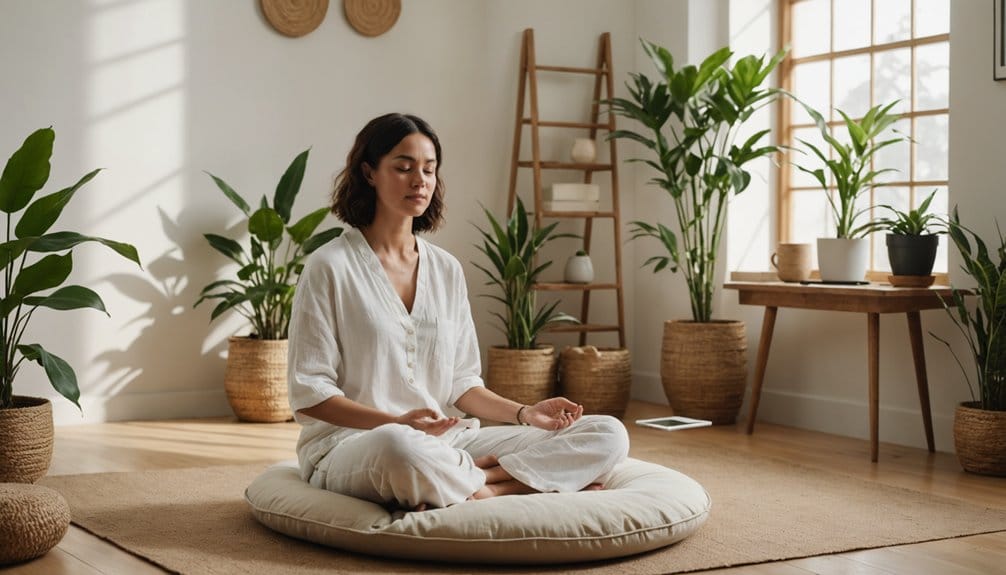
Before diving into Kundalini meditation, you’ll want to create an inviting space and attune your body for the experience ahead. Think of this as prepping for a big adventure, not just a cozy Netflix night! Start with space cleansing—light some sage or burn a candle to cleanse away any funky energy. Trust me, your room will thank you! Next, focus on body alignment; sit up straight to channel that energy effectively. Imagine you’re a tall, majestic tree swaying gently in the wind. Don’t forget to stretch a little; this isn’t about yoga contortions, just a simple ‘hello’ to your muscles. Feeling comfy is key—grab a cushion or blanket if you need it. Let’s set the stage for your inner power! Remember to pay attention to your spine alignment techniques; a strong foundation is essential for effective energy flow.
Step-by-step practice guide
Once you’ve set your space and body for Kundalini meditation, it’s time to immerse yourself in the practice itself! Start by sitting comfortably, allowing body awareness to fill your mind. Inhale deeply, focusing on breath control to awaken your Kundalini energy. Use visualization methods to picture energy moving through your chakras, aligning them for spiritual awakening.
Experiment with different meditation techniques; maybe try chanting or mantras for some extra fun! Let emotions flow—Kundalini can spark emotional healing. Engage in mindfulness practice, observing thoughts without judgment. If your mind wanders (which it will—trust me!), gently bring it back. Remember that incorporating elements like Yoga Nidra can foster a deeper relaxation state, enhancing your overall meditation experience.
And remember, there’s no perfect way here. So, why not embrace the chaos and celebrate every small victory? You’re on a sacred journey!
Common variations
Kundalini meditation isn’t a one-size-fits-all kind of practice; in fact, there are a plethora of variations you can explore. You might immerse yourself in Kundalini yoga, where you’ll focus on specific meditation postures. Ever tried breath techniques? They can help open your energy channels and amplify your practice.
Feeling musical? Chanting mantras can elevate your vibration and deepen your spiritual awakenings. Or, if you prefer a more visual approach, incorporate visualization practices; picture your energy rising through each chakra.
Don’t forget mindfulness integration; it helps ground your experiences. In fact, utilizing methods like diaphragmatic breathing can enhance relaxation and clarity during your meditation sessions. Remember, you’re exploring, not aiming for perfection. It’s totally okay if you lose focus mid-chant—don’t we all? Just laugh it off and center back into your practice!
Benefits and Effects
When you practice Kundalini meditation, you might notice some pretty amazing benefits popping up in your life. Think improved mental clarity and emotional balance—because who doesn’t want to feel a little less like a tightly wound rubber band? Plus, you may even experience shifts that feel downright transformative, making it more than just a quirky thing to add to your routine. Regular practice can also enhance emotional regulation, much like the benefits experienced from Vipassana meditation.
Mental and emotional well-being
Meditation can feel like a magical potion for your mental and emotional well-being—seriously, who wouldn’t want a touch of magic in their life? With just a few minutes of mindfulness practice, you can release incredible meditation benefits. Imagine experiencing emotional healing that gently washes away your worries. Need stress relief? A simple breath can help! You’ll find mental clarity, and suddenly, those life questions seem a lot less overwhelming. Plus, cultivating self-awareness brings you closer to your true self. Feeling anxious? Say goodbye to that! Regular practice really works wonders for anxiety reduction. And let’s not forget personal growth; you’re fundamentally leveling up! In fact, with just 15 minutes of daily practice, you can substantially boost your immune system health! Ready to tap into your inner power? Immerse yourself in the magic of Kundalini meditation today!
Physical health outcomes
Have you ever noticed the way your body responds to stress? With Kundalini meditation, you can tap into that Kundalini energy bubbling inside you. Imagine feeling a surge of physical energy, boosted immune response, and smoother energetic flow. Practicing breath control allows for emotional release—just like when you finally scream into a pillow after a tough day! Regularly working on chakra alignment can improve your body awareness and adaptability techniques, helping you navigate life’s chaos. You’ll notice stress reduction like never before, helping you feel more vibrant and alive. When you align your practice with your physical health goals, you’re not just meditating—you’re energizing your entire being. Furthermore, controlled breathing enhances your emotional resilience, creating a deeper connection to your inner self. So, why wait? Let’s access that inner power and embrace our health!
Spiritual or transformative aspects
Imagine diving deep into a wellspring of inner wisdom, where each breath allows you to explore not just tranquility, but a whole new version of yourself. Sounds dreamy, right? That’s precisely what a spiritual awakening can feel like. You might find pieces of yourself transforming during this journey, like shedding an uncomfortable jacket. Think about it—what if you could embrace your true self, free from society’s expectations? Kundalini meditation offers this transformative journey, revealing your potential in ways you never dreamed possible. You’ll experience clarity, emotional balance, and a sense of connection to the universe. It’s like finally finding that missing puzzle piece you thought was lost! So, are you ready to step into your light and release your inner power?
Common Challenges and Misconceptions
When you start your Kundalini meditation journey, you might run into some common hurdles that can feel pretty intimidating. Ever thought you’d find yourself questioning if you’re more like a confused cat than a serene yogi? Don’t worry, those thoughts are normal, and it’s important to separate the myths from the reality, so you can keep moving forward without tripping over your own misconceptions.
Typical difficulties for beginners
Starting your journey with Kundalini meditation can feel like trying to untangle a set of Christmas lights—you’re excited, but where do you even begin? Many beginners face challenges like breath control and physical discomfort. Don’t worry; you’re not alone! Emotional release might catch you off guard, while mental distractions keep popping up like those pesky holiday trinkets. You might struggle with fear responses, commitment issues, or consistency challenges. Some days, patience will feel like a distant dream, and clarity might seem as elusive as finding that last ornament. Focus difficulty? It’s all part of the process! Embrace these hurdles as opportunities for growth, remembering that every expert was once a beginner tangled in their own lights.
Myths vs. reality
Many people think that Kundalini meditation is all about floating in a blissful state of enlightenment, but let’s clear that up right now—it’s not always a walk in the park wearing rose-colored glasses. You might run into common misconceptions like thinking it’s just about magical experiences. In reality, it involves hard work, personal experiences, and sometimes emotional triggers that come to the surface. Plus, there’s the concern of cultural appropriation and the risk of spiritual bypassing. You may face scientific skepticism, accessibility issues, and even health risks. It’s crucial to pursue authentic practices that prioritize gender inclusivity. Remember, it’s a journey, not a fancy picture on social media. Embrace the messiness, and let yourself grow!
Tips for Deepening Your Practice
To truly enhance your Kundalini meditation practice, you’ll want to contemplate how often and how long you meditate each week. Setting a regular schedule can be a game-changer; even 10 minutes a day can work wonders. Plus, using tools like calming music or guided recordings can make your sessions feel more rewarding — and let’s be honest, who doesn’t love a little help when trying to untangle their mind?
Recommended frequency and duration
While diving into the world of Kundalini meditation can feel overwhelming at first, finding the right frequency and duration for your practice is easier than you might think. Aim for at least 20 minutes a day—trust me, you don’t need to sit for hours like a statue! Frequency recommendations suggest starting with three times a week and increasing as you become more comfortable. It’s like building muscle; the more you engage, the stronger it gets! Duration guidelines can vary. Some days you might feel compelled to meditate longer, and that’s perfectly okay. You’re allowed to thrive! Listen to your intuition. Remember, consistency trumps intensity. And if you skip a day, laugh it off—tomorrow’s another chance to reconnect with your inner energy.
Helpful tools (music, props, guided recordings, teachers)
Exploring Kundalini meditation can feel like stepping into a vibrant world filled with potential, and having the right tools at your disposal can make all the difference. Ever tried meditating without a cozy cushion? It’s like yoga without pants—uncomfortable! Invest in some meditation props to support your journey. Create music playlists for your sessions, letting sound vibrations elevate your practice. Guided recordings can be your best mates too—think of them as helpful GPS for your mind. Don’t forget to check out teacher resources! Learning from experienced minds can really enhance your flow. So, whether you’re vibing out with sound or getting grounded with props, remember: these mindfulness tools can help you release your inner power. Enjoy the ride!
Modern Adaptations and Research
Kundalini meditation isn’t just for yogis in flowing robes anymore; it’s working its way into the everyday hustle. You might be surprised to learn about the scientific studies that back up its benefits—think less stress, more focus, and even improved mental health. So, how can you weave this transformative practice into your chaotic schedule?
How the practice is used in contemporary life
As you immerse yourself in the world of Kundalini meditation, you’ll discover it’s not just some ancient tradition hiding in a dusty scroll. These days, people are embracing Kundalini in workplaces, using it for urban stress relief and as part of corporate wellness programs. You might even find community meditation initiatives sprouting up like tulips in spring! Online meditation platforms and digital mindfulness resources make it accessible for anyone—yes, even busy parents juggling kids and work. Plus, imagine wellness retreats focusing on group dynamics, where you can connect with kindred spirits! If you’ve ever thought about spiritual entrepreneurship, integrating mindful parenting practices could spark your creativity. So, why not let Kundalini help you tap into that inner power?
Scientific studies and evidence
You might think that ancient practices like Kundalini meditation have no place in the lab coat-wearing world of science, but you’d be surprised. Recent neuroscience findings suggest this practice can spark real change in your brain. Studies show that regular practitioners often experience reduced stress, improved focus, and heightened creativity—who doesn’t want that? Imagine meditating away your worries and revealing new insights; sounds pretty magical, right? Plus, embracing Kundalini can lead to better health benefits, like lower blood pressure and improved emotional well-being. You don’t have to trade your yoga mat for a lab bench, but a little science can deepen your understanding. Who knew chasing inner freedom could come with a side of brain research? Reality’s wild, isn’t it?
Conclusion
So, what’s the bottom line on Kundalini meditation? You’ve learned some key takeaways that can spice up your daily routine, right? Why not give it a whirl and see how it transforms your day from mundane to magical?
Key takeaways
Kundalini meditation isn’t just another trend; it’s a transformative practice that can recharge your mind, body, and spirit. Imagine diving into a self-discovery journey that reveals hidden potential within you. What if you could tap into your energy and feel free in ways you never thought possible? The meditation benefits are immense — from reduced stress to deeper self-awareness. You might even find yourself laughing at how much easier life feels when you let go of what holds you back. Seriously, who wouldn’t want to ditch the mental clutter? By embracing this practice, you’re not just meditating; you’re igniting a spark that lights up your entire being. So, are you ready to awaken your inner power? Let’s get started!
Invitation to try and integrate into daily life
While diving into the world of Kundalini meditation might feel like stepping into a mysterious universe, integrating it into your daily life can be surprisingly straightforward. Start small—don’t worry, you don’t need to don a robe or chant on a mountaintop! Just carve out a few minutes each day for mindful integration. Try blending breathing exercises into your morning routine or squeeze in some simple stretches during your lunch break. What about adding a short meditation to your bedtime rituals? With daily rituals like these, you’ll find your spark without feeling overwhelmed. Embrace the awkwardness—it’s part of the journey! Remember, it’s not about perfection; it’s about flow. So, go ahead and let your inner power shine in your everyday moments!
If you have enjoyed this article, you can find more Kundalini-related content, here.