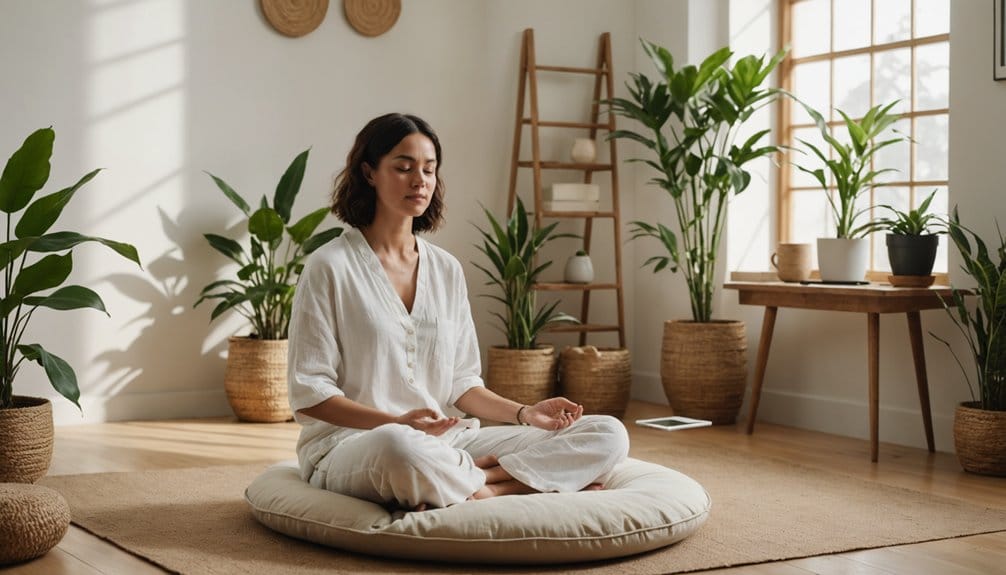
You’ll find ancient wisdom meets modern science in Kundalini meditation, where breathing techniques and mantras help reveal your mind’s hidden potential. By focusing on long, deep breaths and repeating phrases like “Sat Nam,” you’ll quiet mental chatter while activating energy centers throughout your body. Start small with 5-10 minutes daily in a calm space, and don’t worry about your wandering mind – it’s totally normal! There’s a whole world of expanded consciousness waiting as you journey deeper into this transformative practice.
Understanding the Origins of Kundalini Meditation
While ancient yogis weren’t exactly posting meditation tutorials on social media, they did develop one of the most powerful spiritual practices known to humankind – Kundalini meditation.
When you explore Kundalini history, you’ll discover its roots in ancient Indian spirituality, where wise teachers passed down this sacred practice through generations. Think of Kundalini as your body’s dormant spiritual powerhouse – like having a Ferrari in the garage that you didn’t know existed. This energy awakening practice emerged from the tantric yoga tradition, where practitioners sought to release the coiled energy at the base of their spine. You might wonder why it’s called “Kundalini” – it’s named after the Sanskrit word for “coiled snake,” representing the dormant energy waiting to rise through your chakras.
The transformative power of this ancient practice is highlighted in modern discussions about mindfulness and stress relief.
The Science Behind Mindful Energy Awakening
You’ve probably wondered what’s really happening in your brain when you settle into that sweet spot of kundalini meditation – well, it turns out there’s some fascinating science behind those energy waves you’re feeling. Your brain actually shifts through different wavelengths during practice, from the beta waves of normal consciousness down to the deep theta waves where your neurotransmitters and energy centers sync up like a well-orchestrated symphony. The coolest part is how your brain’s natural plasticity allows it to physically rewire itself through consistent practice, creating new neural pathways that can permanently upgrade your consciousness (and no, you won’t need to download any expensive software updates for this upgrade). Pranayama meditation techniques also harness similar brainwave shifts, contributing to increased mindfulness and emotional balance during your practice.
Brain Waves During Meditation
The fascinating world of brain waves during meditation reveals why ancient practitioners felt such profound effects from their practice. When you’re meditating, your brain activity shifts through different frequencies – from the busy beta waves of your daily grind to the calmer alpha and theta states. You might be surprised to learn that your brain can reach the same deep theta waves during meditation that you experience during REM sleep, except you’re fully conscious!
One of meditation’s greatest benefits is its ability to sync your left and right brain hemispheres, creating what scientists call “whole-brain synchronization.” Ever notice how your best ideas come when you’re relaxed? That’s your brain waves doing their dance. Think of it like tuning a radio – you’re simply adjusting your mental frequency to a clearer channel.
Energy Centers and Neurotransmitters
Modern neuroscience reveals fascinating links between our body’s energy centers and the chemical messengers flowing through our brains. When you practice Kundalini meditation, you’re not just sitting there looking zen – you’re actually triggering specific neurotransmitter release patterns that correspond to different chakra alignments. Pretty cool, right?
As you focus on energy flow through each chakra, your brain responds by releasing feel-good chemicals that support emotional healing and stress reduction. Your crown chakra meditation might boost serotonin, while heart-centered practices could spark oxytocin production. This inner balance isn’t just spiritual awakening – it’s science! Through consistent practice, you’ll tap into both intuitive guidance and holistic wellness, creating a beautiful bridge between ancient wisdom and modern neurobiology. Who knew your brain could be such a willing partner in meditation benefits?
Neuroplasticity and Consciousness Shifts
While scientists once believed our brains were fixed after childhood, research now shows incredible neuroplasticity during Kundalini meditation practices. You’re literally rewiring your neural pathways each time you sit down to meditate. Pretty amazing, right?
The neuroplasticity effects you’ll experience aren’t just about forming new habits – they’re about expanding your consciousness itself. As you practice, you’ll notice subtle shifts in how you perceive the world. Maybe you’ll catch yourself responding differently to stress, or find creative solutions popping up when you least expect them.
Your consciousness evolution through Kundalini isn’t just some woo-woo concept – it’s backed by science. Think of your brain as a smartphone that’s constantly downloading updates. Each meditation session helps install new “mental software” that enhances your operating system.
Essential Breathing Techniques and Mantras
Mastering proper breathing techniques and mantras serves as your gateway to revealing Kundalini meditation‘s transformative power. Through breath awareness, you’ll learn to harness the subtle energies flowing through your body, while mantra repetition helps quiet the mind’s endless chatter. Ever notice how your breath changes when you’re stressed? That’s your first clue to its power.
Start with the basics: sit comfortably and focus on long, deep breaths. Count “Sat Nam” (truth is my identity) silently as you inhale and exhale. Don’t worry if your mind wanders – it happens to everyone! Think of mantras as training wheels for your consciousness. They’ll keep you balanced until you’re ready to ride solo. The key is consistency, not perfection. Remember, even the most enlightened masters started exactly where you are now. Kundalini energy is known to fundamentally shift brain waves, enhancing your meditation experience further.
Preparing Your Body and Mind for Practice
You’ll want to start by creating a dedicated meditation corner that’s yours alone – even if it’s just a tiny spot between your bed and that pile of unfolded laundry you’ve been meaning to tackle. Setting up a consistent daily practice time helps train both your body and mind to show up ready for meditation, whether that’s bright and early before your first coffee or during that post-lunch energy slump. Your sacred space doesn’t need to look Instagram-perfect with crystal collections and fancy cushions – just keep it clean, comfortable, and free from distractions like your phone or that stack of bills waiting to be paid. This dedicated meditation corner can serve as a physical reminder of your commitment to mindfulness, enhancing your ability to embrace thoughts without judgment as you dive into your practice.
Create Sacred Practice Space
Before diving into Kundalini meditation, creating a sacred practice space sets the foundation for transformative experiences. You’ll want to choose a quiet corner where you can set clear intentions without interruption. Think of it as your personal sanctuary – a place where the outside world melts away.
Start with comfort arrangements like cushions or a meditation mat, then add natural elements such as crystals, plants, or a small water fountain. Your decor choices matter – consider incorporating personal artifacts that hold special meaning. The right lighting options can make a huge difference – soft candlelight or dimmed lamps work wonders. Don’t forget about your sound environment; gentle chimes or nature sounds can enhance your practice.
Remember to cleanse your space regularly with sage or incense. The key is distraction minimization – your sacred space should feel like a cozy retreat from the chaos.
Establish Daily Meditation Routine
Setting up a consistent daily meditation routine is like training a puppy – it takes patience, dedication, and plenty of treats (okay, maybe skip the treats). The key is finding your natural rhythm and sticking to it. Whether you’re a morning person who loves sunrise salutations or someone who prefers evening reflections, choose a time that feels right for you.
Start small – even 5-10 minutes counts. You wouldn’t run a marathon without training, right? The same goes for meditation. Begin with morning rituals that ground you: light stretching, deep breathing, or simply sitting quietly with your coffee before the day’s chaos begins. As you progress, extend your practice time gradually.
Common Challenges and Their Solutions
While Kundalini meditation offers profound benefits, it’s natural to encounter some bumps along the way – kind of like learning to ride a bike with cosmic training wheels. You’ll face mindful distractions (hello, sudden urge to reorganize your sock drawer!) and emotional resistance that makes you want to quit. Physical discomfort might creep in, and mental fatigue can make focusing feel like herding cats.
Don’t let self-judgment traps or perfectionism pressure derail you. When commitment hurdles arise, remember that even seasoned practitioners deal with external interruptions and wandering minds. The key isn’t to eliminate these challenges but to acknowledge them with a gentle smile. Think of each obstacle as a chance to strengthen your practice, like building spiritual muscles. You’re not failing when challenges arise – you’re simply growing. Embracing the benefits of mindfulness not only enhances your practice but also equips you with tools to navigate these challenges effectively.
Deepening Your Daily Meditation Practice
Once you’ve got the basics down, it’s time to take your Kundalini practice from casual coffee date to spiritual soulmate status. Think of it like leveling up in your favorite video game, but instead of collecting coins, you’re gathering cosmic energy.
Start by integrating mindfulness techniques throughout your day. Set phone reminders for mini-meditation breaks, or link your practice to existing daily rituals like your morning coffee or evening wind-down. Ever notice how athletes create pre-game routines? Do the same with your meditation space.
Create a dedicated meditation corner that calls to you – maybe add some cushions that don’t make your tailbone scream in protest. Your space should feel like a warm hug, not a dentist’s waiting room. Remember, deepening your practice isn’t about perfection; it’s about consistency and authentic connection.
Measuring Your Mindfulness Progress
Tracking your mindfulness journey can feel as tricky as measuring your own shadow – it’s there, but not exactly ruler-friendly. But don’t worry, there are concrete ways to gauge your progress without getting tangled in metrics.
Start by keeping mindfulness journals where you jot down daily observations about your practice. Notice how your mind wanders less during meditation? That’s progress! Pay attention to real-life changes too – maybe you’re responding to stress more calmly or sleeping better at night. Progress tracking isn’t about perfection; it’s about noticing subtle shifts in your awareness.
Remember those days when you couldn’t sit still for two minutes? Now you’re sailing through fifteen-minute sessions like a meditation pro. That’s not just progress – that’s transformation in action!