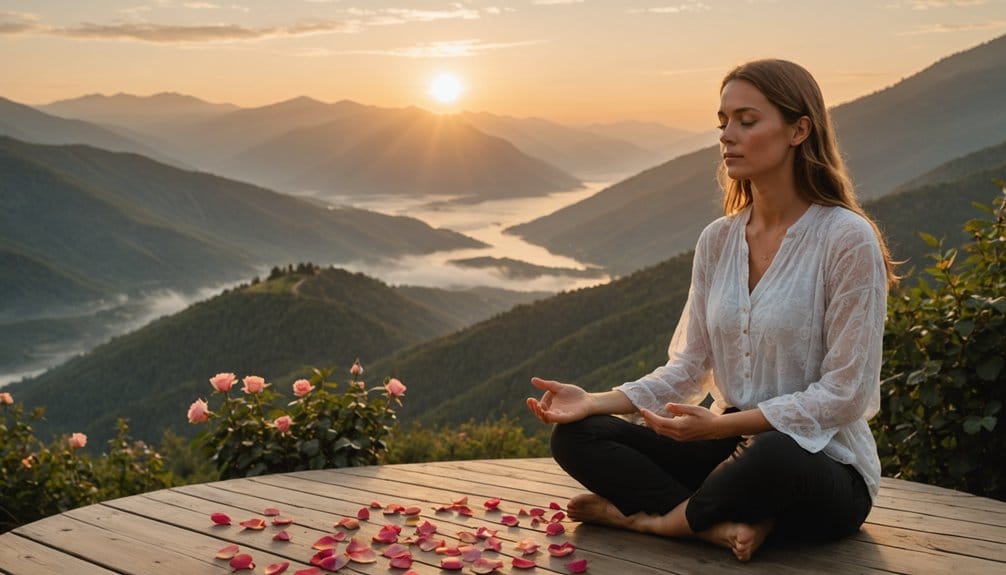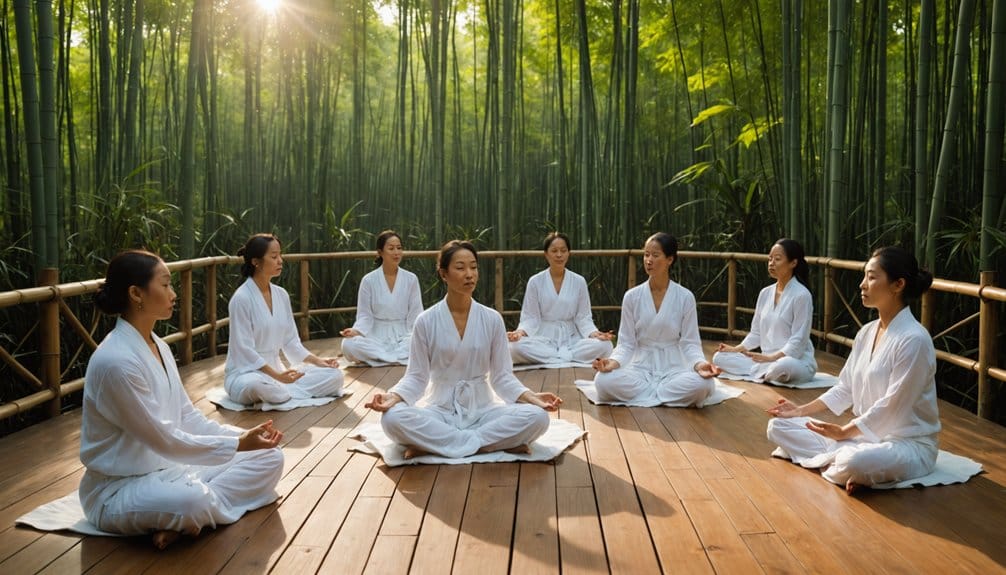
You might think ancient meditation and modern life don’t mix, but you’d be surprised. Transcendental Meditation‘s journey from the sacred caves of India to your local wellness center is quite the plot twist. While The Beatles were finding inner peace with the Maharishi in the ’60s, this age-old practice was quietly revolutionizing how we handle our daily stress. Now you’re probably wondering how a 5,000-year-old tradition became today’s go-to solution for finding calm in the chaos.
Ancient Vedic Foundations
From the misty peaks of ancient India’s spiritual heritage, Transcendental Meditation traces its origins to the time-honored Vedic traditions. You’ll find these roots deeply embedded in sacred Vedic texts that have guided seekers for thousands of years.
Ever wonder why these meditation techniques have stood the test of time? It’s because they’re designed to work with your natural tendency toward greater happiness and spiritual awakening. You’re not just sitting there trying to force your mind to be quiet – you’re tapping into what the ancients discovered about consciousness exploration.
Think of the Vedic masters as the original scientists of inner space. They weren’t sitting in labs with microscopes; they were diving deep into human awareness, mapping the territory of your mind’s hidden potential.
The practice gained widespread Western attention when the Beatles met Maharishi in 1967, sparking a global interest in this ancient meditation technique.
Maharishi Mahesh Yogi’s Journey
While studying under his spiritual teacher Guru Dev in the 1940s, Maharishi Mahesh Yogi began developing what we now know as Transcendental Meditation. You might be surprised to learn that this wasn’t just a lightbulb moment – it took years of dedication and insight.
After Guru Dev’s passing in 1953, Maharishi’s travels took him across India, where he refined his early teachings through trial and error. You’d think teaching meditation would be straightforward, right? But he discovered that people needed a simpler approach than traditional methods. By 1955, you could find him teaching in remote villages and bustling cities alike, adapting ancient wisdom for modern minds.
Sound familiar? That’s because his practical approach still resonates today – making meditation accessible without losing its essence.
The Global Spread in the 1960s
As beatniks gave way to hippies and protest songs filled the airwaves, Transcendental Meditation caught the attention of an unlikely group – The Beatles. You’ve probably seen those famous photos of the Fab Four in India, sitting cross-legged with the Maharishi. Their endorsement sparked a cultural wildfire.
Suddenly, you couldn’t open a magazine without seeing 1960s celebrities raving about their TM experiences. From beach towns in California to bustling European cities, meditation centers popped up faster than flower power bumper stickers. The Maharishi’s global outreach transformed what was once an ancient Eastern practice into a modern Western phenomenon. Ever wonder why your parents or grandparents might have a dusty meditation cushion tucked away in their attic? Now you know – they were probably riding the wave of TM’s groovy global expansion. Like its predecessor ancient pranayama techniques, this practice has roots stretching back over 5,000 years in India’s spiritual traditions.
Scientific Research and Validation
Once skeptics dismissed meditation as pure mysticism, scientific researchers began putting TM under the microscope in the 1970s. You’ll be amazed at how neuroscientific studies have validated what practitioners knew all along – this stuff actually works! From reduced stress to improved focus, researchers have documented countless meditation benefits that’ll make even the biggest doubters raise an eyebrow.
Ever wonder what’s happening in your brain when you meditate? Scientists have found that TM creates unique brain wave patterns and reduces cortisol levels (that’s your stress hormone, by the way). They’ve even discovered increased thickness in areas of the brain associated with attention and emotional regulation. Who knew sitting quietly for 20 minutes could literally reshape your gray matter? It’s not just ancient wisdom anymore – it’s scientifically proven fact.
Modern Practice and Cultural Impact
Since the 1960s, Transcendental Meditation has evolved from a counterculture phenomenon into a mainstream wellness practice that you’ll find everywhere from corporate boardrooms to elementary school classrooms. You’ll spot its influence in today’s mindfulness integration across society – from meditation apps to stress-management seminars.
Looking for inner peace? You’re not alone. Modern wellness culture has embraced TM’s simple yet powerful techniques, making them more accessible than ever. Whether you’re a busy executive seeking clarity or a teacher helping students focus, TM’s adaptability means it fits seamlessly into your daily routine. The practice has shed its hippie-era associations and now speaks to people from all walks of life. Who’d have thought that sitting quietly for 20 minutes twice a day would become so… trendy?