Ever feel like your anxiety’s turned your mind into a chaotic squirrel circus? You’re not alone in this mental acrobatics show. Yoga Nidra might just be your ticket to trading those racing thoughts for some much-needed inner peace. This ancient practice isn’t your typical “om and done” meditation – it’s a scientifically-backed method that helps you shift from stressed-out mess to zen master, even if you can’t touch your toes. Let’s explore how this sleep-based technique could be your secret weapon against anxiety.
Understanding the Science Behind Yoga Nidra
While you might think Yoga Nidra is just a fancy name for napping, there’s actually fascinating brain science behind this ancient practice. Recent neuroscience research shows your brain waves shift from beta to alpha and even theta states during a session – that’s like hitting the reset button on your stressed-out mind.
You know that feeling when you’re caught between sleep and wakefulness? That’s where the yoga nidra benefits really shine. Your body releases tension while your mind stays alert enough to process and heal. It’s like giving your brain a spa day without the expensive cucumber water! Studies have found this systematic relaxation technique reduces anxiety by activating your parasympathetic nervous system – your body’s built-in chill mode. Pretty cool how something that feels like glorified daydreaming can rewire your brain, right?
The Mind-Body Connection in Anxiety Management
You’ve probably noticed how your racing thoughts can make your muscles tense up – that’s your mind and body working as an incredibly synchronized (if somewhat annoying) anxiety team. When you practice Yoga Nidra, you’re actually tapping into powerful brain chemicals like serotonin and GABA that help put both your mental chatter and physical tension in time-out. Your body’s natural relaxation response kicks in like a loyal friend showing up just when you need them, helping to reset both your nervous system and thought patterns at the same time. This ancient meditation practice offers deep relaxation without requiring any complex movements or poses, making it accessible to everyone regardless of physical ability.
Calming the Nervous System
Since the mind and body are inextricably linked, calming your nervous system becomes an essential step in managing anxiety through Yoga Nidra.
Through gentle breathing techniques and visualization exercises, you’ll discover how to flip that mental “off switch” when anxiety kicks in. Think of it as giving your buzzing mind a cozy blanket and a cup of tea. Body awareness exercises help you notice where you’re holding tension – maybe those shoulders are trying to become earrings again? Guided imagery and mindfulness practice work together to trigger your natural relaxation response, making stress reduction feel almost effortless. The key is practice consistency – just like you wouldn’t expect to master a cartwheel in one day (trust me, I’ve tried). With regular emotional regulation exercises, you’ll build a toolkit for tension release that works uniquely for you.
Mental Relaxation Techniques Work
Mental relaxation techniques pack a powerful one-two punch when it comes to managing anxiety. Through mental imagery and deep relaxation, you’re fundamentally teaching your brain how to shift gears from “panic mode” to “peace mode.” It’s like having a remote control for your stress levels – pretty neat, right?
When you practice these techniques regularly, you’ll notice something fascinating: your mind starts responding more quickly to your cues for calm. You’re building new neural pathways that bypass those well-worn anxiety trails. Think of it as creating a mental shortcut to tranquility. Remember that time you couldn’t find your keys and felt your heart racing? Now you’ll have tools to dial down that tension before it spirals. The best part? You can practice these techniques anywhere, anytime – no special equipment needed.
Brain Chemistry During Practice
While practicing Yoga Nidra, fascinating changes occur in your brain chemistry that directly impact anxiety levels. Your brain shifts into slower brainwave states, similar to what happens just before you drift off to sleep – minus the awkward head-nodding in public! This shift helps restore your neurotransmitter balance, kind of like hitting the reset button on your stress response.
You’ll notice your racing thoughts begin to slow down as your brain changes from beta to alpha waves, and sometimes even into theta. It’s like your mind is getting a spa day while you just lie there! The best part? You don’t need to understand all the complex neuroscience – your brain knows exactly what to do. Just show up on your mat, follow the guidance, and let your natural healing processes take over.
Key Benefits of Yoga Nidra for Mental Health
When life feels like an endless hamster wheel of stress and worry, Yoga Nidra steps in as your mental health superhero. You’ll discover how this powerful relaxation technique helps you break free from anxiety’s grip while boosting your overall wellbeing. Through regular mindfulness practices, you’re training your brain to stay calm when life throws curveballs your way.
Can’t remember the last time you had a good night’s rest? You’re not alone. Sleep improvement is one of Yoga Nidra’s superpowers – it’s like hitting the reset button on your busy mind. You’ll learn to let go of racing thoughts and finally experience that elusive deep relaxation you’ve been craving. The best part? You don’t need fancy equipment or years of experience – just your willingness to lie down and let go. Research shows that systematic muscle relaxation helps release physical tension throughout your body without any strenuous movement.
Essential Components of a Yoga Nidra Practice
Before diving into your Yoga Nidra journey, you’ll need to understand its core building blocks – think of them as your relaxation toolkit. Ever notice how your mind wanders? That’s where anchor points and breath awareness come in, keeping you grounded like a ship’s steady anchor.
You’ll start with intention setting (your personal North Star), followed by a thorough body scan that’ll make you wonder how you never noticed that tight spot in your shoulder before. Next up: sensory connection and guided imagery – it’s like Netflix for your mind, but way more relaxing! Add some visualization techniques and mantra repetition (don’t worry, you won’t have to chant in public), and you’re golden. The relaxation response kicks in naturally, while self inquiry gently guides you toward deeper awareness. The parasympathetic nervous system activates during practice, naturally promoting a state of deep relaxation and improved sleep quality.
Getting Started With Guided Relaxation
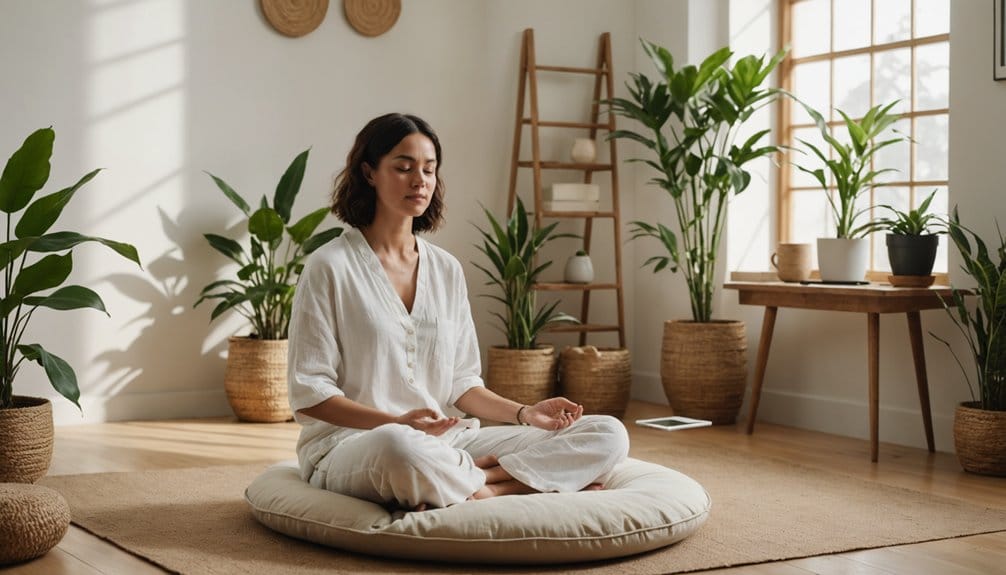
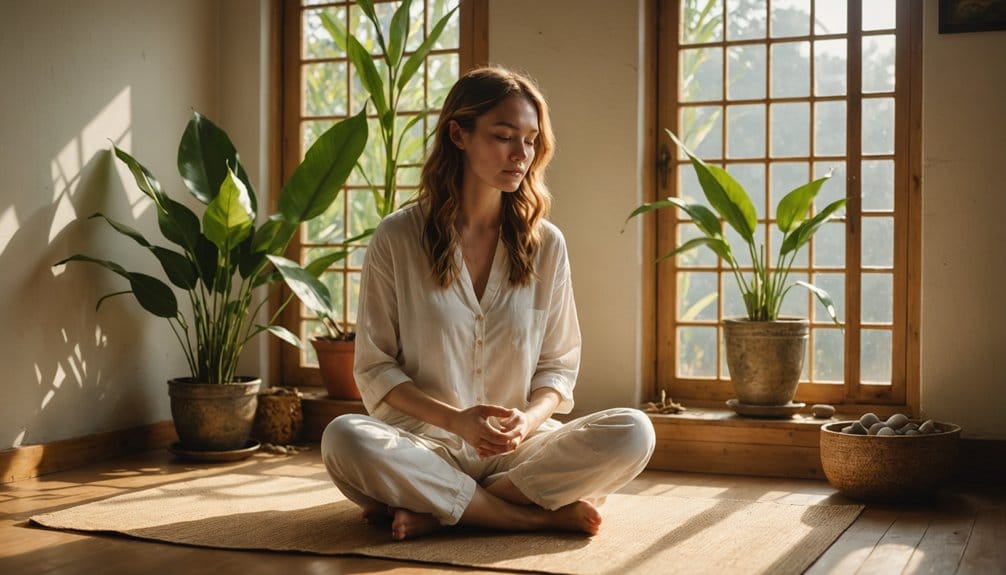
You’ll need surprisingly little to get started with Yoga Nidra – just grab a cozy blanket, a supportive mat or cushion, and find a quiet spot where your cat won’t mistake your peaceful practice for naptime. The classic position is Savasana (lying flat on your back), but if that’s not comfortable, you can prop yourself up with pillows or even practice in a reclined chair. While a dedicated meditation room would be lovely, your living room floor works just fine – the key is picking a space where you won’t be interrupted by your phone, doorbell, or that neighbor who always wants to chat about their garden.
Essential Equipment and Space
Getting started with Yoga Nidra doesn’t require an expensive meditation cushion or fancy props – in fact, the simpler your setup, the better. All you’ll need is a comfortable blanket, a flat surface, and an optional eye mask. While dedicated yoga props can enhance your practice, a cozy couch or bed works perfectly fine.
Creating your ideal environment matters more than the gear. Find a quiet space where you won’t be disturbed for at least 20 minutes. Think of it as your personal relaxation zone – maybe that’s a corner of your bedroom or a peaceful spot in your living room. Dim the lights, silence your phone (yes, even those “urgent” social media notifications), and adjust the temperature so you’re not too hot or cold. Remember, comfort is key – if you’re fighting to ignore a chilly draft, you won’t fully relax.
Key Beginner Positions
Now that your space feels like a cozy relaxation retreat, let’s focus on positioning your body for maximum comfort. While traditional yoga has dozens of complex poses, beginner techniques for Yoga Nidra are delightfully simple. You’ll mostly be lying down – yes, really!
The most common and restful postures start with Savasana, also known as Corpse Pose (don’t worry, you’re still very much alive). Simply lie on your back, arms slightly away from your sides with palms facing up, and let your feet naturally fall outward. Can’t get comfortable? Place a small pillow under your knees to ease lower back tension. Having trouble keeping still? That’s totally normal. Think of yourself as a happy starfish floating on gentle waves – relaxed, supported, and free.
Creating Your Personal Yoga Nidra Routine
While the thought of crafting your own Yoga Nidra routine might seem intimidating at first, it’s actually a lot like building the perfect pillow fort – you just need the right components and a touch of creativity. Start by considering your personal preferences: Do you prefer guided meditations or silence? Morning or evening practice? Your answers will shape your routine.
Make routine adjustments as you discover what works best. Maybe you’ll find that 15 minutes of practice during lunch breaks melts your anxiety better than a full hour before bed. Trust your instincts! You might want to begin with simple body scanning one day, then experiment with visualization techniques the next. Remember, there’s no “wrong way” to do this – unless you’re trying to practice while simultaneously watching cat videos (trust me, I’ve tried). Creating a sacred space for practice with comfortable props and soothing ambiance will help establish a consistent meditation ritual.
Common Challenges and Solutions
Even the most dedicated Yoga Nidra practitioners face speed bumps along their journey to inner peace. You might find yourself battling common misconceptions, like thinking you’re “doing it wrong” if you don’t fall asleep, or believing you need to meditate for hours to see results. Guess what? These worries are completely normal! Try practicing the 4-7-8 breathing method whenever anxiety starts to creep in during your sessions.
Different specific anxiety types require different approaches. Can’t quiet your racing thoughts? Try focusing on your breath instead of fighting them. Mind wandering more than a tourist without a map? That’s okay – just gently guide it back to your practice. The key is working with your challenges, not against them. Remember, even the most zen-looking person in your yoga class probably started out wondering if they were the only one who couldn’t stop thinking about their grocery list.
Measuring Progress and Mental Well-being
As you progress in your Yoga Nidra journey, tracking your mental well-being isn’t quite as straightforward as counting steps on a fitness tracker. But don’t worry – there are plenty of creative ways to measure your growth!
Try keeping a mood journal where you rate your anxiety levels before and after each session. Ever notice how your shoulders aren’t living near your ears anymore? That’s progress! Emotional tracking apps can help you spot patterns, while mindfulness measurement tools like the MACE scale can provide concrete data about your journey.
Remember those situations that used to send you into a tailspin? Start noting how you’re handling them differently now. Maybe that deadline that once caused panic now feels manageable. These real-world victories are your most meaningful metrics of success.
Integrating Yoga Nidra Into Daily Life
Since life moves at warp speed these days, you’ll need some clever strategies to make Yoga Nidra a regular part of your routine. Ever notice how you’ll binge-watch an entire season of your favorite show but can’t find 15 minutes for self-care? Let’s change that!
Start by linking Yoga Nidra to activities you already do. Practice mindful breathing while waiting for your morning coffee to brew, or during your daily commute (eyes open if you’re driving, please!). Create daily affirmations that resonate with your personal goals and record them on your phone. Then, listen during lunch breaks or before bed.
Can’t find a quiet space? Transform your car into a peaceful sanctuary during lunch hour. Your coworkers might think you’re napping, but you’re actually becoming a zen master in disguise!