Just like peeling away layers of an onion, Yoga Nidra helps you shed stress one gentle layer at a time – and who couldn’t use a little less stress these days? You’re probably familiar with the usual relaxation advice: take deep breaths, count sheep, or listen to whale sounds. But Yoga Nidra offers something deeper – a systematic approach that’s been calming minds for thousands of years. If you’ve ever wondered how ancient wisdom can tackle modern-day tension, these seven techniques might surprise you.
Understanding the Essence of Yoga Nidra Meditation
Sleep might be your closest companion, but Yoga Nidra takes relaxation to a whole new dimension. Think of it as hitting the “pause” button on life while staying completely aware – like being awake enough to know you’re dreaming, but too relaxed to care about your to-do list.
Through mindful awareness, you’ll discover a state that’s more rejuvenating than your average power nap. It’s like finding a secret doorway between being awake and asleep, where your mind can finally stop spinning like a caffeinated hamster on a wheel. This practice invites subconscious exploration in ways that’ll make you wonder why you’ve spent years counting sheep instead. You’re not falling asleep – you’re falling awake into a delicious state of being where stress melts faster than ice cream on a summer sidewalk.
Setting Up Your Sacred Space for Practice
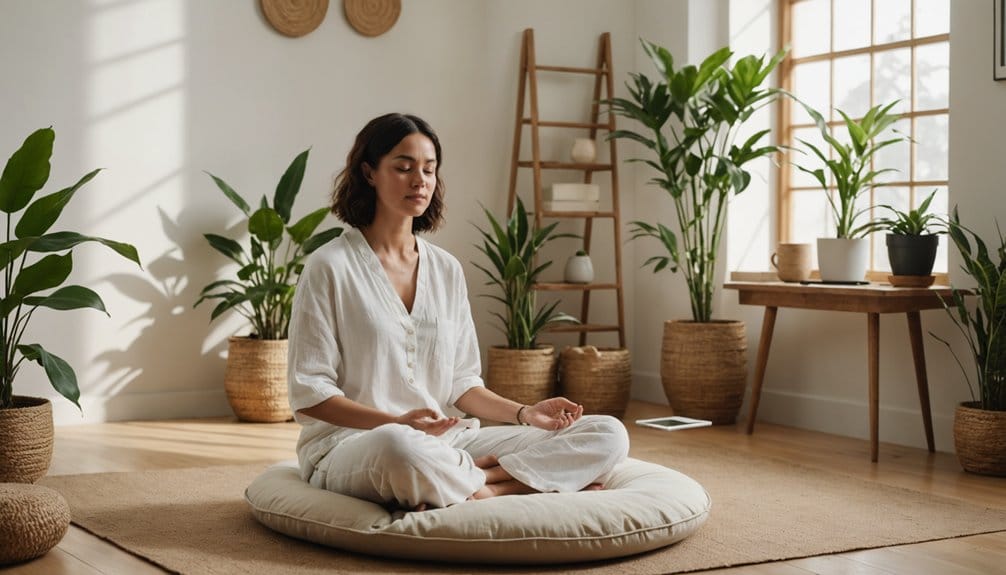
You’ll want to start by finding a clean, quiet corner where you won’t be interrupted by your cat doing parkour or your neighbor’s enthusiastic trombone practice. Next, gather your comfy props – a yoga mat, blankets, and pillows that’ll support you better than your favorite aunt’s hugs. Finally, set the mood with gentle lighting, perhaps some incense or essential oils, and any other elements that help you feel like you’re in a sacred space rather than just lying on your living room floor.
Choose Clean Quiet Location
Creating a peaceful sanctuary for Yoga Nidra begins with finding the perfect quiet spot in your home – one where you won’t be interrupted by barking dogs, buzzing phones, or that neighbor who always seems to start mowing the lawn the moment you try to relax.
Among the ideal locations, your bedroom often works best, especially if it’s far from the street. That spare room you’ve been using as a catch-all storage space? It might be time to clear it out and transform it into your zen den. Consider using a walk-in closet – they’re surprisingly cozy for meditation. For noise reduction, try hanging heavy curtains or using a white noise machine. You’ll want to guarantee the space stays at a comfortable temperature too – nobody achieves enlightenment while shivering or sweating buckets.
Create Comfortable Support System
Physical comfort serves as the foundation for any successful Yoga Nidra practice – after all, it’s pretty hard to drift into blissful relaxation when you’re lying on what feels like a bed of rocks. Start by creating cushions that cradle your body’s pressure points. Layer a yoga mat with folded blankets beneath your knees and lower back, then add a small pillow to support your neck.
You’ll want to build what I like to call your “relaxation nest” using blankets that are neither too heavy nor too light. Think Goldilocks – just right! Wrap yourself in a cozy layer that keeps you warm without feeling restricted. Remember, you’re aiming for that sweet spot between “floating on a cloud” and “mummified in fabric.” The goal is to feel supported and comfortable enough to completely let go.
Set Mindful Atmosphere Elements
Setting up the perfect atmosphere can make or break your Yoga Nidra experience – trust me, it’s hard to drift into peaceful meditation when your neighbor’s dog won’t stop barking! That’s why creating your ideal sanctuary matters. Start with mindful lighting that soothes your senses – dim the harsh overheads and opt for soft candlelight or a gentle salt lamp instead. Ever notice how certain smells instantly relax you? Harness that power with calming scents like lavender, sandalwood, or vanilla (just don’t go overboard – you’re aiming for subtle, not perfume-counter overwhelming!). Consider using noise-canceling headphones or a white noise machine to block out unwanted sounds. The goal is to craft a space that feels like your personal retreat from the world’s chaos.
Body Scanning and Progressive Relaxation
While lying comfortably on your back, body scanning serves as your gateway into deep relaxation – think of it as a mental massage where you’re both the masseuse and the lucky recipient. You’ll move your awareness systematically through each part of your body, from your toes to the crown of your head, creating a profound sensory experience.
Notice where you’re holding tension (we’ve all got that stubborn shoulder knot!) and consciously release it through guided imagery and mindfulness practice. As you journey through this relaxation response, you’re not just releasing physical tension – you’re revealing emotional release too. Ever wonder why your jaw feels like it’s been crushing walnuts after a stressful day? That’s where body awareness comes in handy. Let each area soften and melt, like ice cream on a warm summer day.
Breath Awareness and Counting Techniques
Now that your body feels like a melted stick of butter, let’s focus on your breath – nature’s built-in relaxation remote control. Ever notice how babies breathe? Their bellies rise and fall like tiny waves, completely stress-free. Let’s channel that natural wisdom.
Try these simple breath techniques to deepen your relaxation. Start by counting your inhales from one to four, then reset. It’s like counting sheep, but you won’t fall asleep (well, not yet anyway). When you’ve mastered that, explore more advanced counting methods: inhale for four counts, hold for four, exhale for six. Your mind might wander – that’s totally normal. Just gently guide it back to your breath, like herding a curious kitten. Remember, you’re not trying to control your breath; you’re simply becoming friends with it.
Visualizing Healing Light and Energy Flow
As your breath settles into a natural rhythm, let’s paint with light inside your mind. Imagine a warm, golden glow starting at your toes and slowly rising through your body like honey dripping upward. You’re basically becoming a human lava lamp, but way more zen.
This healing visualization isn’t just pretty – it’s powerful stuff. Feel the light dissolving tension in your shoulders (you know, from all those hours hunched over your phone). As it moves, notice how your energy alignment shifts from scattered to centered. Picture the light filling each muscle, joint, and cell with vibrant, healing energy.
Want to amp it up? Visualize the light changing colors as it flows – maybe cool blue for calm or emerald green for renewal. Your body’s loving this mini light show.
Working With Sankalpa for Transformation
Since you’ve found that cozy sweet spot of relaxation, it’s time to explore sankalpa – your heartfelt intention or resolution. Think of it as your soul’s GPS coordinates for personal transformation. What deeply meaningful change are you ready to manifest?
Your sankalpa’s significance lies in its power to reshape your inner landscape. Unlike typical New Year’s resolutions that fizzle out by February, this intention setting goes deeper. You’re not just saying “I want to be more confident” – you’re declaring “I am already confident” as if it’s happening now. Pretty clever, right? By repeating your sankalpa during your practice, you’re basically rewiring your brain while it’s in this super-receptive state. The key is choosing something that resonates with your authentic self, not what others think you should become.
Integrating Regular Practice Into Daily Life
You don’t need a full hour or a fancy meditation room to make Yoga Nidra part of your daily routine – even 15 minutes during your lunch break can work wonders. Creating a cozy corner in your home with a comfortable mat, a few cushions, and maybe those twinkly lights you’ve been hoarding since last Christmas can transform any space into your personal relaxation zone. Whether it’s that awkward time between meetings or those precious moments after the kids are finally asleep, you’ll be surprised how many small pockets of time you can find for your practice once you start looking.
Creating Small Time Windows
The biggest myth about Yoga Nidra is that it requires huge chunks of free time. In reality, you can practice effective time management by sneaking in quick sessions throughout your day. Think of them as mindful breaks – your personal stress relief moments between life’s chaos.
Got 10 minutes before your next meeting? Perfect! That’s enough time for a mini-session. You’d be amazed what a short practice can do for your focus and energy. Even a 5-minute Yoga Nidra reset while sitting in your parked car can work wonders. And let’s be honest – you probably spend more time than that scrolling through social media anyway!
Start by identifying those small pockets of downtime in your schedule. They’re there, hiding between appointments and daily routines, just waiting to become your relaxation windows.
Establishing Home Practice Space
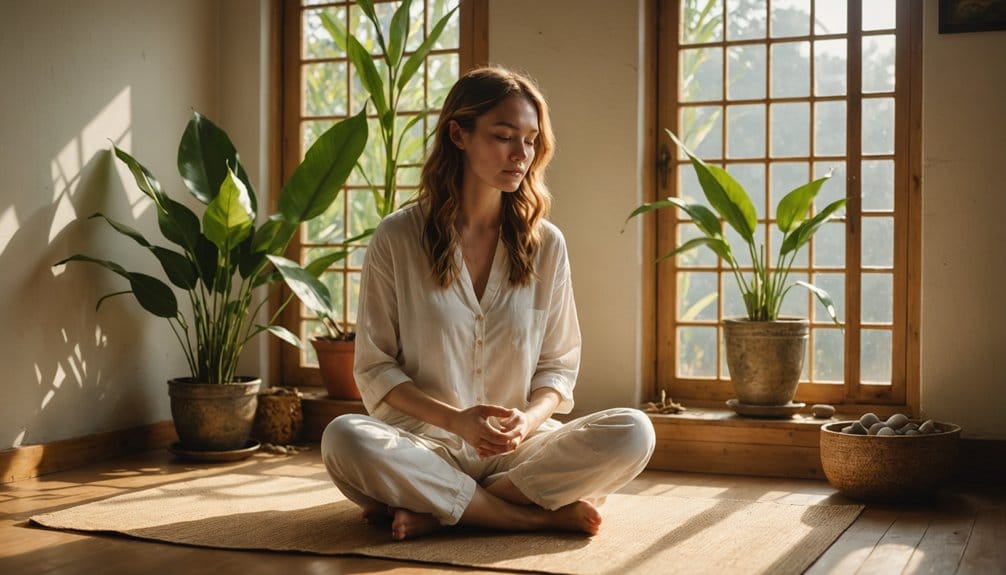
While finding spare moments for practice helps, creating a dedicated Yoga Nidra space at home turns relaxation from an occasional treat into a daily ritual. Pick a quiet corner where you won’t be disturbed – even if it’s just a cozy nook behind your sofa. You don’t need much: a yoga mat, some cushions, and maybe a cozy blanket are your essential yoga essentials.
To create a serene ambiance, clear away clutter and add simple touches that calm your mind. A small plant, a favorite crystal, or a battery-operated candle can transform any space. And let’s be honest – having your peaceful spot already set up makes you more likely to practice than if you have to wrestle furniture out of the way every time.