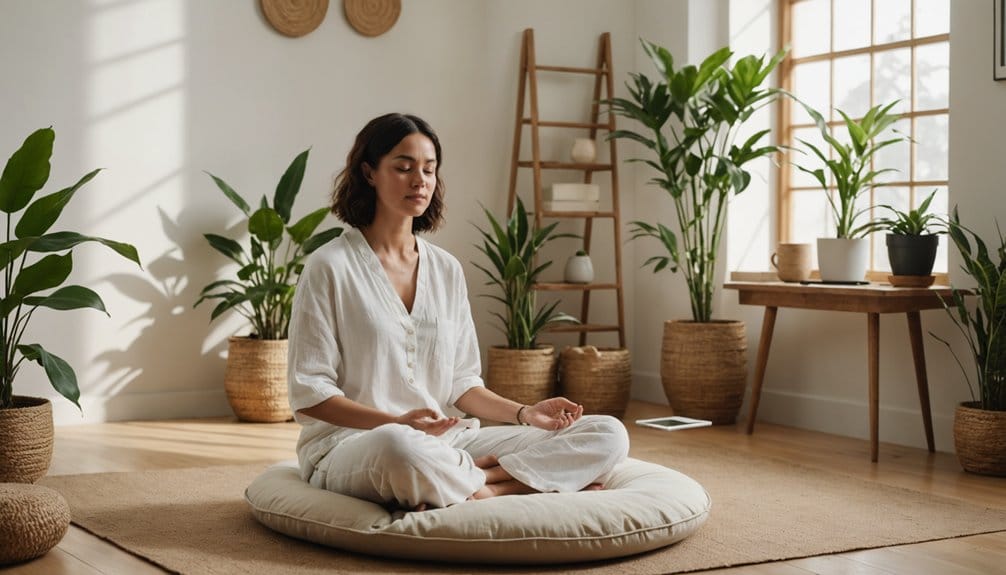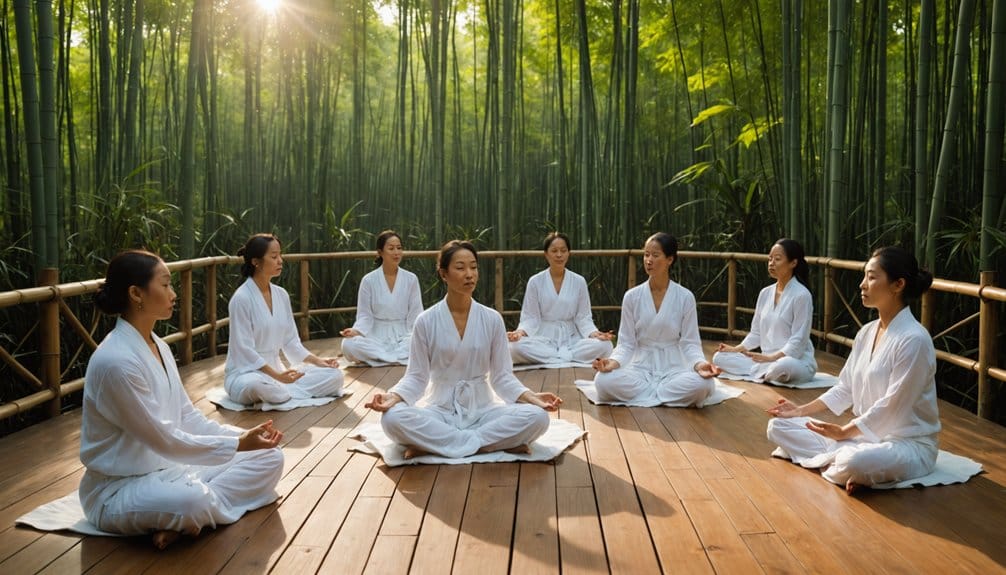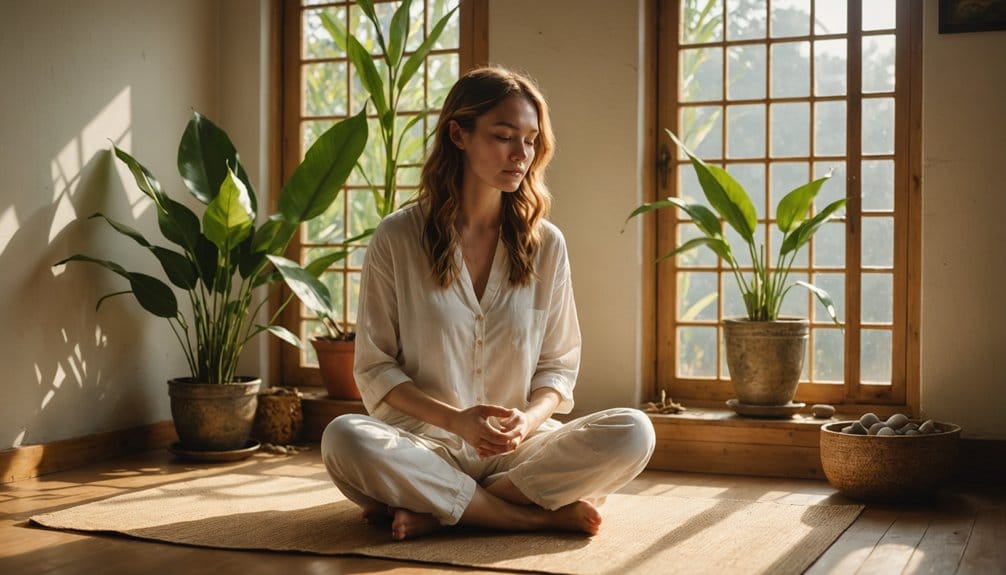
You’ll want to start your Vipassana journey in a quiet space with a comfy cushion and straight-but-relaxed posture – no pretzel poses required! Focus on your natural breath at your nostrils or belly, letting thoughts float by like clouds. When your mind wanders (and trust me, it will), gently guide it back without judgment. Begin with 10-minute sessions and gradually build up. Ready to discover what lies beneath the surface of your wandering mind?
Understanding the Foundations of Vipassana Meditation
Although you might picture meditation as sitting perfectly still while achieving instant enlightenment, Vipassana meditation takes a more down-to-earth approach. Let’s clear up some common meditation misconceptions right away – you don’t need to empty your mind completely or twist yourself into a pretzel!
Vipassana is about seeing things as they really are through mindful observation. Think of it as becoming a friendly detective of your own experience. The mindfulness benefits are backed by science, from reduced stress to improved focus. But here’s the fun part – you’re not trying to become a zen master overnight.
Instead, you’ll learn to notice the constant chatter in your mind without getting caught up in it. Ever tried not thinking about a pink elephant? That’s exactly the kind of mental gymnastics we’re learning to observe rather than control. Regular practice not only enhances your emotional resilience but also leads to thicker gray matter in areas responsible for attention and emotional regulation.
Setting Up Your Meditation Space and Posture
You’ll want to find a quiet corner of your home where you won’t be interrupted by family members barging in to ask where the TV remote is hiding. Getting your meditation space set up doesn’t require a full zen makeover – just grab a firm cushion or folded blanket and position it about 6 inches from a wall for back support if needed. Now for the moment of truth: plant your bottom on that cushion with your legs crossed (no pretzel-master flexibility required), straighten your spine like there’s an invisible string pulling you up from the crown of your head, and let your hands rest naturally on your knees or lap. Remember to focus on breath awareness as you settle into your practice, allowing yourself to return to your breath whenever distractions arise.
Choosing Your Sacred Space
Creating a dedicated meditation space doesn’t require a fancy Zen garden or mountain-top monastery – though wouldn’t that be nice? Instead, focus on finding a quiet corner that speaks to your personal preferences and helps you feel centered. Your sacred environment might be as simple as a cozy nook by a window or a peaceful spot in your bedroom.
The key is consistency and comfort. Pick a place where you won’t be disturbed by family members, pets, or that pesky notification ping from your phone. Maybe it’s the corner of your home office before anyone else wakes up, or perhaps it’s your back porch where you can hear birds chirping. Remember, this space should feel inviting – somewhere you’ll actually want to return to day after day.
Basic Meditation Cushion Setup
When it comes to setting up your meditation cushion, comfort is key – but we’re not talking about sinking into your favorite overstuffed recliner here. You’ll want to find the sweet spot between support and ease, starting with proper cushion height that keeps your hips slightly above your knees. Traditional zafu cushion styles filled with buckwheat hulls offer ideal cushion firmness while conforming to your body.
For best cushion placement, position it on a flat, stable surface about three feet from any wall. You can make cushion adjustments by adding or removing filling until it feels just right. Natural cushion materials like cotton and kapok offer great cushion benefits, including breathability and durability. Remember to maintain your cushion by occasional sunning and gentle spot-cleaning – it’ll be your meditation buddy for years to come!
Proper Sitting Body Alignment
Now that your cushion’s perfectly positioned, let’s focus on what really matters – your body alignment. Think of your spine as a stack of coins – you want them balanced, not toppling over! Start by sitting cross-legged with your hips slightly above your knees for ideal seated comfort.
Proper spine alignment isn’t about being ramrod straight (we’re not in military school!). Instead, imagine a gentle string pulling up from the crown of your head while your shoulders naturally relax downward. Your chin should tuck slightly, as if you’re holding a peach under your chin. Ever notice how a wilting flower can’t reach the sun? Same goes for your posture – keep it natural but upright. Your hands can rest comfortably on your thighs or lap, palms facing up or down.
Focusing on the Breath: The Starting Point
You’ll want to start by finding your “anchor point” – that sweet spot where you can feel your breath most clearly, whether it’s at your nostrils, chest, or belly. Simple counting methods, like tracking from one to ten with each breath cycle, can help keep your wandering mind from planning tomorrow’s grocery list (we’ve all been there). As you get comfortable with the counting, you’ll naturally begin to notice the rhythm of your breath – like waves on a beach, it’s been there all along, just waiting for you to pay attention. This practice can help you develop skills for viewing thoughts as mere perceptions, which is essential in managing anxiety.
Finding Your Anchor Point
The journey of meditation begins with finding your anchor point – that steady, reliable sensation that keeps you grounded like a ship’s anchor in stormy seas. For most practitioners, this anchor is the sensation of breath at the nostrils or the rise and fall of your belly.
You’ll want to experiment to discover which spot feels most natural for finding awareness. Maybe it’s the coolness of air entering your nose, or perhaps it’s the gentle expansion of your abdomen. There’s no wrong choice – it’s like picking your favorite coffee shop to work at. Once you’ve found your sweet spot for sensory focus, stick with it. Don’t hop between anchor points like a distracted squirrel! Think of it as your meditation home base where you can always return when your mind wanders.
Simple Counting Methods
Three simple counting techniques can transform chaotic thoughts into focused awareness during meditation. You’ll start by silently counting each breath from one to ten – it’s like giving your mind training wheels while it learns to stay balanced. When you reach ten, simply start over at one. Don’t worry if your thoughts wander (they will!).
Next, try counting only at the end of each exhale. This breath awareness technique helps you stay present without getting too caught up in the numbers. Finally, advance to counting alternate breaths – odd numbers on inhales, even on exhales. It’s trickier than it sounds, but that’s exactly why it works. Your mind will be too busy counting to wander off into yesterday’s awkward conversations or tomorrow’s to-do list.
Natural Rhythm Awareness
Mastering natural breath awareness feels a bit like learning to ride a bike – at first you’re hyper-focused on every wobble and adjustment, but eventually it becomes second nature. You’ll find yourself noticing the gentle rhythm of your natural breathing without trying too hard, just like you eventually learned to balance on two wheels.
Start by sitting comfortably and simply observing your breath without changing it. Notice how it flows in and out, like waves lapping at the shore. Don’t worry if your mind wanders – that’s totally normal! Just gently guide your mindful awareness back to your breath whenever you catch yourself planning tomorrow’s dinner or reliving that awkward conversation from last week. Remember, you’re not trying to become a zen master overnight. You’re just getting acquainted with your own natural breathing patterns.
Body Scanning Method Step by Step
Learning body scanning in Vipassana meditation doesn’t have to feel like trying to solve a Rubik’s cube blindfolded. You’ll start by sitting comfortably and directing your body awareness to the crown of your head. Ever notice how your scalp tingles when you pay attention to it?
Move your focus slowly downward, like you’re downloading a full-body software update. Observe each sensation – tingling, pressure, warmth, or coolness – without trying to change anything. You’re just collecting data, not fixing what you find. Remember those “spot the difference” games? That’s your sensation analysis job here.
Work your way down through your face, neck, shoulders, and beyond. If your mind wanders (and trust me, it will), just escort it back to where you left off, like guiding a puppy back to its training spot. This process helps enhance neural connectivity as you develop better awareness of bodily sensations and their impact on your mind.
Observing Sensations Without Judgment
Once you’ve mapped your body’s landscape through scanning, the real magic happens in how you process what you find. You’ll notice tingles, pressure, warmth, or maybe that weird itch that always shows up when you’re trying to meditate. The key is mindful acknowledgment without getting caught up in the story behind each sensation.
Think of yourself as a curious scientist observing clouds – they come, they go, and you’re just taking notes. During sensation exploration, you might feel tempted to label things as “good” or “bad,” but that’s not your job here. When your knee starts aching, simply note “pressure” or “throbbing” without adding “and it’s really annoying!” Remember, you’re not trying to change anything – you’re just being present with what is. Cultivating equanimity and mindfulness encourages you to respond to sensations with greater calm and understanding.
Managing Common Challenges and Distractions
The path to peaceful meditation often feels like trying to herd cats – just when you’ve got one thought corralled, three more sprint off in different directions. Don’t worry, you’re not alone in this mental circus! Effective distraction management starts with accepting that your mind will wander.
When mental chatter kicks in (and it will), try this simple trick: label each distraction as it appears. “Planning dinner? That’s thinking.” “Itchy nose? That’s sensation.” “Worrying about work? That’s anxiety.” You’re not trying to silence these thoughts – you’re acknowledging them like clouds passing overhead. The key isn’t perfect focus; it’s gentle persistence. When you catch yourself planning next week’s grocery list (again), just smile and return to your breath. Remember, even experienced meditators deal with monkey mind.
Building a Daily Practice Routine
While establishing new habits can feel as tricky as teaching a cat to fetch, building a consistent Vipassana practice doesn’t have to be complicated. You’ll find success by starting small – even 10 minutes daily makes a difference. Remember those New Year’s resolutions that fizzled by February? Let’s avoid that fate.
Your daily commitment begins with choosing a specific time that works for you. Early birds might prefer sunrise sessions, while night owls can practice before bed. What matters is consistency, not timing. Consider routine variations for busy days – perhaps a quick morning session plus a longer evening practice when possible. Keep your meditation spot ready with a comfortable cushion and timer, making it easier to just sit down and begin. Soon enough, you’ll be craving your practice like that morning coffee.
Progressing Beyond Basic Techniques
After establishing your daily meditation rhythm, you’ll start noticing subtle shifts in your practice – like a guitarist moving beyond “Smoke on the Water” to more complex melodies. Your mind’s starting to pick up on finer details you might’ve missed before.
Ready to level up? Try deepening awareness by extending your sessions gradually – maybe five extra minutes each week. Notice how your breathing changes when you’re stressed versus calm. You’re becoming your own mindfulness detective!
Enhancing concentration doesn’t mean forcing yourself to focus harder. Instead, think of it like training a puppy – gentle persistence wins the day. When your mind wanders (and it will), just smile and guide it back. Remember those first awkward meditation attempts? Look how far you’ve come! Each session builds on the last, creating a richer, more nuanced practice.
Incorporating Mindfulness in Daily Life
Beyond your meditation cushion lies a whole world of mindfulness opportunities. You’ll find chances for present moment awareness in everyday activities, from mindful eating (actually tasting your morning coffee!) to conscious breathing while stuck in traffic.
Start small by incorporating mindful walking between meetings or practicing sensory awareness during your daily shower. Set an intention each morning and try compassionate listening when chatting with friends – you know, actually listening instead of just waiting for your turn to talk! Even mundane tasks become meditation opportunities when you’re fully present.
Don’t forget to sprinkle in some daily gratitude and mindful movement. And here’s a game-changer: try a digital detox for 30 minutes each day. Your social media feed isn’t going anywhere, but your peace of mind might!