Did you know that ancient Zen masters often started their meditation journeys by counting breaths – and frequently lost count by number three? You’re not alone if sitting still feels impossible at first. Whether you’re hoping to tame your monkey mind, find some inner peace, or just figure out why everyone’s so obsessed with mindfulness these days, there’s a simple way to begin that won’t leave you tied up in mental knots.
Understanding the Basics of Zen Meditation
Although Zen meditation might seem intimidating at first, it’s actually one of the most straightforward forms of meditation you can practice. Think of it as hitting your brain’s reset button – no fancy mantras or complicated poses required.
Start by finding a quiet spot where you won’t be interrupted by your cat, phone, or that neighbor who always seems to mow their lawn at the worst times. Sit comfortably with your back straight (but not stiff – you’re not a telephone pole). Now comes the simple part: focus on your breath awareness. Notice how your breath flows in and out naturally.
When your mind wanders – and trust me, it will – just practice mindful observation. Don’t judge those thoughts; simply acknowledge them like clouds passing in the sky and gently return your focus to your breath. Studies have shown that this simple practice of mindful awareness can lead to improved emotional stability and mental clarity over time.
Creating Your Perfect Meditation Space
While finding inner peace is important, having the right environment can make or break your meditation practice. You don’t need a fancy zen garden or Instagram-worthy meditation decor – just a quiet corner you can call your own. Ever tried meditating next to a pile of laundry? Yeah, not exactly conducive to tranquility.
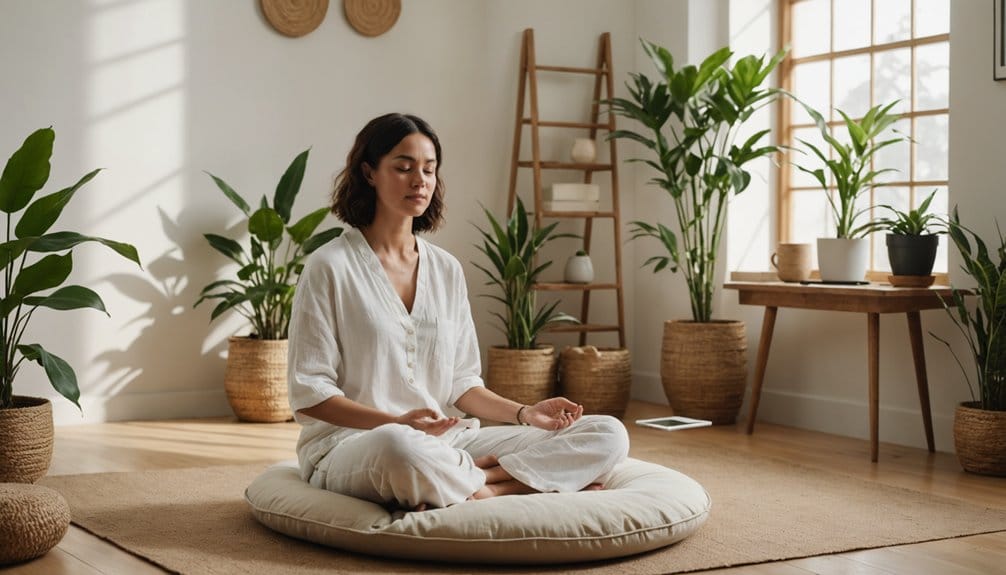
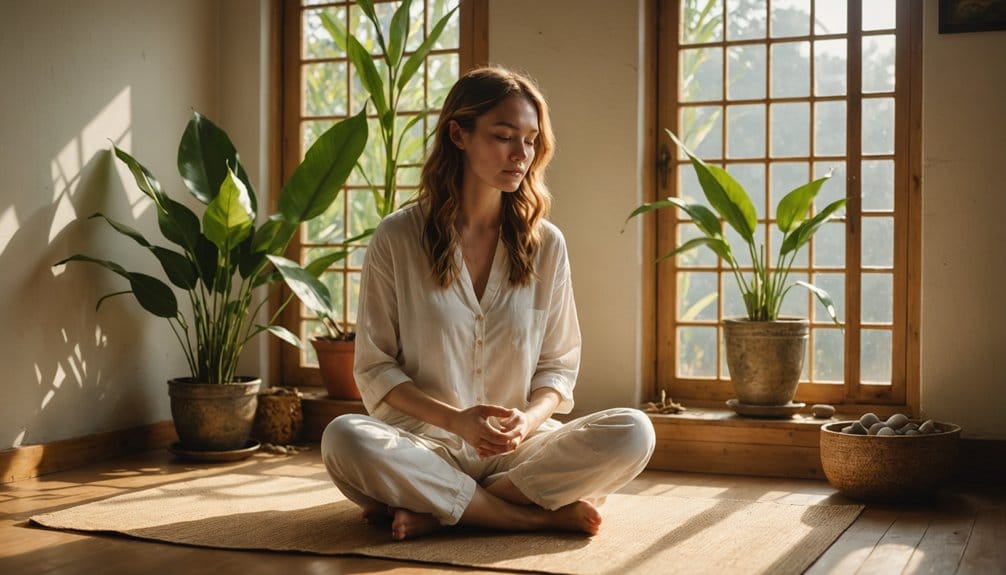
Pick a spot that feels naturally peaceful to you. Maybe it’s by a window where sunlight streams in, or a cozy nook in your bedroom. Add some calming scents like lavender or sandalwood – they’re like nature’s chill pills. Keep it simple: a comfy cushion, maybe a small plant, and definitely no phone in sight (we all know how that notification spiral goes). Remember, this is your sanctuary – make it feel like home, not like someone else’s idea of perfect. Creating a dedicated space helps promote proper posture and alignment while maintaining comfort during your practice.
Essential Breathing Techniques and Postures
Three core elements form the foundation of meditation: your breath, your body, and your mind. Let’s start with breath awareness – it’s like hitting the reset button on your busy brain. Simply notice the natural rhythm of your breathing without trying to change it. Feel the air moving in and out, just like waves on a beach.
For mindful postures, you don’t need to twist yourself into a pretzel! Sit comfortably with your spine straight, whether that’s cross-legged on the floor or in a chair. Your shoulders should be relaxed – not trying to touch your ears! Think “dignified but comfortable.” Imagine there’s a string gently pulling the crown of your head toward the ceiling. Having trouble staying still? Don’t worry – even experienced meditators get fidgety sometimes. The key is finding your sweet spot between alert and relaxed. Pranayama meditation serves as a powerful gateway for transforming scattered thoughts into focused awareness through conscious breathing.
Common Challenges and How to Overcome Them
Many new meditators get frustrated when their minds won’t stop racing – it’s like trying to wrangle a roomful of hyperactive puppies! Don’t worry, you’re not alone in this common challenge. Even experienced practitioners face wandering thoughts.
The key to distraction management isn’t forcing your mind to be quiet (that’s like telling yourself not to think about pink elephants). Instead, try this: when thoughts pop up, acknowledge them with a gentle “hello” and let them float away like clouds. You’ll gradually develop better mental clarity through practice.
Can’t sit still? Start with shorter sessions – even 2 minutes counts! Having trouble staying awake? Try meditating at your peak energy times, or switch from evening to morning sessions. Remember, meditation isn’t about perfection – it’s about progress.
Try maintaining a consistent practice schedule for 21 days to establish a lasting meditation habit.
Building a Daily Meditation Practice
Now that you’ve learned to navigate common meditation hurdles, let’s focus on making meditation stick as a daily habit. Like brushing your teeth or checking your phone (though hopefully with better benefits!), meditation works best when it becomes automatic.
Try linking your practice to existing morning rituals – maybe right after that first cup of coffee or before your shower. If mornings aren’t your thing, evening reflections work beautifully too. Who doesn’t want to wash away the day’s stress before bed? The key is consistency, not perfection. Start with just five minutes – you probably spend longer than that scrolling through social media anyway!
Pick a specific spot in your home that’ll become your meditation zone. It doesn’t need to be fancy – even your favorite corner of the couch will do. This simple practice can lead to improved emotional balance and better sleep quality over time.