You’ve tried meditation, but your mind keeps buzzing like a smartphone on caffeine. Don’t worry – even zen masters started somewhere. Between your neighbor’s enthusiastic drum practice and that nagging thought about tomorrow’s presentation, finding focus can feel impossible. But what if those distractions aren’t your enemies? Learning to master your wandering mind isn’t about forcing stillness – it’s about discovering practical techniques that transform chaos into clarity.
Understanding Common Mental Distractions
Although zen meditation can lead to remarkable mental clarity, let’s be honest – your mind probably feels more like a crowded coffee shop than a tranquil temple. From your weekend to-do list to that awkward thing you said five years ago, mind wandering is as natural as breathing.
You’ll notice two main types of mental chatter competing for your attention. First, there’s the endless parade of random thoughts – grocery lists, song lyrics, and that weird dream about flying pickles. Then come those pesky negative thoughts, the ones that love to remind you about deadlines, past mistakes, or why you shouldn’t have eaten that entire pizza. Sound familiar?
Don’t worry – even experienced meditators deal with these distractions. Your mind isn’t broken; it’s just doing what minds do best: thinking.
Regular practice helps cultivate emotional regulation and allows you to observe these thoughts without becoming entangled in them.
Creating Your Sacred Meditation Space
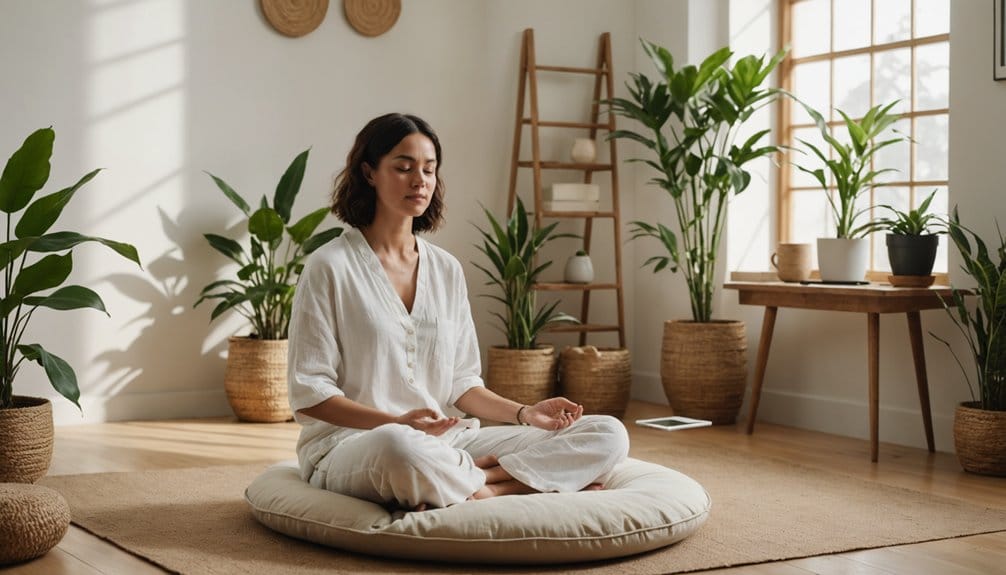
A peaceful meditation corner isn’t just about clearing off that pile of laundry from your favorite chair – it’s about creating a dedicated sanctuary where your mind can finally take a breather. Think of it as your personal zen zone, where the outside world’s chaos melts away.
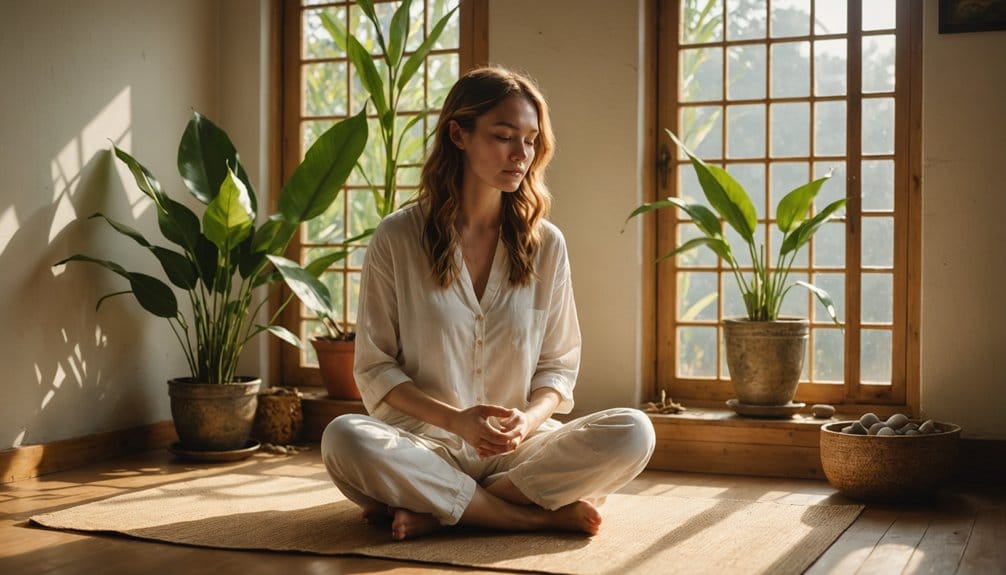
Start with lighting options that soothe your soul – maybe it’s soft candlelight, a Himalayan salt lamp, or natural sunlight filtering through sheer curtains. Your mindful decor should speak to tranquility without screaming for attention. A small Buddha statue? Sure. Your kid’s entire dinosaur collection? Maybe not so much.
Choose items that ground you: a comfy cushion, a gentle chime, or even that quirky peace sign you picked up at a flea market. Remember, this space is uniquely yours – no meditation police will show up to inspect your setup. Creating this distraction-free environment allows you to fully embrace the practice of stillness and presence.
Essential Breathing Techniques for Deep Focus
Now that you’ve created your perfect meditation nook, let’s focus on the heart of zen practice – your breath. Think of breath awareness as your trusty compass in the wilderness of your busy mind. When thoughts scatter like leaves in the wind, your breath brings you back home.
Start with a simple rhythmic inhalation: breathe in for four counts, hold briefly, then release for six. Don’t worry if your mind wanders – it’s what minds do! Ever notice how your cat doesn’t stress about being perfect at napping? Take that same approach with your breathing practice. Let each breath flow naturally, like waves lapping at the shore. When you catch yourself planning tonight’s dinner (we’ve all been there), just smile and return to your breath’s gentle rhythm. For deeper relaxation, try placing one hand on your chest and one on your belly to practice diaphragmatic breathing, which helps activate your body’s natural stress-relief response.
Body Posture and Physical Comfort
Because proper posture forms the foundation of effective meditation, let’s get you sitting comfortably without turning into a human pretzel.
Your seating options are more flexible than you might think. Whether you choose a cushion, bench, or chair, what matters most is maintaining natural alignment awareness throughout your spine. Think of yourself as a puppet with a string gently pulling you upward from the crown of your head. Your shoulders should feel relaxed, not scrunched up by your ears like you’re bracing for bad news.
Can’t sit cross-legged like those serene meditation masters? No problem! Your knees don’t need to touch the floor – that’s just showing off. What’s essential is keeping your back straight, your chin slightly tucked, and your body relaxed yet dignified.
The Burmese posture offers beginners a gentler way to sit with both legs resting parallel on the floor.
Practical Steps to Handle External Interruptions
Even the most dedicated meditators face disruptions like ringing phones, barking dogs, and that neighbor who always seems to mow their lawn during your zen time. Don’t let these interruptions derail your practice. Instead, transform them into opportunities for deeper mindfulness.
Start by creating distraction strategies before you meditate. Put your phone on silent, let family know you’re unavailable, and choose a relatively quiet time of day. When disruptions still happen (because they will), incorporate them into mindful mantras. That lawn mower becomes “present moment awareness.” The barking dog transforms into “accepting what is.”
Regular practice of mindful awareness techniques can lead to improved emotional stability and mental clarity over time.
Building a Consistent Daily Practice
You’ll find it easier to stick with meditation when you block out specific times each day – just like you wouldn’t skip brushing your teeth, make it a non-negotiable part of your routine. Setting up a dedicated meditation corner in your home, even if it’s just a cushion and a candle in your bedroom, gives your practice a physical anchor that beckons you each day. And let’s be honest – there’s something magical about having your own little zen zone where the outside world can’t sneak in with its endless stream of notifications and “urgent” cat videos.
Set Fixed Meditation Times
A reliable meditation practice starts with setting aside fixed times each day, just like scheduling any other important appointment. Your meditation schedule isn’t just another item on your to-do list – it’s your daily rendezvous with clarity. Whether you’re an early bird catching the sunrise or a night owl seeking evening stillness, pick times that realistically work for you.
Building a focus routine means being honest about when you’re at your best. Can’t meditate at 5 AM without falling asleep? That’s okay! Maybe your sweet spot is during lunch break or right after work. The key is consistency, not perfection. Start with just 10 minutes at the same time each day. Your mind will begin to expect and even look forward to these peaceful moments.
Create Sacred Space Daily
Creating a dedicated meditation space transforms any corner of your home into a sanctuary of calm – even if that corner normally hosts your collection of unfolded laundry. Choose calming colors like soft blues or earthy greens for your cushion or mat, and keep the area clutter-free. Remember, this isn’t an Instagram-worthy meditation shrine competition!
Your sacred objects don’t need to be fancy – maybe it’s just a meaningful stone you found on a beach walk, or that tiny Buddha statue your aunt got you from the airport gift shop. What matters is that these items speak to you. Position them thoughtfully, but don’t stress if they’re not perfectly aligned. The goal is to create a space that beckons you to sit, breathe, and find your center.