Zen meditation practices for inner peace focus on mindful breathing and present awareness. You’ll learn to anchor your thoughts by observing your breath, releasing tension with each exhalation, and embracing a non-attachment mindset. Creating a calm space for meditation enhances your experience, allowing you to cultivate stillness and clarity. As you incorporate short moments of mindfulness into your daily routine, you’ll find deeper levels of peace. Discover more techniques to enrich your practice and enhance tranquility.
Key Takeaways
- Begin each session with mindful breathing to anchor yourself in the present moment for greater awareness.
- Embrace a non-attachment mindset by letting go of expectations during meditation practice.
- Create a tranquil meditation environment that minimizes distractions and fosters calmness.
- Integrate brief moments of mindfulness throughout your day to maintain connection with the present.
- Observe thoughts and sensations without judgment, allowing for deeper understanding and inner peace.
Understanding Zen Meditation
Understanding Zen meditation can seem intimidating at first, but it’s really about cultivating a profound sense of awareness and presence. You don’t need to overthink it—just focus on your breath.
Practicing mindful breathing allows you to anchor yourself in the moment. When you inhale, visualize drawing in peace; when you exhale, release tension and distractions. This simple rhythm fosters present awareness, helping you break free from the chaos of your thoughts.
As you sit quietly, acknowledge each sensation without judgment, observing your mind’s ebb and flow. Embrace this process, and you’ll discover the liberation that comes from being fully present.
Zen meditation isn’t just a practice; it’s a journey towards deeper understanding and inner freedom.
Key Principles of Zen Practice
Zen practice is grounded in a few key principles that guide your journey toward inner peace.
First, embrace mindfulness awareness—be present and acknowledge your thoughts and feelings without judgment. This fosters a deeper connection with yourself and your surroundings.
Second, cultivate breath focus by paying attention to your inhalations and exhalations. This technique helps ground you in the moment and calms the mind.
Third, adopt a non-attachment mindset, letting go of expectations and outcomes. This freedom allows you to experience life more fully without the burden of stress.
Ultimately, practice simplicity; stripping away distractions can lead you to a clearer path.
Essential Techniques for Inner Peace
While achieving inner peace might seem challenging, incorporating essential techniques into your daily routine can make a significant difference.
Start with mindful breathing; take a few moments to focus solely on your breath. Inhale deeply through your nose, feel your chest expand, and then exhale slowly through your mouth. This simple practice brings your awareness to the present, grounding you amidst chaos.
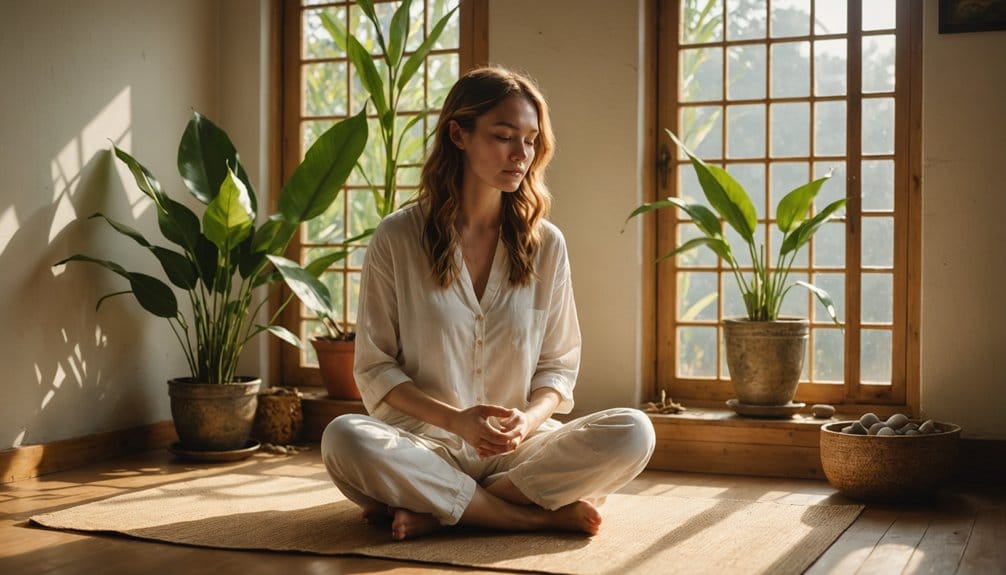
Next, try stillness exercises. Find a quiet spot, sit comfortably, and allow yourself to be still. Notice your thoughts without judgment as you cultivate a sense of calm. You don’t need to rush; just embrace the stillness.
Creating a Suitable Meditation Environment
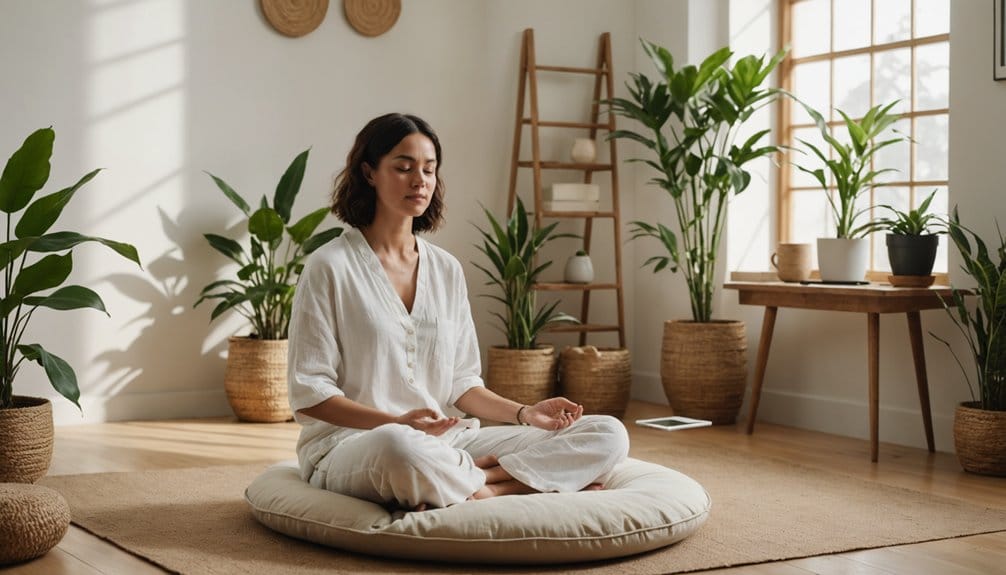
Creating a peaceful meditation environment can greatly enhance your practice. Start by selecting a calm space where you won’t be disturbed. This can be a corner of your room, a garden, or anywhere you feel comfortable.
Next, focus on mindful lighting. Natural light is ideal, but if that’s not possible, use soft, warm lights that create a soothing atmosphere. Dimming the lights can help in fostering a tranquil ambiance.
You might also want to adjust the temperature to avoid distractions. Personalize your space with items that inspire you, like plants or soothing images, but keep it clutter-free.
Incorporating Zen Meditation Into Daily Life
Incorporating Zen meditation into your daily life can transform routine moments into opportunities for mindfulness and calm. Start by integrating brief meditative pauses throughout your day, whether it’s during your morning coffee or five minutes before sleep.
Focus on your breath, tuning out distractions and anchoring yourself to the present. As you move through daily routines, practice mindfulness integration by paying attention to each action, like washing dishes or walking.
Embrace the freedom of being fully engaged in the here and now, allowing thoughts to come and go without attachment. These small practices cultivate a deeper sense of peace and awareness, enabling you to navigate life’s challenges with greater ease and a serene spirit.
Frequently Asked Questions
Can Zen Meditation Improve Physical Health and Wellness?
Zen meditation can considerably enhance your physical health by deepening the mind-body connection. You’ll experience stress reduction, which lowers blood pressure and improves overall wellness, leading to a invigorating sense of freedom and energy in your life.
How Long Should I Meditate to See Results?
Wondering how long you should meditate for results? Aim for at least 10-20 minutes daily. With consistent mindfulness, you’ll gradually uncover profound shifts in your mental clarity and emotional freedom—so stick with it!
What Are Common Distractions During Zen Meditation?
During Zen meditation, you might find your mind wandering or get distracted by external noises. Acknowledge these distractions, refocus your breath, and embrace the freedom that comes with returning to the present moment.
Can Beginners Practice Zen Meditation on Their Own?
Absolutely, you can practice zen meditation on your own! Try beginner techniques like focusing on your breath or using self-guided meditation apps. Remember, the journey’s yours, so explore what feels right and liberating for you.
Is Zen Meditation Suitable for Children?
Absolutely, introducing your child to Zen meditation can reveal a treasure trove of benefits. These meditation techniques nurture focus and calmness, fostering a sense of freedom and self-discovery that enriches their young minds beautifully.
Conclusion
By embracing Zen meditation, you can tap into a profound sense of inner peace and calm. Did you know that a study found that just 10 minutes of daily meditation can reduce stress and anxiety by up to 40%? Imagine what a consistent practice could do for you. As you create a tranquil space and weave meditation into your daily routine, you’ll reveal the transformative power of Zen, enriching your life in ways you never thought possible.