Transform your meditation practice with these proven tips: Start small with just five minutes daily, find a cozy meditation spot (even if it’s just your bed), and use breath awareness as your anchor. Let thoughts float by like clouds, embrace physical discomfort with curiosity, and weave mindfulness into daily activities – yes, even your morning coffee counts! Make peace with imperfection; showing up in mismatched socks beats not showing up at all. There’s so much more to discover on your journey to inner peace.
Finding Your Sacred Space and Time
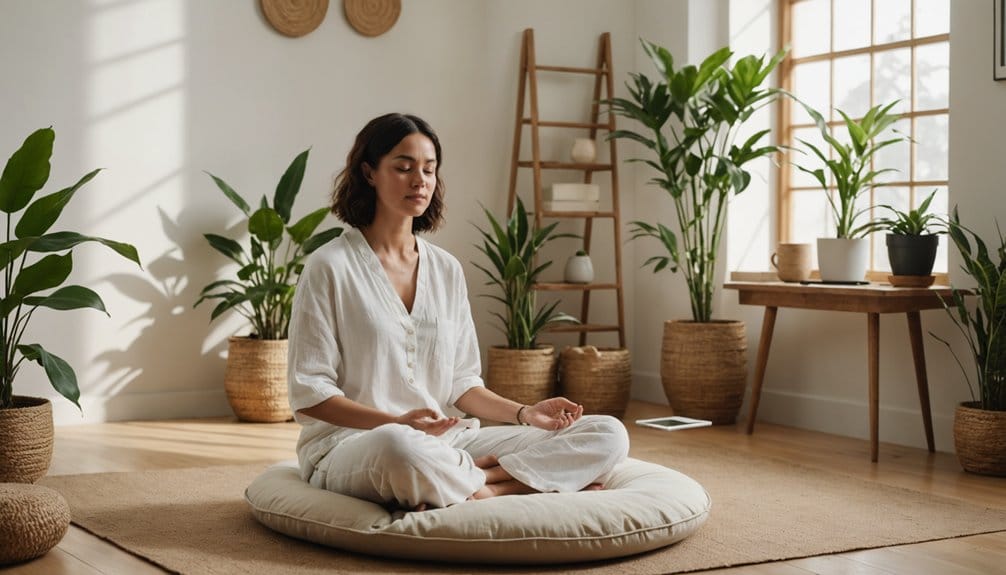
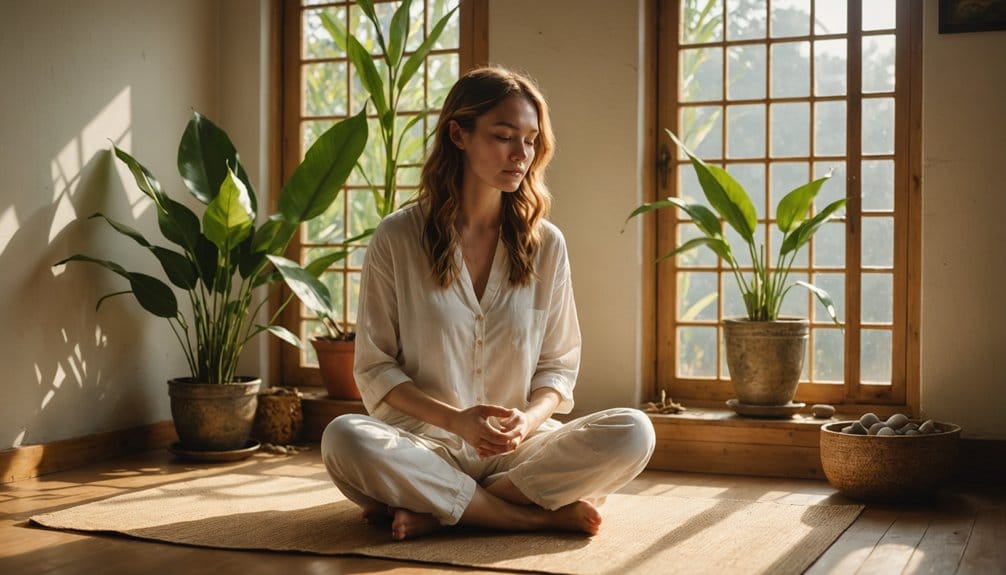
Where in your home can you find a pocket of peace amid the daily chaos? Maybe it’s that cozy corner by the window where your cat loves to sunbathe, or the spare room that’s become your impromptu sanctuary. Creating sacred surroundings doesn’t require a meditation mansion – even a cleared space on your bedroom floor can work wonders. A dedicated space aids in resetting the nervous system and enhances mental clarity.
Now, let’s talk intentional timing. You’re probably thinking, “I barely have time to brush my teeth!” But here’s the thing – you don’t need an hour of silence at sunrise. Start with just five minutes when the kids are still asleep, or that sweet spot right after your morning coffee. The key is consistency, not perfection. Think of it like dating your inner zen – show up regularly, even if you’re wearing mismatched socks.
Mastering the Art of Breath Awareness
Once you’ve found your perfect meditation spot and time, let’s focus on the simplest yet most powerful tool you already possess – your breath. It’s amazing how we take thousands of breaths daily without giving them a second thought, isn’t it?
Start by placing one hand on your belly and focusing on rhythmic inhalation. Notice how your abdomen rises and falls like a gentle ocean wave. Try breath visualization by imagining each inhale as golden light filling your lungs, and each exhale as releasing tension. Count if it helps – many people find “four in, hold for four, four out” creates a natural rhythm. Box breathing is one method that can help you structure your practice and promote relaxation.
Don’t worry if your mind wanders (it will). Just like training a puppy, gently guide your attention back to your breath. That’s the whole practice!
Developing Body Scanning Techniques
Three key elements make body scanning a uniquely powerful meditation technique – awareness, acceptance, and release. Ever notice how your shoulders creep up toward your ears during a stressful day? That’s where body scanning comes in handy.
Start by finding a comfortable position and closing your eyes. You’ll systematically direct your mental focus from your toes to your head, like a gentle security guard checking each part of your body for tension. Don’t rush – spend about 15-20 seconds on each area. When you discover tight spots (and trust me, you’ll find them), simply acknowledge them without judgment.
The magic happens when you combine deep body awareness with conscious relaxation. It’s like hitting the reset button on your physical tension, one body part at a time. Additionally, strengthening your breath awareness can amplify the effectiveness of the body scan, leading to an even deeper state of relaxation.
Cultivating Non-Judgmental Awareness
Non-judgmental awareness builds naturally from body scanning by shifting our focus from physical sensations to mental patterns. When you notice your thoughts wandering, don’t beat yourself up – that’s just what minds do! Instead, practice compassionate observation by watching your thoughts float by like clouds in the sky.
You’ll start noticing how quick you are to label experiences as “good” or “bad.” Isn’t it fascinating how we judge everything? Through non-judgmental acceptance, you’ll learn to simply acknowledge what’s happening without getting caught in the drama. When that critical inner voice pipes up (and it will), just smile and say “There’s my judging mind at work again!”
This isn’t about becoming an emotionless robot – it’s about choosing when to engage with your thoughts rather than letting them run the show. Regular practice of mindfulness meditation can lead to improved mental clarity, enhancing your ability to observe without judgment and respond effectively to your thoughts.
Working Through Physical Discomfort
When your legs start screaming during meditation, you’ve got two choices: fight the discomfort or work with it mindfully. You’ll want to make small posture adjustments while staying present with the sensations – think of it as having a friendly conversation with your body rather than trying to boss it around. Just as you wouldn’t judge a friend for being a bit fidgety, try accepting your physical experiences without labeling them as good or bad, even if your left foot feels like it’s hosting a pins-and-needles party. Engaging in this mindful approach can help you develop emotional regulation, as it allows you to process and observe physical discomfort without letting it overwhelm you.
Adjust Posture Mindfully
Physical discomfort during meditation might feel like your body’s way of playing an awkward game of “how long can you sit still?” As your practice deepens, you’ll notice various sensations creeping in – maybe your knee starts complaining, or your back decides to remind you of yesterday’s gardening adventure.
Don’t ignore these signals – they’re actually valuable feedback. Instead of forcing yourself to maintain an uncomfortable position, make gentle alignment adjustments. Shift your weight slightly, roll your shoulders back, or lengthen your spine. Think of it as mindful stretching rather than fidgeting. You’re not breaking meditation by moving – you’re actually deepening it by staying aware of your body’s needs. Remember, even experienced meditators adjust their posture. The goal isn’t to become a statue; it’s to find a position that supports your practice.
Accept Physical Sensations
Everyone experiences those moments during meditation when their body seems to be staging a protest rally – complete with aches, tingles, and the occasional leg that falls asleep.
Instead of fighting these sensations or letting them derail your practice, try embracing them with curiosity. Body awareness isn’t about forcing discomfort away – it’s about acknowledging what’s there. Notice how that knee pain pulses, or how your shoulders tighten up like they’re auditioning for a statue competition.
Through sensation acceptance, you’ll discover that physical discomfort often shifts and changes on its own. Think of it like watching clouds pass across the sky. You’re not trying to push them away; you’re simply observing their natural flow. Remember, even the Buddha probably had an itchy nose sometimes.
Integrating Mindfulness Into Daily Life
You don’t need to radically overhaul your entire routine to bring mindfulness into your daily life – sometimes the smallest shifts create the biggest impact. Whether you’re brushing your teeth, waiting for coffee to brew, or stuck in traffic, these ordinary moments can become powerful opportunities for present-moment awareness. Just like you wouldn’t try to run a marathon without training first, integrating mindfulness is about starting with manageable moments and building your “awareness muscles” one mindful breath at a time.
Start Small, Build Consistently
While diving headfirst into meditation might seem tempting, starting small is the secret sauce to building a sustainable practice. You wouldn’t run a marathon without training first, right? Begin with micro sessions – just 2-3 minutes of focused breathing when you wake up or before bed.
Think of it like building a tower of blocks – one steady piece at a time. Your gradual progress might feel slow, but that’s exactly what makes it stick. Maybe you’ll miss a day here and there (we’re all human!), but consistency beats intensity every time. Set a realistic goal: meditate for the length of one song, or while your coffee brews. Before you know it, those tiny moments will snowball into a practice that feels as natural as brushing your teeth.
Create Mindful Daily Triggers
Building a meditation practice is one thing, but integrating mindfulness throughout the day? That’s where the real magic happens. You’ll need some clever mindful reminders to snap you back to the present moment.
Try linking mindfulness to everyday activities you already do. Let your morning coffee become a sensory anchor – really notice the warmth, aroma, and taste. Red traffic lights? Perfect mini-meditation spots. Your phone notifications? Transform them from stress triggers into breath breaks. Even your pet’s antics can serve as natural mindfulness prompts.
The trick isn’t creating new habits from scratch – it’s piggybacking mindfulness onto existing routines. Your day is already full of potential meditation moments; you just need to notice them. Think of it as sprinkling little doses of zen into your regular schedule.
Practice Mindful Transitions Naturally
Moving between daily activities often feels like switching channels on an old TV – static, jarring, and a bit disorienting. But what if you could make these shifts smoother, more intentional, and even enjoyable?
Start by creating simple shift rituals that work for you. When you’re moving from work to home life, take three mindful breaths while stretching your arms overhead. Before eating, pause to appreciate the aroma of your food. Use mindful movement between tasks – maybe a quick shoulder roll or gentle neck stretch as you walk to your next meeting.
These micro-moments of awareness aren’t about perfection. They’re about catching yourself in the in-between spaces and choosing to move through your day with purpose. Remember, even a five-second pause can reset your mental channel.
Deepening Your Practice With Extended Sits
Once you’ve established a consistent daily meditation practice, it’s time to explore the transformative power of extended sitting sessions. Think of it like leveling up in a video game – you’re ready for the next challenge! Start by adding just 10 minutes to your usual sits, then gradually work up to longer periods.
Extended meditation opens doors to deeper transformative experiences you might miss in shorter sessions. You’ll notice subtle sensations and thought patterns you’ve never caught before. Remember that time your leg fell asleep and you swore you’d never sit longer than 20 minutes? Well, now you’re ready to push past those initial discomforts. Set yourself up for success with a comfortable cushion, timer, and perhaps a gentle reminder that you’re not training for the meditation Olympics – there’s no rush to reach the one-hour mark.