If you’ve ever felt like your mind is a browser with too many tabs open, you’re not alone in the anxiety struggle. Transcendental Meditation might be your digital reset button – and it’s a lot simpler than you’d think. You’ll discover how this ancient practice doesn’t just calm your nerves; it actually rewires your brain’s stress response from the ground up. Want to know what makes TM different from counting sheep or stress-eating your way through a pint of ice cream?
Understanding the Science Behind TM and Stress Response
Science shows us that Transcendental Meditation (TM) isn’t just about sitting quietly with your eyes closed – it’s actually rewiring your brain’s stress response in fascinating ways. Recent neuroscience insights reveal that when you practice TM, your amygdala (that pesky fear center) actually calms down, while your prefrontal cortex – your brain’s CEO – powers up.
Ever notice how you can’t think straight when you’re stressed? That’s where TM’s stress reduction magic kicks in. You’re training your nervous system to bounce back from anxiety faster, like teaching an old dog some seriously impressive new tricks. Instead of staying stuck in fight-or-flight mode, you’ll naturally shift into a state of calm alertness. It’s like having a reset button for your brain – and who couldn’t use one of those?
Regular meditation practice activates your rest-and-repair mode, allowing cells throughout your body to recover from stress signals.
Physical Benefits of TM for Anxiety Management
Through consistent practice, you’ll likely experience lower blood pressure, reduced muscle tension, and more balanced breathing patterns. Who doesn’t want that? The stress reduction benefits go beyond just feeling calmer – you might find yourself sleeping better, dealing with fewer headaches, and even having more energy throughout the day. It’s like giving your body a reset button it can actually use. And the best part? These physical changes often start showing up within just a few weeks of regular practice. Just 20 minutes twice daily of TM practice can create lasting changes in your body’s stress response system.
Mental and Emotional Effects of Regular TM Practice
While physical benefits of TM are impressive, the mental and emotional payoffs can be absolutely life-changing. You’ll discover a newfound sense of emotional resilience that helps you bounce back from life’s curveballs with grace. Remember those days when small setbacks felt like major catastrophes? Through consistent mindfulness practice, you’ll find yourself responding rather than reacting.
Your anxiety triggers won’t disappear completely (wouldn’t that be nice?), but you’ll develop an amazing ability to observe them without getting swept away. It’s like upgrading your mental software – suddenly you’re equipped with better tools to handle stress. You’ll notice improved focus, clearer thinking, and a natural sense of calm that stays with you throughout the day. Who knew sitting quietly for 20 minutes could rewire your emotional responses so powerfully? The practice requires just 40 minutes daily split between morning and afternoon sessions to experience these transformative benefits.
Comparing TM to Other Anxiety Relief Methods
As you explore different ways to manage anxiety, you’ll find that TM stands out from the crowd of traditional approaches. Unlike medication or talk therapy, TM techniques don’t require you to rehash your worries or pop a pill – you simply sit quietly and let your mind do its thing.
While alternative therapies like yoga or mindfulness meditation are fantastic options, TM offers unique advantages. You won’t need to twist yourself into a pretzel or force yourself to “think about nothing.” Instead, you’ll learn a personalized mantra that works like a mental escape hatch. And here’s the kicker – you can practice TM anywhere. Stuck in traffic? Perfect time to meditate. Waiting for your coffee to brew? There’s another opportunity. It’s like having an anxiety relief button that’s always within reach. Recent neuroscientific studies have shown that TM actually reduces cortisol levels in the body, making it a scientifically-validated method for stress reduction.
Getting Started With TM for Anxiety Relief
Starting your TM journey doesn’t require a complete lifestyle overhaul or magical powers – you just need an open mind and about 20 minutes twice a day. You’ll begin by finding a certified TM instructor who’ll guide you through personalized training sessions. Think of it as having a friendly coach for your mind!
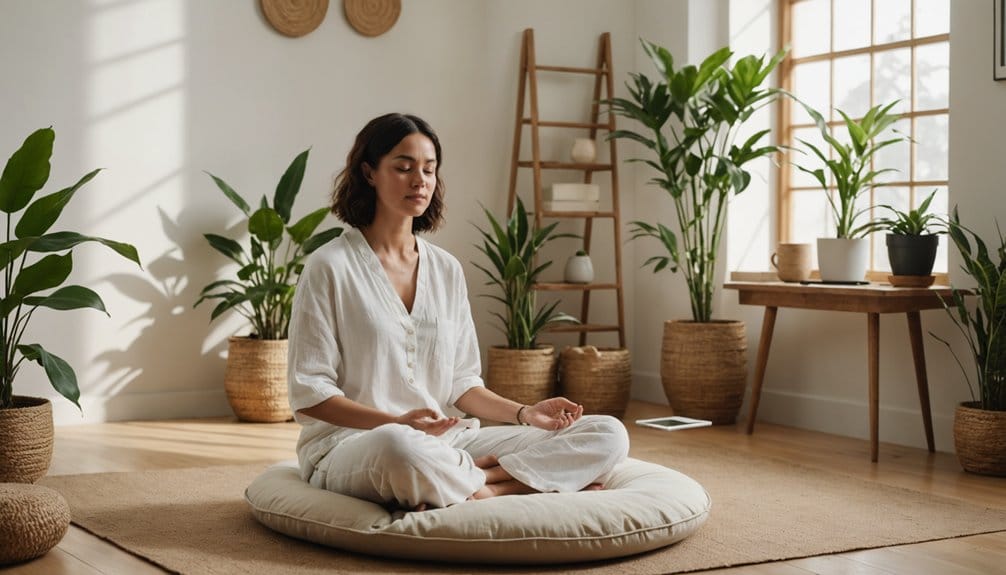
During your benefit exploration phase, you’ll learn essential practice tips like finding your ideal meditation spot (no, the bathroom probably isn’t it) and maintaining proper posture. Don’t worry if your mind wanders at first – that’s totally normal. The key is consistency, not perfection.
Ready to plunge in? Schedule a free intro session with a local TM center. They’ll walk you through everything you need to know, from mantras to meditation timing, without any pressure or judgment. Regular practice can help activate calming brain waves that shift your mind from anxiety-driven states to more relaxed ones.