Meditation doesn’t have to be intimidating! Guided meditation makes it simple to swap the chaos of your day for some much-needed calm. Just picture yourself in a cozy spot, letting stress melt away as you focus on your breath. It can improve your emotional wellness and even boost your immune function. Sounds great, right? Plus, if you struggle with racing thoughts or find it hard to sit still, you’re not alone! Stick around to explore how to make it work for you.
Key Takeaways
- Guided meditation promotes mental clarity and emotional well-being, making it a practical tool for everyday stress management.
- It enhances physical health through stress reduction and immune support, contributing to overall wellness.
- Short meditation sessions can easily fit into daily routines, providing mental rejuvenation and focus.
- Practicing mindfulness helps ground individuals in the present, fostering resilience against daily challenges.
- Guided meditation is adaptable, offering various techniques to cater to individual preferences and lifestyles.
Introduction
Ever find yourself stuck in your own head, worrying about everything from tomorrow’s meetings to that Netflix series you can’t finish? Guided meditation’s here to help you swap that chaos for calm, walking you through peaceful imagery and relaxation techniques. It’s not just a trendy thing; it’s a fantastic way to find your zen in this fast-paced world we live in! Additionally, establishing a consistent meditation routine can deepen your practice and enhance emotional wellness, making it easier to reduce anxiety and find clarity amidst daily challenges.
What this meditation style is about
When life feels like a whirlwind and your mind races faster than a caffeinated squirrel, guided meditation can be a welcome pause. This meditation style invites you to embrace mindfulness techniques that help ground you in the present. Imagine this: you’re walking through a scenic forest, visually engaging all your senses. Guided sessions lead you through such visualization practices, gently steering your thoughts away from chaos. It’s like having a friendly tour guide for your mind! You don’t need prior experience—just a comfy spot to sit and a willingness to explore. Incorporating deep diaphragmatic breathing into your practice can significantly enhance relaxation and focus. So, whether it’s five minutes or half an hour, why not give yourself the freedom to unplug for a while? Your mind deserves a mini-vacation!
Why it matters today
In today’s fast-paced world, finding a moment of peace can feel like searching for a needle in a haystack—or perhaps the last cookie in a jar full of healthy snacks. With stress looming large, guided meditation steps in like a trusty friend. It offers stress reduction and anxiety relief, making it easier to embrace mindfulness development and emotional balance. Imagine trading your racing thoughts for focus enhancement and self-awareness instead. By incorporating simple relaxation techniques into your daily habits, you kickstart personal growth and overall wellness. You don’t need to sit cross-legged for hours; even a few minutes can spark transformation. Additionally, mindfulness meditation acts as a protective shield against depression, contributing to enhanced emotional adaptability. So, why not give it a try? Who knows? You might just find that cookie after all!
Historical Roots and Origins
Guided meditation didn’t just pop up overnight; it’s got deep roots in various cultures and spiritual practices. Think about figures like Buddha, who popularized mindfulness, or ancient Indian traditions that set the stage for what we now consider calming practices. Isn’t it fascinating to think how what you do today might echo traditions that are thousands of years old? The foundational practices of Vipassana, known for their emphasis on non-judgmental observation, continue to influence modern meditative approaches.
Cultural and spiritual background
Meditation isn’t just a fancy word for sitting on the floor in silence; it has deep roots that stretch back thousands of years. Imagine tapping into the rich tapestry of Buddhist traditions and spiritual practices that shaped mindfulness origins. These practices weren’t just about zoning out; they evolved in historical contexts that influenced entire cultures. Ever thought about how much cultural influence can shift perspectives? Some people see meditation as an ancient life hack, evolving over time to adapt to modern needs. We’re talking about a journey where intentional breath meets mindful awareness. So, when you meditate, you’re not so much alone in silence as you are part of a historical thread that connects millions seeking freedom and calm. Interestingly, the practice of Transcendental Meditation reflects a refined approach developed from ancient Vedic traditions. How cool is that?
Key figures or traditions associated with it
A diverse array of key figures and traditions has shaped the practice of meditation over the centuries, many of whom you’d recognize if you explored the history books. Think about the Buddhist masters who’ve guided countless minds toward tranquility or the Hindu traditions that laid the foundation for yoga and meditation. You might even recall those Mindfulness movements that turned a simple breath into an art form! Then there’s Transcendental meditation, made popular by historical figures like Maharishi Mahesh Yogi. Secular influences emerged too, with contemporary practitioners adapting ancient lessons for modern life. Spiritual leaders today remind us that anyone can find freedom in stillness, no matter where you begin. Discovering the roots of Kundalini meditation can provide deeper insights into the transformative power of these practices. So, why not explore this rich tapestry? You might be pleasantly surprised!
Core Philosophy and Principles
Guided meditation opens the door to a unique way of connecting with your inner self. Unlike other techniques that might focus solely on the mind or body, this practice emphasizes a holistic approach, inviting you to embrace each moment without judgment. So, ever wondered how you can benefit from a philosophy that combines mindfulness, acceptance, and a sprinkle of patience? It also helps in breaking the cycle of anxious thoughts, providing a mechanism to observe thoughts without entanglement, which cultivates mental freedom.
Underlying worldview or beliefs
When life throws chaos your way—like that time you spilled coffee on your favorite shirt right before a big meeting—it can feel impossible to find your center. But in those moments, your spiritual beliefs and mindfulness attitudes serve as anchors. Think about it: aren’t we all seeking answers to those pesky existential questions? Guided meditation helps you explore those philosophical foundations by fostering inner awareness and encouraging conscious living. You begin to see how cultural perceptions shape your reality and recognize the ethical implications of your choices. Embracing this practice doesn’t just calm your mind; it provides freedom. So when chaos strikes, remember that clarity lies within—just waiting for you to tune in and laugh at life’s little messes along the way! Mindfulness meditation can further enhance your ability to navigate life’s unpredictability with ease.
What makes it distinct from other forms
Unlike other forms of meditation, which often rely on quiet contemplation or self-directed focus, guided meditation introduces a unique element: a voice to lead you. This auditory guidance lets you dive deep into mindful focus without wondering, “Am I doing it right?” You’ll explore visualization techniques that help you envision your stress melting away, promoting stress relief while enhancing emotional regulation. With breath awareness at the forefront, you can achieve cognitive clarity and spark that spiritual connection many of us crave. By engaging in this intentional practice, you cultivate self-compassion, allowing you to be kinder to yourself—because let’s face it, life can be tough! So why not let someone guide you through the journey of being blissfully present? Additionally, pairing guided meditation with chakra music can further enhance your relaxation experience.
How to Practice Guided Meditation
So, you’re ready to practice guided meditation? Great! First, let’s set up a cozy spot—you know, somewhere you won’t hear your neighbor’s dog barking or the pizza guy at the door. Then, I’ll walk you through a simple step-by-step guide that’ll have you floating on a cloud (or at least trying not to think about that laundry pile). To enhance your experience, consider starting with a Body Scan Meditation to become aware of physical tension and promote relaxation.
Preparing your body and space
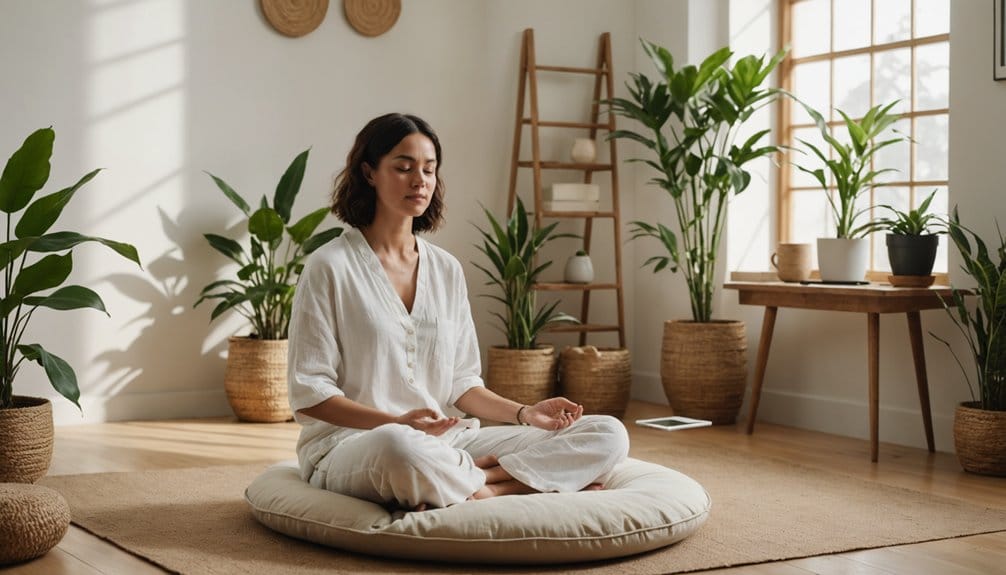
To get the most out of your guided meditation practice, it helps to prepare both your body and your space as if you’re getting ready for a cozy movie night—popcorn optional! Start with body preparation: wear comfy clothes and maybe stretch a bit; you don’t want to be thinking about that tight waistband while you’re trying to relax! Next, focus on space organization. Find a calm spot free of distractions. Dim the lights, or throw on a soft blanket—it’s all about creating a vibe! Maybe even light a candle if you’re feeling fancy. Remember, the goal is to feel at ease. A cozy space and a relaxed body can make your meditation journey so much smoother. Additionally, maintaining proper posture can enhance your focus and relaxation during meditation. Ready to jump in?
Step-by-step practice guide
Now that you’ve set up your cozy nook and your body is ready to unwind, it’s time to jump into the actual meditation practice. Start by finding a comfortable position, but not so comfy that you might start dozing off—no one wants to snore during mindfulness techniques! Close your eyes and take a deep breath. Visualize your stress melting away like snow on a sunny day. Follow the guided meditation, focusing on each word. If your mind wanders—hey, it happens—gently bring it back. Keep your attention on your breath; it’s the secret sauce for stress reduction. Engaging in techniques like deep diaphragmatic breathing can enhance your relaxation experience. After a few minutes, open your eyes slowly. Smile! You’ve just carved out a little pocket of peace. How cool is that?
Common variations
Guided meditation comes in many flavors and styles, each offering a unique way to nurture your mind and soothe your soul. You might find yourself exploring techniques like mindful breathing, which helps you focus on your breath and bring your wandering thoughts back home. Ever tried visualization techniques? Picture yourself on a beach or atop a mountain—trust me, you’ll feel the bliss in no time!
Love nature? There’s guided meditation that takes you on a peaceful forest stroll without leaving your chair. Want something to kickstart your day? Opt for energizing sessions that blend affirmations with calming melodies. There’s something for everyone. So, why not mix it up and discover what speaks to you? After all, variety is the spice of life, isn’t it? Incorporating peaceful natural settings into your practice can elevate your experience and deepen your relaxation.
Benefits and Effects
When you think about guided meditation, you might just picture sitting quietly with your eyes closed, but there’s so much more to it! It can actually boost your mental and emotional well-being, improve your physical health, and even spark some spiritual transformations. Who wouldn’t want to trade a little stress for a calmer mind and a happier life? Regular practice can lead to thicker gray matter in areas responsible for attention and emotional regulation.
Mental and emotional well-being
While you might think meditation is just about sitting cross-legged and chanting mantras, it actually offers a treasure trove of benefits for your mental and emotional well-being. Think of it as a gym for your mind—no sweat required! By practicing guided meditation, you build emotional resilience, bouncing back from life’s curveballs with ease. You get more than just clarity; you learn to rise above distractions and focus on what truly matters. Imagine tackling your day with the calmness of a sloth in a hammock, instead of a cat on a hot tin roof! With regular practice, you’ll sharpen your mental clarity and discover warmth in your heart, making every moment feel a little more free and bright. Additionally, incorporating mantra repetition into your meditation can significantly enhance focus and reduce mental chatter. Give it a try!
Physical health outcomes
Even if you think meditation is just about achieving inner peace while sitting still, it actually packs quite a punch when it comes to physical health outcomes. You might just find that regular practice leads to some serious stress reduction, helping your body chill out and boost immune function. Say goodbye to chronic pain that seems to love overstaying its welcome, and hello to better cardiovascular health. Plus, improved sleep quality means you’ll wake up feeling refreshed instead of groggy. Who doesn’t want that extra mental clarity to make sense of life’s chaos? And let’s not forget, meditation can even enhance your physical fitness by keeping you focused and motivated. So, why not give it a go? Your body will thank you!
Spiritual or transformative aspects
You might not realize it, but diving into guided meditation can lead to some pretty transformative spiritual experiences. Imagine initiating a journey where you can reconnect with your true self! Guided meditation often sparks that elusive spiritual awakening you’ve been longing for. As you follow those soothing voices, you may find insights bubbling up, shifting your perspective on life’s big questions. Plus, it’s like personal therapy without the hefty bill!
Ever notice how sometimes your mind feels like a cluttered attic? Guided sessions help clear that junk away, paving the way for transformative journeys. So, whether it’s achieving inner peace or uncovering deeper meanings, you’re not just sitting quietly; you’re exploring the depths of your existence—with a hint of humor along the way.
Common Challenges and Misconceptions
You might think meditation is all about instant peace, but let’s be real—those thoughts don’t just disappear. Beginners often struggle with distractions, thinking they’re “doing it wrong,” and that’s totally normal! So, what if you can’t clear your mind completely? There’s a myth that you need to achieve a monk-like state to benefit, but even just a few minutes of guided meditation can work wonders.
Typical difficulties for beginners
When starting out with guided meditation, it’s normal to feel a bit like a fish trying to ride a bicycle—awkward and slightly unsure of what to do next. You might wrestle with an overactive mind, sneaking in thoughts about an upcoming deadline or last night’s dinner disaster. Maybe you’re worried about time commitment, feeling pressure to meditate “perfectly.” Self-judgment may creep in when you don’t feel focused, and you might have unrealistic expectations about instant Zen. Don’t forget about distractions around you—like that neighbor who thinks yard work is a weekend sport! Physical discomfort or motivation issues can also rear their heads. Just remember: it’s all part of the journey, and practice makes progress!
Myths vs. reality
Despite what some might have you believe, meditation isn’t about sitting cross-legged in a perfectly silent room while your mind floats in blissful nothingness. Let’s bust some guided misconceptions right now: you don’t need to be a zen master or have hours to spare. Meditation truths reveal that just a few minutes a day can transform your mental landscape. Think of it as a mental reset button.
Got racing thoughts? That’s normal! Don’t stress—you’re not failing. Instead, focus on your breath or the voice guiding you. You’re allowed to fidget and even get distracted! Meditation’s about finding your own groove, not achieving perfection. Remember, it’s okay to be a work in progress. Embrace the journey!
Tips for Deepening Your Practice
If you want to strengthen your meditation game, figuring out how often and how long to practice can really help. Maybe aim for a daily session of just ten minutes—trust me, you can find that time between scrolling through your phone and actually doing something productive! And don’t underestimate the power of good tools; whether it’s chill music, comfy props, or a guided recording, the right setup can make it feel less like homework and more like a cozy retreat.
Recommended frequency and duration
Finding the right frequency and duration for your guided meditation practice can feel like trying to pick the perfect avocado—you want it to be just right! Ideally, aim for a daily practice, even if it’s just 10 to 15 minutes a day. Think of it this way: short sessions can work wonders, like a shot of espresso for your mind!
Feeling rushed? That’s okay! You might start with two or three times a week. As you grow comfortable, adjust your meditation schedule to suit your needs. Not everyone has time for a marathon session. Even 5 minutes can help if you’re in a pinch. Listen to your body, and soon, you’ll find your rhythm. Enjoy this journey; the freedom lies in your choices!
Helpful tools (music, props, guided recordings, teachers)
When you’re diving into guided meditation, a few handy tools can really enhance your experience—think of them as your trusty sidekicks on this journey. For starters, create relaxing music playlists to set the vibe; soft tunes can transport you into a peaceful mental space. Don’t forget about meditation props! A comfy cushion or blanket can make all the difference, helping you sink into calm like a cozy burrito. Guided recordings are your best pals, leading you step-by-step—who doesn’t need a friendly voice reminding them to breathe? And supportive teachers? They’re gold. A good teacher can inspire and motivate you, turning your practice into an uplifting adventure. So grab your tools, and commence on this liberating path!
Modern Adaptations and Research
In today’s fast-paced world, you might be surprised at how many people are turning to guided meditation for a little peace of mind. Scientific studies have shown it can reduce stress and improve focus—who doesn’t want that when tackling a never-ending to-do list? Plus, with apps and online resources popping up everywhere, it’s like having a personal meditation coach who doesn’t care if you’re still in your pajamas!
How the practice is used in contemporary life
Guided meditation isn’t just for yogis in flowing robes anymore; it’s become a handy tool for everyone from busy professionals to stressed-out students. Think about it—how often do you feel overwhelmed? Mindfulness techniques, like guided meditation, fit seamlessly into your daily routines, helping with stress reduction and work-life balance. You can carve out just a few minutes a day for personal growth, enhancing your focus and time management skills. Imagine tackling that never-ending to-do list with newfound emotional resilience! Whether you’re diving into spiritual exploration or starting a journey of self-discovery, guided meditation opens doors. It’s your personal reset button; who wouldn’t want that? So, give yourself permission to pause—the world can wait.
Scientific studies and evidence
While you might think meditation is all about sitting cross-legged in silence, the science behind it is anything but quiet. Neuroscience research shows that mindfulness training can rewire your brain, making you more resilient to stress and anxiety. Imagine boosting your focus and creativity simply by sitting still for a few minutes—sounds amazing, right? Studies have found that even short guided sessions can lead to significant improvements in emotional regulation. Who wouldn’t want to handle life’s curveballs better? Think of it as giving your mind a mini-vacation, while you keep your body in check. So, why not take that leap? Your brain will thank you, and hey, you might even enjoy that “silent” time a lot more than you expect!
Conclusion
So, you’ve learned a lot about the perks of guided meditation, but what’s next? It’s time to think about how you can make this practice a regular part of your life, even if it’s just ten minutes between Netflix episodes. Trust me, your mind deserves a little TLC—who wouldn’t want a mental vacation without packing or plane tickets?
Key takeaways
Meditation isn’t just a trendy buzzword tossed around at wellness retreats. It’s a powerful tool for reclaiming your life. You may think you don’t have time, but guided meditation can fit into even the busiest days. By adopting mindfulness techniques, you’ll find clarity amid chaos and ease your racing thoughts. Relaxation methods teach you to unwind, leaving stress in the dust. Imagine sitting quietly, taking a breath, and suddenly, that endless to-do list feels lighter. Who doesn’t want that? The beauty of these practices is their accessibility; no fancy yoga studio required! So, grab a comfy spot, close your eyes, and let guided meditation transform those frantic moments into pockets of peace. You deserve it!
Invitation to try and integrate into daily life
Finding time for yourself might feel like searching for a unicorn, but integrating guided meditation into your daily routine isn’t as intimidating as it seems. Start small—just five minutes while sipping your morning coffee can work wonders. Set reminders, or pair meditation with existing habits like brushing your teeth. Seriously, who doesn’t love a good excuse to zone out for a moment?
Try relaxing apps or video sessions to guide you—everyone can use a little nudge! Remember, it’s all about daily integration. Don’t aim for perfection. Instead, embrace the journey, and treat yourself with kindness. If you skip a day, laugh it off. Tomorrow’s another chance! Ready to find your zen? You got this!
If you have enjoyed this article, you can find more Guided Meditation-related content, here.