You’ll discover that mastering Yoga Nidra techniques isn’t just about catching better z’s – it’s your ticket to hitting life’s reset button. Through systematic relaxation and proven methods, you’ll learn to melt away stress, sharpen your focus, and tap into deeper self-awareness. Think of it as upgrading your mental operating system while giving your body the ultimate power nap. Ready to transform those scattered thoughts into serene clarity? The techniques await your exploration.
Understanding the Foundations of Yoga Nidra
While many people think of yoga as just stretchy poses on a mat, Yoga Nidra takes you into a completely different domain of relaxation. Ever wondered what it’s like to be fully awake yet deeply asleep? That’s the fascinating paradox of this ancient practice.
Rooted in yoga philosophy dating back thousands of years, Nidra origins trace to the tantric traditions of India. You’re not twisting yourself into a pretzel here – instead, you’ll learn to navigate the space between consciousness and sleep. Think of it as your mind’s favorite vacation spot, where you’re both the tourist and the tour guide.
Unlike that time you dozed off during meditation (we’ve all been there!), Yoga Nidra guides you through specific stages of awareness, helping you access deeper levels of relaxation you didn’t even know existed. Engaging in this practice can lead to scientific studies showcasing its effectiveness in reducing anxiety and improving overall well-being.
Benefits of Regular Nidra Practice
You’ll be amazed at how regular yoga nidra practice transforms both your nighttime rest and daytime focus – it’s like hitting the reset button for your brain and body. Through consistent practice, you’ll notice your stress melting away as your mind becomes sharper and clearer, making those mid-afternoon mental fog moments a thing of the past. While catching quality zzz’s might feel like a superpower these days, nidra’s combination of deep relaxation and heightened awareness will help you master the art of truly restorative rest, whether you’re a meditation newbie or a seasoned practitioner. This ancient technique offers profound relaxation that can significantly improve your overall well-being.
Deeper Sleep and Rest
Through consistent Nidra practice, you’ll discover a profound shift in both your sleep quality and daytime energy levels. Ever notice how even eight hours of sleep can leave you feeling groggy? That’s because not all sleep is created equal. Nidra helps you tap into deeper, more restorative sleep cycles that actually repair and rejuvenate your body.
You know that delicious feeling when you wake up naturally, without an alarm? That’s what you’re aiming for. By training your mind to fully relax, you’re setting yourself up for premium-quality rest. Think of it as upgrading from economy to first-class sleep! Your sleep cycles become more efficient, and you’ll find yourself drifting off faster at night. Even a quick 20-minute Nidra session can feel as revitalizing as a two-hour nap.
Mental Clarity and Focus
Regular Nidra practice sharpens your mental clarity like a freshly honed blade. You’ll notice your thoughts becoming more organized and precise, like finally finding that missing puzzle piece you’ve been searching for. Through consistent mental discipline, you’ll develop an enhanced ability to focus on tasks without your mind wandering off to contemplate what’s for dinner.
The cognitive enhancement benefits are remarkable – ever tried to concentrate while your brain feels like it’s swimming in fog? Nidra helps clear that mental haze. You’ll find yourself remembering where you put your keys (first try!), tackling complex problems with newfound ease, and maintaining laser-sharp focus during important meetings. It’s like upgrading your mental operating system, but without the annoying automatic updates. The best part? These improvements stick around as long as you maintain your practice.
Reduced Stress and Tension
While modern life bombards us with endless stressors, Nidra practice offers a reliable path to genuine relaxation and tension release. You’ll find your shoulders dropping and jaw unclenching as you learn to let go of that stress you’ve been carrying around like an overpacked suitcase.
Through regular practice, you’re building a powerful toolkit for stress management that works both on and off the mat. Ever notice how your neck feels like concrete after a tough day? Nidra helps dissolve that tension, teaching your body to release accumulated stress naturally. You’ll discover muscles you didn’t even know were tight suddenly softening and melting away. The best part? You don’t have to be a meditation guru or yoga expert – just showing up and following along is enough to start experiencing these transformative benefits.
Creating the Ideal Environment for Practice
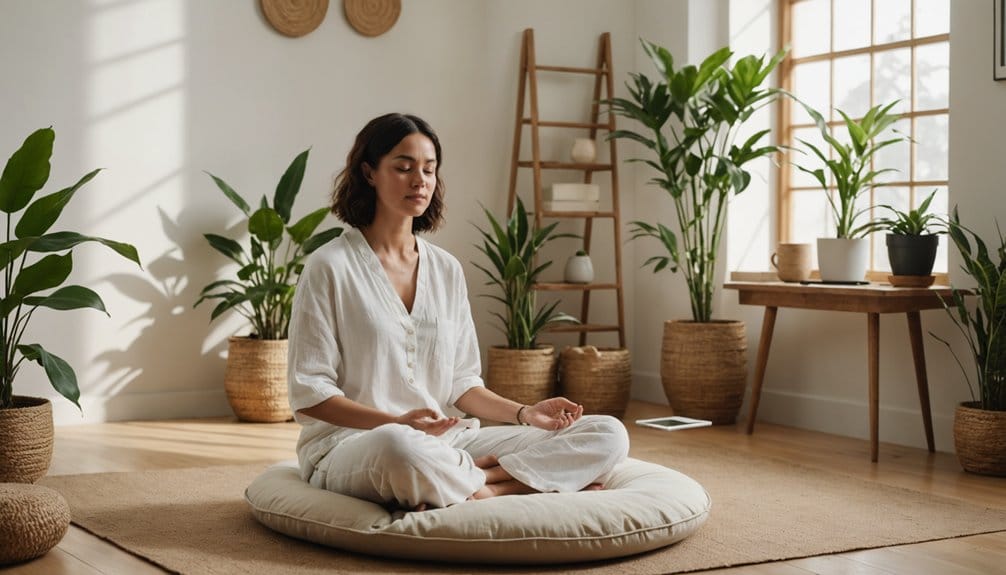
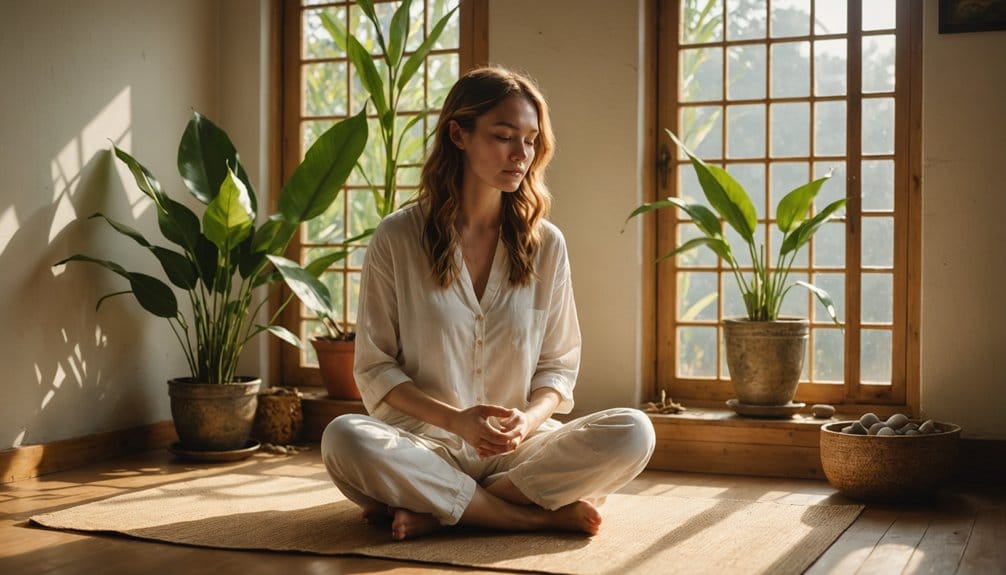
You’ll want to start by carving out a dedicated space for your nidra practice – even if it’s just that cozy corner where you normally scroll through cat videos. Getting the temperature and lighting just right makes a huge difference, so aim for a slightly cool room (around 65-68°F) with soft, dimmed lights that won’t have you squinting or sweating. Your practice spot should feel like a mini sanctuary where you can temporarily escape the chaos of daily life, complete with comfy cushions and maybe even a “Do Not Disturb (Unless You’re Bringing Chocolate)” sign on the door. Don’t forget to keep a light blanket nearby for personal temperature adjustment to ensure you remain comfortable throughout your session.
Setting Your Sacred Space
Before diving into your Nidra practice, creating a sacred space isn’t just about tidying up – it’s about crafting your personal sanctuary of serenity. You’ll want to choose a quiet corner where you won’t be disturbed, one that speaks to your soul. Consider incorporating sacred objects that hold special meaning – perhaps a cherished crystal, a family heirloom, or even that quirky Buddha statue you picked up on vacation.
Don’t forget the power of calming scents to transform your space. A few drops of lavender essential oil or the gentle wisp of sandalwood incense can work wonders. Remember, this isn’t about creating an Instagram-worthy meditation corner – it’s about what feels right for you. Even if your sacred space is just a cozy corner of your bedroom, it’s perfect as long as it helps you disconnect from the outside world.
Temperature and Lighting Control
Two key elements can make or break your Nidra practice: temperature and lighting. You’ll want to nail both of these or risk spending your session fidgeting instead of relaxing. For temperature regulation, aim for a comfortable 68-72°F (20-22°C). Ever tried meditating while shivering or sweating? Not fun! Keep a light blanket nearby – your body temperature naturally drops during deep relaxation.
As for lighting adjustments, you’ve got options. Natural light can be lovely, but it’s not always reliable (thanks, clouds!). Consider blackout curtains or an eye mask for daytime practice. For evening sessions, dim warm lights work wonders. Those LED smart bulbs that change colors? They’re perfect for creating your ideal ambiance. Just avoid harsh fluorescent lights – unless you’re going for that “meditation in the DMV” vibe.
Essential Body Scanning Techniques
Body scanning lies at the heart of every effective Nidra practice, and mastering three core techniques will transform your experience. Start by developing body awareness through the “elevator method” – imagine a gentle lift moving from your toes to your crown, pausing at each floor of your body. You’ll be amazed at what you discover!
Next, try sensory tuning by focusing on individual body parts while asking yourself, “What do I feel right now?” Don’t worry if your mind wanders – that’s perfectly normal. Just guide it back like you’re herding a playful kitten.
Finally, practice the “wave scan” by visualizing healing energy flowing through your body like ocean waves. Let each wave wash away tension as it moves from feet to head. Who knew scanning could feel so invigorating? Incorporating systematic muscle relaxation into these techniques can significantly enhance your Nidra practice.
Breath Awareness and Energy Management
The gentle art of breath awareness forms the cornerstone of energy management in Nidra practice. You’ll discover that simple breath techniques can transform your scattered energy into focused stillness. Ever notice how your breath changes when you’re stressed versus relaxed? That’s your key to mastering energy flow.
Start by observing your natural breathing pattern without trying to change it. You might find yourself thinking “Am I doing this right?” – and that’s perfectly normal! As you progress, you’ll learn to direct your breath into different areas of your body, like sending a gentle wave of relaxation wherever it’s needed. It’s like having a remote control for your energy levels, except you won’t lose this one between the couch cushions! This practice not only enhances stress relief but also promotes better energy flow throughout your entire being.
Working With Sankalpa in Nidra
While your body rests in Nidra practice, your sankalpa acts as your inner compass – a heartfelt intention that guides personal transformation. Think of sankalpa formulation as crafting your personal mission statement, but way less corporate and much more soul-nourishing.
When setting your intention, you’ll want to keep it positive, present-tense, and powerful. Instead of “I want to be less stressed,” try “I am calm and centered.” See the difference? Your sankalpa shouldn’t feel like a New Year’s resolution you’ll abandon by February – it’s more like programming your internal GPS for success.
Overcoming Common Practice Challenges
Despite your best intentions to achieve yogic bliss, practicing Nidra can sometimes feel like trying to meditate while your neighbor’s dog won’t stop barking. You’re not alone in facing common obstacles – from racing thoughts to that mysterious ability to fall asleep the moment you lie down. But don’t let these challenges derail your journey.
Practice perseverance by starting with shorter sessions and gradually building up your stamina. Can’t quiet your mind? Try counting backwards from 100, or focus on your breath like it’s your favorite Netflix show. If you keep nodding off, try practicing seated instead of lying down. Remember, even experienced practitioners occasionally drift into dreamland or get distracted by that embarrassing thing they said in third grade. The key is to keep showing up, one practice at a time.
Deepening Your Nidra Experience
Once you’ve mastered the basics of Nidra practice, you’re ready to explore its deeper dimensions. Think of it as graduating from advanced napping to true mindful relaxation – though don’t worry, you’ll still get to lie down!
To deepen your practice, try extending your sessions by 5-minute increments. You might be surprised how different a 25-minute session feels compared to your usual 15 minutes. Pay attention to subtle body sensations you previously missed, like the gentle rise and fall of your belly or the space between your thoughts.
Want to kick it up a notch? Experiment with different times of day. That post-lunch slump might actually be your golden hour for Nidra. Remember, deepening your practice isn’t about forcing intensity – it’s about discovering what naturally unfolds when you create more space.