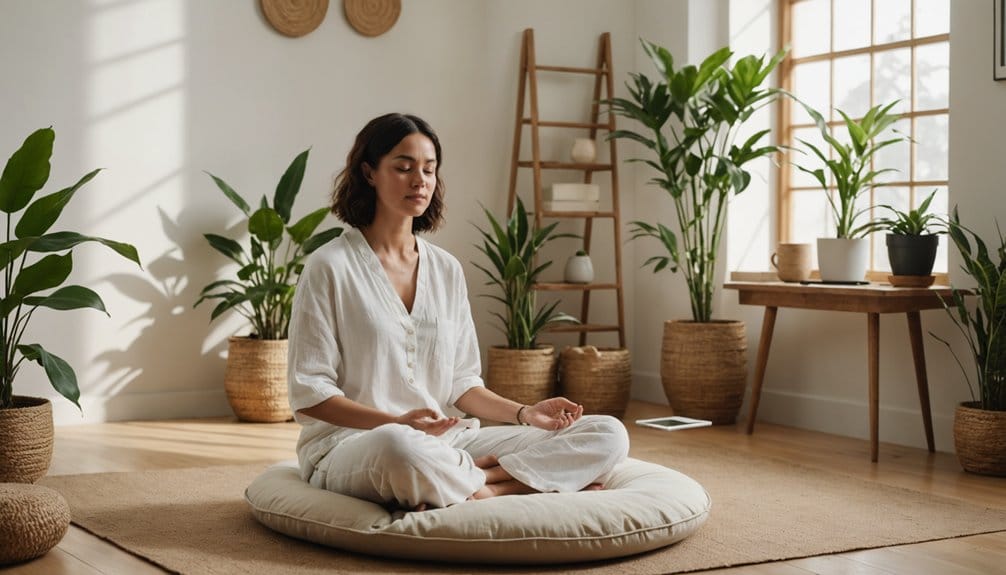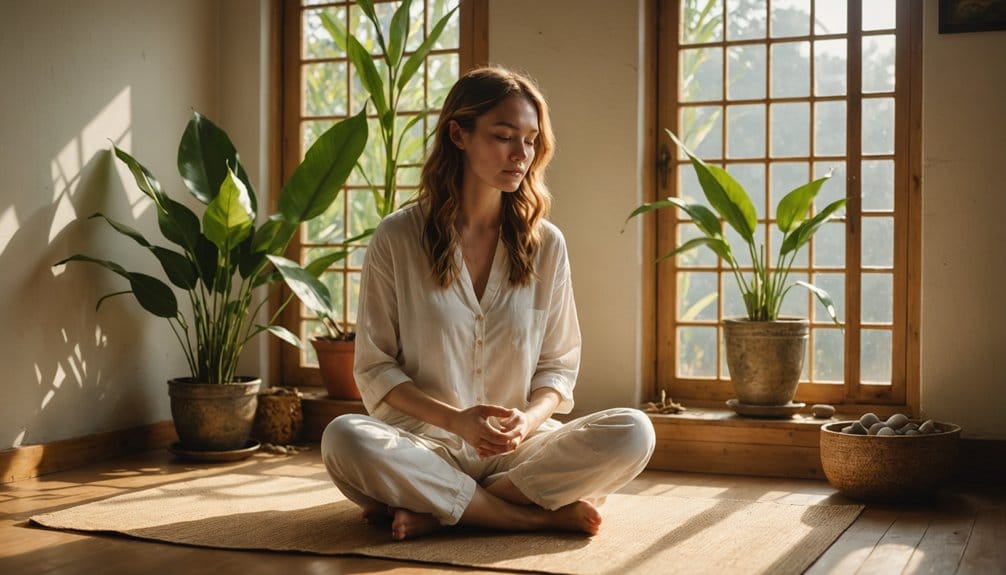
You’re about to transform a corner of your home into your personal relaxation sanctuary – and no, we’re not talking about that cozy napping spot on your couch. Creating the perfect yoga nidra space isn’t rocket science, but it does require some thoughtful touches that’ll make the difference between “meh” and “magical.” Ever noticed how the tiniest details can either enhance your zen or send your mind wandering? Let’s explore what turns an ordinary room into a retreat-worthy oasis.
Creating the Perfect Temperature and Ventilation
Three key elements make or break your Yoga Nidra environment: temperature, airflow, and comfort. You’ll want to aim for a room that’s just right – think Goldilocks zone, around 68-72°F (20-22°C). Too hot and you’ll be fighting sleep instead of finding it; too cold and you’ll be shivering through shavasana.
When it comes to airflow quality, don’t underestimate the power of proper ventilation. You’re seeking that sweet spot between stuffy and drafty. Open a window 15 minutes before practice, or use a quiet fan on low setting. Got temperature control issues? Keep a light blanket nearby – you can always adjust your personal microclimate without disrupting the room’s overall vibe. Remember, your breath is your anchor, so you’ll want air that’s fresh enough to truly savor.
Systematic muscle relaxation during your practice will help release physical tension from head to toe while maintaining the ideal room conditions.
Selecting Comfortable Props and Support
While dedicated yogis might invest in fancy props, you don’t need a studio’s worth of equipment to create your perfect Yoga Nidra setup. Start with the basics: comfortable mats and blankets that make you feel like you’re floating on a cloud. Ever tried practicing on a thin mat? Not fun!
Layer in bolsters and cushions strategically – they’re your best friends for those longer sessions. Place a cushion under your knees to ease lower back tension, and nestle a small pillow beneath your neck. You’ll wonder how you ever managed without them! Want extra comfort? Roll up a blanket to support your ankles, or create a cozy cocoon by wrapping yourself in a soft throw. Remember, your body knows best, so adjust until you find your sweet spot. Deep relaxation and mindfulness blend naturally when you create an environment that supports both physical and mental comfort.
Managing Light and Darkness
Now that you’re comfortably propped up, let’s talk about setting the perfect lighting for your practice. You’ll want to find that sweet spot between too bright (hello, unwanted wake-up call!) and too dark (we’re aiming for relaxation, not hibernation). Adjusting light intensity is key – dim enough to let your mind unwind, but not so dark that you’ll drift into dreamland.
Natural ambient lighting works beautifully if you’re practicing during dawn or dusk. During other times, try using adjustable lamps or light dimmers. Can’t control your lighting? No worries – a soft eye pillow or lightweight scarf can be your best friend here. Remember, you’re not trying to recreate a cave dwelling – just a gentle cocoon of calm where your mind can truly let go. The right lighting environment helps trigger your parasympathetic nervous system to promote deep relaxation and better sleep quality.
Establishing a Quiet Sound Environment
Since ambient noise can sabotage even the most well-intentioned yoga nidra session, creating your sound sanctuary deserves special attention. Think you’ll need to build a professional recording studio? Not quite! Simple soundproofing techniques like hanging thick curtains, placing draft stoppers under doors, and using area rugs can dramatically reduce unwanted noise.
You’ll want to curate calming playlists that transport you to your zen zone – and no, that doesn’t mean exclusively wind chimes and whale sounds (unless that’s your jam). Consider gentle instrumental music, nature sounds, or guided meditations that resonate with you. Can’t decide? Test different audio environments during short practice sessions. Your neighbor’s drum practice might be unavoidable, but with these tweaks, you’ll create a cocoon of tranquility that’s uniquely yours. Try incorporating ocean wave breathing techniques into your practice to deepen your relaxation response through synchronized breath and calming imagery.
Adding Calming Scents and Aromatherapy
The perfect yoga nidra space isn’t just about what you hear – it’s about what you smell too. Your nose knows what relaxes you, so why not create an aromatic oasis? Essential oils like lavender, chamomile, or sandalwood can transport you straight into tranquility-ville (and away from that pile of laundry you’re avoiding). Loving-kindness meditation has shown that creating a peaceful environment can significantly reduce anxiety and enhance emotional well-being. Set up a diffuser in the corner of your space, or place a few strategically positioned scented candles around the room – just don’t get so relaxed that you forget to blow them out! You’ll want to choose gentle, natural fragrances that won’t overwhelm your senses. Remember, you’re aiming for “peaceful garden sanctuary,” not “perfume store at the mall.” Start with just one or two scents and adjust based on what helps you unwind best.