You’ll discover powerful stress relief by combining meditation with soothing music – it’s like a spa day for your brain! Start with just 10-15 minutes in a quiet corner, using comfortable headphones and nature sounds or gentle classical tunes. Choose lower frequencies (432-528 Hz) for maximum relaxation, and try syncing your breath with the rhythm. Whether you’re a meditation newbie or a zen master, these techniques will help you find your inner calm – and there’s plenty more to explore.
Understanding the Power of Meditation Music
While most of us know what it feels like to be stressed, we don’t always realize that music can be our secret weapon for finding inner peace. Think about it – when’s the last time you actually explored meditation music beyond those generic “relaxing sounds” playlists?
Meditation music isn’t just wind chimes and whale songs (though those can be pretty great). It’s a sophisticated blend of musical genres and cultural influences that’s scientifically designed to calm your racing mind. You’ll find everything from traditional Tibetan singing bowls to modern ambient compositions that’ll make your stress melt away faster than ice cream on a hot sidewalk. The best part? You don’t need to be a zen master to benefit from it – even five minutes of listening can help turn your mental chaos into clarity. Isn’t it time you gave your brain the sonic vacation it deserves?
In fact, combining meditation music with techniques like advanced breath control can enhance your overall experience and deepen your relaxation.
Choosing the Right Musical Elements for Relaxation
Because choosing the right meditation music can feel like trying to pick the perfect ice cream flavor at a 31-flavor shop, let’s break down what actually works for relaxation. You’ll want to explore different musical genres that naturally promote calmness – think classical, ambient, or nature-inspired sounds. These aren’t your typical workout jams!
When it comes to sound frequencies, lower tones tend to help you unwind more effectively. You’re looking for pieces that hover between 432 Hz and 528 Hz, which research shows can reduce stress levels. Haven’t heard of hertz before? Don’t worry – just remember that if the music makes you feel like you’re floating in a warm bubble bath rather than running a marathon, you’re on the right track. In addition, using sound therapy techniques, such as singing bowl vibrations, can help ground your energy and enhance the relaxation experience.
Creating Your Perfect Meditation Space
Even the most relaxing meditation music won’t help much if you’re trying to zen out in the middle of Grand Central Station. That’s why creating your own peaceful sanctuary is vital for effective meditation practice.
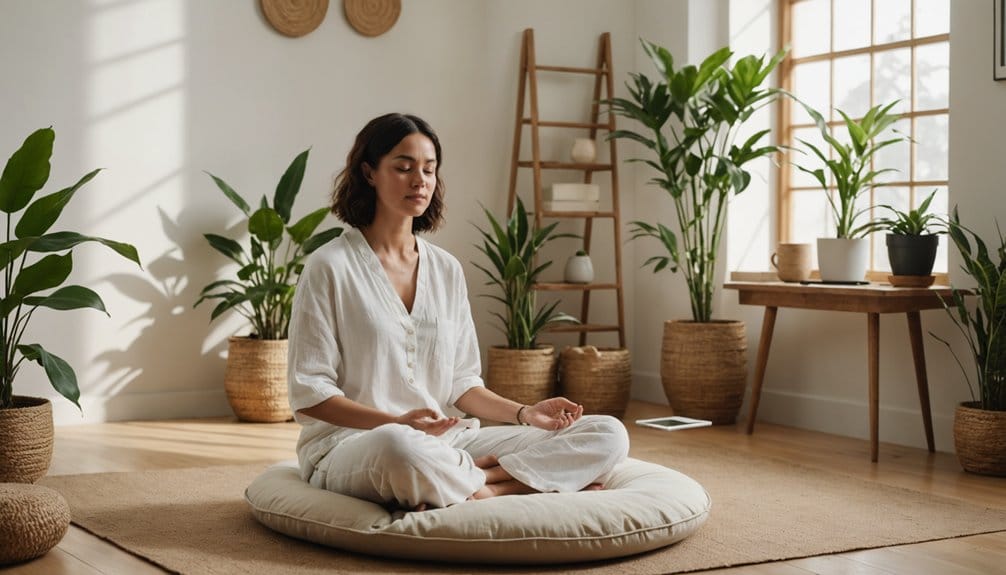
Start by selecting a quiet corner of your home where you won’t be disturbed. Add comfortable meditation cushions that support good posture – your back will thank you later! Ambient lighting plays an important role, so consider using dimmable lamps or candles to create that perfect calming glow. Ever notice how harsh overhead lights can make you feel like you’re in an interrogation room?
Keep your space clutter-free and personalize it with items that bring you peace – maybe a small plant, a meaningful photo, or your favorite aromatherapy diffuser. Remember, this is your retreat from the chaos of daily life. Movement meditation’s holistic approach enhances your overall well-being, making your meditation space even more crucial.
Optimal Times and Duration for Musical Sessions
You’ve probably wondered if there’s a “perfect time” for your meditation music sessions – and while everyone’s different, research suggests early morning and just before bed pack the biggest stress-busting punch. For beginners, it’s smart to start with 10-15 minute sessions (you won’t believe how long that can feel when you’re just starting out!). As you get more comfortable, you can stretch your musical meditation time to 30 minutes or even an hour, but remember – consistency matters more than duration, so pick a length you’ll actually stick with.
Daily Timing Sweet Spots
When it comes to getting the most out of meditation music, timing truly matters. You’ll find your sweet spots by experimenting with morning rituals and evening unwind sessions. Ever notice how your mind feels clearest just after waking? That’s your cue to grab those headphones.
Start with 10-15 minutes during your morning routine – maybe while you’re waiting for that coffee to brew (we all know how that zombie-like state feels). For evening sessions, try timing your musical meditation about two hours before bedtime. You’re not trying to fall asleep here – you’re aiming for that perfect balance between alertness and relaxation. Think of it like tuning a radio: there’s static on either end, but right in the middle? That’s your meditation music sweet spot.
Session Length Guidelines
Though many meditation apps push for lengthy 30-minute sessions, the sweet spot for most people actually falls between 5-20 minutes. You’ll get the most benefit when you match your session length to your daily schedule and energy levels.
For beginners, start with just 5 minutes – that’s enough time to settle in without feeling overwhelmed. As you build your practice, you can gradually extend your duration to 10 or 15 minutes. Remember, consistency beats length every time! You’re better off doing 7 minutes daily than forcing yourself through a dreaded 30-minute marathon once a week.
Listen to your body’s signals. If you’re finding yourself checking the time or getting fidgety, that’s your cue to wrap things up. The perfect session duration is simply the one you’ll actually stick with.
Blending Breathing Techniques With Calming Sounds
Since ancient times, combining mindful breathing with soothing sounds has been a powerful way to melt away stress. You’ll find that matching your breathing rhythms to gentle music creates a natural harmony that helps quiet your racing thoughts. Ever notice how ocean waves seem to breathe with you? That’s no accident – nature’s sound frequency often mirrors our own relaxation response.
Try this simple technique: As calming music plays softly, breathe in for four counts, hold for four, then release for six. Let the melody guide your breath like a gentle dance partner. This connection between breath and sound, known as mindful breathing, enhances the body’s relaxation response. Don’t worry if you’re not perfectly in sync – even the most seasoned meditators sometimes find themselves bobbing their heads like excited puppies to the beat. The key is finding your own peaceful groove.
Incorporating Nature Sounds Into Your Practice
You’ll find that nature sounds add a whole new dimension to your meditation practice – after all, who hasn’t felt their shoulders drop at the sound of gentle ocean waves? Forest ambiance, with its mix of rustling leaves and distant bird calls, can transport you from your cramped apartment to a peaceful woodland clearing in seconds. When you’re feeling particularly scattered, there’s nothing quite like the steady patter of rainfall to create that mental breathing room you’ve been craving.
Ocean Waves and Breathing
When it comes to finding your zen, nothing quite matches the soothing rhythm of ocean waves paired with mindful breathing. The steady ebb and flow of ocean rhythms naturally sync with your breathing patterns, making it easier to slip into a meditative state. You’ll find yourself naturally matching the waves – inhaling as they rush toward shore, exhaling as they retreat.
Try this simple exercise: Close your eyes and picture yourself at the beach. As each wave approaches, breathe in for a count of four. Hold briefly at the wave’s peak, then exhale slowly as it recedes. You’ll be amazed at how quickly your body responds to this natural tempo. Even if you’re nowhere near the coast, ocean wave recordings can transport you to that peaceful shoreline state of mind.
Forest Sounds Aid Relaxation
The gentle rustling of leaves and soft chirping of birds create nature’s most enchanting meditation soundtrack. When you’re feeling overwhelmed, these forest sounds can transport you from your busy life to a peaceful woodland sanctuary. Ever notice how your shoulders relax when you hear those familiar bird songs floating through the air?
Try finding a meditation track that combines tree rustling with the occasional woodpecker or owl call – it’s like having your own personal forest retreat without the mosquitoes! You’ll find yourself breathing deeper as the natural rhythms sync with your body’s patterns. And unlike that neighbor’s lawn mower or the city traffic below your window, these forest melodies never feel intrusive or jarring. They’re your ticket to tranquility, available whenever you need an escape.
Rainfall Creates Mental Space
Just like nature’s own white noise machine, rainfall creates the perfect backdrop for clearing your mental clutter. The gentle pitter-patter of raindrops offers unique rainfall benefits that can transform your meditation practice from scattered thoughts to pure cognitive clarity. Ever notice how your mind feels refreshed after a good rain shower?
When you’re feeling overwhelmed, try closing your eyes and focusing on recorded rainfall sounds. The steady rhythm helps wash away daily stress, creating a mental space where worries seem to dissolve like puddles after the storm. You’ll find your thoughts becoming as clear as rain-washed windows (minus the annoying streaks). The consistent pattern of falling rain provides a natural anchor for your attention, making it easier to stay present and focused. Who knew Mother Nature was such an excellent meditation coach?
Using Binaural Beats for Deep Relaxation
Diving into the fascinating world of binaural beats can transform your meditation practice from a basic relaxation session into a scientifically-enhanced journey of tranquility. When you listen through headphones, these specially designed frequencies create a unique effect in your brain – it’s like giving your mind a gentle nudge toward deep relaxation.
The binaural benefits become clear as your brain responds to the subtle differences between what each ear receives. Your brainwaves naturally begin rhythmic synchronization with the beats, helping you ease into deeper meditative states. Ever noticed how hard it can be to “turn off” your racing thoughts? That’s where binaural beats shine – they’re like training wheels for your mind, guiding you toward that peaceful mental space you’ve been seeking. Additionally, regular practice can lead to improved mental clarity, enriching your overall meditation experience.
Mindful Listening Techniques for Better Results
You’ll get much more from your meditation music when you’re fully present and attentive, rather than letting it fade into background noise while scrolling through your phone (we’ve all been there). Take time to notice individual elements like the gentle shimmer of wind chimes, the deep resonance of singing bowls, or the subtle layers of ambient tones that create the sonic landscape. When you really tune in and give the music your complete focus, you’ll start catching all those intricate details you’ve been missing – it’s like suddenly noticing your neighbor’s had a new haircut after seeing them every day for months.
Listen With Full Presence
How often do you find yourself “listening” to meditation music while simultaneously scrolling through social media or organizing your sock drawer? Let’s be honest – we’ve all been guilty of treating meditation music like background noise while our minds wander elsewhere.
To experience true stress relief, you’ll need to develop mindful awareness during your listening sessions. Think of it as giving the music your undivided attention, just as you would a fascinating conversation with a close friend. Create an immersive experience by finding a quiet spot, closing your eyes, and focusing solely on the sounds. Notice how each note flows into the next, how different instruments blend together, and how the music affects your breathing and body tension. You’re not just hearing the music – you’re actually experiencing it.
Focus on Sound Elements
Once you’ve settled into mindful listening, it’s time to sharpen your focus on specific sound elements that make meditation music so powerful. Start by tuning into the lower sound frequencies – those deep, grounding tones that seem to resonate in your chest. Ever notice how they can instantly make you feel more centered?
Next, pay attention to the rhythmic patterns flowing through the music. They’re like gentle waves washing over you, helping your breathing naturally fall into sync. You’ll find some pieces have steady, predictable rhythms (perfect for beginners), while others feature more complex arrangements that keep your mind engaged. Try following just one instrument or sound layer at a time – it’s like having a conversation with each musical element. Don’t worry if your attention drifts; that’s completely normal.
Building a Personal Meditation Music Library
A well-curated meditation music library is like a personal sanctuary you can carry in your pocket. Start your music curation journey by exploring different genres that resonate with your personal preferences – from nature sounds to instrumental compositions. You’ll want to create thematic playlists that match various mood variations and meditation goals.
Consider diving into different sound frequencies and historical influences as you build your collection. Digital platforms make it easy to experiment, but don’t forget to keep offline options handy for those airplane mode moments. Want to make it more interesting? Try collaborative playlists with fellow meditation enthusiasts who share your taste. As you develop emotional connections to certain pieces, you’ll discover their cultural significance and how they uniquely support your practice. Remember, your perfect meditation soundtrack is as individual as your fingerprint!
Combining Movement and Musical Meditation
While sitting still works wonders for many meditators, combining gentle movement with musical meditation can take your practice to new heights. You’ll find that mindful dancing and movement exploration naturally sync with your rhythmic breathing, creating a powerful flow state that melts stress away.
Start by setting an intention for your practice, then let your body respond instinctively to the music. Maybe you’ll sway gently, wave your arms like seaweed, or simply bob your head – there’s no wrong way to move! As you practice, you’ll develop deeper body awareness and discover new ways to release pent-up energy. Who knew meditation could be this much fun? Even simple movements like walking in place or stretching can transform your musical meditation into an energizing mind-body experience.