You can quickly calm your anxious mind through Yoga Nidra‘s proven relaxation techniques. Start with systematic body scanning from toes to head, releasing tension in each muscle group. Add slow breathing with longer exhales (try a 4:6 ratio) to activate your “rest and digest” response. Combine this with soothing visualizations, like imagining warm golden light dissolving stress. Practice consistently at the same time daily, and you’ll discover powerful tools to transform your relationship with anxiety.
Understanding the Science Behind Yoga Nidra and Anxiety
When anxiety starts creeping in, your body’s stress response system kicks into high gear like an overprotective parent who won’t stop texting to check on you. But here’s where the neurobiology of relaxation comes into play – Yoga Nidra actually helps rewire your brain’s reaction to stress. Think of it as hitting the reset button on your nervous system.
Through mindfulness techniques, you’re teaching your brain to shift from “fight or flight” to “rest and digest” mode. You know that feeling when you’re finally able to exhale after holding your breath? That’s what’s happening on a neurological level. Your brain waves slow down, your heart rate steadies, and those racing thoughts? They begin to settle like leaves floating to the bottom of a pond. Regular practice of Yoga Nidra can lead to significant reductions in anxiety and improved overall sleep quality.
Essential Body Scanning Techniques for Deep Relaxation
You’ll be amazed at how these three powerful body scanning methods can transform your anxiety into calm – starting with the classic toe-to-head method that’s as natural as counting sheep, but way more effective. Through sequential muscle release, you’ll learn to consciously let go of tension in each body part (yes, even that stubborn shoulder you’ve been carrying up by your ears). The tension sensing meditation ties it all together, helping you become a detective of your own body’s stress signals, spotting and releasing anxiety before it gets too cozy. This approach aligns perfectly with the principles of Yoga Nidra, a practice that encourages deep relaxation and self-awareness for effective anxiety management.
Toe to Head Method
The toe-to-head body scanning method stands as one of the most powerful relaxation techniques in Yoga Nidra practice. You’ll start by focusing your attention on your toes – yes, those often-forgotten digits at the bottom of your feet. Ever notice how you rarely pay attention to your toes until you stub one?
Begin by wiggling each toe gently, establishing toe awareness and creating a mindful body connection. Then, slowly move your attention upward through your feet, ankles, and legs. It’s like taking your consciousness on a leisurely elevator ride up your body. As you progress, you’ll notice tension melting away from each area you focus on. Some people find it helpful to imagine a warm, golden light moving upward with their attention, dissolving stress as it travels.
Sequential Muscle Release
Stepping beyond basic toe-to-head scanning, sequential muscle release offers a methodical approach to melting away tension throughout your entire body. Think of it as teaching your muscles to take a well-deserved vacation – one group at a time.
Start by developing muscle awareness in your feet. Squeeze them tight, hold for three seconds, then completely let go. Feel that? That’s what true release feels like. Work your way up through each major muscle group – calves, thighs, glutes, core, and beyond. You’ll notice how some areas practically sigh with relief while others might need a bit more convincing.
These release techniques work best when you don’t rush. Ever tried to force yourself to relax? Not exactly effective, right? Give each muscle group its moment in the spotlight.
Tension Sensing Meditation
Most people approach body scanning like they’re checking items off a grocery list – rushed and mechanical. But tension sensing meditation requires you to slow down and truly feel what’s happening in your body. Think of it as becoming a detective of your own discomfort.
Start by focusing on your toes (yes, those often-forgotten digits). Notice any tightness or strain without trying to change it. Using mindfulness techniques, gradually move your attention upward, investigating each body part with genuine curiosity. Where’s that sneaky tension hiding today?
As you practice this tension release exercise, you’ll discover surprising spots of resistance – maybe that clenched jaw you didn’t even realize you had. The key isn’t to fight these tensions but to acknowledge them with a friendly “oh, hello there” attitude.
Breath Awareness Practices to Calm the Mind
Breathing mindfully lies at the heart of calming an anxious mind – yet most of us barely notice this automatic function until we’re gasping for air during a panic attack. That’s where pranayama exercises come in handy, helping you regain control one breath at a time.
Start by finding a comfortable position and placing one hand on your belly. Feel it rise and fall with each breath – like a tiny wave pool at a very relaxed water park. Using mindfulness techniques, focus on lengthening your exhales until they’re slightly longer than your inhales. Count if it helps: inhale for 4, exhale for 6.
Can’t seem to slow those racing thoughts? Try this trick: imagine your breath is like a gentle breeze, sweeping away scattered leaves of worry from your mental lawn. Additionally, engaging in group metta practice has been shown to foster collective compassion, further enhancing emotional well-being during moments of anxiety.
Visualization Methods for Releasing Tension
You’ll be amazed at how quickly tension melts away when you picture yourself in a peaceful forest glade or on a quiet beach at sunset – it’s like hitting the reset button on your stressed-out brain. The progressive body scanning method takes this mental vacation even further by having you systematically relax each muscle group while maintaining those calming nature scenes in your mind’s eye. Whether you’re wound up tighter than a rubber band or just need a quick mental escape, these visualization techniques work like magic to help you decompress and find your calm center. Incorporating body scan meditation into your routine can significantly enhance your ability to recognize and release physical tension.
Nature Scene Mental Imagery
The peaceful power of nature provides an ideal foundation for releasing anxiety through guided visualization. You’ll find that nature immersion, even when imagined, can help your mind and body relax deeply. Picture yourself in your favorite outdoor setting – maybe it’s a sun-dappled forest or a quiet beach at sunset.
Let’s tap into visual relaxation by engaging all your senses. Feel the warmth of sunshine on your skin, hear leaves rustling in the breeze, and smell the crisp mountain air or salty ocean spray. Who knew your imagination could be such a powerful anxiety-buster? As you create this mental sanctuary, notice how your shoulders soften and your breathing becomes more rhythmic. The best part? You can return to this peaceful place anytime – no hiking boots required!
Progressive Body Scanning Method
Progressive body scanning feels like giving your body a thorough spring cleaning – except instead of dusting shelves, you’re sweeping away tension from head to toe. Starting at your scalp, you’ll systematically check in with each area of your body, releasing stored stress as you go. Ever notice how your shoulders creep up toward your ears during a tough day? That’s where body awareness comes in handy.
As you move down through your chest, arms, and legs, you’re building a mental map of where you hold tension. Some spots might surprise you – who knew your toes could be so stressed? This methodical approach triggers emotional release as you consciously let go of physical tension. Think of it as hitting your body’s reset button, one muscle group at a time.
Progressive Muscle Relaxation Steps
When practicing muscle relaxation as part of Yoga Nidra, it’s essential to follow a systematic approach that guides you through each major muscle group. Start with your toes and work your way up – you’ll be amazed how much tension you’re holding without realizing it! Tighten each muscle group for 5-7 seconds, then release completely.
Begin with your feet, then move to your calves, thighs, and buttocks. Next, focus on your stomach, chest, and back. Don’t forget those shoulders – they’re probably reaching for your ears right now! Finally, progress through your arms, neck, and facial muscles. Ever notice how your jaw clenches during stressful moments? These relaxation techniques help you identify and release muscle tension you didn’t even know was there. Incorporating this mind-body connection into your practice can enhance your ability to alleviate anxiety and improve overall relaxation.
Setting Up Your Optimal Practice Environment
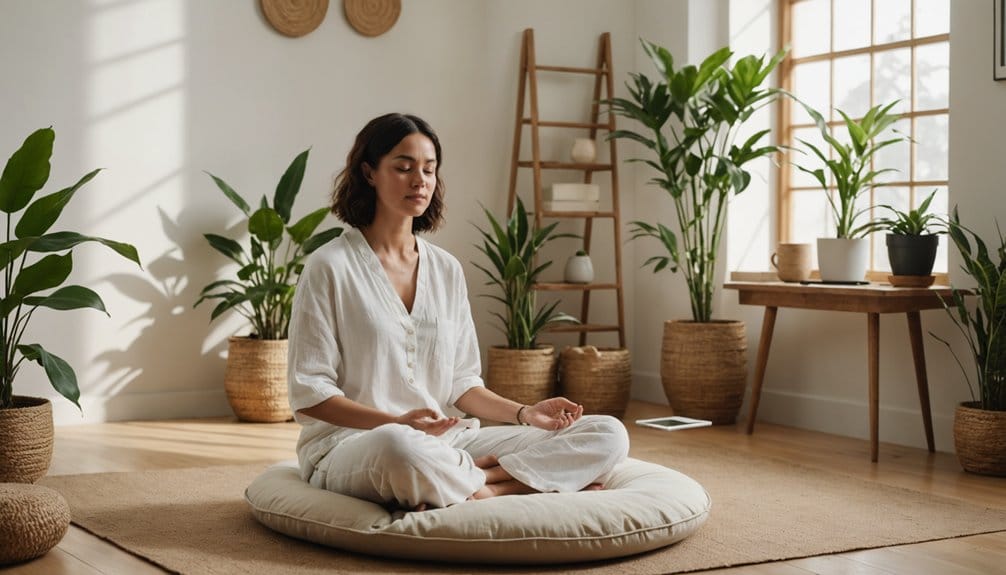
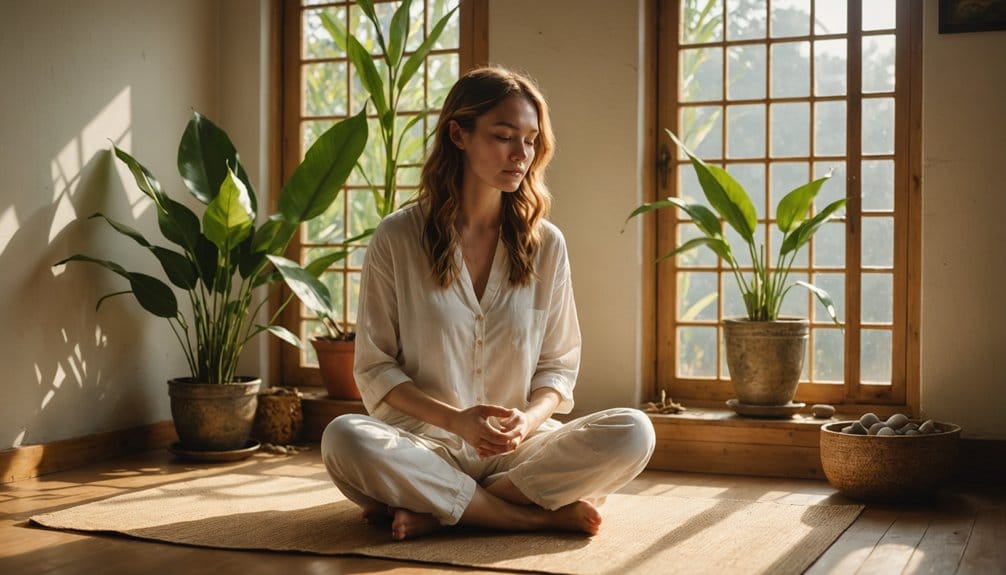
Now that you’ve learned to relax those tense muscles, let’s create your perfect Yoga Nidra sanctuary. Think of it as designing your personal relaxation cocoon – minus the actual metamorphosis (though you might emerge feeling like a new person!).
Start with ideal lighting that soothes your mind. Dim those harsh overhead lights and opt for soft, warm lamps or natural sunlight filtered through sheer curtains. Ever noticed how dentist office lighting puts you on edge? We’re aiming for the opposite effect here.
Add calming scents to your space with lavender, chamomile, or vanilla – whatever helps your shoulders drop from their permanent “ear-height” position. Keep your practice area clutter-free and at a comfortable temperature. Remember, you can’t zen out if you’re shivering or sweating!
Building a Regular Yoga Nidra Routine
Since establishing new habits can feel as tricky as teaching a cat to fetch, let’s make your Yoga Nidra practice stick with some simple strategies.
Start by picking a consistent time that works with your natural rhythms – are you a morning person or a night owl? Creating consistency becomes easier when you attach your practice to existing habits, like right after brushing your teeth or before your evening shower. Finding motivation gets a boost when you track your progress, so grab a calendar and give yourself gold stars (yes, really!). Start with just 10 minutes three times a week, then gradually increase as it becomes part of your routine. Remember, you wouldn’t expect to run a marathon on day one, so be patient with building your meditation muscles.
Measuring and Tracking Your Anxiety Relief Progress
Tracking your anxiety relief journey can feel a bit like being your own personal scientist – complete with lab coat and clipboard (though pajamas work just fine too). You’ll want to gather both objective and subjective data about your progress.
Start by rating your anxiety levels before and after each session on a 1-10 scale. Notice physical signs too: Is your breathing slower? Has that knot in your shoulders loosened up? Keep a simple journal to track these progress metrics over time.
Don’t forget the bigger picture changes. Are you sleeping better? Handling work stress more smoothly? Maybe you’re not jumping out of your skin when your neighbor’s dog barks anymore. These real-life improvements are your most meaningful anxiety tracking indicators – and they’re worth celebrating!