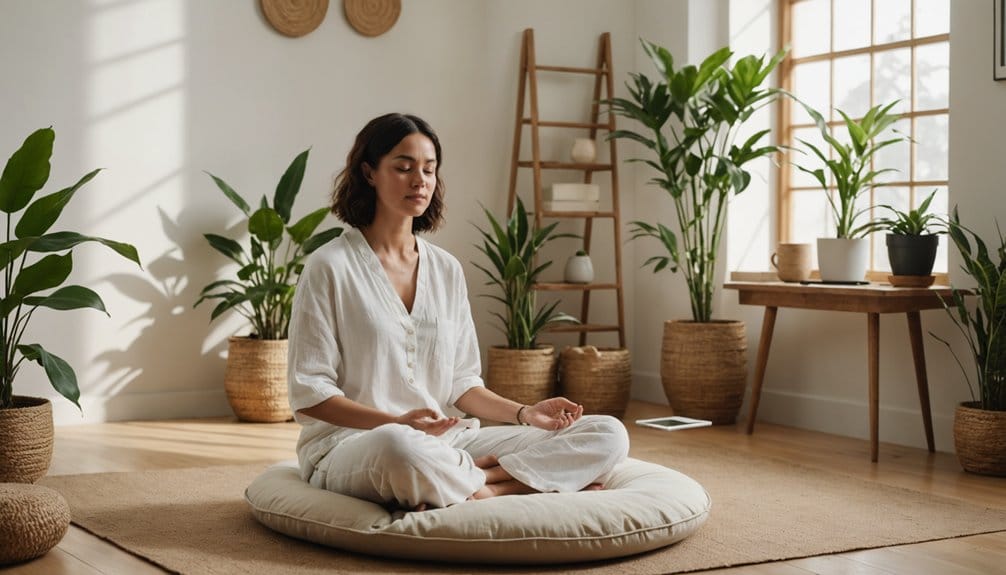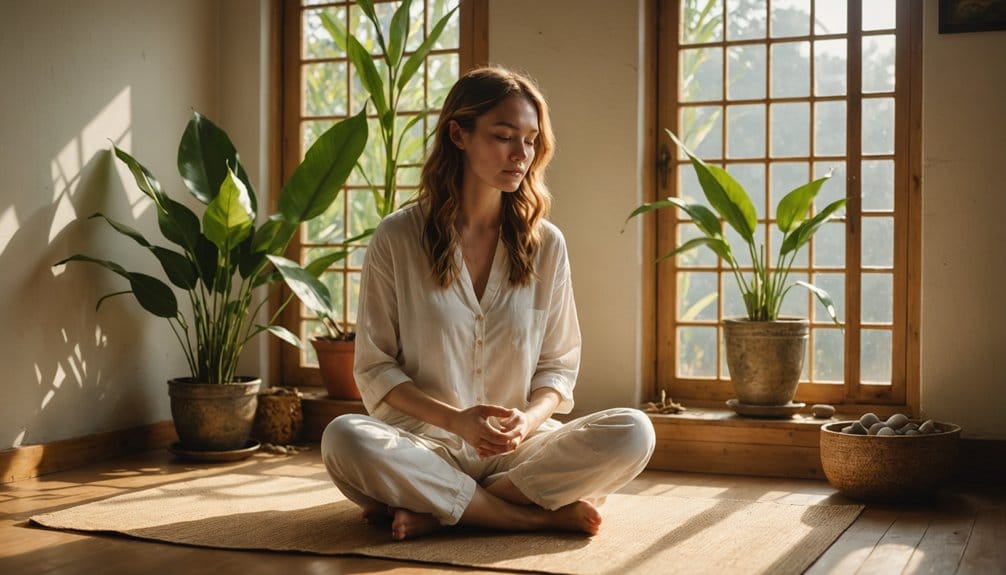
Ever noticed how your mind wanders off during meditation like a toddler in a toy store? You’re not alone. Adding visualization to your breathwork is like giving that wandering mind a comfy place to sit and behave. When you pair specific mental images with your breathing patterns, you’re fundamentally creating a movie in your mind that keeps you focused and present. It’s a powerful combo that’ll transform your practice from “am I doing this right?” to “wow, that was deep.”
The Science Behind Visual-Breath Integration
Your breath and brain are dance partners in an intricate neuroscientific tango. When you sync your breathing with mental imagery, you’re activating multiple brain regions simultaneously – like a mental disco ball lighting up different corners of your consciousness. Pretty groovy, right?
The neuroscience integration happens when your visual perception meets your respiratory rhythm. You know that peaceful feeling when you imagine waves rolling onto shore while breathing deeply? That’s your brain’s visual and respiratory centers having a mindful meetup. Studies show this dynamic duo can reduce stress faster than either technique alone.
You’re fundamentally teaching your brain a new choreography – one where your breath leads and your imagination follows. And just like any good dance, the more you practice, the more natural it becomes. Ancient yoga texts recognized breath as a vital bridge between physical consciousness and mental awareness over 5,000 years ago.
Benefits of Combining Imagery With Breathing
When you’re feeling scattered and frazzled, combining visualization with your breathing practice can help you zero in on what matters, like imagining your breath as a golden light clearing away mental cobwebs. You’ll find that pairing specific mental images with your breath cycles works as an emotional release valve, letting you process feelings that might otherwise stay stuck. Whether you picture waves washing away stress or roots growing deeper with each exhale, these visualization techniques transform ordinary breathing exercises into powerful tools for both mental clarity and emotional freedom. Like traditional meditation practices, this approach helps create a peaceful experience while maintaining awareness of your thoughts without trying to eliminate them.
Enhanced Mental Focus
Though traditional meditation can sometimes feel like herding cats in your mind, combining focused breathing with visualization creates a powerful one-two punch for mental clarity. When you pair specific images with your breath, you’re basically giving your wandering thoughts a comfy place to rest.
Think of it like training a puppy – instead of letting your mind chase every squirrel it sees, you’re teaching it to stay focused on one engaging task. By anchoring your focused intention to concrete visual elements (like imagining a golden light or peaceful beach), you’ll find it easier to maintain concentration. Your mind loves something tangible to latch onto, and visualization provides that mental handrail. You’re not fighting against your thoughts anymore – you’re directing them with purpose and creativity.
Deeper Emotional Release
Since emotions often get trapped in our bodies like old junk in an overstuffed closet, combining breath work with vivid imagery can help open up and release those stuck feelings. When you picture yourself breathing in healing light while exhaling dark clouds of stress, you’re tapping into visualization benefits that go beyond simple relaxation.
Ever notice how a good cry feels like finally unclogging a drain? That’s what emotional release through breathwork visualization is like. You might imagine yourself standing under a warm waterfall, letting it wash away old hurts, or picture your breath as golden threads untangling emotional knots in your chest. Don’t worry if it feels a bit awkward at first – even expert meditators started somewhere! The key is finding images that resonate with your personal need for release.
Popular Visualization Methods for Deep Breathing
How can you transform an ordinary breath into a powerful meditation tool? It’s simpler than you might think – your imagination is the key. Start with guided imagery by picturing your breath as a gentle ocean wave, flowing in and out with perfect rhythm. Who knew your mind could turn simple breathing into a mini-vacation?
Color visualization adds another dimension to your practice. Imagine inhaling pure golden light that fills your body with warmth and energy. As you exhale, picture releasing smoky gray clouds of stress and tension. You’ll be amazed at how quickly this technique can shift your mood. Think of it as giving your mind a new pair of rose-colored glasses – except these actually work! Let your creativity flow and experiment with different visual anchors that resonate with you.
Enhancing Mind-Body Connection Through Visual Anchors
Visual anchors transform your breath meditation into a full-body experience that deepens your mind-body connection. When you’re feeling scattered (we’ve all been there!), these anchors act like mental Post-it notes, bringing your attention back to your practice. Try visualizing a favorite spot in nature – maybe that beach where you had ice cream last summer, or your grandmother’s garden in full bloom.
Sensory imagery works wonders when you’re learning to stay present. Picture your breath as ocean waves or imagine a warm light flowing through your body with each inhale. Sound too woo-woo? Think of it as giving your mind something to do besides planning dinner or remembering that embarrassing thing you said five years ago. You’ll be amazed at how quickly these visual cues become your meditation best friends.
Creating Your Personal Breathing Visualization Practice
You’ll find it’s much easier to stick with breathwork when you’ve got clear mental checkpoints to return to – kind of like having your favorite comfy chair waiting at home. Creating your own visualization journey means choosing imagery that really clicks with your personality, whether that’s imagining your breath as ocean waves or picturing yourself as a mighty oak tree growing stronger with each inhale. While fancy guided meditations are great, there’s something special about crafting your own personal mind-movie that makes you think “yep, that’s totally me” every time you practice.
Building Mental Anchor Points
Establishing mental anchor points in breathwork meditation is like creating your own personal GPS system for the mind. Think of these anchors as friendly pit stops along your inner journey – places where your attention can rest and reorient itself when it starts to wander. Through mental imagery, you’ll create specific visual touchstones that resonate with your personal style.
You might envision a golden thread of breath moving through your body, or picture yourself as a mighty tree drawing energy from the earth. The key to anchor visualization is consistency – pick images that feel natural to you and stick with them. Don’t worry if your mind occasionally takes a detour into thinking about what’s for dinner. Simply notice when you’ve drifted and gently guide yourself back to your chosen mental landmarks.
Personalizing Your Visualization Journey
While following prescribed breathing patterns serves a purpose, creating your own personalized visualization practice lets your imagination truly soar. Think about what naturally resonates with you – maybe you’re drawn to ocean waves or floating clouds. Your personalized imagery should feel like a comfy pair of well-worn jeans, not someone else’s borrowed suit.
Start with simple imagination exercises: picture your breath as a color that shifts from blue to gold, or envision it as a gentle river flowing through your body. Don’t worry if your mind wanders to thoughts of pizza – that’s perfectly normal! The key is making your practice uniquely yours. Remember, there’s no “wrong way” to visualize as long as it helps you connect with your breath and brings you peace.
Overcoming Common Breathwork Challenges With Imagery
Despite our best intentions to maintain steady breathing patterns, many beginners find themselves getting tangled up in their own thoughts during breathwork practice. That’s where breath imagery comes in handy – it’s like giving your wandering mind a fun job to do. When you’re struggling to focus, try visualizing your breath as ocean waves or a gentle breeze moving through trees.
Visualization strategies can help you blast through mental roadblocks that might pop up during your practice. Feeling stuck? Picture yourself effortlessly scaling a mountain with each inhale, or releasing tension like autumn leaves floating downstream. These simple yet powerful techniques are perfect for overcoming barriers that might otherwise derail your session. You’ll be amazed at how quickly your mind responds when you give it creative ways to stay engaged.
Advanced Visualization Techniques for Experienced Practitioners
Once you’ve mastered the basics of breathwork visualization, it’s time to explore some mind-bending advanced techniques. Ever wondered what it’s like to breathe through every cell of your body? Now’s your chance to find out.
Leading practitioner insights suggest combining multiple visualization streams – imagine your breath as both light and water simultaneously. Picture yourself breathing in golden sunshine while exhaling crystal-clear streams. Pretty wild, right?
Try this advanced technique: visualize your breath creating intricate geometric patterns that pulse with each inhale and exhale. Start with simple shapes, then build up to complex mandalas that transform with your breathing rhythm. You’re not just watching these patterns – you’re becoming them. Remember, at this level, there’s no “wrong way” to visualize. Your mind’s the limit!
Integrating Visual Elements Into Daily Breathing Exercises
The art of breathing doesn’t need to be confined to your meditation cushion or yoga mat. You can transform mundane moments into mindful experiences by adding simple visualization aids to your daily breath patterns. Stuck in traffic? Imagine your breath as ocean waves, rising and falling with each car that inches forward. Dealing with a chatty coworker? Picture your breath as a gentle breeze sweeping away their words.
Start small by choosing one daily activity where you’ll practice visualized breathing. Maybe it’s your morning coffee ritual, where each sip syncs with your breath like a dance. Or perhaps it’s during your commute, when you envision your breath as colored light flowing through your body. The key is making these practices feel natural, not forced.