You’ll find peace through meditation by starting small – just five minutes in a quiet space with your breath as your anchor. Focus on belly breathing while letting thoughts drift by like clouds (no need to karate chop them away!). Make it a daily habit by linking it to existing routines like your morning coffee. Remember those physical stress signals like tension headaches? They’re your body’s way of saying it’s time to hit pause. The more you practice, the deeper your mental garden will grow.
Understanding the Mind-Body Connection
Stress has a sneaky way of showing up everywhere – in that tension headache during a work deadline, the upset stomach before a big presentation, or those restless nights when your mind won’t stop racing. Ever notice how your shoulders creep up toward your ears during a tough phone call? That’s your body talking!
Building mind awareness helps you catch these body signals before they spiral. Think of your body as an early warning system – like that friend who always tells it like it is. When you’re tuned in, you’ll start noticing patterns: maybe your jaw clenches during morning traffic, or your breathing gets shallow during difficult conversations. The good news? Once you recognize these connections, you’ve already taken the first step toward managing stress more effectively. Pretty neat how your body’s been trying to help all along, right? Incorporating breathing techniques, such as the 4-7-8 Breathing Method, can also help reset your body’s response to stress.
Getting Started With Daily Meditation Practice
While diving into meditation might seem as tricky as learning to juggle with your eyes closed, getting started is actually pretty simple. You don’t need a zen garden or a lifetime of spiritual training – just five minutes and a quiet spot will do.
Begin by downloading one of the popular meditation apps that’ll guide you through basic mindfulness exercises. They’re like having a friendly coach in your pocket! Find a comfortable position (no, you don’t have to twist yourself into a pretzel), and start with short sessions. Can’t sit still for more than two minutes? That’s totally normal.
Set a consistent time each day – maybe right after your morning coffee or before bed. You’ll be amazed how quickly these small moments of peace become your favorite part of the day. Embracing mindfulness meditation can transform these moments into opportunities for increased awareness and clarity.
Essential Breathing Techniques for Relaxation
Once you’ve found your meditation groove, it’s time to focus on the powerhouse of relaxation – your breath. Start with simple breath awareness, noticing how your chest and belly move with each inhale and exhale. You’ll want to master diaphragmatic breathing, where your belly expands like a balloon on the inhale.
Ready to level up? Try box breathing – inhale for four counts, hold for four, exhale for four, hold for four. Repeat until your mind stops doing backflips. For a gentler approach, practice breathing visualization by imagining your breath as waves on a shore or clouds floating by. You can also use breath counting, reaching ten before starting over (and don’t worry if your mind wanders at three – we’ve all been there!). The key is finding your personal rhythm through mindful inhalation and calming exhalation. Incorporating controlled breathing techniques can serve as a superpower for emotional resilience and anxiety relief.
Creating Your Perfect Meditation Space
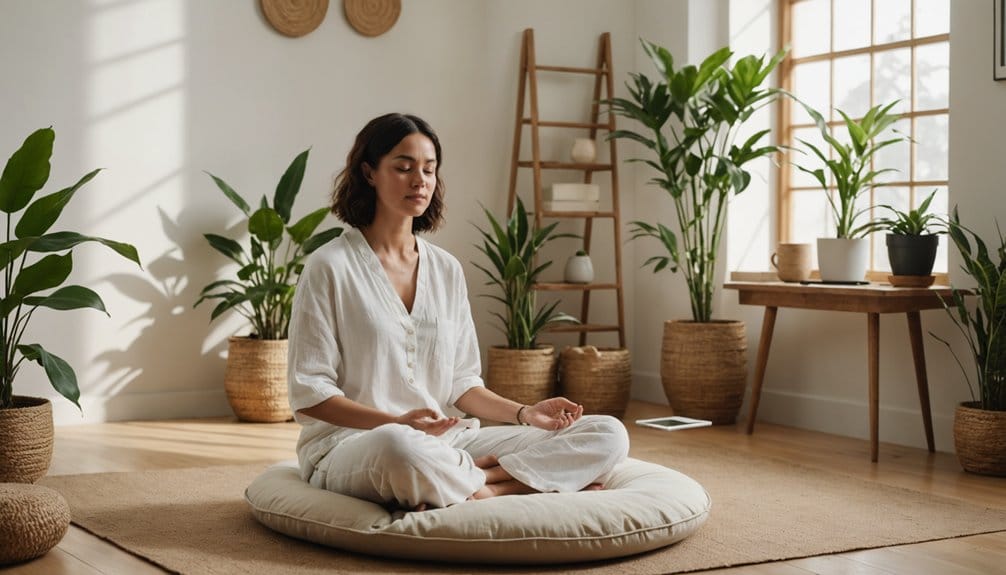
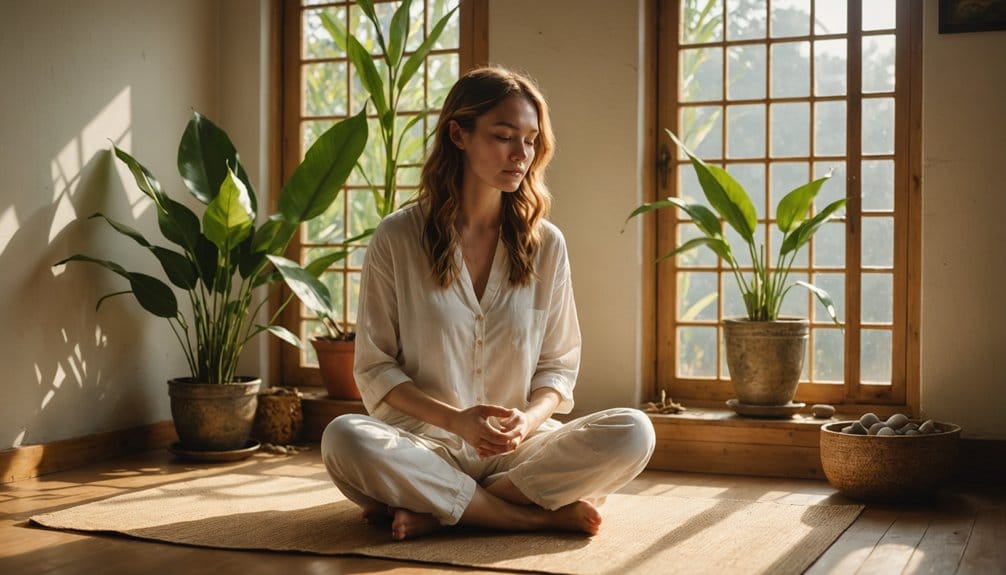
You’ll want to start by choosing a dedicated meditation spot that feels like your own personal sanctuary – maybe it’s that cozy corner by the window where your cat always stretches out in the sun. Your space doesn’t need to be Instagram-worthy perfect, but it should include elements that help quiet your mind, like soft cushions, gentle lighting, or that scented candle you’ve been saving for a special occasion. Just remember, while creating your meditation nook isn’t rocket science, it’s worth taking time to set up a space that makes you think “ahh, this is where the magic happens” every time you see it. A dedicated space aids in resetting the nervous system and enhances mental clarity.
Choose Your Sacred Spot
Finding the right meditation spot can feel like discovering a hidden superpower – it’s that important to your practice. When selecting your sacred environment, trust your personal preferences. Maybe you’re drawn to that cozy corner by the window where morning light streams in, or perhaps you prefer the quiet sanctuary of your bedroom after everyone’s asleep.
Your meditation spot doesn’t need to be Instagram-worthy or straight out of a spiritual magazine. It just needs to feel right for you. Have you noticed how some spaces naturally calm you while others make you fidgety? Listen to those instincts. Whether it’s a cushion tucked into your walk-in closet or a dedicated corner of your home office, choose a location that beckons you to sit, breathe, and connect with yourself.
Essential Elements for Calm
While your sacred meditation spot sets the foundation, transforming it into a calming oasis requires thoughtful attention to a few key elements. Start by incorporating soft, natural lighting – whether it’s filtered sunlight or the gentle glow of himalayan salt lamps. You’ll want comfortable seating that supports good posture (no falling asleep mid-mindful awareness!).
Add elements that engage your senses without overwhelming them. A small water fountain creates soothing white noise, while essential oils can transform the space’s energy. Consider incorporating meaningful objects that spark joy – perhaps a cherished crystal or family photo. These items become anchors for your calming rituals.
Temperature matters too. Keep your space comfortably cool, since nothing disrupts meditation quite like feeling like you’re in a sauna!
Common Challenges and How to Overcome Them
You’re not alone if meditation feels more like a mental gymnastics routine than a peaceful escape – most beginners find their thoughts bouncing around like caffeinated squirrels. Between your busy schedule and that restless mind that won’t stop planning tomorrow’s grocery list, establishing a consistent practice can seem as tricky as teaching a cat to fetch. But don’t worry – we’ll tackle these common meditation roadblocks head-on with practical solutions that’ll help you transform from meditation newbie to zen master (okay, maybe just “reasonably calm person”). Remember, the goal of meditation is not to eliminate common distractions but to observe them without attachment.
Restless Mind During Practice
As your mind darts between yesterday’s awkward conversation and tomorrow’s to-do list, meditation can feel like trying to wrangle a caffeinated squirrel. Don’t worry – you’re not failing at meditation when restless thoughts pop up. That’s just your brain doing what brains do best: thinking.
Instead of fighting mental clutter, try this: imagine your thoughts are leaves floating down a stream. You don’t need to grab them or push them away. Just notice them passing by. When you catch yourself planning next week’s grocery list (and you will), gently guide your attention back to your breath. Remember, even experienced meditators deal with monkey mind. The goal isn’t to empty your head completely – it’s to practice returning to the present moment, one wandering thought at a time.
Making Time to Meditate
How often have you caught yourself saying “I’ll meditate when I find the time” – only to watch that time mysteriously vanish into thin air? Let’s be honest: time doesn’t magically appear; you’ve got to carve it out deliberately.
Start small by linking meditation to existing habits. Set morning intentions while your coffee brews, or practice evening reflections as you wind down for bed. Can’t spare 20 minutes? Begin with five. You’d be surprised how much calmer you’ll feel with just a few mindful breaths between meetings.
The trick isn’t finding time – it’s making it. Schedule your meditation like any other important appointment. After all, you wouldn’t skip a doctor’s visit because you were busy scrolling through social media, would you?
Maintaining Consistent Daily Routine
While establishing a meditation practice feels exciting at first, maintaining it can sometimes feel like trying to keep a New Year’s resolution past January 15th. You know the drill – life gets busy, your schedule shifts, and suddenly that daily commitment starts looking more like a “whenever I remember” situation.
The secret? Build routine flexibility into your practice. If you’re not a morning person, don’t force yourself to meditate at 5 AM just because some guru said it’s ideal. Instead, identify two or three potential meditation windows throughout your day. Maybe it’s right after your morning coffee, during lunch break, or just before dinner. When one time slot doesn’t work out, you’ve got backups ready. Think of it like having multiple spare keys – you’re never truly locked out of your practice.
Benefits of Long-Term Meditation Practice
Long-term meditation practice transforms both your brain and daily experience in profound ways that casual practitioners might never discover. You’ll notice mindfulness benefits that extend far beyond those first peaceful moments on the cushion. Remember how you used to snap at your partner over dirty dishes? That’s where enhanced emotional stability comes in – you’ll find yourself responding rather than reacting.
Think of your mind like a muscle that’s been hitting the gym regularly. After months of consistent practice, you’ll discover you’re handling life’s curveballs with surprising grace. Your stress response becomes more like a gentle wave than a tsunami, and you’ll catch yourself wondering, “Was I always this calm?” The answer is no – you’ve just become a meditation superhero, minus the cape and tights.