Just as a tightrope walker needs proper balance and technique, you’ll want to approach meditation with mindful awareness of safety. You’re not training for the meditation Olympics, but you do need to protect your mind and body during practice. Whether you’re a seasoned zen master or someone who can barely sit still for thirty seconds (we’ve all been there!), these essential tips will help you navigate the path of inner peace without stumbling into common pitfalls.
Physical Posture and Body Alignment Guidelines
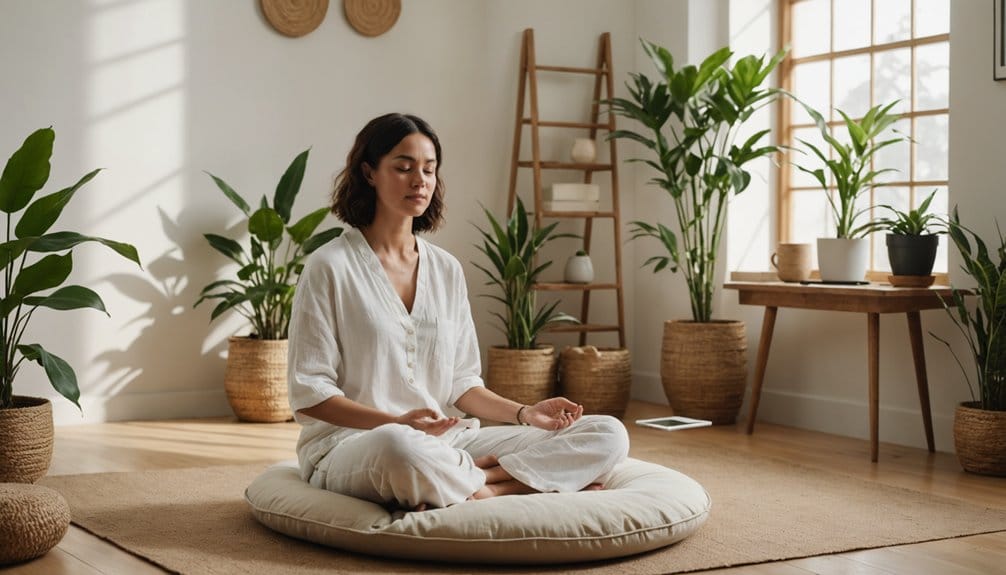
While finding the perfect meditation posture might seem as complicated as solving a Rubik’s cube blindfolded, it’s actually pretty straightforward once you know the basics. Start with proper seating – whether you’re on a cushion or chair, make sure your hips are slightly higher than your knees to prevent your legs from falling asleep (nobody wants that tingly pins-and-needles feeling mid-zen).
Keep your spine naturally straight, as if an invisible string is gently pulling you up from the crown of your head. Think of yourself as a happy mountain – stable at the base, relaxed at the peak. Alignment awareness is key: your ears should stack over your shoulders, and your nose should align with your navel. Don’t worry about being perfect – even the Buddha probably had to adjust his cushion now and then. For those seeking additional support during meditation, a meditation bench can help maintain proper posture while reducing pressure on the ankles and knees.
Warning Signs and When to Stop Practicing
You wouldn’t ignore your car’s check engine light, and you shouldn’t ignore your body’s warning signs during meditation either. While practicing, stay alert for physical red flags like dizziness, nausea, or unusual tension headaches that signal it’s time to take a breather. Your mind can also wave warning flags through anxiety spikes, racing thoughts that won’t settle, or that uncomfortable feeling when your meditation starts feeling more like a wrestling match with your own brain than a peaceful practice. Taking short five-minute breathing sessions can help ease you back into meditation practice while minimizing anxiety and stress.
Physical Warning Signs
Meditation’s profound benefits shouldn’t come with physical discomfort or pain. If you’re experiencing persistent headaches, dizziness, or unusual sensations during breath awareness practice, it’s your body waving a red flag. Who knew sitting still could be so complicated, right?
Pay attention to any muscle tension that doesn’t ease up after your session. Those clenched shoulders or a stiff neck aren’t your meditation buddies. Other warning signs include trembling, numbness, or tingling that lasts beyond your practice time. And let’s talk about that racing heart – if it’s pounding like you’ve run a marathon while you’re trying to find zen, something’s not quite right.
Mental Red Flags
Watch out for feelings of disconnection from reality or overwhelming emotions that self awareness techniques aren’t helping to manage. Your meditation journey should enhance emotional regulation, not derail it. Having weird thoughts? That’s normal! But if they become distressing or you’re losing track of time frequently, take a step back. Remember, you’re not training for the meditation Olympics – there’s no prize for pushing through mental distress.
Mental Preparation and Emotional Boundaries
Mindfulness comes with its share of emotional twists and turns, much like trying to tame an energetic puppy – it takes patience and proper boundaries. Before diving into mindfulness techniques, you’ll want to establish your emotional comfort zone. Ever notice how you feel after watching an intense movie? That’s your emotional awareness at work.
Start by setting clear intentions for your practice. Maybe you’re seeking stress relief or inner peace – whatever it is, own it. Create a mental safe word that you can use when things get overwhelming (yes, even experienced meditators need an escape hatch). Remember, you’re not trying to become a zen master overnight. Think of it like training for a marathon – you wouldn’t start with a 26-mile run, would you? Begin with small, manageable sessions that respect your emotional limits. Regular practice helps strengthen your prefrontal cortex to better observe and manage anxious thoughts without becoming overwhelmed by them.
Creating a Safe Meditation Environment
When it comes to setting up your meditation space, creating the right environment is like preparing a cozy nest for your mind to settle into. You’ll want to find a quiet spot where you won’t be interrupted by your cat doing parkour or your roommate’s impromptu karaoke sessions.
Consider environmental factors that’ll support your practice: soft lighting that won’t have you squinting, comfortable temperature (nobody achieves enlightenment while shivering), and proper ventilation. Got a noisy neighborhood? Try using a white noise machine or nature sounds to mask those urban symphonies.
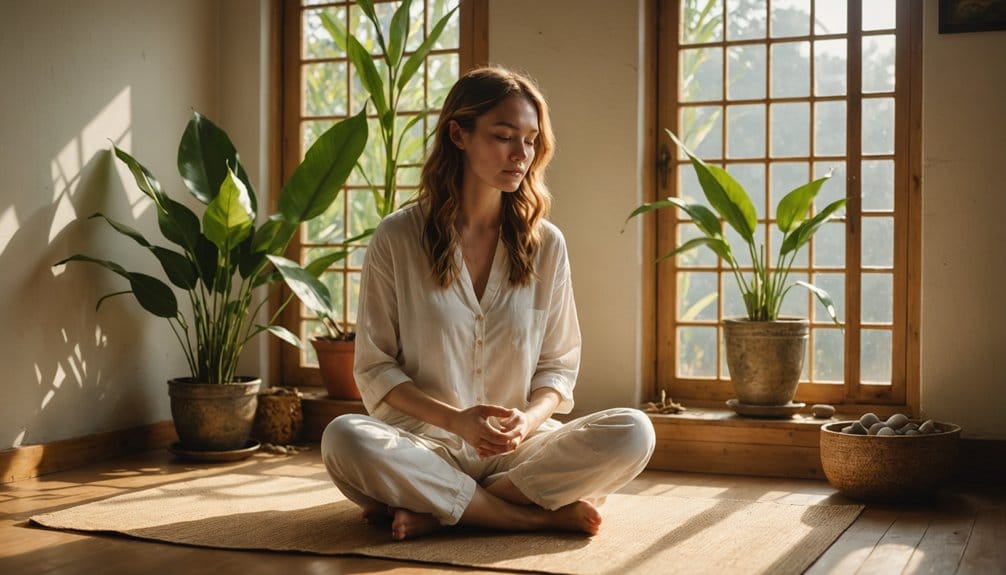
Make your meditation space personal but clutter-free. Think minimalist, not “haven’t-cleaned-in-three-months” minimalist. A simple cushion, maybe an inspiring picture, and you’re good to go. Remember, you’re creating a sanctuary, not auditioning for an interior design show.
Ensuring your space allows for good posture during meditation will help maintain comfort and focus throughout your practice.
Managing Energy Flow and Grounding Techniques
You’ll want to keep your feet planted firmly on the ground during meditation – after all, nobody wants their consciousness floating around like a lost balloon at a kid’s birthday party. When you’re working with energy in meditation, it’s crucial to release any excess buildup through visualizing it flowing down into the earth, just like you’re a tree sending roots deep into the soil. To maintain balance in your energy centers, imagine drawing up earth energy through your feet while cosmic energy flows down through your crown – creating a natural circulation that’ll keep you stable and centered throughout your practice. This grounding practice aligns with traditional chakra energy centers that have been recognized in yogic traditions for thousands of years.
Stay Connected to Earth
Even the most skilled meditation practitioners can sometimes feel ungrounded and spacey during deep practice. When your mind’s floating somewhere between Saturn and Neptune, it’s time to employ some down-to-earth grounding techniques. You know that floaty feeling when you’ve meditated so deeply you’re not sure if you’re still on the planet? Yeah, that’s your cue to reconnect.
Try this simple earth connection exercise: Place your bare feet on the ground (grass, sand, or soil works best) and imagine roots growing from your soles deep into the Earth. If you’re indoors, pressing your palms against a stone or wooden surface works too. Think of yourself as a tree – the deeper your roots go, the more stable you’ll feel. Who knew staying grounded could be so literal?
Release Excess Energy Flow
During meditation sessions that leave you buzzing with excess energy, it’s crucial to know how to safely discharge that heightened state. Ever feel like you’re practically floating off your cushion? That’s when energy release techniques come in handy.
Try this simple excess energy management routine: Stand up and gently shake out your limbs while visualizing the excess energy flowing down through your feet. You can even stomp a little – who doesn’t love a good energy dance? Next, rub your palms together vigorously and press them against your lower belly. This helps redistribute that buzzing sensation throughout your body.
Still feeling wired? Take a slow walk outdoors, touching trees or plants along the way. Nature’s pretty good at absorbing our energetic overflow – no awkward explanations needed!
Balance Your Energy Centers
Managing your energy centers takes balance – think of it like being a DJ at the world’s most zen nightclub. You’re mixing the perfect blend of high and low frequencies through your body’s energy system. Too much bass in your root chakra? Dial it back. Crown chakra feeling a bit spacey? Bring that slider down.
Start your energy alignment by focusing on each chakra point, from root to crown. Picture yourself adjusting those cosmic sound levels until everything feels just right. You’ll know you’re hitting the sweet spot when your body hums with peaceful vibrations – not too intense, not too quiet. Through mindful chakra balancing, you’re creating your own inner harmony playlist. Remember, there’s no need to crank everything to maximum. Sometimes the best spiritual mix comes from subtle adjustments.
Building a Supportive Practice Routine
While meditation itself can be wonderfully freeing, you’ll need some structure to make it stick as a daily habit. Ever notice how your best intentions tend to evaporate by Wednesday? That’s where routine consistency comes in. Pick a specific time and space that works for you – maybe it’s right after your morning coffee or just before bed when the house finally quiets down.
Don’t try to go it alone! A supportive community can make all the difference between “I should meditate someday” and “I can’t wait for my daily practice.” Whether it’s joining a local meditation group or finding an online circle of fellow practitioners, having accountability partners helps you stay on track. Plus, let’s face it – everything’s more fun when you’re not the only one trying to tame your wandering mind.
Finding Qualified Teachers and Guidance
Although books and apps can teach you meditation basics, having an experienced teacher guide your practice is like having a skilled navigator on a challenging journey. When finding reliable resources, start with established meditation centers and reputable organizations – they’ve already vetted their instructors so you don’t have to start from scratch.
Before committing to a teacher, do your homework on evaluating teacher credentials. How long have they been practicing? Where did they train? You wouldn’t trust your car to a mechanic who learned everything from YouTube, right? Look for teachers who’ve completed formal training programs and maintain connections with respected meditation lineages. The best instructors will encourage questions, acknowledge their limitations, and prioritize your safety over pushing you into advanced practices too quickly.