You’ll master ocean breath in no time with this ancient yogic technique. Start by sitting comfortably with a straight spine and breathing through your nose. Next, slightly constrict your throat muscles to create that signature oceanic sound – think Darth Vader meets peaceful waves! Practice deep, steady breaths while maintaining the gentle rushing sound. Keep your shoulders relaxed and breath from your belly. There’s a whole world of calming benefits waiting when you dive deeper into this transformative practice.
What Is Ocean Breath and Why Practice It
While most of us breathe without thinking twice about it, Ocean Breath (Ujjayi Pranayama) transforms this automatic process into a powerful meditation technique. Ever notice how the sound of crashing waves instantly calms your mind? That’s exactly what you’ll create with this ancient breathing practice.
The ocean breath origins trace back thousands of years to yogic traditions, where practitioners discovered that controlling their breath could reveal extraordinary mental clarity. You’ll learn to constrict the back of your throat slightly while breathing, creating a soothing oceanic sound that’s remarkably similar to Darth Vader’s breathing (but way more zen!).
This technique isn’t just about making interesting sounds – it’s your gateway to reduced anxiety, better focus, and enhanced mind-body connection. Engaging in this practice helps foster breath awareness, allowing you to connect more deeply with your consciousness. Ready to ride these peaceful waves of breath?
The Science Behind Ocean Breath’s Calming Effects
When you’re stressed and your thoughts won’t stop racing, your brain’s actually doing what it’s designed to do – firing up those fight-or-flight signals through your neural pathways. You’ll be amazed to learn that ocean breath works by activating your vagus nerve, which is like your body’s built-in chill pill that tells your nervous system “hey, everything’s actually okay!” Research shows this simple breathing technique can lower those pesky stress hormones like cortisol, giving you the same relaxation benefits you’d get from a day at the beach (minus the sunburn and sand in your shoes). By practicing mindful breathing exercises, you can enhance this calming effect and further reduce your anxiety levels.
Neural Pathways and Relaxation
As you exhale through Ocean Breath, you’re activating a fascinating cascade of neural responses that’d make any neuroscientist geek out. Your vagus nerve – that superhighway of calm running from your brain to your gut – springs into action. Think of it as your body’s chill-out button.
When you engage in these relaxation techniques, you’re literally rewiring your brain’s stress response. Cool, right? Your neural benefits stack up with each breath, creating new pathways that help you stay cooler under pressure. It’s like building a mental off-ramp from Stress Highway to Relaxation Boulevard.
The best part? You’re not just temporarily masking anxiety – you’re teaching your nervous system a whole new way to respond. Your brain’s getting better at hitting the brakes before stress can take the wheel.
Vagus Nerve Activation Benefits
The vagus nerve deserves its reputation as your body’s master switch for relaxation – it’s basically your built-in zen button. When you practice ocean breath, you’re giving this powerful nerve a gentle workout, enhancing your mental health and emotional regulation naturally. Ever notice how a deep breath instantly calms you down? That’s your vagus nerve in action!
Through ocean breathing, you’ll activate this relaxation superhighway, strengthening your respiratory support system while building resilience to stress. It’s like having a remote control for your nervous system – pretty cool, right? The best part? You’re not just temporarily chilling out; you’re actually training your body’s rest-and-digest response to kick in more efficiently. Think of it as upgrading your inner peace software, one breath at a time.
Stress Hormone Reduction Research
Scientific studies confirm what ocean breath practitioners have known for centuries – this powerful breathing technique directly lowers your body’s stress hormones like cortisol and adrenaline.
Research from the University of California found that just 10 minutes of ocean breath reduced cortisol levels by up to 23% in stressed participants. Think about that – you’re literally breathing away your stress! A 2021 study in the Journal of Alternative Medicine tracked stress hormone reduction across 300 participants who practiced ocean breath daily for 8 weeks. The results? Their baseline cortisol dropped by a whopping 31%.
You don’t need fancy equipment or a PhD to tap into these benefits. Your breath is already the perfect stress-management tool – it’s just waiting for you to use it properly.
Essential Preparation for Ocean Breath Practice
You’ll want to start your ocean breath practice by finding a comfortable seat – and no, the couch where you binge-watch your favorite shows doesn’t count! Before you begin, make sure your practice space is at a pleasant temperature (around 70-72°F is ideal) since it’s tough to focus on breathing when you’re either sweating or shivering. Once you’re settled in your space, take a moment to clear your mind of today’s chaos – yes, even that embarrassing thing you said during the morning meeting can wait until later. This mindful preparation not only sets the tone for your practice but also aligns with the benefits of enhanced mental clarity that come from focused breathing techniques.
Find Comfortable Seated Position
Anyone who’s tried meditation knows that finding the right seated position is half the battle. Ever noticed how your legs start tingling just when you’re getting into the zone? That’s why proper seated alignment is essential before diving into ocean breath practice.
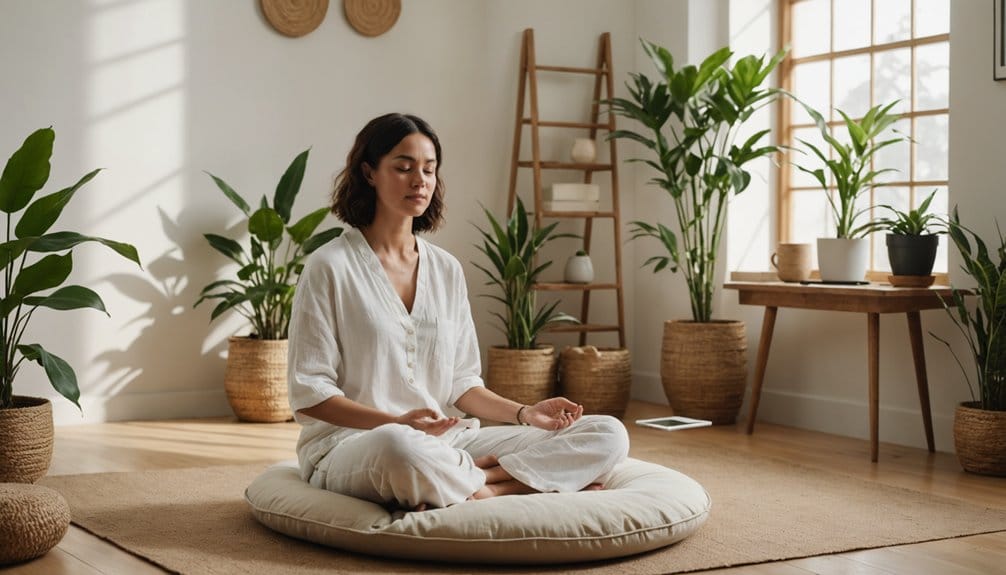
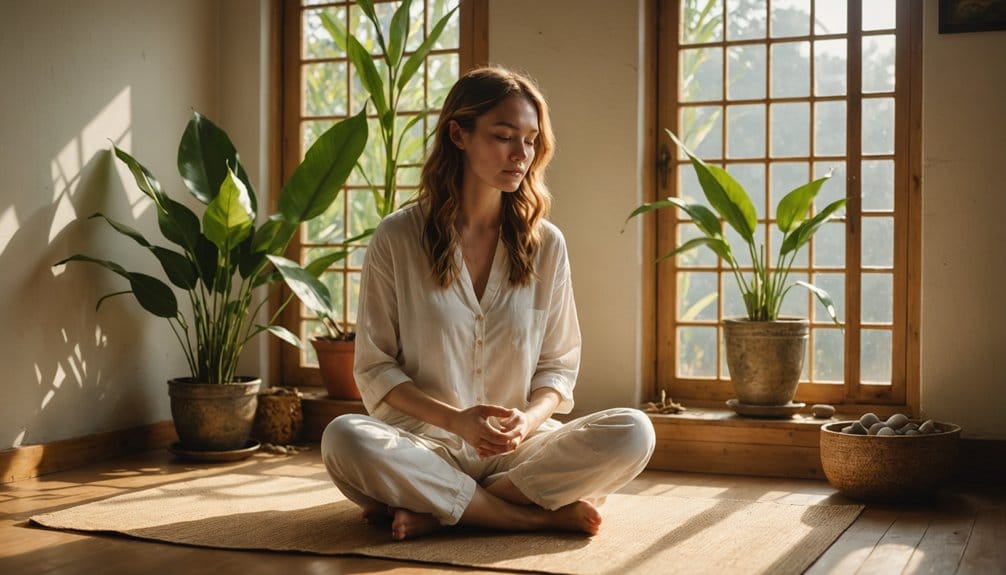
Start by sitting cross-legged on a firm cushion or folded blanket – your hips should be higher than your knees. Can’t cross your legs comfortably? No worries! A chair works perfectly fine. The key is maintaining a comfortable posture with your spine naturally straight, like a string’s gently pulling you up from the crown of your head. Let your shoulders relax away from your ears, and rest your hands on your thighs or knees. Remember, you’re not training for the meditation Olympics – just find what works for your body.
Set Optimal Room Temperature
Before starting your ocean breath practice, getting the room temperature just right can make or break your experience. You’ll want to aim for a comfortable 68-72°F (20-22°C) – not so cold you’re shivering, not so warm you’re sweating through your yoga pants! Ever tried meditating in a stuffy room? Not fun.
Pay attention to room humidity and air quality too. If the air’s too dry, your throat might feel scratchy during those ocean sounds. Too humid? You might feel like you’re actually swimming in the ocean instead of just breathing like it! Crack a window for fresh air or run a small fan on low. Just don’t position yourself directly in front of an AC vent or heater – unless you’re going for that “hot yoga meets arctic expedition” vibe!
Clear Your Mind First
Getting your mind into the right space matters just as much as having the perfect room temperature. You’ve probably noticed how your thoughts can race like a caffeinated squirrel – we’ve all been there! That’s why mastering basic mindfulness techniques before diving into ocean breath is essential.
Take a moment to settle in. Close your eyes and notice where your mind wanders. Is it stuck on that awkward thing you said three years ago? (Isn’t it funny how our brains work?) Gently guide your attention back to the present moment. Mental clarity doesn’t mean having zero thoughts – it’s about acknowledging them without getting caught in their undertow. Think of it like cleaning your mental desktop before opening a new program. A few deep breaths and a quick mental declutter will set you up for success.
Step-by-Step Guide to Ocean Breath
How do you create that soothing sound of waves crashing on the shore with just your breath? It’s simpler than you might think! Start by sitting comfortably with your spine straight – no need for pretzel poses here. Close your mouth and breathe normally through your nose.
Now for the fun part: slightly constrict the muscles at the back of your throat, like you’re trying to fog up a window. You’ll hear that signature ocean sound that makes this pranayama so popular. Keep your breath awareness focused on maintaining steady inhales and exhales.
Not quite getting that wave-like sound? Try whispering “haaa” with your mouth closed. Once you’ve got it, settle into mindful breathing patterns, letting each breath roll in and out like gentle surf. Before you know it, you’ll be riding the wave of relaxation!
Common Mistakes to Avoid in Ocean Breath
While ocean breath might seem as simple as making a beachy sound, there are several pitfalls that can leave you feeling more like a grumpy seal than a zen master. First up: incorrect breathing that starts from your chest instead of your belly. Ever noticed how your shoulders hunch up when you’re stressed? That’s exactly what you don’t want here.
Watch out for poor posture alignment – slouching won’t do you any favors. You’ll want to keep your spine straight but not rigid, like a palm tree swaying in the breeze. And here’s a common rookie move: forcing the breath sound from your throat. You’re aiming for a natural ocean wave, not Darth Vader at the beach! Let the sound flow freely through your slightly constricted throat without straining. Practicing deep diaphragmatic breathing can help you engage your diaphragm and avoid these common mistakes.
Benefits of Regular Ocean Breath Practice
Once you’ve mastered ocean breath, you’ll reveal a treasure chest of physical and mental perks that’ll make you wonder why you didn’t start sooner. This powerful practice heightens your breath awareness, helping you stay anchored in the present moment even when life gets chaotic.
Ever notice how your shoulders creep up to your ears during stressful meetings? Ocean breath swoops in to save the day, melting tension faster than your favorite ice cream on a hot summer day. The mindfulness benefits are equally impressive – you’ll find yourself catching anxiety before it snowballs, and sleep? It’ll become your new superpower.
Your immune system gets a boost too, while your nervous system learns to switch from fight-or-flight to rest-and-digest mode like a well-oiled machine. Regular practice of ocean breath can lead to improved mental clarity, helping you navigate through life with greater ease and focus. Who knew making waves with your breath could be so transformative?
Incorporating Ocean Breath Into Your Daily Routine
Since ocean breath is as natural as walking, you’ll want to weave it seamlessly into your daily activities. Ever notice how you breathe differently when you’re stuck in traffic versus lounging on the beach? That’s your cue to practice! Set breathing reminders on your phone or link ocean breath to routine actions like checking email or waiting for coffee to brew.
Transform mundane moments into opportunities for daily mindfulness. Try ocean breathing while showering (bonus points for matching the sound of running water!), during your commute, or even in boring meetings. Who says you can’t find your zen while organizing spreadsheets? The beauty of ocean breath is its subtlety – no one needs to know you’re practicing. Mindful movement practices, like ocean breathing, can help you transform stress into strength whenever you need it most. Before long, you’ll naturally shift into this calming rhythm whenever you need it most.
Advanced Ocean Breath Variations and Techniques
After mastering the basics of ocean breath, you’re ready to explore some fascinating variations that’ll take your practice to new depths. Ever tried ocean breath while walking? It’s a game-changer for multitasking yogis on the go. Simply sync your breath with your steps and let that oceanic sound follow you down the street.
For a more challenging variation, try alternating between loud and whispered ocean breaths. Start with 30 seconds loud, then 30 seconds soft – it’s like taking your inner waves from stormy seas to gentle ripples. Another advanced technique involves extending your exhales to twice the length of your inhales. Picture yourself riding these breath waves: short inhale (3 counts), long exhale (6 counts). You’ll feel like a breath-surfing pro in no time!
Tips for Teaching Ocean Breath to Others
Teaching ocean breath effectively comes down to three key elements: demonstration, patience, and meeting students where they’re at. You’ll want to first explain the ocean breath benefits – like stress relief and mental clarity – before diving into the actual technique.
Start by having your students simply listen to your breath. Make the sound yourself, then invite them to join in. Notice someone struggling? Try this teaching technique: ask them to fog up an imaginary mirror with their exhale. That usually does the trick! You can also share that practicing ocean breath can help shrink the overactive amygdala, promoting a sense of calm and reducing stress levels.