You know that nagging pain that follows you everywhere like a clingy ex who won’t take the hint? Well, meditation might just be your new best friend in dealing with chronic discomfort. It’s not about sitting cross-legged on a mountaintop chanting “om” (though if that’s your thing, go for it). Instead, you’ll discover practical techniques that can help tame that persistent pain – and you won’t need any fancy equipment or a guru certification to get started.
Understanding the Mind-Pain Connection
While scientists once viewed pain as purely physical, we now know there’s an intimate dance between your mind and how you experience discomfort. Your pain perception isn’t just about nerve signals – it’s deeply influenced by your thoughts, emotions, and stress response.
Think of your neurological pathways like a busy highway system. When you’re stressed or anxious, that traffic gets worse, amplifying your pain signals. But here’s the good news: you’ve got more control than you might think. Through mindfulness benefits and proper coping mechanisms, you can actually redirect that traffic.
Your psychological influences play a huge role in pain management. Ever notice how your chronic conditions feel worse when you’re having a rough day? That’s because your emotional triggers can either dial up or tone down your pain. By understanding this connection and activating your relaxation response, you’re already halfway to finding relief.
Basic Mindful Breathing Techniques
The simplest path to pain relief starts with your breath – something you’re already doing thousands of times each day without thinking about it. Let’s transform those automatic breaths into mindful breaths that can actually help manage your discomfort.
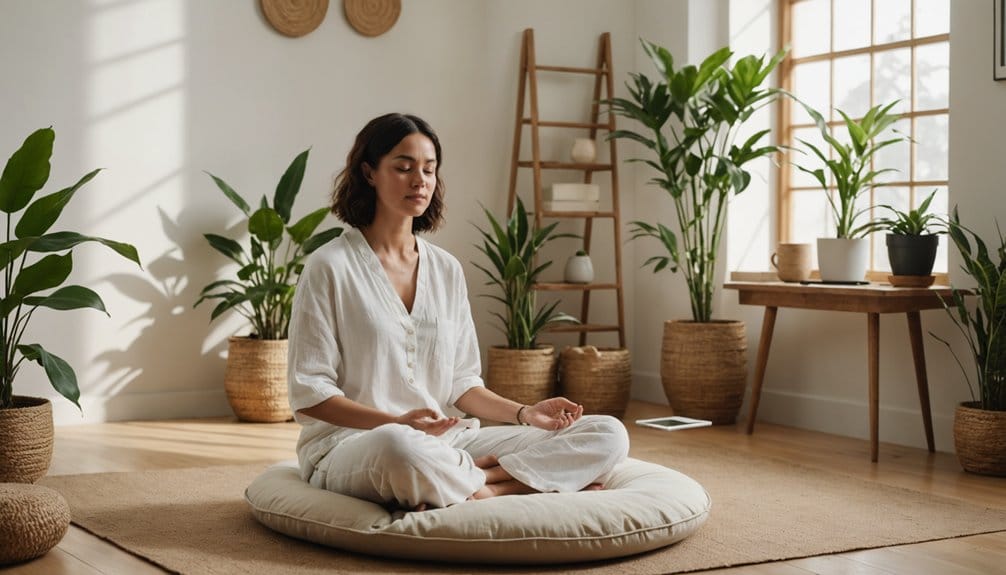
Start by finding a comfortable position – and no, you don’t need to twist yourself into a pretzel! Simply sit or lie down where you won’t be disturbed. Focus on the natural rhythm of your breathing for just 30 seconds. Notice how your chest rises and falls. When your mind wanders (and it will – we’re only human!), gently guide it back to your breath. These basic relaxation techniques might feel awkward at first, but they’re like training wheels for your mind. With practice, you’ll develop a powerful tool for pain management.
Body Scan Meditation Practice
Once you’ve mastered basic breathing techniques, body scanning takes your meditation practice to the next level – think of it as upgrading from a flip phone to a smartphone. Through deliberate body awareness, you’ll learn to zoom in on different areas like a mental microscope, noticing sensations you usually ignore.
Start at your toes (yes, those often-forgotten digits) and work your way up. What do you feel? Maybe there’s tingling in your feet, tension in your calves, or that annoying knot in your shoulder you’ve been avoiding. The key is sensory observation without judgment – no labeling sensations as “good” or “bad.” Haven’t felt your left elbow in years? That’s perfectly normal! Simply observe each body part with curious attention, like you’re discovering a new territory on your personal pain-relief map.
Guided Visualization Methods
You’ll discover three powerful visualization techniques that can help tame your chronic pain like a skilled lion tamer working with an unruly beast. The Healing Light Body Scan lets you imagine warm, soothing light flowing through your body (much like that feeling when you’re lounging in perfect sunshine), while the Nature Scene Pain Release transports you to your own personal paradise where discomfort melts away like morning frost. For those times when pain feels like an unwanted houseguest who won’t leave, the Pain-to-Peace Journey technique helps you transform that pesky visitor into a more manageable presence through step-by-step mental imagery.
Healing Light Body Scan
Guided light visualization offers a powerful gateway into deep meditative pain relief, combining the mind’s natural imagery abilities with systematic body awareness. Think of yourself as your own healing artist, painting with streams of golden light.
Start by imagining a warm, healing light entering through the crown of your head. You’ll direct this energy to each area of discomfort – like using a flashlight to illuminate dark corners. As you scan downward, visualize the light dissolving tension in your neck, shoulders, and beyond. Wherever you find pain, let the radiance linger and expand.
Don’t worry if your mind wanders – even master meditators chase stray thoughts sometimes! Just gently guide your focus back to that healing light, allowing it to wash through your body like a soothing wave.
Nature Scene Pain Release
While healing light provides one path to relief, the natural world offers its own potent medicine cabinet of calming imagery. You’ll be amazed how nature immersion can transform your pain experience, even from the comfort of your meditation cushion.
Picture yourself in your favorite outdoor sanctuary – maybe it’s a sun-dappled forest or a peaceful beach at sunset. Engage each sense fully: hear waves lapping at the shore, feel a gentle breeze on your skin, smell pine needles or salty air. This deep sensory engagement acts like a mental vacation from pain.
Ever notice how time seems to slow down when you’re lost in nature’s embrace? Let your mind wander through detailed scenes – count rings on a tree trunk, watch clouds shape-shift, or follow a butterfly’s dance. Your pain doesn’t disappear, but it often fades into the background of nature’s symphony.
Pain-to-Peace Journey Techniques
Moving through chronic pain requires a roadmap, and guided visualization offers exactly that – a step-by-step journey from discomfort to tranquility. You’ll learn to transform your pain perception through emotional regulation techniques that feel like giving your mind a rejuvenating spa day.
Start by picturing your pain as a shape or color that you can manipulate. Maybe it’s a red ball that you’re slowly turning blue, or a sharp edge that’s becoming softer. This self-awareness practice isn’t about denial – it’s about expanding your consciousness to include peace alongside discomfort. Combined with relaxation techniques and positive affirmations (“I’m becoming stronger than my pain”), these coping mechanisms create powerful stress reduction tools. Think of it as becoming the director of your own healing story, where you’re gradually rewriting the script from “ouch” to “ahhh.”
Mindful Movement and Gentle Stretching
Because chronic pain can make traditional meditation feel impossible, incorporating gentle movement into your practice offers a perfect middle ground. You don’t need to sit still like a statue – your body craves movement, even when it hurts.
Start with simple stretches that feel good to you. Maybe it’s rolling your shoulders or gently twisting your torso. The key is staying present with each movement, noticing how your body responds. Remember, you’re not training for the Olympics here – mindful movement is about listening to your body’s whispers before they become shouts.
Try this: Stand up (if you can) and slowly raise your arms overhead while breathing deeply. Lower them with purpose. Feel that? That’s mindful movement in action, and you’re already doing it. See? You’re better at this than you thought!
Developing a Daily Meditation Routine
Once you’ve explored mindful movement, establishing a daily meditation practice might seem as intimidating as climbing Mount Everest in flip-flops. But here’s the thing – you don’t need to meditate for hours to reap the consistency benefits. Start with just five minutes each morning.
Pick a time that works with your natural rhythm. Are you a bright-eyed early bird? Meditate right after your morning coffee. Night owl? Try a peaceful evening session before bed. Use simple motivational techniques like setting your meditation cushion in plain sight or tracking your progress with a fun app. Remember, you’re not competing for a meditation gold medal – you’re simply creating a peaceful ritual that works for you. Even the days when your mind wanders more than a tourist without a map still count as practice.
Combining Meditation With Pain Management Strategies
While traditional pain management often feels like a solo journey, integrating meditation into your relief toolkit can be a game-changer. Think of it as adding a superpower to your existing strategies – like giving your trusty pain relief methods a mindfulness upgrade.
You don’t have to choose between meditation and other pain management techniques. Instead, combine them strategically. Try practicing mindfulness while applying heat therapy, or use meditation to enhance the effectiveness of your prescribed medications. Ever noticed how stress amplifies pain? That’s where mindfulness integration works its magic.
Before physical therapy? Take five minutes to center yourself. During stretching exercises? Focus on your breath. Even simple activities like walking can become moving meditations. You’re not just managing pain – you’re transforming your relationship with it.
Measuring Progress and Adjusting Your Practice
You’ll want to start tracking your pain levels daily – think of yourself as a detective gathering clues about what meditation techniques work best for you. When you notice patterns (like how 20-minute sessions might help more than 10-minute ones), you can adjust your practice to maximize relief. Keep a simple pain diary with a 1-10 scale and jot down which meditations leave you feeling better – it’s like being your own meditation scientist, minus the lab coat and fancy equipment.
Track Pain Intensity Levels
Keeping a pain diary might sound about as exciting as watching paint dry, but tracking your meditation progress is a game-changer for managing chronic pain. Using pain journals helps you spot patterns you’d otherwise miss – like how that 20-minute morning session actually carries you through your toughest afternoon meetings.
Start simple with basic intensity scales from 1-10. How’s your pain before meditation? After? A week later? You’ll be amazed at what these numbers reveal. Maybe you’ll discover that shorter, frequent sessions work better than marathon sits. Or that guided meditations crush your pain levels more effectively than silent ones. Think of yourself as a pain detective, gathering clues to crack the case of your own comfort. The evidence is in the numbers!
Adapt Meditation Time Blocks
Once those pain tracking numbers start telling their story, it’s time to fine-tune your meditation schedule like a radio dial searching for the perfect frequency. You’ll notice certain times when your body’s more receptive to meditation – maybe it’s those quiet morning moments or that sweet spot after lunch. Work with these natural rhythms, not against them.
Create adaptable timeframes that flex with your pain levels. Having a rough day? Break your usual 30-minute session into three 10-minute chunks. Feeling stronger? Stretch it out longer. Remember to build in scheduled breaks – they’re not admitting defeat, they’re strategic pit stops on your healing journey. Ever notice how race car drivers don’t win by flooring it non-stop? They pace themselves, and so should you.