Picture Sarah, a graphic designer who spent years hunched over her desk, until she discovered how combining yoga with mindful movement transformed her daily routine. You don’t need to be a pretzel-twisting guru to enhance your mind-body connection – in fact, you might already practice elements of mindful movement without realizing it. Whether you’re a meditation newbie or a seasoned yogi, these three approaches will help you turn everyday movements into opportunities for greater awareness and well-being.
The Mind-Body Connection in Movement
While many people think of movement as purely physical, your mind and body are actually dancing an intricate tango together every time you take a step, stretch, or breathe. Through mindful observation, you’ll notice how your thoughts directly influence your muscle tension, posture, and even the rhythm of your breath. Ever catch yourself hunching when stressed? That’s your body speaking volumes!
Your emotional awareness becomes heightened when you tune into these subtle signals. You’ll start recognizing how excitement bubbles up as tingles in your chest, or how anxiety might create a knot in your stomach. By paying attention to these mind-body conversations, you’re not just moving – you’re experiencing a full-body dialogue. And trust me, once you start listening, you’ll be amazed at how much your body’s been trying to tell you all along. This mindful connection releases beneficial brain chemicals like dopamine and serotonin that enhance your overall mental clarity.
Mindful Breathing During Yoga Flow
You’ll transform your yoga practice when you focus on mindful breathing during each pose, letting your inhales and exhales guide your movements like a dance partner who actually knows the steps. Between flow sequences, don’t hesitate to pause and check in with your breath – it’s not cheating, it’s actually part of the process! By syncing your breath with movement, you’re not just going through the motions anymore – you’re creating a moving meditation that’ll make even the wobbliest warrior pose feel more grounded. Try incorporating diaphragmatic breathing practice while lying in savasana to deepen your mind-body connection and enhance relaxation.
Breathe Through Each Pose
As you flow through yoga poses, mindful breathing serves as your anchor to the present moment – it’s the difference between just making shapes with your body and truly practicing yoga. Let your breathe rhythm match each movement, creating a natural dance between inhales and exhales.
Coming into Warrior II? Breathe in as you extend your arms. Flowing into Forward Fold? Release your breath as you dive down. Your pose awareness deepens when you sync your breathing to each shift. Ever notice how holding your breath usually means you’re forcing a pose? (We’ve all been there!)
Connect Movement With Breath
Moving mindfully with your breath creates a beautiful dance between body and mind. As you flow through poses, let your breath awareness guide each shift. Think of it like riding a wave – your inhales lift and expand while your exhales ground and release.
Want to find your flowing rhythm? Start simple. Raise your arms with each inhale, lower them with each exhale. Once you’ve got that down, try linking other movements to your breath. Maybe you’ll wobble or lose track sometimes (we all do!), but that’s part of the practice. Your breath becomes your internal metronome, setting a natural pace that’s uniquely yours.
Notice how your movements become smoother when you sync them with your breathing. There’s no need to force it – just let your body and breath move as one.
Pause Between Flow Sequences
While flowing through yoga sequences feels amazing, the mindful pauses between them are pure gold. These intervals aren’t just rest stops – they’re opportunities to check in with yourself and deepen your practice. Take a moment to notice how your body feels, where your breath has taken you, and what sensations are arising.
During these breaks, you’ll develop greater flow awareness by simply observing without judgment. Has your heart rate changed? Are your muscles humming with energy? Instead of rushing to the next pose, embrace these mini-meditation moments. They’re like hitting the refresh button on your mind and body. Remember, you’re not being lazy – you’re being intentional. These conscious pauses help integrate the benefits of your previous sequence while preparing you for what’s next.
Daily Rituals for Movement Awareness
To transform mindful movement from an occasional practice into a natural part of your day, you’ll need some strategic rituals that fit seamlessly into your routine. Start with gentle morning stretches while your coffee brews – even a simple cat-cow sequence can wake up your spine. Who says you can’t multitask mindfully?
Make movement check-ins your secret superpower throughout the day. Notice how you’re sitting at your desk (probably hunched over like a question mark – we’ve all been there). Take three conscious breaths and realign. During evening reflections, scan your body from head to toe, releasing tension spots you’ve collected like souvenirs. Think of it as decluttering your physical space, just like you’d tidy up your living room. Regular practice of mindful movement meditation helps create lasting neural pathways that improve your brain’s stress response over time.
Blending Meditation With Physical Practice
You’ll discover that breath and movement create a natural dance when you start paying attention to how they flow together. As you shift between yoga poses, your breath becomes the conductor – inhaling to expand and lengthen, exhaling to settle deeper into each position. It’s like learning to pat your head while rubbing your belly at first, but soon you’ll find yourself moving with such natural rhythm that you’ll wonder how you ever exercised without this mindful awareness. This mindful approach draws from ancient Vedic philosophy that recognized the essential connection between physical discipline and spiritual exploration through movement.
Moving Through Breath Flow
As your mind wanders during meditation, your breath becomes the bridge between stillness and movement. Let’s face it – staying focused isn’t easy when your thoughts zip around like caffeinated squirrels. That’s where breath awareness steps in as your anchor.
Start by syncing your movements with your natural breathing rhythm. When you’re flowing through poses, match each shift to your inhales and exhales. Notice how your body naturally wants to expand with each breath in and soften with each breath out. This rhythmic flow isn’t just pretty – it’s practical. Ever tried rushing through a sun salutation while holding your breath? (Spoiler alert: it doesn’t end well!)
You’ll find your own sweet spot where movement and breath dance together, creating a moving meditation that feels both grounding and liberating.
Mindful Posture Transitions
While shifting between yoga poses might seem like the perfect time to plan your grocery list, these moments actually hold incredible potential for deepening your practice. Each change is an opportunity to explore mindful alignment and build body awareness. Ever notice how your mind wanders when you’re moving from warrior to triangle pose?
Here’s your chance to turn those auto-pilot moments into moving meditation. Focus on creating seamless changes by matching your breath to each movement. Let your inhale initiate the shift and your exhale settle you into the new position. Think of it like dancing – you wouldn’t just jump from one position to another, would you? Instead of rushing through the in-between spaces, treat them as poses themselves. Your practice will transform from a series of static snapshots into a graceful, flowing journey.
Creating Sacred Movement Spaces
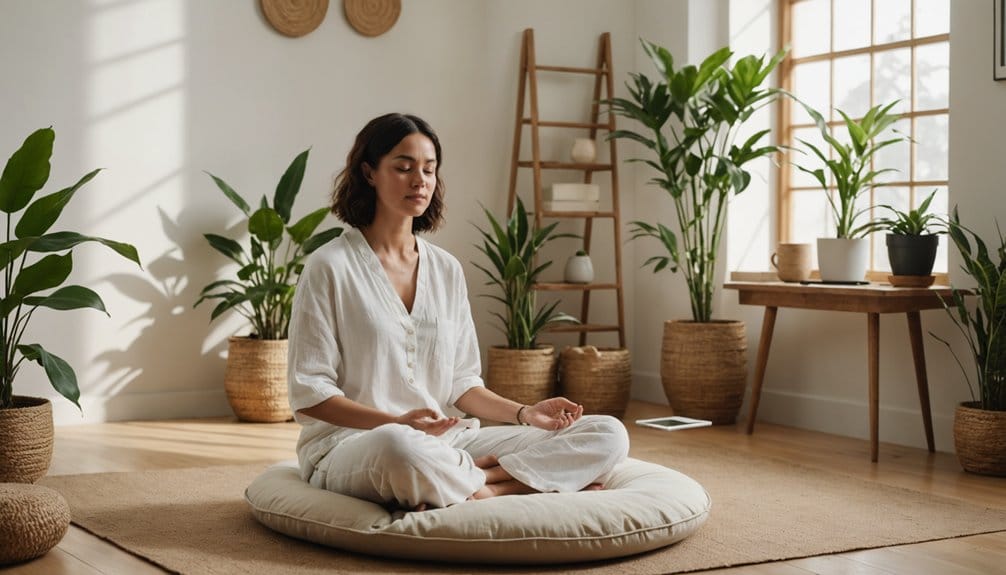
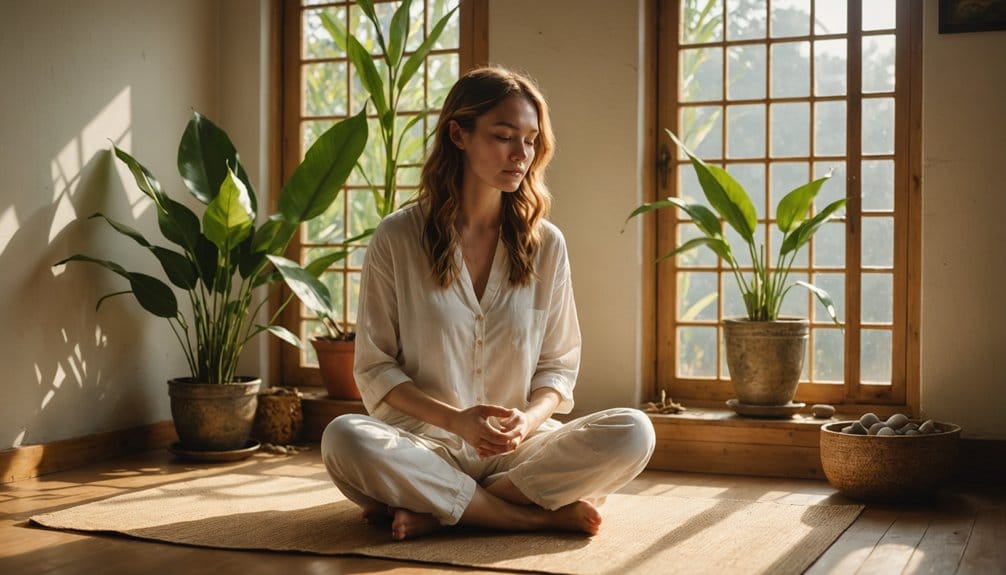
Setting up a dedicated movement space transforms an ordinary room into a sanctuary for your yoga and mindfulness practice. You don’t need an entire room – even a corner will do! Create an intentional environment by clearing clutter and adding elements that speak to your soul: maybe it’s a small altar with meaningful objects, or simply a lovely plant that makes you smile.
Your sacred space should feel inviting, not intimidating. Keep it simple – you’re not designing a magazine cover! Add soft lighting, perhaps a cushion or two, and anything that helps you shift into practice mode. Remember, this is your space to move freely and breathe deeply. Just like you wouldn’t try to meditate in your kitchen junk drawer (though sometimes we all feel that scattered!), your movement area deserves its own peaceful vibe. This dedicated space allows for mindful walking meditation, offering an invigorating way to practice presence while moving through your sanctuary.
Building a Sustainable Movement Practice
Because life loves to throw curveballs at our carefully planned routines, building a sustainable movement practice requires both flexibility and structure. You’ll need to embrace adaptive routines that bend without breaking when work runs late or your energy tanks. Start by setting realistic goals – maybe it’s just 10 minutes of mindful movement daily rather than an hour-long yoga session.
Create sustainable habits by linking movement to existing routines, like morning stretches while your coffee brews. Practice variations keep things fresh and prevent injury – some days you might flow through sun salutations, others you’ll focus on gentle stretching. Remember to integrate self-care through mindful assessment: How’s your body feeling today? What kind of movement would serve you best? Movement consistency isn’t about perfection – it’s about showing up for yourself, even when plans go sideways.
Mindful Movement Beyond the Mat
The practice of mindful movement doesn’t end when you roll up your yoga mat. Life offers countless opportunities to move with intention and awareness. You’ll find mindful moments during nature walks, while dancing freely in your living room, or even during joyful running sessions with friends.
Turn everyday activities into moving meditation through mindful gardening or conscious walking between meetings. Why not try some tai chi in the park or active stretching while waiting for your coffee to brew? Body scanning can transform mundane tasks into opportunities for presence. Let playful movement and creative expression guide you – whether you’re dancing with your kids or simply stretching at your desk. Remember, mindfulness isn’t about perfection; it’s about bringing awareness to whatever movement feels natural in the moment.