You’ll find Vipassana meditation to be a game-changer for your mindfulness practice, as it combines ancient wisdom with practical self-observation techniques. Through daily sessions of breath awareness and body scanning, you’re training your mind to stay present while building emotional resilience. Don’t worry if your thoughts wander – that’s totally normal! What makes Vipassana special is how it transforms ordinary moments into opportunities for deeper insight. Ready to access your mind’s hidden potential?
The Ancient Roots of Vipassana Practice
While many modern meditation practices seem to pop up overnight like mushrooms after rain, Vipassana‘s roots stretch back over 2,500 years to ancient India. You’re tapping into a practice that’s witnessed empires rise and fall, survived countless cultural shifts, and still remains remarkably unchanged in its core teachings.
The historical significance of Vipassana can’t be overstated – it’s like the great-grandparent of mindfulness meditation. As you explore this ancient technique, you’ll find it’s been quietly shaping the cultural influence of meditation across Asia for millennia. Think of it as the original “operating system” for mental clarity, way before smartphones made meditation apps trendy. What’s fascinating is how this ancient practice fits so perfectly with our modern need for stress relief and self-discovery. By learning to engage in self-observation and mindfulness, you’re able to cultivate deeper self-awareness and enhanced emotional stability, mirroring the original intention of the Buddha’s teachings.
Understanding the Core Principles of Insight Meditation
When you’re ready to explore Vipassana meditation, you’ll discover it’s rooted in ancient Buddhist wisdom that’s surprisingly practical for modern life. You’ll learn to observe your body and mind with the fascinated attention of a scientist studying the world’s most interesting specimen (plot twist: that specimen is you). The key is developing your present-moment awareness – think of it as upgrading your mental software from “constantly-distracted monkey mind” to “mindfully-aware human 2.0.”
Ancient Buddhist Practice Origins
Dating back over 2,500 years to the time of the Buddha, Vipassana meditation emerged as one of humanity’s most profound techniques for understanding the true nature of reality. Throughout Buddhist history, this practice has evolved from its origins in ancient India, where the Buddha himself discovered it during his quest for enlightenment.
You’ll find it fascinating how this meditation technique has remained remarkably unchanged since those early days. While other aspects of Buddhist practice have adapted across cultures, Vipassana’s core method stays true to its roots. Think of it as the original mindfulness GPS – helping countless generations find their way to inner clarity! The meditation evolution you’re participating in today connects you directly to those first practitioners who sat cross-legged in ancient monasteries, seeking the same insights you’re pursuing now.
Observing Body and Mind
Three core principles form the foundation of Vipassana insight meditation: observing physical sensations, watching mental activity, and maintaining equanimity throughout the process.
Through mindful observation, you’ll notice sensations you’ve probably never paid attention to before – like that subtle itch on your nose or the gentle rise and fall of your chest while breathing. Isn’t it amazing how much we usually miss? Body awareness becomes your compass as you scan from head to toe, discovering the symphony of tingles, pressures, and temperatures that make up your physical experience.
Your mind will wander (trust me, everyone’s does), but that’s part of the practice. When thoughts pop up like uninvited guests at a party, simply acknowledge them and return your focus to those body sensations. No judgment needed – just gentle, persistent observation.
Present-Moment Awareness Techniques
While it’s natural to get lost in thoughts about the past or future, present-moment awareness techniques help anchor you firmly in the now. Through mindful breathing, you’ll learn to observe each inhale and exhale without trying to change anything. Ever notice how your mind wanders off like a curious puppy? That’s perfectly normal – just gently guide it back to your breath.
Body scanning is another powerful tool in your awareness arsenal. Start at your toes and work your way up, paying attention to each sensation. You might feel tingles, pressure, or warmth – maybe even that annoying itch you didn’t notice before. Don’t judge these sensations; simply acknowledge them and move on. Think of yourself as a friendly scientist, curiously exploring the territory of your own experience.
The Mind-Body Connection in Vipassana
You’ll discover that Vipassana meditation creates a fascinating bridge between your chattering mind and your physical body through mindful observation of sensations. When you scan your body from head to toe, noticing every tingle and ache, you’re actually training your brain to maintain razor-sharp clarity – it’s like upgrading your internal GPS system. Your enhanced body awareness becomes a trusty anchor to the present moment, keeping you from drifting off into tomorrow’s to-do list or yesterday’s awkward moments. Additionally, similar to how Transcendental Meditation facilitates enhanced mental clarity, Vipassana meditation promotes a focused state that supports your creative process.
Observing Physical Sensations
As you settle into your meditation posture, physical sensations become your gateway to deeper awareness – whether it’s that annoying itch on your nose or the subtle pulsing in your fingertips. You’ll notice how your mind wants to immediately react to these sensations, but here’s where the magic happens: instead of scratching that itch, you simply observe it.
Through regular practice, your sensory awareness sharpens dramatically. That persistent knee pain? It’s no longer just “pain” – you’ll start noticing its precise location, intensity, and how it shifts moment by moment. Sometimes it feels like you’ve become a detective of your own body, discovering sensations you never knew existed. Who knew your left earlobe could tingle like that? The key is staying curious without getting caught up in the story.
Mental Clarity Through Scanning
Body scanning in Vipassana meditation brings a whole new meaning to the phrase “mind over matter.” This systematic practice of sweeping your attention from head to toe reveals the fascinating interplay between your thoughts and physical sensations.
When you engage in mental scanning, you’ll notice how your mind often plays tricks on you – one minute you’re focused on your breathing, the next you’re planning tomorrow’s lunch! But that’s exactly why this practice is so powerful for clarity enhancement. You’re training your brain to catch these wandering thoughts and gently guide them back to the present moment.
Think of it as giving your mind a spa day – methodically releasing tension and mental clutter as you move through each body part. Before you know it, you’ll find yourself steering through life’s challenges with newfound mental sharpness.
Present-Moment Body Awareness
Three distinct threads weave together in present-moment body awareness: your physical sensations, your mental activity, and the bridge between them. As you develop body awareness through Vipassana, you’ll notice how your thoughts directly influence your physical state. Ever catch yourself tensing up during a stressful meeting? That’s the mind-body connection in action!
Your sensory perception becomes sharper as you practice. You’ll start noticing subtle sensations you’ve always missed – like that slight pressure on your feet while walking or the gentle movement of your chest while breathing. It’s like upgrading from standard definition to 4K ultra-HD in your body awareness. The best part? You don’t need special equipment or a fancy meditation room – just your willingness to tune in and observe.
Daily Practice Techniques and Methods
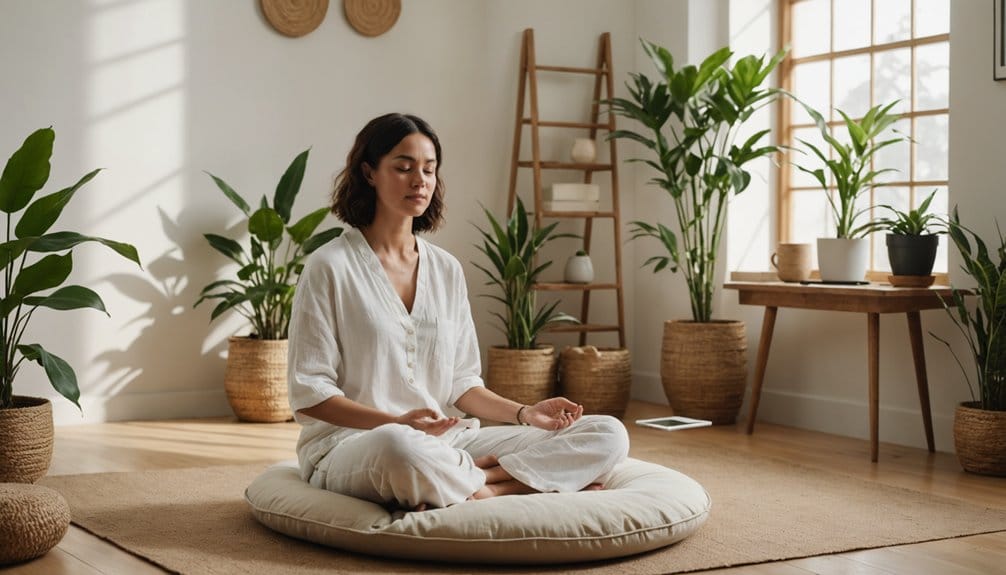
The daily practice of Vipassana meditation doesn’t require fancy equipment or an elaborate setup – you’ll just need a quiet space and about 30 minutes of uninterrupted time. Start with silent sitting in a comfortable position, whether that’s cross-legged on a cushion or in a straight-backed chair. Your body will thank you for not attempting those Instagram-worthy pretzel poses right away!
Focus on breath awareness by noticing the natural rhythm of your breathing. Don’t try to control it – just observe how the air moves in and out. When your mind wanders (and trust me, it will), gently guide your attention back to your breath without judgment. Think of it like training a puppy – you wouldn’t scold it for getting distracted, you’d just kindly guide it back to where it should be. This practice can also contribute to enhanced emotional adaptability, helping you manage difficult emotions effectively.
Overcoming Common Meditation Challenges
While starting a meditation practice can feel exciting, most beginners soon encounter a few stubborn roadblocks that test their patience. You might find your mind wandering to tomorrow’s grocery list or that weird thing you said five years ago. Don’t worry – these meditation distractions are completely normal!
When uncomfortable memories or feelings bubble up during practice, remember that emotional release is actually a sign of progress. You’re not doing anything wrong. Think of it like cleaning out a cluttered closet – sometimes you’ll find dust bunnies hiding in the corners. Try labeling these thoughts (“planning,” “remembering,” “worrying”) and gently return to your breath. And if you catch yourself planning next week’s vacation for the tenth time? Just smile and start again. Incorporating breathing techniques during your practice can also help anchor your mind and reduce anxiety.
Integrating Vipassana Into Modern Life
Mastering meditation techniques is one thing, but putting them into practice amid buzzing phones and packed schedules? That’s where the real challenge begins. Here’s how you can achieve mindful integration without becoming a hermit.
Start small – you don’t need to meditate for hours like a zen master. Even five minutes of focused breathing during your morning coffee counts. Look for natural pauses in your day: waiting for the elevator, standing in line at the grocery store, or sitting in traffic (yes, even road rage moments can become opportunities for daily mindfulness).
Transform routine activities into mini-meditation sessions. While washing dishes, focus on the sensation of warm water. During your commute, notice the rhythm of your footsteps. You’ll find that Vipassana naturally weaves into life’s fabric – no mountain retreat required.
Scientific Research and Proven Benefits
Recent scientific studies have transformed Vipassana meditation from an ancient Buddhist practice into a thoroughly researched wellness tool. You’ll find compelling evidence that regular practice enhances brain function and emotional regulation. Studies show practitioners experience significant stress reduction and improved focus after just eight weeks of mindfulness training.
Want to know what’s really exciting? Research indicates that Vipassana meditation actually changes your brain structure. It increases gray matter in areas linked to self-awareness, compassion, and memory. You’re literally rewiring your neural pathways! And here’s something that might surprise you: scientists have found that long-term meditators show biological markers suggesting they’re physically younger than their chronological age. Who wouldn’t want that bonus? The evidence is clear – you’re not just sitting there breathing; you’re actively upgrading your mental and physical wellbeing.
In addition, this practice has been shown to reduce cortisol levels, which can further support your physical and emotional health.