You might think guided meditation sounds too “woo-woo” for your bedtime routine, but it’s actually a science-backed way to improve your sleep quality. If you’re tired of counting sheep or scrolling through your phone at 2 AM, there’s a better approach waiting for you. Whether you’re dealing with racing thoughts, stress-induced insomnia, or just can’t seem to wind down, specific meditation techniques can transform your nightly battle with sleep into a peaceful shift to dreamland.
Understanding the Connection Between Meditation and Sleep
While tossing and turning might feel like your nightly routine, understanding how meditation impacts sleep can be a game-changer for those endless bedtime battles. You’re not alone in seeking a natural way to drift off – and that’s where meditation benefits come into play.
Think of your mind as a browser with too many tabs open. Meditation helps you close those unnecessary tabs, allowing your brain to flow smoothly through sleep cycles. When you meditate, you’re fundamentally teaching your body to recognize the difference between “time to think” and “time to rest.” Ever notice how your best ideas pop up right when you’re trying to sleep? That’s your mind being rebellious! Regular meditation practice helps tame that mental chatter, creating the perfect environment for quality rest without counting endless sheep.
Body scan techniques help identify and release physical tension that may be keeping you awake at night.
Essential Elements of Pre-Sleep Meditation
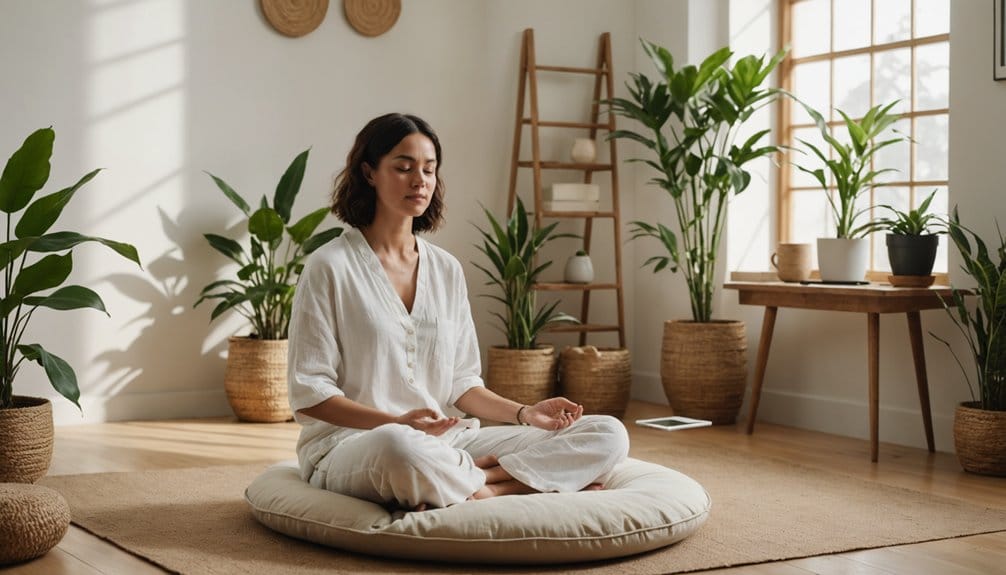
Tranquility begins with a few key ingredients – just like your favorite bedtime tea. To master your pre-sleep rituals, you’ll need a quiet space (and no, your cat’s midnight zoomies don’t count as meditation tools), comfortable seating or lying position, and about 15-20 minutes of uninterrupted time.
Ever notice how your mind races like a caffeinated squirrel right before bed? That’s where proper positioning comes in. You’ll want to find a posture that’s relaxed but alert – think “mindful slouching” rather than full-on couch potato mode. Set up your meditation tools: perhaps a gentle timer, some soft lighting, or your favorite cushion. The goal isn’t to force yourself into a zen state – it’s about creating an environment where peace naturally unfolds. Remember, even the Buddha probably had nights when he couldn’t stop thinking about his to-do list. Following the principles of yogic sleep meditation, you can achieve deep relaxation without complex movements or poses while remaining consciously aware.
Body Scan Meditation for Deep Relaxation
Body scan meditation leads the way to dreamland like a gentle tour guide through your own personal relaxation museum. Starting from your toes and moving upward, you’ll explore each part of your body with mindful attention – kind of like giving yourself a mental massage. Who knew your left pinky toe could hold so much tension?
As you develop body awareness, you’ll notice where you’re carrying stress (hello, stubborn shoulder knots!) and learn to consciously release it. Think of tension release as opening tiny doors throughout your body, letting peace flow in. You might discover surprising spots where you’ve been unconsciously clenching – jaw, fingers, even your tongue. With practice, you’ll become an expert at spotting and melting away tension, making your journey to sleep smoother and more enjoyable. Research shows that systematic muscle relaxation can significantly reduce physical tension throughout your entire body, making it easier to transition into restful sleep.
Breathing Techniques for Better Sleep
Since deep breathing acts as nature’s built-in relaxation switch, mastering a few simple techniques can transform your bedtime routine from restless to restful. Start with diaphragmatic breathing – you know, that belly-expanding breath that makes you look like you’ve just devoured a holiday feast. Place one hand on your chest and another on your stomach, then breathe deeply so your belly rises while your chest stays still.
Ready to level up? Try progressive relaxation breathing, where you’ll inhale for four counts, hold for seven (no cheating!), and exhale for eight. It’s like playing a musical instrument, except the only note you need to hit is “Zzzz.” Practice this pattern for 5-10 cycles, and you’ll likely drift off before you can count your next sheep. For enhanced mindfulness, try square breathing technique which involves four equal phases of inhaling, holding, exhaling, and holding again.
Mindfulness Practices to Quiet Racing Thoughts
When your mind won’t stop churning through tomorrow’s to-do list at bedtime, you’ll need more than just deep breaths to drift off peacefully. By using your breath as an anchor point for your attention, you can gently guide those racing thoughts back to the present moment whenever they try to wander off into worry-land. A relaxing body scan meditation helps shift your focus from mental chatter to physical sensations, letting you notice – and release – tension you didn’t even realize you were carrying in your shoulders, jaw, or anywhere else that stress likes to hide. Similar to ancient meditation practices, these techniques have been scientifically proven to improve sleep quality and reduce anxiety when practiced regularly.
Breathing Anchors Mental Focus
Racing thoughts can feel like a chaotic party in your mind where everyone’s talking at once. But here’s the beautiful thing about breath awareness – it’s like having an instant “mute” button for that mental chatter. Your breath becomes your anchor, giving your busy mind something concrete to focus on.
When you’re lying there at 2 AM wondering if penguins have knees (they do, by the way), try this: Focus on your mindful exhalation. Make each out-breath slightly longer than your in-breath. It’s like slowly deflating a balloon – but don’t worry, your head won’t actually shrink! This simple technique helps quiet those tap-dancing thoughts that love to perform their midnight show. Your breath is always there, waiting patiently to be your mental bouncer, ready to escort those unwanted thoughts right out the door.
Body Scan for Relaxation
A cozy bed can feel like a wrestling match with your own body when sleep won’t come. Your mind races while your muscles quietly harbor the day’s stress like unwanted house guests. That’s where the body scan technique comes in – your personal eviction notice for tension.
Start at your toes (yes, those neglected little piggies) and gradually move your attention upward. Notice each body part without judgment, like you’re taking attendance in the world’s most relaxing classroom. As you develop body awareness, you’ll spot areas of tension you didn’t even know were staging a protest. Take slow, deliberate breaths while consciously releasing that tension. Your shoulders might be hovering somewhere near your ears – let them drop. Your jaw? Probably clenched tighter than a pickle jar. Release it all.
Creating the Perfect Sleep Meditation Environment
Since your sleeping environment can make or break your meditation practice, it’s essential to set up your space thoughtfully. Start by dimming the lighting ambiance – nobody’s ever achieved zen under harsh fluorescent lights, right? A few well-placed flameless candles can transform your bedroom from “everyday chaos” to “personal sanctuary” in seconds.
Don’t forget the power of calming scents to set the mood. Whether you’re team lavender or devoted to vanilla, choose aromas that help your mind say “time to chill.” Just don’t go overboard – you’re aiming for subtle relaxation, not a perfume store explosion. Keep your space cool (around 65-68°F), clutter-free, and cozy. Remember, your meditation spot should feel like a warm hug, not a stuffy boardroom. A soft blanket and supportive cushion can make all the difference.
Science-Backed Benefits of Sleep Meditation
Now that you’ve created your perfect sleep sanctuary, let’s explore why meditation deserves a permanent spot in your bedtime routine. Research shows that regular meditation positively impacts your sleep cycles, helping you drift off faster and stay in deeper sleep longer. Who doesn’t want that?
Studies have consistently demonstrated impressive meditation outcomes, including reduced anxiety, lower blood pressure, and increased melatonin production. You’ll experience up to 50% fewer nighttime wake-ups and feel more refreshed in the morning. Ever notice how your mind races just when you’re trying to sleep? That’s where meditation swoops in like your personal sleep superhero.
Think of sleep meditation as hitting your brain’s reset button – it’s like giving your busy mind permission to clock out for the night.
Building a Sustainable Nighttime Meditation Routine
While creating the perfect meditation routine might seem challenging at first, you’ll be surprised how quickly it becomes second nature – just like brushing your teeth or checking your phone for the hundredth time before bed. The key is meditation consistency, treating it as non-negotiable as your morning coffee.
Start by picking a specific time that works with your schedule – maybe right after your evening shower or once you’ve changed into those comfy PJs. Your nighttime rituals should flow naturally, so don’t force yourself to meditate at 9:47 PM sharp if that doesn’t match your lifestyle. Instead, attach your practice to existing habits. Already have a skincare routine? Perfect! Add five minutes of mindful breathing right after you moisturize. Before you know it, you’ll be craving that peaceful moment.