Whether you’re new to meditation or you’ve been practicing for years, proper breathing can make or break your mindfulness experience. Let’s be real – most of us breathe about as mindfully as we fold laundry (which is to say, not very). You might think you’ve got breathing down pat since you’ve been doing it your whole life, but there’s more to it than just inhaling and exhaling. Want to transform your scattered monkey mind into a zen master’s paradise? The secret lies in mastering these game-changing techniques.
The Science Behind Mindful Breathing
When you consciously control your breathing rhythms, you’re actually triggering a cascade of beneficial changes throughout your body. Your heart rate slows down, your blood pressure drops, and those stress hormones that keep you tossing and turning at night? They start to melt away. It’s like having a reset button for your nervous system.
Ever notice how babies breathe deeply and naturally from their bellies? That’s what you’re aiming for with mindful breathing. This natural approach to stress reduction isn’t just some new-age trend – it’s backed by solid research showing measurable changes in brain activity. Square breathing method has proven particularly effective for managing stress in high-pressure situations while maintaining mental clarity.
Essential Elements of Proper Breathing Posture
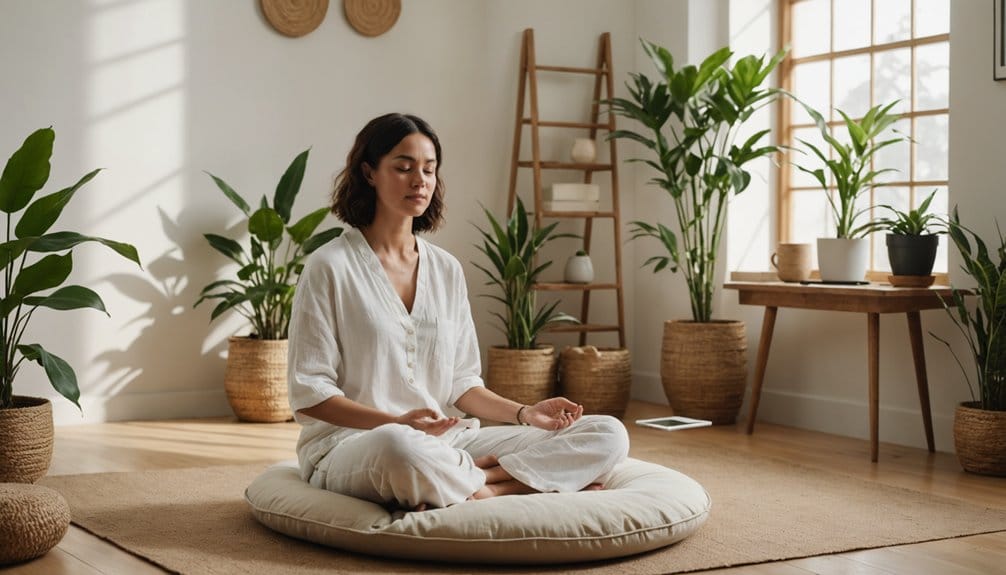
Your foundation for mindful breathing starts with proper posture – you can’t expect your lungs to work their magic if you’re slouched like a teenager gaming for 12 hours straight. Think about creating proper alignment from the ground up: plant your feet firmly on the floor, stack your spine like building blocks, and let your shoulders drop away from your ears (they’re not earrings, after all).
Maintain mindful awareness of your body’s position throughout your practice. Your head should float above your shoulders as if suspended by an invisible string, while your hands rest comfortably on your thighs. Remember, you’re not trying to become a meditation statue – feeling natural and at ease is key. When your posture’s on point, your breath flows freely, and that’s when the real magic happens. This mindful positioning helps activate brain wave patterns that promote deeper relaxation and mental clarity during meditation.
Foundational Deep Breathing Methods
When you’re ready to explore foundational breathing methods, you’ll find that techniques like box breathing, diaphragmatic breathing, and ocean breath can transform your meditation practice from “Am I doing this right?” to “Wow, I’m actually getting somewhere!” Box breathing gives you a simple four-count structure that’s perfect for beginners (think: breathe in, hold, breathe out, hold – just like drawing a box), while diaphragmatic breathing helps you tap into your body’s natural stress-relief system by engaging your belly instead of your chest. The soothing sound of ocean breath, where you’ll slightly constrict your throat to create a gentle rushing noise, isn’t just calming – it’s also a foolproof way to know you’re breathing correctly (and yes, you might sound a bit like Darth Vader at first, but that’s all part of the fun). These ancient breathing practices have been cultivated in India for over 5,000 years as a bridge between physical existence and higher consciousness.
Box Breathing Method
Box breathing stands as one of the most versatile and effective meditation techniques you’ll ever learn. It’s like giving your mind a timeout in the best possible way. The box breathing benefits are impressive – from reducing stress to sharpening focus when you’re feeling scattered.
Here’s how to master box breathing exercises: Imagine drawing a square with your breath. Inhale for 4 counts, hold for 4, exhale for 4, then hold again for 4. That’s it! You’ve just created your mental square. Feeling a bit silly counting in your head? Don’t worry – we all start somewhere. You can practice this technique anywhere – stuck in traffic, before a big presentation, or when your mother-in-law asks about grandkids (again). The beauty is, nobody even needs to know you’re doing it.
Diaphragmatic Breathing Basics
Learning diaphragmatic breathing feels a bit like becoming best friends with your belly – strange at first, but totally worth it in the end. Ever noticed how babies breathe? They’ve got it figured out naturally, with their little tummies rising and falling like gentle waves.
To master this technique, lie down and place one hand on your chest and another on your belly. As you inhale through your nose, focus on expanding your belly while keeping your chest still. You’ll feel the diaphragm contraction as this powerful muscle draws air deep into your lungs. Then slowly exhale through pursed lips, letting your belly fall. Simple, right? With consistent breath awareness, you’ll find yourself naturally breathing this way, even when you’re stuck in traffic or racing to meet a deadline.
Ocean Breath Technique
Similar to the soothing sound of waves crashing on the shore, the Ocean Breath technique (Ujjayi in Sanskrit) creates a calming rhythmic flow that’ll transport your mind to a peaceful seaside retreat.
Begin by sitting comfortably and slightly constricting the back of your throat – you know, like when you’re trying to fog up a mirror. As you breathe through your nose, you’ll create a soft oceanic sound that’s surprisingly similar to waves rolling in and out. Let your rhythmic inhalation match the tempo of gentle surf – about 4-6 seconds per breath.
Want to amplify the experience? Try adding ocean visualization by imagining yourself on a quiet beach. Feel the salt air filling your lungs as you ride the waves of your breath. Before you know it, you’ll be in your own private meditation paradise.
Advanced Zen Breathing Techniques
While traditional breathing exercises lay the foundation for mindful meditation, advanced Zen techniques take your practice to fascinating new depths. You’ll discover how to cultivate deeper Zen awareness through precise control of your breath. Don’t worry – you won’t need to twist yourself into a pretzel or chant in ancient languages!
Start by mastering rhythmic inhalation: breathe in for four counts, hold for two, then release for six. Notice how your mind becomes sharper with each cycle? That’s your consciousness expanding. As you progress, you’ll learn to detect subtle energy shifts that once seemed invisible. Ever wondered why experienced practitioners seem so annoyingly calm? They’ve mastered these advanced patterns.
Want to really challenge yourself? Try maintaining awareness of your breath while someone’s eating chips loudly next to you! These techniques draw from ancient Buddhist traditions that have proven effective for over two millennia.
Common Breathing Challenges and Solutions
Even experienced meditators face frustrating obstacles when it comes to proper breathing techniques. You’re not alone if you’ve encountered breathing struggles that make your mindfulness practice feel more like a wrestling match than a peaceful escape. Environmental factors, like noisy neighbors or that pesky car alarm, can throw off your breath awareness faster than a cat chasing a laser pointer.
When physical discomfort creeps in (hello, cramped legs!), try adjusting your posture or using props for support. For anxiety management, start with shorter sessions focused on relaxation techniques before diving into deeper practice. Can’t keep your mind from wandering? That’s where focus enhancement comes in – try counting your breaths or visualizing each inhale as a wave rolling onto shore. The 4-7-8 breathing method can provide instant calm when anxiety peaks during meditation. These simple tweaks can help you overcome common mindfulness barriers without losing your sense of humor.
Integrating Breathing Practices Into Daily Life
Have you ever noticed how your breath becomes shallow when you’re stuck in traffic or racing to meet a deadline? That’s exactly when you need mindful breathing the most. The good news is, you don’t need a meditation cushion or a silent retreat to practice.
Try setting breathing reminders throughout your day. Link deep breaths to daily rituals you already have – like waiting for your coffee to brew or standing in the elevator. Take three conscious breaths while your computer boots up. Let that red traffic light become your cue to reset.
You’ll be amazed how these small moments add up. Before you know it, mindful breathing becomes as natural as checking your phone – but way more relaxing! Think of it as your personal reset button, available anytime, anywhere.