You’ll find remarkable clarity and inner peace through seated meditation – even if you’re a complete beginner. Starting with just 5 minutes a day, this time-tested practice helps sharpen focus, reduce stress, and build emotional resilience. Think of it as a mental gym session where you train your mind to stay present instead of racing through endless to-do lists. The best part? You don’t need any fancy equipment or spiritual knowledge to access your mind’s natural ability to find stillness.
Understanding the Foundation of Zazen
Meditation doesn’t have to feel like you’re trying to become a pretzel-shaped zen master overnight. When you’re exploring zazen principles, you’ll find they’re surprisingly down-to-earth and practical. Think of it as giving your mind a comfy chair to rest in – except you’re the one sitting in the actual chair.
The meditation origins of zazen trace back to ancient Buddhist practices, but don’t let that intimidate you. You’re not expected to transform into a mountaintop guru who survives on dewdrops and enlightenment. Instead, you’re learning a time-tested method to quiet your mind, which, let’s face it, probably runs like a caffeinated squirrel most days. Starting with just five minutes of seated practice, you’ll begin to understand why millions have found clarity in this simple yet profound practice, leading to improved mental clarity that enhances the quality of daily life.
Benefits of Daily Seated Practice
You’ll notice your ability to focus sharply improves when you commit to a daily seated meditation practice, even if you start with just 5-10 minutes each morning. Your stress levels will naturally decrease as you learn to observe your thoughts without getting tangled up in them – it’s like watching clouds pass by instead of trying to wrestle them into submission. While these benefits might seem subtle at first, you’ll soon find yourself handling life’s chaos with the composed grace of a zen master (well, maybe not quite that peaceful, but definitely more collected than your previous “running-around-like-a-headless-chicken” approach). Additionally, regular practice can encourage better emotional regulation, helping you respond to life’s challenges with greater resilience.
Mental Focus Improvements
A consistent seated practice can transform your mental focus from scattered to laser-sharp in ways you might not expect. Ever notice how your mind jumps between thoughts like a caffeinated squirrel? That’s where mindful awareness comes in – it helps you catch those mental gymnastics in action.
Through regular meditation, you’ll develop concentration enhancement that carries into daily life. You’ll find yourself actually listening when others speak instead of planning your grocery list. Tasks that once scattered your attention now feel manageable. Remember that time you read the same paragraph three times because your mind wandered? With practice, you’ll catch yourself drifting and gently redirect your focus. It’s like training a puppy – your mind will still wander, but you’ll become much better at bringing it back to heel.
Stress Management Benefits
Beyond sharpening your mental focus, regular seated practice offers powerful stress-busting benefits that’ll make you wonder why you didn’t start sooner. When life throws its daily curveballs, you’ll find yourself better equipped to stay cool under pressure.
Think of stress reduction through meditation as your personal reset button. Those racing thoughts about work deadlines or family drama? You’ll learn to observe them without getting swept away in the emotional current. Through consistent practice, you’re developing emotional regulation skills that work like a mental thermostat – helping you maintain an even temperature no matter what’s heating up around you. And yes, you might still occasionally lose your cool when someone steals your parking spot, but you’ll bounce back faster than ever before.
Creating Your Meditation Space
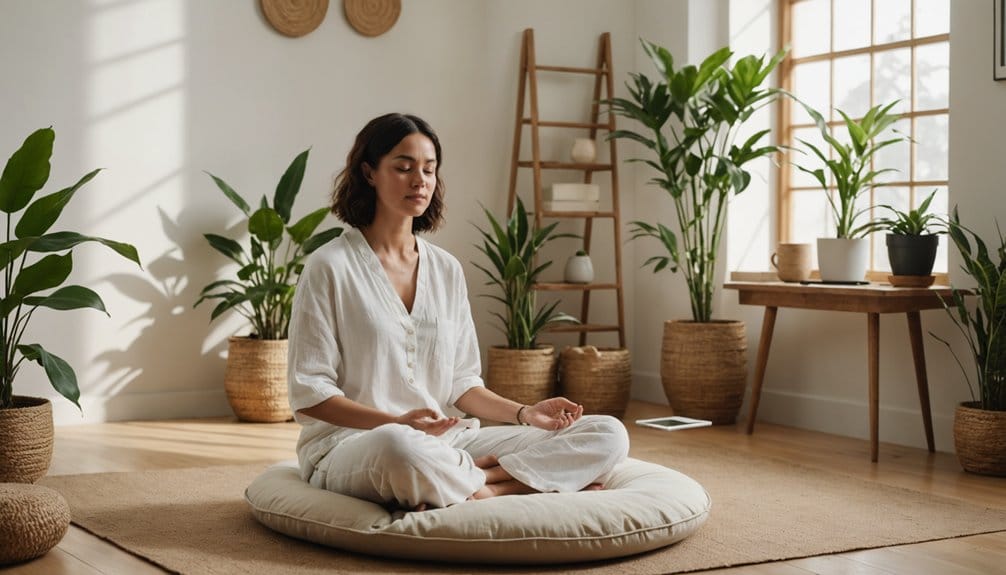
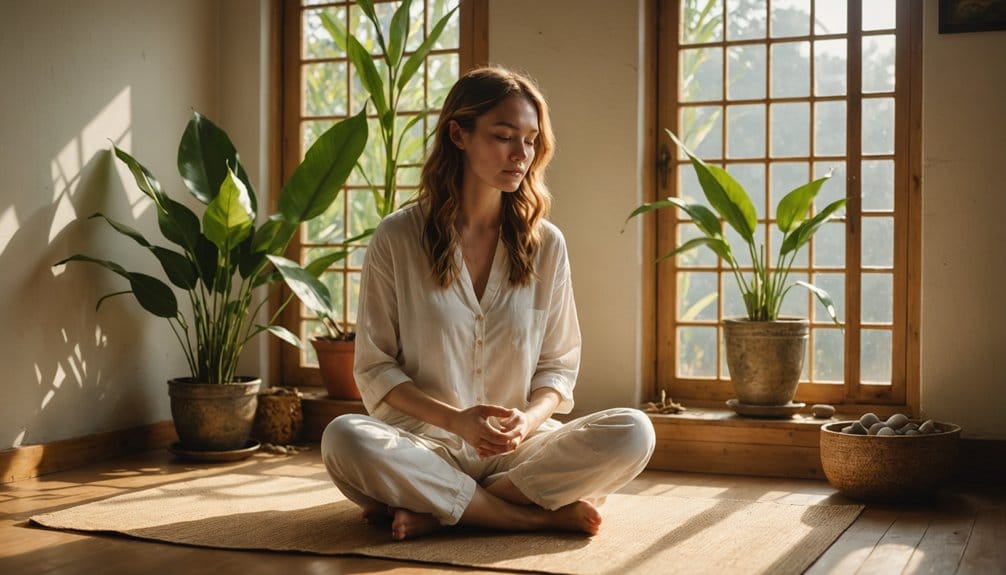
While creating the perfect meditation space might seem intimidating at first, it’s really about finding a cozy corner that speaks to your soul. You don’t need a fancy meditation room – even a quiet spot near your window can work wonders. Think about meditation aesthetics that calm you: maybe it’s a soft cushion, a small plant, or your favorite inspirational quote on the wall.
Pay attention to sensory elements that help you relax. Does the gentle flicker of a flameless candle soothe you? What about the subtle scent of lavender? Keep it simple – you’re not designing a zen resort! Remember, your meditation space should feel like a mini sanctuary where you can comfortably sit for 10-15 minutes without your legs falling asleep or your cat demanding attention. Additionally, having a dedicated space can aid in resetting your nervous system and enhancing mental clarity.
Proper Posture and Breathing Techniques
You’ve probably heard the old saying about “sitting up straight” from your mom a thousand times, but when it comes to meditation, she was actually onto something. Maintaining proper posture with a straight spine helps your breath flow freely while keeping you alert and focused during your practice – think less slouchy couch potato and more graceful forest creature. Just like learning to ride a bike, mastering deep abdominal breathing takes practice, but it’s worth it when you feel the difference between those shallow chest breaths and the full, energizing belly breaths that’ll become your meditation superpower. Incorporating techniques like deep diaphragmatic breathing provides a bridge between your physical body and consciousness, enhancing your overall meditation experience.
Straight Spine While Sitting
Maintaining a straight spine during meditation sounds simple until you actually try it – then suddenly your back feels like a soggy noodle with a mind of its own. Don’t worry though – proper spine alignment isn’t about rigid perfection. Think of your spine as a stack of coins – they should line up naturally without forcing them.
To find your ideal seated comfort, imagine a string pulling you up from the crown of your head while keeping your shoulders relaxed. You’ll know you’ve got it right when breathing feels easier and your back muscles aren’t screaming for mercy. Still wobbling? Try sitting against a wall at first or using a meditation cushion to elevate your hips. Remember, even experienced meditators occasionally catch themselves slumping – it’s all part of the practice.
Deep Abdominal Breath Control
Once you’ve settled into proper posture, it’s time to master the art of deep abdominal breathing – your meditation’s secret weapon. Think of diaphragmatic breathing as your body’s built-in stress reliever. Place one hand on your chest and the other on your belly, just below your ribs. Feel the gentle rise and fall?
As you inhale through your nose, let your belly expand like a balloon filling with air. Your chest should barely move – that’s how you know you’re doing it right! When you exhale, let your belly fall naturally. Focus on this breath awareness; it’s like watching waves roll in and out at the beach. Haven’t quite got the hang of it? No worries – even long-time meditators sometimes catch themselves breathing like they’re running a marathon.
Common Challenges for New Practitioners
While beginning a meditation practice brings many rewards, it also comes with its share of common hurdles that can test even the most determined newcomer. Let’s face it – your mind probably feels like a hyperactive monkey on caffeine! Overcoming distractions is your first big challenge, from that itchy nose to wondering if you remembered to lock the car. Then there’s dealing with discomfort: your legs fall asleep, your back aches, and suddenly you’re convinced your cushion is made of concrete.
You’ll find yourself planning dinner, replaying conversations, or writing mental to-do lists when you should be focusing on your breath. Don’t worry – even experienced meditators struggle with these challenges. The key is accepting these moments as natural parts of the journey rather than viewing them as failures. Incorporating breath awareness exercises into your practice can provide immediate relief and help you stay grounded amidst these distractions.
Establishing a Consistent Practice Schedule
Because developing good habits takes time and dedication, you’ll need a realistic meditation schedule that fits your daily life. Think about when you’re most alert – are you a morning person or night owl? Pick that time for your practice. Start small with just 5-10 minutes daily.
Making a personal commitment means treating meditation like any other important appointment. Set daily reminders on your phone, or link your practice to existing habits like having your morning coffee. And don’t beat yourself up if you miss a day – we’re all human! Just get back on track tomorrow.
Pro tip: Keep your meditation cushion visible in your home. It’s like having a gym membership – when you see the equipment, you’re more likely to use it. Your future zen self will thank you.
Mindfulness Beyond the Cushion
Since regular meditation sets a strong foundation, it’s time to explore taking that mindfulness magic into your everyday world. You’ll find countless opportunities to practice awareness while washing dishes, commuting to work, or even scrolling through your phone.
Start by catching those daily distractions when they arise. Notice how your mind wanders during routine tasks – that’s perfectly normal! Instead of fighting it, gently guide your attention back to the present moment. Create mindful moments by taking three conscious breaths before meetings, savoring the first sip of your morning coffee, or feeling your feet connect with the ground as you walk. Think of it as sprinkling little meditation breaks throughout your day. Soon you’ll discover that life itself becomes your meditation cushion.
Building Mental Resilience Through Stillness
The consistent practice of stillness meditation builds your mental muscles just like going to the gym builds physical ones. When you sit quietly, focusing on your breath despite that itch on your nose or your neighbor’s barking dog, you’re developing mental grit that carries into daily life.
Think of it like training for an emotional marathon. Each time you return to your breath instead of chasing random thoughts, you’re strengthening your ability to stay balanced during life’s chaos. Remember that presentation that made your heart race? Or that argument that had you fuming? Your meditation practice helps you respond with emotional balance instead of reacting on autopilot. Sure, you’ll still have moments when you want to yell at the printer for jamming, but you’ll recover faster.
Integrating Zazen Into Modern Life
Modern life bombards us with endless notifications, packed schedules, and that neighbor who seems to mow their lawn at the worst possible times. Yet you can still find moments for urban meditation – even if it’s just five minutes between Zoom calls.
Start by creating a dedicated zazen space in your home. It doesn’t need to be fancy – a quiet corner with a cushion works perfectly. You’ll be amazed how this simple setup can transform your bedroom or home office into a sanctuary for modern mindfulness.
Can’t find peace at home? Try these alternatives: arrive at work 15 minutes early to meditate in your parked car, find a secluded park bench during lunch, or transform your evening commute into contemplative time. Remember, zazen isn’t about escaping modern life – it’s about finding stillness within it.