You’ve probably tried meditation before – sitting there wondering if you’re “doing it right” while your mind wanders to that embarrassing thing you said five years ago. Don’t worry, we’ve all been there! Synchronized breathing offers a practical way to finally get your meditation practice on track, minus the confusion. It’s like having a built-in GPS for your breath, guiding you through each inhale and exhale. Ready to discover how this simple technique can transform your practice?
Understanding Synchronized Breathing Mechanics
While synchronized breathing might sound as complex as trying to pat your head and rub your belly at the same time, it’s actually a natural process that your body already knows how to do. Think about how you’ve naturally matched your breath to music or found yourself breathing in time with someone else during yoga class.
The key lies in understanding your natural breath rhythm and building from there. You’ll want to focus on your inhalation timing – counting as you breathe in and out. Ever noticed how a steady count of four feels just right? That’s your body’s wisdom at work. You’re not learning something new; you’re just becoming aware of what’s already happening. It’s like finally noticing that you’ve been dancing to life’s rhythm all along. The square breathing method provides an excellent framework for mastering this rhythmic breathing pattern, using four equal counts for each phase of the breath.
Essential Preparations for Your Practice
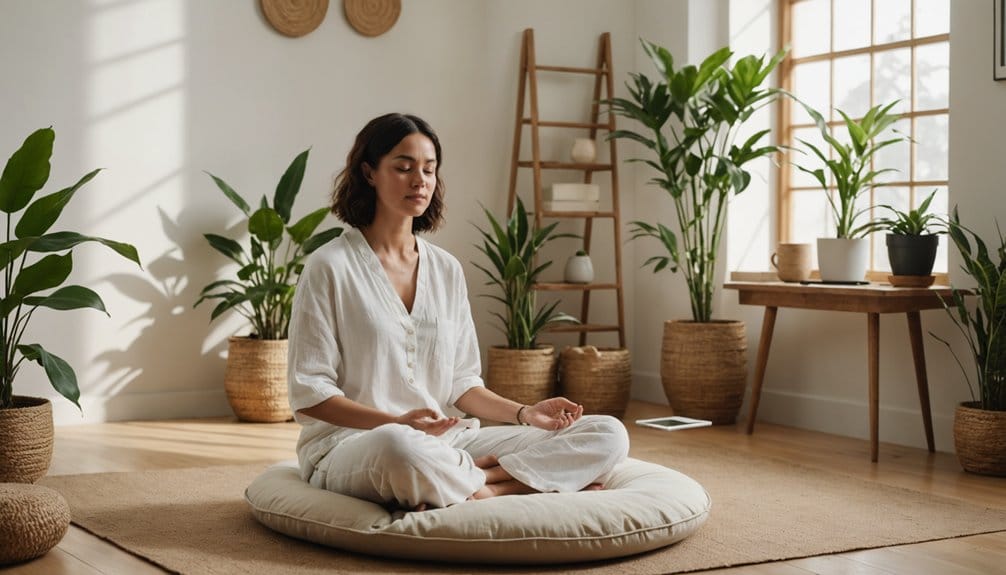
Three simple preparations can make your synchronized breathing practice feel less like an awkward first date and more like meeting an old friend for coffee. First, create a meditation space that speaks to your soul – whether that’s a cozy corner with soft pillows or just your favorite chair by the window. You’ll want a breathing environment that’s quiet enough to hear yourself think (and breathe!). Second, set aside a specific time when you won’t be interrupted by texts, calls, or that neighbor who always seems to know when you’re trying to relax. Finally, wear comfortable clothes that won’t make you fidget – yes, those old sweatpants are perfect. Ever notice how the best meditation sessions happen when you’re truly comfortable in your own skin? Consider starting with the 4-7-8 method as it’s particularly effective for reducing anxiety in any setting.
Step-by-Step Breathing Technique
Once you’ve created your meditation sanctuary, let’s immerse ourselves in the actual breathing technique that’ll transform your practice from random inhales to synchronized serenity.
Start by taking three deep breaths – you know, the kind that make your belly look like you’ve just devoured a feast! Now, establish your natural breathing rhythm by simply observing your breath for 30 seconds. Ever notice how your breathing patterns change when you’re actually paying attention to them? That’s totally normal. Next, begin counting: inhale for four counts, hold for two, exhale for four. Think of it like a peaceful little dance your breath is doing. Keep this rhythm going for five minutes, and don’t worry if you lose count – we all do! Your mind will naturally sync with this gentle cadence. This ancient Indian practice has been recognized for over 5,000 years as a powerful bridge between physical existence and higher consciousness.
Common Challenges and Solutions
When you’re trying to sync your breath during meditation, it’s totally normal for your mind to wander off to your growing to-do list or that embarrassing thing you said five years ago. You might also notice your legs falling asleep or your back starting to ache, which can make you wonder if you’re somehow “doing meditation wrong.” Don’t worry – even experienced practitioners face these common hurdles, and we’ll explore some practical ways to work through them while keeping your sense of humor intact. Ancient Indian practices have shown that conscious breathing techniques can effectively manage stress and racing thoughts for over five millennia.
Maintaining Focus When Distracted
Even the most experienced meditators find their minds wandering during synchronized breathing practice – it’s as natural as a puppy getting distracted by squirrels. When your attention drifts, don’t beat yourself up. Instead, try these proven focus strategies to gently guide your mind back to your breath.
Start by acknowledging the distraction without judgment, then use simple distraction techniques like counting your breaths or visualizing each inhale as a wave rolling in. You might find it helpful to anchor your focus with a physical sensation – maybe the feeling of air passing through your nostrils or your belly rising and falling. Remember how a skilled surfer doesn’t fight the waves but rides them? That’s your approach to wandering thoughts. Notice them, let them pass, and return to your breath with a smile.
Physical Discomfort During Practice
Many meditation practitioners struggle with physical discomfort that can feel like your legs are staging a full-scale rebellion against stillness. Don’t worry – you’re not alone in this universal challenge of mind-body practice.
The key is developing body awareness while making mindful posture adjustments. When your knee screams or your back protests, listen to what your body’s telling you. Maybe you need to elevate your hips with a cushion or try meditating in a chair (no meditation police will arrest you for this, promise). Small tweaks can make a huge difference in your comfort level.
Remember: discomfort isn’t failure – it’s feedback. Your body’s speaking its truth, and sometimes that truth is “Hey, maybe lotus position isn’t our thing.” That’s perfectly okay.
Benefits of Synchronized Breathing
You’ll be amazed at how synchronized breathing can clear your mental fog and sharpen your focus, almost like defrosting a foggy windshield on a winter morning. Beyond the brain benefits, you’re also giving your body a tune-up as this practice can lower blood pressure, boost immune function, and even help you sleep better at night. Whether you’re a meditation newbie or a zen master, these breathing techniques work like a reset button for both your mind and body, helping you tackle life’s challenges with renewed energy and clarity. Regular practice activates alpha and theta waves, promoting deeper states of mental relaxation and awareness.
Mental Clarity and Focus
Clarity emerges naturally when your breath and mind sync in perfect harmony. You’ll notice your scattered thoughts begin to settle, like leaves floating down to rest on a still pond. Through mindful awareness, you’re training your brain to focus on what truly matters instead of chasing every squirrel that crosses your mental path.
The cognitive enhancement you’ll experience isn’t just meditation mumbo-jumbo – it’s real and measurable. You’ll find yourself remembering where you put those keys (finally!), and staying on task becomes less of a wrestling match with your attention span. Ever notice how Olympic athletes control their breathing before a big moment? They’re tapping into the same powerful connection between breath and mental performance that you’re cultivating in your practice.
Physical Health and Wellbeing
When your breath falls into a steady rhythm during meditation, remarkable changes begin unfolding throughout your body. You’ll notice your shoulders dropping, your jaw relaxing, and tension melting away – it’s like hitting the reset button on your whole system. The mind-body connection strengthens with each mindful inhale and exhale.
Through consistent breath awareness, you’re not just calming your mind – you’re actually giving your body a tune-up from the inside out. Your heart rate steadies, blood pressure often drops, and digestion improves. Ever notice how you sleep better after a good meditation session? That’s your body thanking you for the oxygen boost. You’re fundamentally becoming your own maintenance crew, and the best part? No fancy equipment required – just you and your breath working together.
Advanced Methods and Variations
After mastering the basics of synchronized breathing, you’re ready to explore some fascinating variations that’ll take your practice to new heights. Ever tried alternating between rapid and slow breathing patterns? It’s like being your own DJ, mixing tempos to create a unique meditation soundtrack. Start by experimenting with tempo variations – try 4-7-8 breathing for deep relaxation, or energizing box breathing when you need a boost.
Want to really challenge yourself? Incorporate walking meditation while maintaining synchronized breath, or practice with a partner to match each other’s rhythm. You’ll be amazed at how these advanced techniques can transform your practice. And don’t worry if you feel a bit uncoordinated at first – even meditation masters started somewhere! The key is finding what resonates with your natural flow.