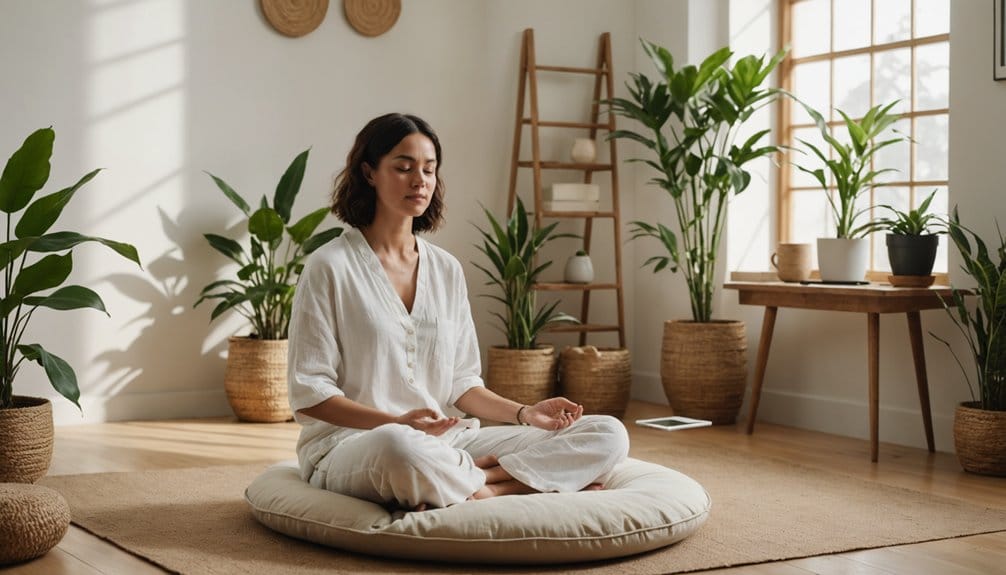
You’ve probably tried to change your life before – maybe with a new diet, exercise plan, or productivity system. Yet those good intentions often crumble faster than a cookie in your coffee. That’s where mindfulness meditation comes in as your secret weapon for lasting transformation. It’s not just about sitting cross-legged and humming (though that’s totally fine if it’s your thing). Instead, think of it as your brain’s personal trainer, helping you build the mental muscles needed for real personal growth.
The Science Behind Mindfulness and Brain Development
While scientists once viewed meditation as purely spiritual practice, groundbreaking research has revealed it actually rewires your brain in fascinating ways. Ever wonder why seasoned meditators seem so unflappable? The neuroscience implications are crystal clear: regular mindfulness practice increases gray matter in areas controlling attention and emotional regulation. You’re literally upgrading your brain’s operating system!
The most exciting part? You’ll develop greater cognitive flexibility – that’s science-speak for becoming mentally nimble. Instead of getting stuck in old thought patterns (like that time you obsessed over an awkward conversation for three days straight), you’ll learn to pivot your perspective with ease. Your brain becomes like a well-oiled machine, but instead of creaky gears, you’ve got smooth neural pathways ready for action.
Essential Elements of Mindful Meditation Practice
Before you plunge into your first meditation session wondering if you’re “doing it right,” let’s break down the essential building blocks that make mindfulness work. Think of it like learning to ride a bike – you’ll wobble at first, and that’s perfectly okay.
Start with mindful breathing as your anchor. You don’t need to force yourself into a pretzel position or chant mysterious mantras. Simply focus on the natural rhythm of your breath while letting thoughts float by like clouds. When your mind wanders (and it will), gently guide it back.
Next, tap into sensory awareness. Notice the temperature of the air on your skin, distant sounds, or the texture of your clothing. These simple observations help you stay present without getting caught in the tornado of thoughts that usually fills your head.
Breaking Through Mental Barriers With Present Moment Awareness
You’ve probably noticed how your mind loves to build elaborate walls of “what-ifs” and “I can’ts” that keep you stuck in old patterns. Through present moment awareness, you’ll learn to watch these mental blocks float by like clouds in the sky, neither pushing them away nor getting tangled in their stories. When you start observing your thoughts with curiosity instead of judgment, you’ll find it’s much easier to step beyond your comfort zone – just like finally trying that spicy dish you’ve been avoiding because your brain kept insisting “too hot, too scary!”
Observing Thoughts Without Judgment
The practice of observing thoughts without judgment stands as one of mindfulness meditation‘s most powerful yet challenging skills to master. Through mindful observation, you’ll learn to watch your thoughts float by like clouds in the sky, neither chasing nor resisting them.
Think of your mind as a busy street corner – thoughts are just passing pedestrians. You don’t need to stop and chat with every one! With thought detachment, you’re simply acknowledging “there goes anxiety” or “hello, self-doubt” without getting tangled in their stories. Pretty soon, you’ll catch yourself smiling at how your mind loves to spin dramatic tales.
Releasing Mental Resistance
Mental resistance shows up like an overprotective security guard, blocking access to your deepest potential for growth and change. It’s that nagging voice that says “not now” or “you can’t” whenever you’re about to step out of your comfort zone.
Want to develop mental flexibility? Start by noticing when you’re creating obstacles for yourself. Those moments when you automatically say “no” to new experiences or judge situations before they unfold – that’s resistance at work. Here’s the fun part: instead of fighting it, just watch it with curiosity. Like clouds passing overhead, let those resistant thoughts float by.
Building emotional resilience means getting comfortable with discomfort. The next time you feel that internal pushback, take a deep breath and ask yourself: “What if I just let this be?”
Expanding Your Comfort Zone
Breaking through your comfort zone feels a lot like learning to swim – at first you’re clinging to the edge of the pool, but eventually you discover the water’s not so scary after all. Through mindfulness meditation, you’ll learn to observe your fears without getting swept away by them. Remember that time you thought karaoke would be mortifying, but ended up having a blast?
Start small with comfort zone challenges that stretch but don’t snap you. Maybe it’s speaking up in a meeting or trying that spicy dish you’ve been eyeing. As you practice fear exploration through meditation, you’ll notice something interesting – those “terrifying” situations become more like amusing adventures. Your mind’s tendency to catastrophize (“Everyone will laugh at me!”) transforms into curiosity (“I wonder what’ll happen if…”). Before you know it, you’re diving into the deep end with a smile.
Building Emotional Intelligence Through Regular Practice
Imagine your emotions as ripples on a pond – some days they’re gentle waves, other days they’re crashing storms. Through mindful meditation, you’ll develop emotional regulation that helps you navigate these waters with grace. Ever notice how you react before you think? That’s where practice comes in handy.
Regular meditation strengthens your ability to pause between trigger and response. You’ll find yourself catching those knee-jerk reactions before they surface – like that time you almost sent that spicy email to your boss! But it’s not just about managing your own emotions. Empathy enhancement naturally follows as you become more attuned to others’ emotional states. You’ll start picking up on subtle cues you might’ve missed before, like a friend’s slight change in tone or a colleague’s worried expression.
Creating Positive Behavioral Changes Through Mindfulness
You’ve probably noticed how those old habits and thought patterns can feel like a well-worn path you keep stumbling down, even when you’d rather take a different route. Through mindfulness practice, you’ll learn to catch yourself before automatically reacting the same old ways – it’s like having a reset button for your brain’s autopilot. Once you’re aware of these patterns, you can start building new neural pathways that lead to healthier responses and habits you actually want to keep, whether that’s finally breaking up with your snooze button or choosing an apple over those 3 PM candy bar cravings.
Breaking Old Thought Patterns
Most of us have mental grooves so deep they might as well be the Grand Canyon of habits – those well-worn thought patterns that send us spiraling into stress, self-doubt, or that inexplicable urge to check our phones 87 times an hour.
Through mindfulness, you’ll start recognizing triggers that set off these mental autopilots. Maybe it’s that morning meeting that always leaves you feeling inadequate, or the social media scroll that somehow turns into a two-hour comparison fest. By catching yourself in these moments, you’re taking the first step toward reframing beliefs that no longer serve you.
Think of your mind as a GPS – it’s been following the same routes for years. But here’s the thing: you can update your mental software. It just takes a bit of presence, patience, and maybe a sense of humor about your own thought traffic jams.
Cultivating Better Daily Habits
While breaking old thought patterns clears the mental slate, establishing new daily habits is where mindfulness really flexes its muscles. Through mindful awareness, you’ll catch yourself before falling into autopilot mode – you know, like when you’ve driven home but can’t remember the journey. That’s where habit formation begins.
Start small with daily rituals that anchor your practice. Maybe it’s taking three mindful breaths before checking your phone in the morning (instead of doom-scrolling through social media like the rest of us). Or perhaps it’s savoring your coffee instead of gulping it down between emails. When you bring consciousness to these moments, you’re not just going through the motions – you’re actively designing your day. And isn’t that what personal freedom is all about?
Transforming Self-Awareness Into Personal Excellence
Since developing self-awareness through meditation opens new doors of personal insight, transforming those revelations into concrete progress requires deliberate action. You’ve noticed your tendency to procrastinate or your habit of negative self-talk – now what? It’s time to turn those self reflection techniques into stepping stones toward personal excellence.
Start by choosing one insight to focus on each week. If you’ve discovered you’re constantly checking your phone, set specific times to disconnect. When you catch yourself in old patterns, don’t beat yourself up – that’s your new awareness working! Instead, celebrate that you noticed and redirect your energy. Think of it like being your own friendly coach rather than a drill sergeant. With each small victory, you’re building a bridge between insight and real change.
Integrating Mindfulness Into Daily Life for Continuous Growth
Because mindfulness can seem overwhelming at first, let’s break it down into bite-sized pieces you can actually use in your daily routine. Ever noticed how you rush through breakfast without tasting it? That’s your first opportunity for mindful living right there. Take three mindful bites, really experiencing the flavors and textures.
Your commute can transform into a daily reflection session. Instead of cursing traffic, use red lights as reminders to check in with yourself. How’s your breathing? What’s on your mind? You don’t need a meditation cushion or incense to practice awareness – just your everyday moments. Washing dishes, walking the dog, or waiting in line at the grocery store can become mini-mindfulness sessions. Who knew personal growth could happen while folding laundry?