Life moves fast, work piles up, and your mind feels like a browser with too many tabs open. Sound familiar? You’re not alone in seeking emotional balance through meditation – though getting started can feel as tricky as trying to fold a fitted sheet. Whether you’re a meditation newbie who falls asleep during “om” or a seasoned practitioner looking to level up, these seven practical tips will help you find your zen sweet spot.
Create Your Sacred Meditation Space
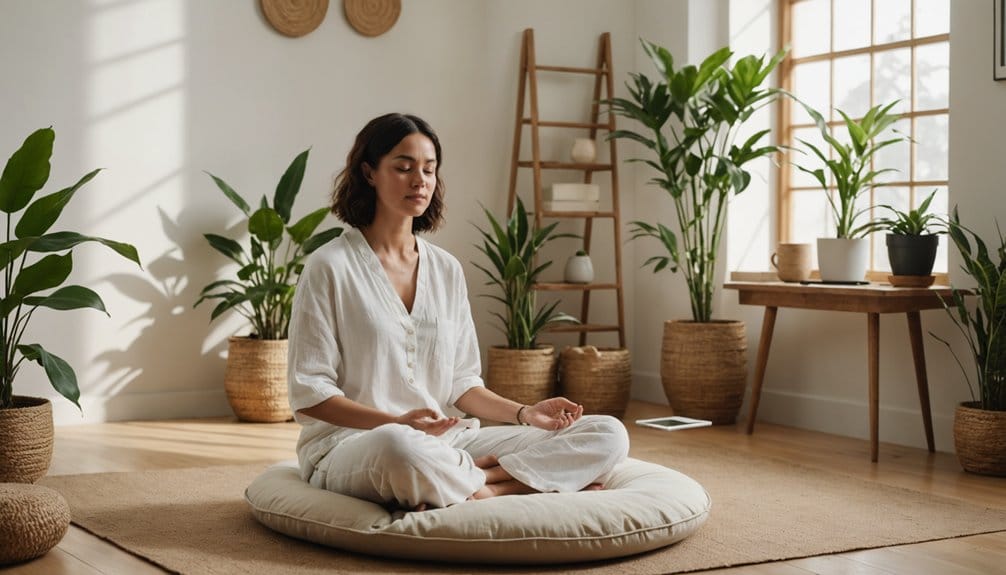
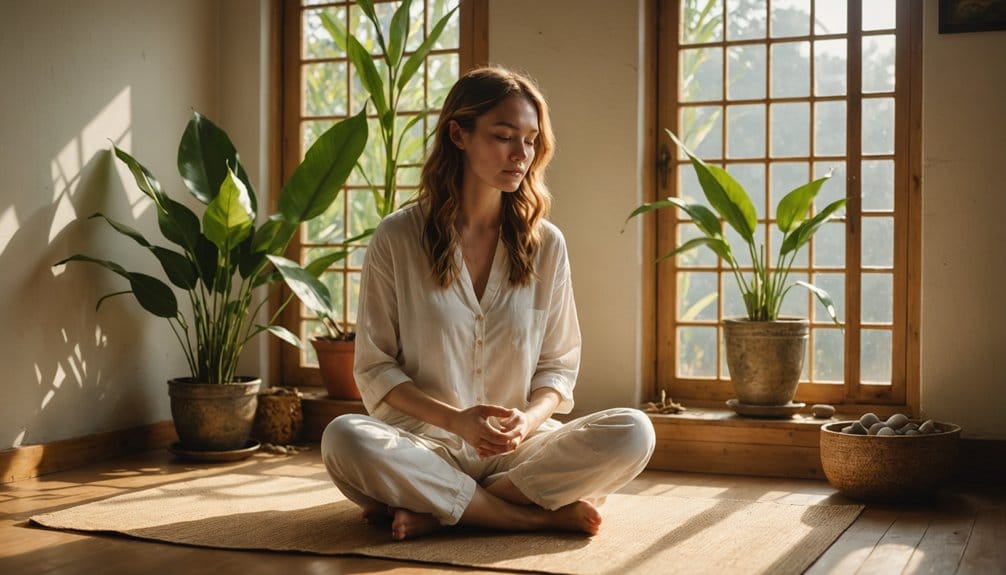
Tranquility begins at home – specifically, in your personal meditation sanctuary. Let’s face it – you can’t find inner peace while staring at that mountain of unfolded laundry or yesterday’s coffee mug. Your meditation space should be your escape pod from daily chaos.
Pick a quiet corner and transform it with calming colors like soft blues or gentle greens. Wondering what else you’ll need? Keep it simple. A cushion that doesn’t make your bottom go numb after five minutes is essential (we’ve all been there). Add sacred items that spark joy – maybe a crystal you picked up on vacation, or that Buddha statue your aunt swears brings good luck. Just don’t go overboard – you’re creating a meditation space, not a spiritual garage sale. Your sanctuary should whisper “peace,” not shout “look at all my stuff!”
Start With Breath Awareness
When you’re ready to begin meditating, your breath becomes your most reliable anchor – it’s always there, like that friend who never forgets to text back. You’ll want to notice your natural breathing rhythm without trying to change it, much like watching clouds drift across the sky. As thoughts pop up (and trust me, they will), simply acknowledge them with a mental nod and return your attention to the steady in-and-out of your breath, knowing there’s no “wrong” way to experience this moment.
Follow Your Natural Rhythm
Starting with breath awareness might seem too basic at first – like being told to notice you have a nose on your face. But here’s the thing: your breath naturally flows with your body’s wisdom. Why fight it?
Your meditation practice shouldn’t feel like you’re forcing yourself into someone else’s schedule. Instead, tune into your natural cycles throughout the day. Notice when you’re naturally more alert or relaxed. Maybe you’re sharper at dawn, or perhaps your mind settles best at dusk. That’s your intuitive timing at work.
Don’t get caught up in rigid rules about “perfect” meditation times. Your body knows when it’s ready to settle in. Sometimes it’s for five minutes between meetings, other times it’s a luxurious half-hour when you just can’t sleep.
Focus on Each Breath
Before diving into complex meditation techniques, let’s master the foundation – your breath. Think of it as your trusty companion that’s been with you since day one, even if you haven’t been paying much attention to it lately (we’ve all been there!).
Start with simple breath counting – inhale for four counts, hold briefly, then exhale for six. You’d be amazed how many thoughts can pop up during those few seconds! When your mind wanders (and it will), gently guide it back without judgment. Try breath visualization by imagining your breath as a gentle wave or a warm light flowing through your body. It’s like having your own internal light show, minus the expensive tickets.
Observe Without Judgment
The next step builds naturally from your breath practice into a broader awareness. As thoughts and feelings arise during meditation, you’ll start practicing emotional detachment – observing them like clouds passing in the sky. Ever notice how we tend to grab onto every thought like it’s breaking news? Not anymore!
Instead of jumping into thought assessment mode, simply acknowledge what appears in your mind: “Ah, there’s worry about that deadline” or “Interesting, I’m feeling restless today.” You’re not trying to change anything – just noticing what’s already there. Think of yourself as a friendly scientist studying your inner world with curiosity rather than criticism.
When judgment sneaks in (and it will), just smile and let that go too. You’re learning to watch your mental traffic without getting stuck in it.
Practice Body Scanning Techniques
Anyone can learn body scanning meditation, a powerful technique that helps you tune into physical sensations while quieting your busy mind. Start by lying down comfortably and bringing your attention to your toes. Can you feel the subtle tingling? Gradually move your awareness upward, exploring each body part with gentle curiosity.
You’ll notice areas of tension you didn’t even know existed – like that stubborn knot between your shoulders from hunching over your phone (we’ve all been there!). This deepening body awareness often triggers emotional release as you uncover stored stress. Don’t worry if you drift off occasionally; your wandering mind is just being, well, a mind. Simply guide your focus back to wherever you left off, whether it’s your knees, hips, or that mysterious twitch in your left eyebrow.
Observe Thoughts Without Judgment
While meditating, you’ll notice thoughts popping into your head like uninvited party guests – and that’s perfectly normal. Your job isn’t to kick these thoughts out or scold yourself for having them. Instead, practice thoughts awareness by simply watching them float by like clouds in the sky.
Think of yourself as a curious scientist observing an experiment. When a thought appears – whether it’s your grocery list or that embarrassing thing you said five years ago – acknowledge it with non judgmental observation. “Oh, there’s a thought about work stress,” you might note, before letting it drift away. No need to chase it or push it away. Remember how you’d watch a bubble float by as a kid? That’s the vibe you’re going for here. Just watch, notice, and let go.
Cultivate Self-Compassion Through Loving-Kindness
Learning to treat yourself with kindness can feel as awkward as trying to pat your own back – but it’s an essential part of emotional wellbeing. Through simple self kindness exercises, you’ll discover that being your own cheerleader isn’t as strange as it seems. Start by speaking to yourself like you would to a dear friend who’s having a rough day.
Compassion meditation helps you build this skill naturally. Sit quietly and repeat phrases like “May I be happy” or “May I find peace.” Sure, it might feel a bit silly at first – like giving yourself a pep talk in the mirror – but stick with it. You’re rewiring years of self-criticism! Remember those times you’ve shown kindness to others? You deserve that same gentle understanding. Let’s face it – we’re all perfectly imperfect works in progress.
Incorporate Mindful Movement
You don’t need a fancy gym membership or complicated routines to incorporate movement into your meditation practice – sometimes the simplest approach works best. Start with mindful walking, where you’ll sync your breathing to each step while noticing how your feet connect with the ground (it’s like giving your mind training wheels while your body does the pedaling). When you’re ready to level up your practice, try flowing through gentle stretching sequences that combine breath awareness with fluid movements, letting your body become a living meditation in motion.
Gentle Walking and Breathing
Beyond sitting still with eyes closed, meditation can flourish through mindful movement – particularly gentle walking combined with intentional breathing. You’ll discover that gentle walks become moving meditations when you sync your breath with each step. Try counting four steps as you inhale, then four more as you exhale.
Don’t worry if your mind wanders to that embarrassing thing you said at last week’s meeting – it happens to everyone! Simply redirect your focus to your feet touching the ground and your breath flowing naturally. Whether you’re strolling through a park or pacing your backyard, these mindful breathing walks can transform a regular afternoon into a rejuvenating mental reset. It’s like hitting the pause button on life’s chaos while still keeping your body in motion.
Mindful Stretching Sequences
While traditional meditation often brings to mind sitting cross-legged on a cushion, mindful stretching offers a perfect blend of physical movement and mental clarity. You’ll love how these embodiment exercises help you tune into your body’s wisdom while releasing tension – it’s like hitting the reset button on your stress levels.
Start with gentle neck rolls and shoulder shrugs, moving with intention through each motion. Let your mindful flow emerge naturally as you stretch your arms overhead, perhaps adding a playful side bend. Ever notice how your mind feels clearer when your body’s moving freely? That’s the magic of mindful stretching at work. Focus on one area at a time, breathing deeply into any tight spots. Your body will thank you for this moving meditation practice.
Develop a Consistent Daily Practice
Building a consistent meditation practice isn’t about achieving perfection from day one – it’s about making small, sustainable commitments that grow into lasting habits. Whether you’re an early bird who thrives on a morning routine or a night owl who prefers evening reflection, the key is finding your rhythm and sticking to it.
Start with just 5 minutes – yes, that’s all! You wouldn’t run a marathon without training, so why plunge into hour-long sessions right away? Pick a trigger – maybe it’s right after brushing your teeth or before your first cup of coffee. Let’s be real: you’ll miss some days, and that’s perfectly fine. The magic happens when you gently return to your practice without beating yourself up. Remember, consistency beats intensity every time.