Want to start guided breathing meditation but feeling overwhelmed? Don’t worry – it’s simpler than you think. Begin with just 5 minutes in a quiet spot, focusing on the natural rhythm of your breath. Try the 4-4-4 square method: inhale for 4 seconds, hold for 4, exhale for 4, pause for 4. When your mind wanders (and it will!), gently guide it back to your breath. There’s a whole world of peace waiting in each mindful moment.
Understanding the Basics of Breath Awareness
Breath – it’s the one thing we all do thousands of times each day without thinking twice about it. Yet when it comes to breath awareness, most of us feel like fish trying to understand water. We’re surrounded by it, but we rarely notice it’s there!
Mindful breathing isn’t about changing how you breathe – it’s about tuning into what’s already happening. Think of it as becoming a curious observer of your own respiratory rhythm. You’ll notice the cool air entering your nostrils, the gentle rise of your chest, and the warm flow of each exhale. Ever wondered why your breath quickens when you’re stressed or deepens when you’re relaxed? That’s your body’s natural intelligence at work. By practicing breath awareness, you’re simply learning to tap into this built-in wisdom that’s been there all along. Controlled breathing has been utilized for over 5,000 years to support stress management, serving as a powerful tool for emotional resilience.
Benefits of Guided Breathing Meditation
Why do so many doctors, therapists, and wellness experts swear by guided breathing meditation? Simply put, it’s a powerful tool that transforms both mind and body. You’ll experience immediate stress reduction as your racing thoughts slow down, making way for mental clarity that feels like wiping a foggy mirror clean.
The benefits don’t stop there. Enhanced focus helps you tackle daily tasks with newfound energy, while emotional balance keeps those mood swings in check. You’ll notice physical relaxation spreading from head to toe – yes, even those tense shoulders will finally drop! And if you’re tired of counting sheep, improved sleep awaits. The practice nurtures self-awareness, helping you recognize stress triggers before they escalate. For anyone battling anxiety, guided breathing meditation offers reliable relief without side effects – except maybe occasional moments of unexpected peace! Incorporating techniques like the 4-7-8 Breathing Method can further enhance your experience and promote instant calm.
Creating Your Ideal Meditation Space
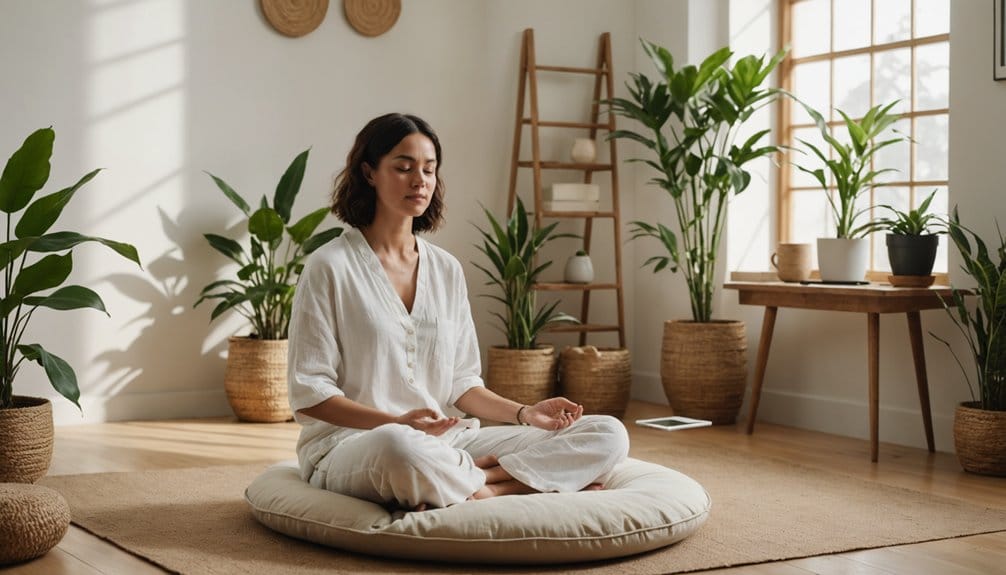
A peaceful meditation space can transform your daily practice from “maybe later” to “can’t wait to start.” Think of it as your personal sanctuary – a cozy corner where the outside world fades away and tranquility takes center stage.
Start by choosing calming colors like soft blues or gentle greens for your walls or cushions. You’ll want comfortable seating that won’t leave you squirming (nobody achieves enlightenment with a numb bottom!). Consider lighting options – dimmer switches or salt lamps work wonders. Natural elements like plants or a small fountain can enhance your sensory experience. Don’t forget sound considerations – maybe it’s time to invest in those noise-canceling headphones you’ve been eyeing? Add personal touches that spark joy, like meaningful photos or crystals. Finally, guarantee privacy needs are met – even if that means hanging a “Do Not Disturb” sign on your doorknob. Creating a dedicated space can aid in resetting the nervous system and enhances mental clarity, making your practice even more effective.
Simple 4-4-4 Square Breathing Method
Here’s how it works: Inhale for 4 seconds, hold that breath for 4 seconds, exhale for 4 seconds, then pause for – you guessed it – 4 seconds. See why they call it square breathing? Each side of the “square” gets equal time. This balanced breathing rhythm helps calm your nervous system faster than scrolling through cat videos (though those are pretty great too). Practicing the Square (Box) Breathing Method can not only reduce stress but also promote mindfulness during your daily activities.
You can practice this during meetings, while stuck in traffic, or even when your mother-in-law starts telling that story for the hundredth time. Just remember: 4 in, 4 hold, 4 out, 4 pause. Repeat as needed!
Following the Natural Flow of Breath
Unlike structured breathing patterns, following your natural breath requires letting go of control and simply observing what’s already happening. Think of it as becoming a curious scientist studying your own breath awareness – without trying to change a thing.
Notice how your breath naturally flows in and out. Is it deep or shallow? Fast or slow? Don’t judge it – just watch. Your body knows its natural rhythm better than any breathing exercise could teach. It’s like watching waves at the beach; they don’t need instructions on how to roll in and out.
You might find yourself wanting to “fix” your breathing. That’s normal! Just gently return to observing whenever you catch yourself trying to control it. Remember, you’ve been breathing successfully your whole life without thinking about it. Mindful breathing promotes measurable changes in brain activity and is particularly useful in high-pressure situations.
Common Challenges and Solutions
While practicing mindful breathing seems straightforward, most people encounter a few common roadblocks along the way. From breath distractions like your neighbor’s lawn mower to the mental chatter about tonight’s dinner plans, maintaining focus can feel like herding cats. You’re not alone in dealing with frustration when your mind wanders!
Physical discomfort might creep in too – that annoying itch or cramped position. The key is cultivating patience and remembering that overcoming impatience is part of the journey. When emotional release happens (yes, sometimes meditation brings up feelings), simply acknowledge it and return to your breath. Feel antsy after two minutes? That’s normal! Start with short sessions and gradually build up your practice. Remember, even experienced meditators deal with wandering thoughts – they’ve just gotten better at gently guiding their attention back.
Incorporating Mindfulness With Each Breath
When you consciously focus on each breath flowing in and out, you’re training your mind to stay anchored in the present moment rather than wandering off to that embarrassing thing you said last week. Your breath acts like a bridge between mind and body, helping you notice physical sensations like tight shoulders or a clenched jaw that you didn’t even realize were there. As you breathe deeply and mindfully, you’ll naturally start to release built-up tension – it’s like finally remembering to unclench your teeth after stressing about your inbox all morning.
Present in Each Moment
Being present with each breath creates a powerful gateway to mindfulness that you can access anytime, anywhere. You don’t need fancy equipment or a silent monastery – just your own awareness and willingness to tune in. Think of mindful presence as your personal reset button for those moments when life feels like it’s spinning too fast.
Ever notice how your breath changes when you’re stressed? That’s your body trying to tell you something. By cultivating moment awareness, you’re basically becoming fluent in your body’s language. It’s like having a conversation with yourself, minus the awkward small talk! Take a few seconds right now – yes, literally right now – to feel your breath. Where do you notice it most? In your nose? Your chest? Your belly? That’s all it takes to begin practicing presence.
Connect Mind and Body
Developing body awareness doesn’t mean you need to become a yoga master or meditation guru. Start small – feel your chest rise and fall, notice how your shoulders relax with each breath, and observe where tension likes to hide. You might discover your jaw’s been clenched all day (who hasn’t been there?). By tuning into these subtle signals, you’re strengthening the communication highway between your mental and physical self. It’s like giving your mind and body a direct hotline to each other.
Release Tension Through Breathing
Tension hides in sneaky places throughout your body, but mindful breathing acts like a skilled detective tracking it down. You’ll be amazed at how much stress lurks in your shoulders, jaw, and even your toes! Through conscious breath control, you’re about to become your own tension-release expert.
Start by taking a slow, deep breath while scanning your body from head to toe. Notice that tight spot between your eyebrows? That’s where you’ve been storing Monday’s frustrations. As you exhale, imagine releasing that tension like air from a balloon. With each breath cycle, you’re becoming a pro at this detective work. Your body’s holding onto stress like a squirrel hoards acorns, but don’t worry – your breath is the key to letting it all go.
Progressing From 5 to 20 Minutes
You’ll want to start with just 5 minutes of guided breathing meditation – trust me, even that can feel like an eternity when you’re first learning to sit still with your thoughts. As you build confidence and comfort with your practice, add 2-3 minutes each week while maintaining those deep, mindful breaths you’ve mastered. Before you know it, you’ll be breezing through 20-minute sessions like a meditation pro, especially if you stick to practicing at the same time each day (even if that means setting your alarm clock a bit earlier – yeah, we both know how fun that is).
Build Time Gradually Weekly
When starting a meditation practice, it’s tempting to plunge into lengthy sessions, but that’s like trying to run a marathon without training for it first. You’ll only end up frustrated and discouraged.
Instead, embrace weekly progression as your friend. Start with 5-minute sessions in week one – yes, that’s totally fine! Add 2-3 minutes each week as you build your meditation muscles. By week three, you might be sitting comfortably for 10 minutes. Amazing progress!
Keep up this gradual increase until you reach your target duration. Remember those first few times you tried riding a bike? You didn’t jump straight to racing downhill. Think of meditation the same way – each extra minute is a victory worth celebrating. Before you know it, you’ll be sailing through 20-minute sessions like a pro.
Focus on Deep Breathing
Deep breathing forms the foundation of every meditation practice, much like rhythm sets the pace for a great song. When you’re first starting out, it’s tempting to take shallow breaths – we’ve all been there, wondering if we’re “doing it right.” But here’s the thing: your breath is your anchor to deep relaxation.
Start by placing one hand on your belly and one on your chest. As you inhale, let your belly expand like a balloon (yes, exactly like that time you ate too much pizza). When you exhale, feel it deflate. This simple technique helps you achieve mental clarity while keeping your mind from wandering off to your growing to-do list. Don’t worry if your thoughts drift – just gently guide yourself back to your breath, like herding a playful kitten.
Stick to Regular Schedule
Just as marathon runners don’t start with a 26-mile run, building a meditation practice takes gradual progression. Start with just 5 minutes daily, then slowly increase your sessions by 2-3 minutes each week until you reach 20 minutes. Ever notice how the hardest part is simply showing up?
Creating consistency becomes easier when you establish a non-negotiable time slot in your day. Maybe it’s right after your morning coffee, or perhaps before your evening shower. Your brain loves establishing routine, so pick a time that realistically fits your schedule. Think you can’t find the time? You probably spend more minutes scrolling through social media! Start small, stay committed, and watch your practice grow. Before you know it, those 20-minute sessions will feel as natural as brushing your teeth.
Building a Daily Breathing Practice
Starting a daily breathing practice isn’t as intimidating as it might seem – you don’t need a zen garden or a mountaintop retreat to make it happen. You can begin right where you are, even if that’s your cluttered desk during lunch break or your cozy bed before hitting the snooze button.
Pick a time that works best for you – maybe it’s those peaceful morning moments before the kids wake up, or perhaps it’s your evening wind-down routine. Start with just five minutes of mindful practice, focusing on simple breathing techniques like counting your inhales and exhales. Remember, you’re not training for the meditation Olympics here! It’s perfectly normal if your mind wanders to your grocery list or that awkward thing you said three years ago. Just gently guide your attention back to your breath.