You’ll love how simple yet powerful meditation can be once you know the basics. Start with proper posture (straight spine, relaxed shoulders) and gentle breathing exercises like ocean breath or square breathing. Focus on a meaningful mantra or visualization while staying aware of body sensations. Practice for 5-10 minutes daily at dawn or dusk, gradually building your meditation muscles. Ready to access your inner zen? The journey gets even more interesting.
Understanding the Basics of Kundalini Energy
Ancient yogis spoke of a mysterious force coiled like a serpent at the base of your spine – they called it Kundalini energy. Think of it as your body’s dormant superpower, waiting to be awakened through dedicated meditation practice. When you experience a Kundalini awakening, it’s like flipping on all the lights in a dark house at once.
This powerful energy flow begins at your tailbone and travels up through seven major energy centers, or chakras. You might feel tingles, warmth, or even gentle vibrations as it moves. Don’t worry if you’re skeptical – most practitioners start that way! The key is to approach it with respectful curiosity rather than forcing the experience. Remember, you’re not trying to wrestle a snake – you’re simply inviting your inner energy to dance.
As you explore this journey, you’ll find that breathing techniques play a crucial role in stimulating your dormant energy and creating the right conditions for your awakening.
Essential Breathing Exercises for Awakening
You’re about to learn three powerful breathing techniques that’ll transform your meditation practice from “am I doing this right?” to “wow, I feel amazing!” Starting with diaphragmatic breathing basics (think belly-breathing like a sleeping baby), you’ll progress to the soothing waves of ocean breathing, where your breath sounds like gentle surf. Once you’ve mastered those foundational practices, you’ll discover the perfectly balanced square breathing pattern – it’s like giving your nervous system a relaxing spa day in just four simple counts. Additionally, incorporating deep diaphragmatic breathing into your routine serves as a bridge between your physical body and consciousness, enhancing your overall meditation experience.
Diaphragmatic Breath Control Basics
Mastering diaphragmatic breathing is like learning to drive a stick shift – it feels awkward at first, but soon becomes second nature. You’ll discover amazing diaphragmatic benefits once you get the hang of it, from reduced stress to better focus.
Start by lying on your back and placing one hand on your chest, the other on your belly. As you breathe, your belly should rise while your chest remains still. Sounds simple, right? Well, most people get it backwards at first! With practice, though, you’ll develop stronger breath awareness and control.
Try this: breathe in for four counts, watching your belly expand like a balloon. Then exhale for six counts, feeling your navel sink toward your spine. Who knew your belly could be such an excellent meditation companion?
Ocean Breathing for Calm
When life feels like a stormy sea of stress, ocean breathing can be your anchor to tranquility. You’ll transform each breath into a wave of calm by using this ancient technique that mimics the sound of gentle surf.
Start by sitting comfortably and closing your eyes. As you practice rhythmic inhalation through your nose, create a soft oceanic sound in the back of your throat – think Darth Vader meets peaceful beach waves. Let your ocean visualization transport you to a serene coastline while maintaining this soothing whisper-breath for 5-10 cycles.
Don’t worry if you sound a bit like a winded walrus at first – we’ve all been there! With practice, you’ll master this technique and find yourself naturally turning to it whenever stress crashes into your day.
Square Breathing Pattern Method
The elegant simplicity of square breathing makes it a perfect technique for both meditation newbies and zen masters alike. You’ll master this pattern in no time: inhale for 4 counts, hold for 4, exhale for 4, then hold again for 4. Just like drawing a square in your mind – neat, right?
The square breathing benefits are impressive: reduced anxiety, improved focus, and better stress management. You can practice anywhere – stuck in traffic, before a presentation, or when your mother-in-law’s coming to visit! Once you’ve got the basics down, try some square breathing variations. Speed up the counts for an energizing effect, or slow them down for deeper relaxation. Want to mix it up? Experiment with different counts while maintaining the square pattern. Your breath is your anchor – might as well make it count!
Proper Posture and Body Alignment
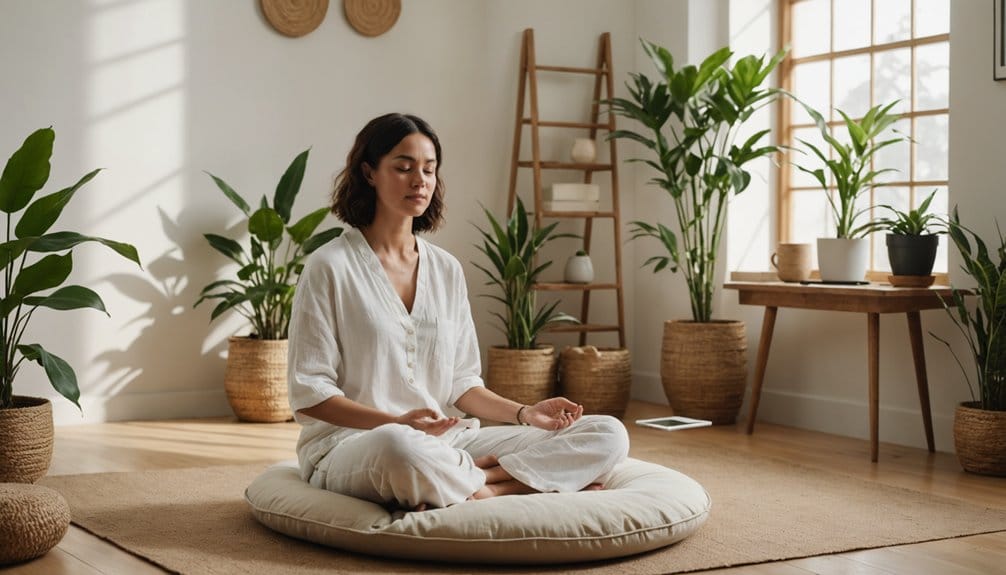
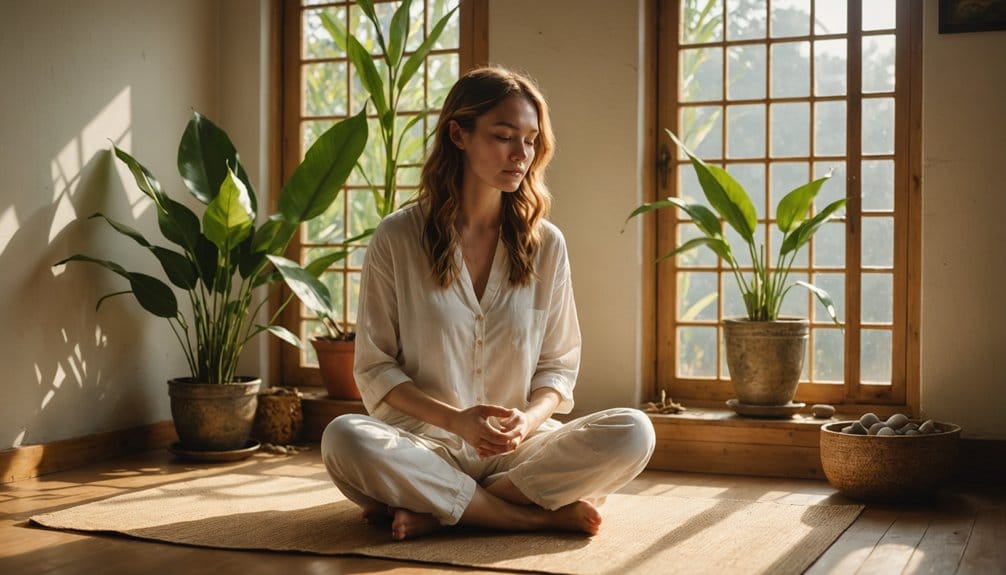
You’ll want to start by finding your ideal seated position – for most people, that’s cross-legged on a cushion with your hips slightly elevated above your knees. Keep your spine straight but not rigid, imagining a string gently pulling the crown of your head toward the ceiling while your shoulders relax naturally downward. Your neck should align with your spine like a noble emperor penguin’s posture (they’ve got meditation figured out), with your chin slightly tucked to prevent strain. Additionally, consider trying the full lotus position for a more stable base if you’re comfortable with it.
Spine and Neck Alignment
Maintaining proper spine alignment sits at the core of effective meditation practice, quite literally keeping you centered from the inside out. Think of your spine as nature’s stack of building blocks – when they’re lined up just right, everything flows smoothly. You’ll want to keep your back straight but not rigid, as if an invisible thread gently pulls you upward from the crown of your head.
Your neck position matters more than you might think. Ever catch yourself with that tech-neck posture from too much phone scrolling? During meditation, tuck your chin slightly and imagine your neck floating upward. Simple neck stretches before you begin can work wonders. Roll your head gently from side to side to release tension, but don’t force it – your neck isn’t a bobblehead doll!
Cross-Legged Sitting Position
Now that your spine’s aligned like a well-stacked tower, let’s focus on your foundation – the cross-legged sitting position. You’ll want to find your sweet spot where cross-legged comfort meets posture importance. Think of your legs as sturdy table legs, creating a stable triangle with your hips.
Start by sitting on a cushion that elevates your hips slightly above your knees. This isn’t the time to tough it out – if you’re feeling pins and needles, adjust! Place your feet naturally beneath opposite thighs, but don’t force them. Remember, you’re not trying to become a human pretzel. Your knees should rest comfortably on the ground or cushion. If they’re floating in mid-air like lost balloons, try raising your seat height. Your body will thank you later!
Core Mantras and Sound Meditation
Have you ever noticed how certain sounds can instantly shift your mental state? It’s not just your imagination – sound vibrations profoundly affect your brain and body. That’s where mantra meditation comes in.
You’ll start by choosing a meaningful sound or phrase – it could be the classic “Om,” the soothing “So-Hum,” or even a personal word that resonates with you. Don’t worry if you feel a bit silly at first – we all do! Through consistent mantra repetition, you’ll create a powerful focal point for your mind. Think of it as giving your busy brain a comfy hammock to rest in.
Try this: Close your eyes, take a deep breath, and softly chant your chosen mantra for 5-10 minutes. You’ll be amazed at how quickly your mental chatter quiets down. By employing calming effects of mantra meditation, you’re not only finding tranquility but also significantly reducing stress and anxiety levels.
Chakra Activation Techniques
Sound vibrations lead naturally into the world of chakras – those powerful energy centers flowing through your body like an inner rainbow. You’ll want to start by visualizing each chakra’s distinct colors, from the earthy red at your base to the cosmic purple at your crown. Ever notice how certain areas of your body feel blocked or sluggish? That’s where chakra work comes in handy.
To activate these energy centers, try this simple technique: Close your eyes and focus on each chakra point, starting from the base. As you breathe deeply, imagine that chakra’s color growing brighter and spinning freely. You might feel a gentle warmth or tingling – that’s the energy flow awakening. Don’t worry if you can’t feel it right away; even seasoned practitioners sometimes get the chakra colors mixed up! Additionally, recognizing imbalances in your energy centers can empower you to take proactive steps towards healing and overall wellbeing.
Daily Practice Schedule and Tips
Three key times stand out for establishing your daily meditation practice: dawn when the world is still peaceful, lunch break when you need to reset, and dusk as the day winds down. Choose the time that works best with your natural rhythm – there’s no prize for forcing yourself to meditate at 5 AM if you’re a night owl!
Set daily reminders on your phone and start with just 5-10 minutes. You’ll be amazed how quickly it becomes a habit you actually look forward to. Keep a meditation journal for goal setting and tracking your progress. Having trouble staying consistent? Try the “don’t break the chain” method – mark each day you meditate on a calendar and watch your streak grow. Remember, some days will feel easier than others, and that’s perfectly normal.
Common Experiences and Safety Guidelines
As you establish your meditation routine, it’s natural to wonder what sensations and experiences you might encounter along the way. You’ll likely notice tingling in your hands, occasional muscle twitches, or even waves of emotion – all perfectly normal meditation experiences. Ever catch yourself suddenly jerking awake? That’s your body maneuvering the delicate edge between relaxation and sleep.
When it comes to safety precautions, listen to your body and don’t force yourself to sit uncomfortably long. If you experience persistent dizziness or unusual anxiety, simply open your eyes and take a break. Remember, meditation isn’t about pushing through discomfort – it’s about finding your sweet spot. Keep a cushion handy, maintain good posture, and maybe skip that triple espresso before your session (trust me on this one!).