When your mind races like a caffeinated squirrel and your thoughts scatter like leaves in the wind, you’re probably ready to try meditation. But here’s where it gets interesting – not all meditation styles work the same way. Vipassana and Samatha meditation might sound like exotic tea varieties, but they’re actually two distinct paths to inner peace. Before you cross your legs and say “om,” you’ll want to know which approach matches your personality and goals.
The Origins and Historical Background
While both forms of meditation trace their roots to ancient Buddhist practices, they emerged from different schools of thought in early India. You’ll find Samatha’s origins in the earliest Buddhist traditions, where monks sought perfect concentration through unwavering focus. Think of it as the original “one-pointed mind” practice that your wandering thoughts probably need (trust me, we’ve all been there!).
Vipassana, on the other hand, gained prominence during Buddhism’s later development. It’s like the analytical cousin who loves to ask “but why?” about everything. This practice emerged from the insight-focused traditions that weren’t content with just calm minds – they wanted to understand the nature of reality itself. Ancient practices evolved, and these two distinct approaches have been helping people find clarity ever since. Dating back over 2,500 years ago, Vipassana meditation was originally taught by the Buddha as a technique for gaining deep spiritual insight through careful self-observation.
Core Principles and Meditation Objectives
These two meditation styles approach inner work with distinctly different goals in mind – kind of like taking two separate paths up the same mountain. With Samatha, you’re aiming for laser-focused concentration techniques that’ll help quiet your busy mind. Think of it as training your mental puppy to finally sit still! Meanwhile, Vipassana is all about developing mindfulness awareness of everything that’s happening in your present experience – the good, the bad, and the slightly uncomfortable. While practicing Vipassana, structural brain changes occur in regions controlling attention and emotional regulation. You’ll find Samatha zeroes in on a single point of focus (like your breath), while Vipassana encourages you to observe all sensations without getting caught up in them. Ever tried watching your thoughts float by like clouds? That’s more the Vipassana way.
Practice Techniques and Methods
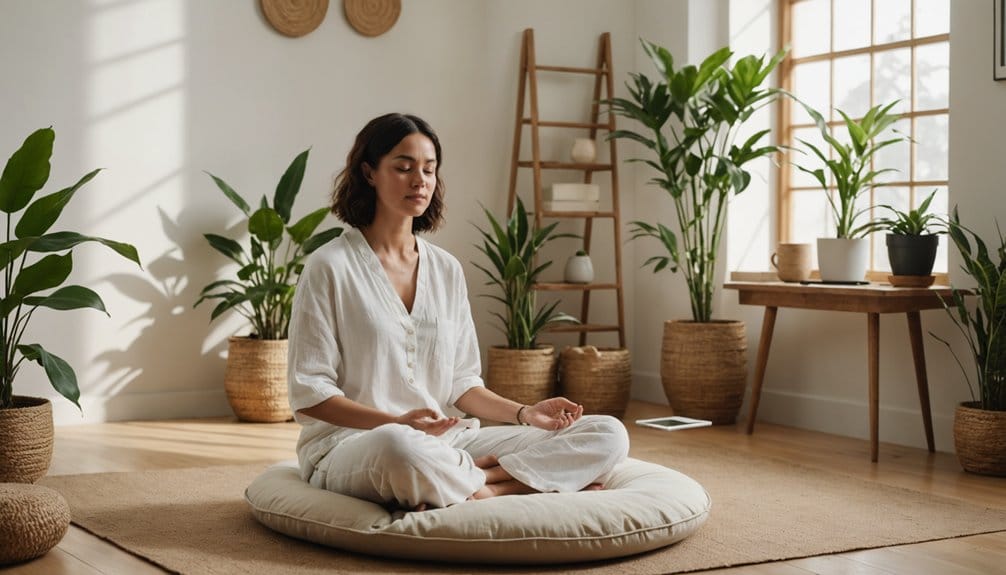
Getting your posture right for both Vipassana and Samatha meditation might feel like learning to sit “properly” at a fancy dinner – except instead of impressing your date’s parents, you’re training your mind. You’ll want to find a comfortable but alert position, whether that’s cross-legged on a cushion, kneeling, or even sitting in a chair (no judgment here – your back will thank you). While the physical foundation is important, it’s your mental approach that really sets these practices apart – Samatha asks you to zero in on a single focus point like your breath, while Vipassana invites you to notice everything that pops up in your awareness. For beginners, natural breath awareness is essential without trying to control or modify the breathing pattern.
Core Meditation Postures
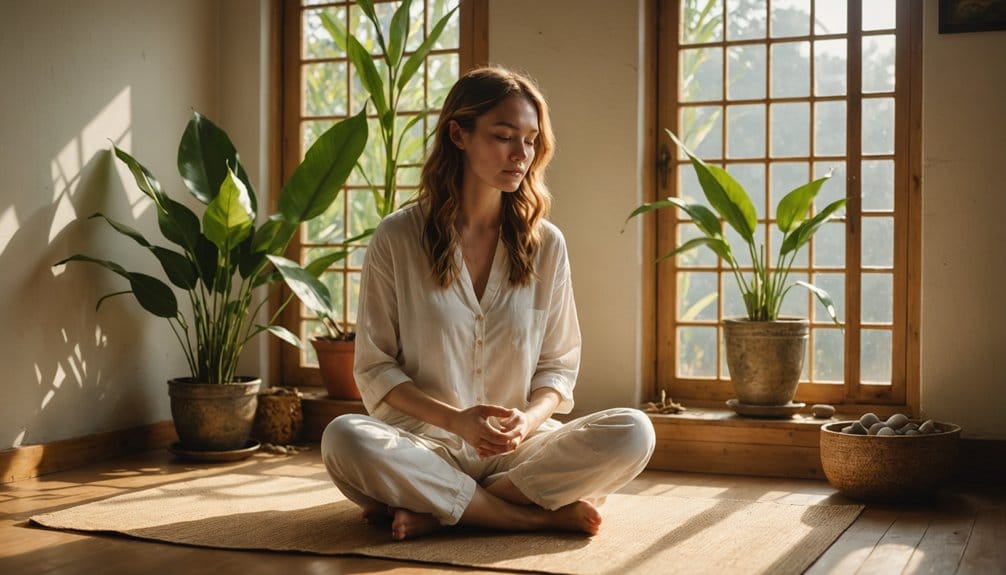
Proper posture forms the foundation of both Vipassana and Samatha meditation practices. Whether you’re sitting cross-legged on the floor or perched on a chair, maintaining proper body alignment is essential for your practice. You’ll want to keep your spine straight – imagine a string pulling you up from the crown of your head – but don’t make yourself stiff as a board!
The most common meditation postures include the full lotus, half lotus, Burmese position, and simple cross-legged sitting. Can’t sit on the floor? No problem! A chair works perfectly fine, as long as your feet are flat on the ground and you’re not leaning back like you’re watching TV. The key is finding a position that’s both stable and comfortable enough that you won’t be distracted by physical discomfort.
Mental Training Methods
Once you’ve found your ideal meditation posture, it’s time to sharpen those mental muscles! Think of your mind as a puppy – it needs consistent training and lots of patience. Both Vipassana and Samatha use distinct mindfulness techniques to wrangle that wandering mind of yours.
In Samatha, you’ll focus on concentration exercises like following your breath or fixing your attention on a single object. It’s like teaching your puppy to “stay” – not always easy, but definitely rewarding! Vipassana, on the other hand, invites you to observe everything that comes up without getting caught in the drama. Notice an itch? Perfect! A random thought about tacos? Great! You’re training yourself to watch these experiences with the calm curiosity of a scientist studying fascinating specimens under a microscope.
Mental Focus and Attention Training
Mental focus stands at the heart of both Vipassana and Samatha practices, though they train attention in distinctly different ways. With Samatha, you’ll work on focus enhancement through single-pointed concentration – like keeping your mind glued to your breath. It’s like training a puppy to sit and stay! Vipassana, however, teaches attention control through mindful observation of your entire experience.
Think of Samatha as developing a laser beam of concentration – you’re aiming for that steady, unwavering focus on one thing. You’ll probably start by counting breaths (and yes, losing count more times than you’d care to admit). With Vipassana, you’re more like a curious scientist, training yourself to notice everything that arises in your awareness without getting caught up in it.
Physical Posture and Environmental Requirements
While both meditation styles share core physical requirements, they differ in how strictly you’ll need to follow traditional posture rules. Samatha demands more rigid posture alignment – think perfectly straight spine and precisely positioned hands. You’ll want a distraction-free meditation environment too. But hey, nobody’s expecting you to twist into a pretzel!
Vipassana’s a bit more relaxed about it. Sure, good posture helps, but you’ve got wiggle room to find what works for you. Whether you’re on a cushion, chair, or (let’s be honest) your favorite couch, comfort’s key. The environment matters less too – you can practice pretty much anywhere. Remember though, if you’re falling asleep during sessions, maybe that ultra-comfy recliner isn’t your best choice. Find your sweet spot between proper form and personal comfort.
Benefits and Transformative Effects
Both Samatha and Vipassana meditation pack serious transformative power, but they’ll take you down different paths to inner peace. With Samatha, you’ll develop laser-like focus and unshakeable calmness – perfect for those moments when your mind resembles a caffeinated squirrel. Through dedicated practice, you’ll experience deep states of bliss and emotional healing that’ll make your daily struggles feel more manageable.
Vipassana, on the other hand, offers transformational experiences through radical self-understanding. You’ll start seeing through those pesky illusions that keep you stuck in old patterns. Ever wonder why you keep dating the same type of person or reaching for that midnight snack? Vipassana helps you understand these patterns at their core, leading to profound insights and lasting change. Think of it as your personal reality check – minus the awkwardness. Regular practice strengthens your emotional resilience against life’s inevitable ups and downs.
Choosing the Right Path for Your Practice
You’ll want to begin by asking yourself what you’re really hoping to achieve through meditation – whether it’s stress relief, spiritual growth, or just learning to stay awake during boring meetings (we’ve all been there). The teaching methods and time commitments between Vipassana and Samatha can differ quite a bit, with Vipassana typically requiring more intensive retreats while Samatha often fits more easily into daily life. Before jumping in, take an honest look at how much time and energy you can realistically dedicate to your practice, since choosing a path that matches your schedule and temperament will help you stick with it for the long haul.
Assess Your Meditation Goals
When it comes to choosing between Vipassana and Samatha meditation, getting clear on your personal goals is essential – it’s like picking the right tool for the job. Are you seeking deep insights into the nature of reality, or do you need a way to calm your racing mind after a hectic day at work?
Take a moment to reflect on your personal intentions. If you’re drawn to exploring the depths of consciousness and uncovering life’s deeper truths, Vipassana might be your path. But if your desired outcomes include stress relief, better focus, or a solid foundation for other practices, Samatha could be your best bet. Think of it this way: Vipassana’s like diving deep into the ocean, while Samatha’s more like learning to surf the waves with grace.
Compare Teaching Approaches
The teaching approaches of Vipassana and Samatha meditation couldn’t be more different – it’s like comparing a strict piano teacher to your laid-back guitar instructor. While Vipassana teaching styles emphasize self-discovery through minimal guidance, Samatha instructors provide detailed, step-by-step direction.
In Vipassana, you’ll often find yourself figuring things out independently, with teachers offering occasional course corrections rather than constant feedback. It’s like learning to ride a bike – sometimes you’ve got to fall to learn! Samatha guidance techniques, however, feel more like having training wheels. Your teacher will closely monitor your progress, offering specific breathing cues and concentration exercises.
Ever wondered which approach suits you better? If you thrive on structure, Samatha’s supportive teaching style might be your path. More of a self-starter? Vipassana’s independent approach could be perfect.
Consider Time Investment Needed
Because time management often feels like juggling flaming torches while riding a unicycle, choosing between Vipassana and Samatha meditation requires careful consideration of your schedule.
Samatha’s time commitment can fit into bite-sized chunks – you’ll start with 5-10 minutes daily and gradually build up. It’s like dipping your toes in the meditation pool before diving deep. Perfect for busy bees who can’t block out huge chunks of time.
Vipassana, on the other hand, demands a more intensive practice duration. You’re looking at dedicated blocks of 30-60 minutes daily, plus occasional multi-day retreats. Think of it as signing up for a meditation marathon rather than a casual jog. But hey, if you’re ready to commit, the transformative benefits can be worth rearranging your calendar.