Buddhist meditation techniques can deeply transform your life. Mindfulness (Vipassana) keeps you present, while Loving-Kindness (Metta) fosters compassion for yourself and others. Concentration (Samatha) sharpens your focus, and Visualization (Kinhin) sparks creativity through imagery. Zen (Zazen) guides you to inner peace with breath awareness. Each practice offers unique benefits that can enhance your awareness and emotional resilience. Want to explore how these techniques can enrich your daily routine? You’re in for a journey of insight.
Key Takeaways
- Mindfulness meditation (Vipassana) cultivates awareness, using breath as an anchor to enhance presence and serenity in each moment.
- Loving-kindness meditation (Metta) fosters compassion and emotional resilience by encouraging positive intentions toward oneself and others.
- Concentration meditation (Samatha) sharpens focus through directed attention, allowing the mind to quiet and enhancing concentration with practice.
- Visualization meditation (Kinhin) uses imagination to create vivid mental imagery, promoting present moment awareness and deepening meditation experiences.
- Zen meditation (Zazen) emphasizes breath awareness and thoughtful acknowledgment of distractions, supporting inner peace and self-discovery through structured posture.
Mindfulness Meditation (Vipassana)
Mindfulness meditation, or Vipassana, invites you to cultivate awareness and presence in each moment.
You’ll discover that focusing on your breath serves as a powerful anchor, guiding your attention back to the here and now.
With each inhale and exhale, you create a space for serenity and clarity, allowing distractions to fade away.
With every breath, you invite peace and understanding, creating a sanctuary where distractions dissolve into stillness.
As you practice breath awareness, you’ll learn to embrace the present moments, letting go of worries about the past or future.
This journey toward inner freedom reveals the beauty of simplicity.
You’ll find that true liberation lies in accepting things as they are, moment by moment.
Loving-Kindness Meditation (Metta)
Loving-kindness meditation, or Metta, opens your heart to compassion and kindness, both toward yourself and others. This practice offers a benefits overview, enhancing emotional resilience, reducing stress, and fostering connections.
To get started, find a quiet space where you feel safe and comfortable. Begin by bringing to mind someone you love; wish them happiness and peace. Gradually extend these well-wishes to yourself, loved ones, acquaintances, and even those you struggle with. Repeat phrases like “May you be happy” and “May you be free from suffering.”
Consistency is key—try dedicating a few minutes daily. By following these practical tips, you’ll cultivate a profound love that can transform your outlook and relationships, empowering you on your journey towards freedom.
Concentration Meditation (Samatha)
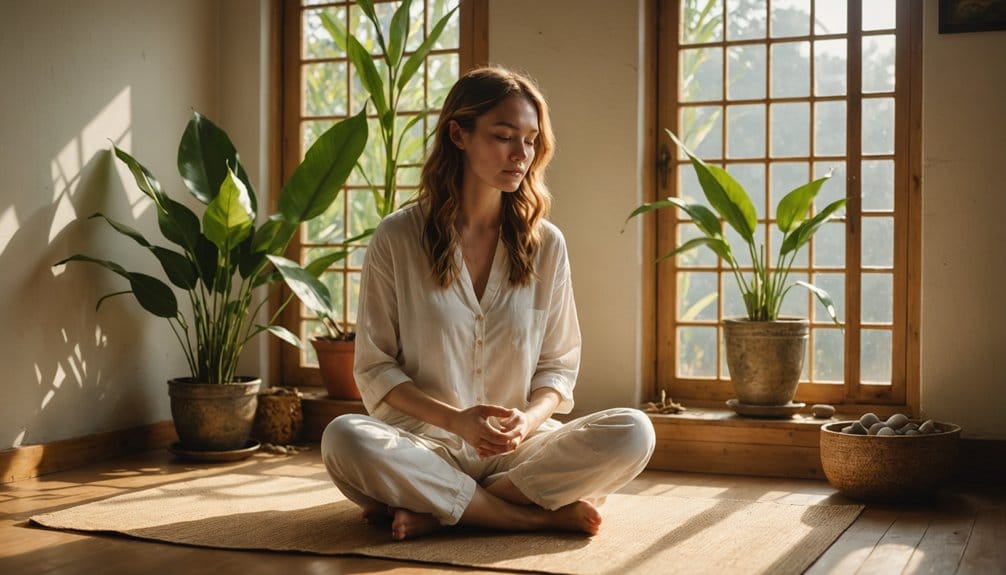
Concentration meditation, known as Samatha, is a powerful technique that sharpens your focus and calms the mind. You’ll find that by practicing this form of meditation, you can cultivate deep tranquility and centeredness in your life.
As you sit quietly, direct your attention to a single point—this could be your breath, a sound, or even a candle flame. By maintaining focused attention, distractions fade away, allowing you to experience the freedom that comes from a quiet mind.
With each session, you’ll gradually enhance your ability to concentrate, nurturing a sense of peace and a profound connection within. Embrace this journey of focused attention and enjoy the liberation that true tranquility cultivation brings.
Visualisation Meditation (Kinhin)
As you explore visualization meditation, or Kinhin, you’ll find it offers a unique way to engage your imagination and deepen your meditative practice. This technique encourages you to create vivid, mindful imagery in your mind, allowing you to journey beyond the constraints of everyday life.
By focusing on these visualization techniques, you tap into the power of your thoughts, enhancing your awareness of the present moment. Picture a serene landscape or envision the flow of your breath as a gentle stream, guiding you toward inner calm.
Embrace the freedom that comes with this practice; it invites creativity and encourages a more profound connection to your surroundings. Let each session expand your mind, providing clarity and insight on your path towards enlightenment.
Zen Meditation (Zazen)
Zen meditation, known as Zazen, offers a powerful gateway to inner peace and self-discovery.
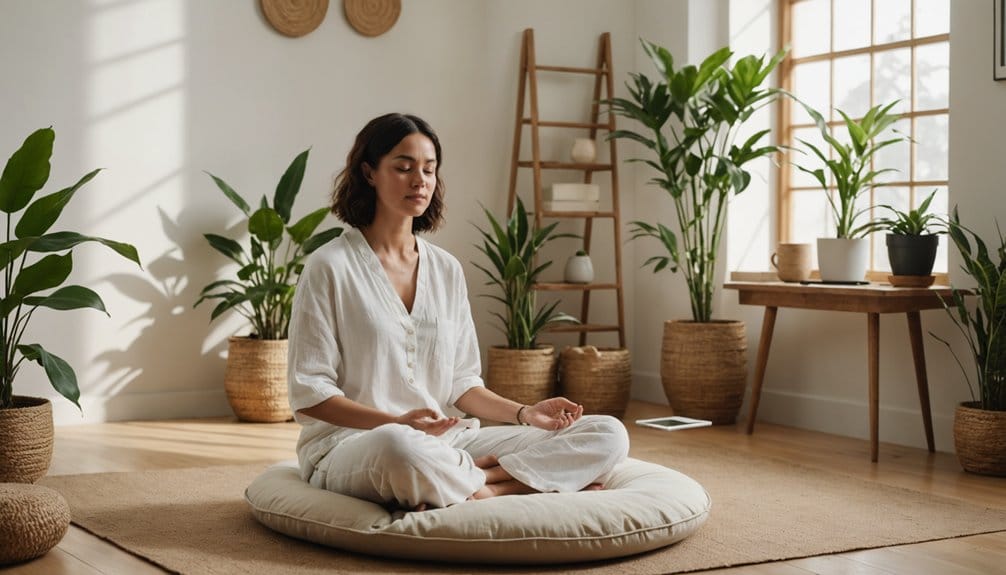
To start, find a comfortable space where you can sit quietly. Adopt the zazen posture: sit cross-legged or on a chair, keeping your back straight and hands resting gently in your lap. Close your eyes or soften your gaze, and let your focus shift to breath awareness.
Find a tranquil space, settle into zazen posture, and turn your attention to your breath for a serene meditation experience.
Feel each inhale and exhale, allowing your mind to settle without judgment. If thoughts arise, acknowledge them, then gently return your attention to your breath.
With practice, you’ll experience freedom from overwhelming thoughts and emotions, opening your mind to deeper insights. Embrace this journey; with each session, you’ll cultivate clarity and harmony within yourself.
Frequently Asked Questions
How Long Should I Meditate Each Day for Best Results?
To experience the best results, aim for at least 15 to 30 minutes of meditation daily. Consistently incorporating this into your routine can cultivate greater awareness and freedom in your mind and life.
What Are the Best Postures for Meditation Practice?
The best postures for meditation practice include comfortable sitting positions like cross-legged or seated on a chair, as well as a kneeling stance. You’ll find freedom and stability in whichever position feels most natural for you.
Can Meditation Help With Anxiety and Stress Management?
Meditation can greatly help you manage anxiety and stress. By practicing mindfulness benefits and employing breathing techniques, you’ll find yourself achieving a sense of freedom, clarity, and emotional balance in your daily life.
How Do I Maintain Focus During Meditation?
Picture a serene lake; distractions ripple its surface. To maintain focus during meditation, you’ll find breath counting as your anchor and mantra repetition as your gentle breeze, guiding you towards tranquility and freedom within.
What Should I Do if I Get Distracted While Meditating?
If you get distracted while meditating, acknowledge it without judgment. Gently redirect your focus using distraction techniques. Cultivating mind awareness can help you embrace the moment, freeing you from the clutter that interrupts your peace.
Conclusion
Incorporating these Buddhist meditation techniques into your life can be like planting seeds in a garden; with time and care, you’ll witness the blossoming of inner peace, compassion, and focus. As you explore mindfulness, loving-kindness, concentration, visualization, and Zen practices, you’ll cultivate a deeper awareness of yourself and the world around you. So, take a moment, breathe, and let each technique guide you on your journey toward tranquility and understanding. Your path to serenity awaits!