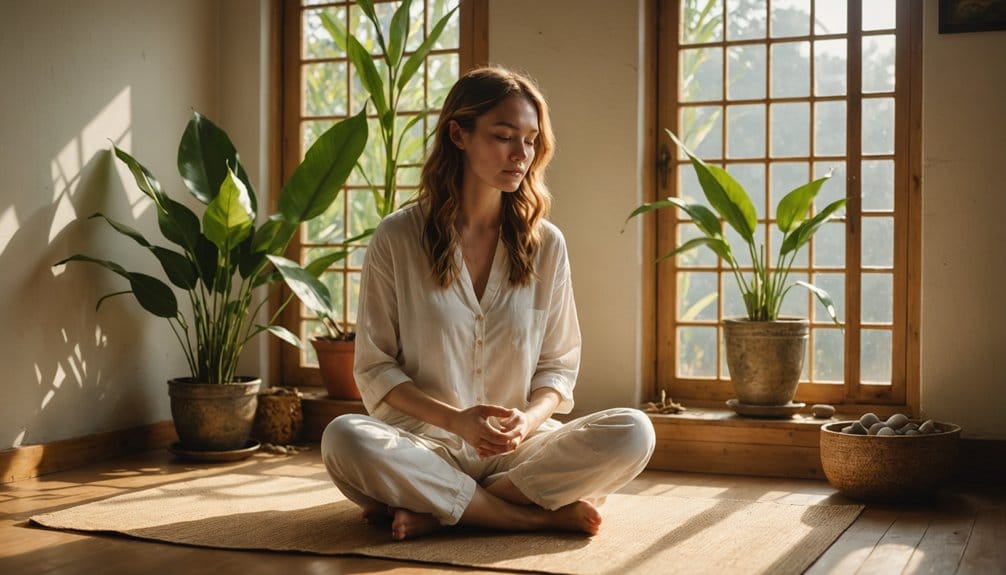
Want to feel like you’re giving your brain a gentle massage? Bhramari, or “bee breath,” is an ancient yogic technique where you hum like a contented bee while breathing – and yes, it’s totally okay to feel a bit silly at first! You’ll close your eyes, block your ears with your thumbs, inhale deeply, then make a smooth humming sound as you exhale. Just 5 minutes can lower stress, blood pressure, and quiet that mental chatter. There’s more to this buzzing technique than meets the ear.
The Ancient Origins of Bhramari Pranayama
While the exact origins of Bhramari Pranayama remain shrouded in mystery, this ancient breathing practice has been passed down through generations of yogis in India for thousands of years.
You might wonder why it’s called the “bee breath” – and no, it’s not because ancient yogis had peculiar hobbies! The name comes from the Sanskrit word “bhramara,” meaning black bee, due to the humming sound you’ll make during the practice. The historical context of Bhramari traces back to ancient texts like the Hatha Yoga Pradipika, where it’s described as a powerful technique for calming the mind. Its cultural significance runs deep in Indian spiritual traditions, where it’s been used by meditation practitioners seeking inner peace. Think of it as your ancestors’ natural stress-relief technique – way before meditation apps were cool!
Scientific Benefits and Research Findings
Although scientists have only recently begun studying Bhramari’s effects, the research findings are seriously impressive. Studies show remarkable neurophysiological effects, including reduced blood pressure, slower heart rate, and improved brain wave patterns. You’ll love how this simple humming practice can transform your stressed-out state into zen-like calm in minutes.
Looking for solid proof? Research participants showed significant stress reduction after just 5 minutes of Bhramari practice. Their cortisol levels dropped, and they reported feeling more balanced and clear-headed. Even better, regular practitioners demonstrated enhanced cognitive function and emotional regulation. Who knew making bee sounds could be so scientifically sound? Whether you’re a skeptic or a believer, the data backs up what ancient yogis always knew – this buzz is the real deal.
Step-by-Step Guide to Practicing Bhramari
Four simple steps will transform your regular breathing into a calming bee-like buzz. First, find a quiet spot and sit comfortably with your back straight – no need for fancy poses here! Next, gently press your thumbs against your ears while your fingers rest softly on your closed eyes. You’re basically giving yourself a mini face hug.
Now for the fun part: take a deep breath in through your nose, then make a humming sound as you exhale – just like a content little bee. This is where your breath control journey begins. Keep this mindfulness practice going for 5-10 breaths, or until you feel wonderfully relaxed. Remember, it’s perfectly normal if you feel a bit silly at first – we all do!
Common Mistakes to Avoid During Practice
Learning Bhramari may seem straightforward, but even seasoned practitioners can slip into some common pitfalls. Don’t make the rookie mistake of forcing the humming sound – it should flow naturally. Watch out for these breath control blunders: rushing your inhales, tensing your jaw, or humming too loudly.
You might think closing your eyes super-tight will enhance the practice (spoiler alert: it won’t!). Keep them gently closed instead. Another classic error? Forgetting to sit up straight. Sure, you’re not training for military posture, but slouching won’t do your practice any favors. And please don’t hold your breath between rounds – this isn’t an underwater contest! Remember to maintain a smooth, continuous flow. When in doubt, return to the basics and let your body guide you.
Best Times and Conditions for Practice
While you can practice Bhramari breathing any time of day, certain conditions will help you get the most out of your humming bee experience. The ideal times are early morning and evening when the world’s still quiet – you won’t have to compete with your neighbor’s leaf blower or your cat’s demands for attention.
Environmental factors play a huge role in your practice’s effectiveness. Find a cool, well-ventilated space where you won’t be disturbed. Ever tried meditating next to a noisy air conditioner? Not fun. Your practice space should be like your favorite coffee shop – comfortable but not so cozy you’ll fall asleep. Dim lighting helps, and if you can practice outdoors in nature, even better. Just make sure the real bees don’t mistake you for competition!
Modifications for Different Skill Levels
Whether you’re a total newbie or a seasoned pro, there’s a version of Bhramari breathing that’ll work perfectly for your experience level – kind of like how we all started with training wheels before tackling Tour de France-level cycling. You’ll want to start with the basics if you’re new, focusing on the simple humming sound while seated comfortably, before working your way up to the intermediate variations that incorporate hand positions and longer breath holds. For those ready to kick things up a notch, you can explore advanced intensity levels that combine multiple mudras, extended durations, and even synchronized movement patterns – but don’t worry if you’re not there yet, we’ve all had to learn to walk before we could run.
Beginner Practice Tips
Since mastering Bhramari takes time and practice, starting with simple modifications can help you build confidence and proper technique. Begin in a quiet room where you won’t feel self-conscious about making bee sounds – trust me, we’ve all felt a bit silly at first!
Focus on breath awareness before adding the humming. Take 5-10 natural breaths, simply observing how your chest and belly move. When you’re ready, try gentle humming on the exhale. Don’t worry about perfect sound resonance yet – just aim for a comfortable, steady tone.
Start with just 2-3 rounds, keeping your eyes open if closing them feels uncomfortable. You can practice while sitting in a chair instead of cross-legged. Remember, even experienced practitioners started as beginners who wondered if they were “doing it right.”
Intermediate Level Variations
Once you’ve gotten comfortable with the basic Bhramari breath, you’re ready to explore some interesting variations that’ll kick things up a notch. Try extending your exhale to create deeper sound resonance – you’ll feel like you’re conducting your own personal symphony! Want to challenge yourself? Experiment with different breathing rhythms by adding short pauses between hums.
Ready for more? Try this: Create waves of vibration by gradually increasing and decreasing the volume of your hum. Or get fancy with alternating between high and low pitches – just don’t startle your cat! You can also play with finger positioning, lifting one finger at a time from your ears to notice how the sound changes. Remember, these variations aren’t about perfection; they’re about discovering what resonates with you.
Advanced Intensity Levels
As you venture into advanced Bhramari practice, you’ll discover it’s a bit like becoming a master chef – there’s always another layer of complexity to explore!
Ready to kick things up a notch? Try extending your humming duration to 30 seconds or more while maintaining perfect breath control. You can also experiment with varying the pitch of your hum – start low and gradually rise higher, or create wave-like patterns. For a real challenge, incorporate advanced techniques like alternating nostrils between hums or adding subtle head movements.
Want to test your focus? Practice in increasingly challenging environments, from a busy park to a noisy café. Just remember – even advanced practitioners sometimes get thrown off by a sudden sneeze or an itchy nose! The key is to maintain your composure and keep that peaceful buzz going.
Therapeutic Applications in Modern Wellness
If you’re struggling with anxiety, depression, or poor sleep, Bhramari breathing might become your new best friend (minus the awkward small talk). Research shows this ancient humming practice can actually calm your nervous system and lift your mood – it’s like having a built-in stress reliever that doesn’t require a prescription or weird side effects. You’ll be amazed how such a simple technique can help quiet those racing midnight thoughts and guide you toward more restful sleep, proving sometimes the best medicine is just your own breath (and a little controlled buzzing).
Managing Anxiety and Depression
While many modern wellness practices require elaborate setups or expensive gear, Bhramari breathing offers a powerfully simple way to calm anxiety and lift depression using just your breath and a gentle hum.
You’ve probably tried various mindfulness strategies before – maybe meditation apps that didn’t stick or pricey therapy sessions that felt overwhelming. That’s where Bhramari shines. This practice helps you regain control through emotional regulation in a way that feels natural, not forced. When anxiety starts creeping in, you can duck into any quiet spot for a quick humming session. No special equipment needed, just you and your breath.
Think of it as your pocket-sized calm button. The vibrations from humming actually help activate your body’s relaxation response, making it harder for those anxious thoughts to take hold.
Sleep Quality Improvement
When restless nights leave you staring at the ceiling, Bhramari breathing can be your natural ticket to dreamland. You know those nights when your mind just won’t shut off? That’s where this buzzing breath practice really shines.
The sleep benefits of Bhramari are pretty remarkable – it’s like hitting your brain’s reset button before bed. The gentle humming vibrations have calming effects that help quiet those late-night thought spirals. Ever noticed how a cat’s purring can make you drowsy? It works on a similar principle.
Try practicing Bhramari for 5-10 minutes as part of your bedtime routine. You’ll likely find yourself drifting off more easily, and the quality of your sleep often improves too. Who knew pretending to be a bee could be such a powerful sleep aid?
Combining Bhramari With Other Breathing Techniques
Although Bhramari breathing is powerful on its own, combining it with other pranayama techniques can supercharge your practice. You’ll find that pairing Bhramari and yoga creates a deeply meditative state – try it after a few rounds of alternate nostril breathing or at the end of your asana practice. Who knew bees could be such great meditation partners?
Want to take your practice even further? Mix Bhramari and meditation with simple techniques like breath counting or body scanning. Start with 4-7-8 breathing to calm your nervous system, then shift into Bhramari’s soothing buzz. You can also sandwich your Bhramari practice between rounds of deep belly breathing. The possibilities are endless – feel free to experiment and find what resonates best with your body and mind.
Safety Guidelines and Contraindications
Since Bhramari’s buzzing vibrations are powerful, you’ll want to practice this technique safely and mindfully. While it’s a gentle practice, certain health conditions require extra caution. If you have high blood pressure, ear infections, or epilepsy, check with your doctor first.
Skip this practice if you’re experiencing severe headaches, chest congestion, or inner ear problems. Following basic safety precautions will keep your buzzing blissful rather than bothersome. Practice on an empty stomach, and if you feel dizzy or uncomfortable, simply return to normal breathing. Who knew making bee sounds could need a warning label, right?
Remember to start slowly and build up gradually – there’s no prize for being the loudest buzzer in yoga class! Your body’s wisdom will guide you toward the right intensity level.