Ever notice how your mind wanders faster than a squirrel chasing after the last acorn of autumn? You’re not alone in this mental gymnastics routine. Whether you’re struggling to focus during important meetings or finding yourself checking your phone for the hundredth time, guided meditation might be your ticket to laser-sharp concentration. From ancient breathing techniques to modern apps that’ll keep your monkey mind in check, there’s a focus-boosting meditation style that’ll fit perfectly into your chaotic schedule.
Understanding the Science Behind Meditation and Focus
While scientists once viewed meditation as purely spiritual practice, modern research has revealed fascinating insights into how it physically changes our brains. You’ve probably noticed how scattered your thoughts can get when you’re stressed – like having 37 browser tabs open at once. That’s where neuroscience insights come in.
When you meditate regularly, you’re actually rewiring your neural pathways. Pretty cool, right? Studies show the cognitive benefits include increased gray matter in areas responsible for focus, memory, and emotional regulation. Your brain becomes more efficient at filtering out distractions, like that neighbor who thinks 7 AM is the perfect time to practice their drum solo.
Think of meditation as a gym workout for your mind – except you don’t have to wear uncomfortable spandex or pretend to understand how the machines work. Just ten minutes of practicing guided body scans can reduce stress hormone levels by up to 15%.
Breath Awareness Meditation for Mental Clarity
You’ve probably noticed how chaotic your mind feels when you can’t focus – like having fifty browser tabs open at once! Learning basic breath awareness meditation starts with something you’re already an expert at (breathing, that is), but this time you’ll pay attention to each inhale and exhale as if you’re watching waves roll in and out at the beach. By establishing a consistent 5-10 minute daily practice of mindful breathing, you’ll build the mental clarity needed to finally close those metaphorical browser tabs and get things done. Try incorporating the 4-7-8 breathing technique to quickly calm your nervous system and reset your scattered thoughts.
Basic Breathing Techniques
Three essential breathing techniques form the foundation of any successful meditation practice for mental clarity. You’ll start with basic breath control – simply observing your natural rhythm without trying to change it. Next, try diaphragmatic breathing by placing one hand on your belly and feeling it expand like a balloon with each inhale. Who knew your stomach could be such an entertaining meditation tool?
Finally, there’s the 4-4-4 technique: breathe in for four counts, hold for four, then release for four. It’s like a mini vacation for your mind, minus the expensive airfare. These techniques aren’t about achieving perfection – they’re about finding what works for you. Start with just two minutes a day, and you’ll be amazed at how quickly your focus improves.
Benefits of Mindful Breathing
Now that you’ve got those breathing basics under your belt, let’s explore what makes mindful breathing such a game-changer for your mental clarity. Think of it as hitting your brain’s reset button – pretty neat, right?
When you practice mindful breathing, you’re actually training your mind to stay in the present moment instead of wandering off to yesterday’s awkward conversation or tomorrow’s deadline. You’ll notice stress reduction kick in within minutes as your body shifts from “fight-or-flight” mode to “rest-and-digest.” Ever feel like your thoughts are racing like a caffeinated squirrel? Mindful breathing helps pump the brakes.
The best part? You can tap into these benefits anywhere – during your commute, between meetings, or even while your colleague rambles about their weekend plans.
Establish Your Practice Routine
While establishing a meditation routine might seem as intimidating as assembling furniture without instructions, it’s actually pretty straightforward. You’re simply carving out time for yourself – no Allen wrench required!
Start by picking a meditation schedule that fits your natural rhythm. Are you a morning person? Great – meditate right after your coffee. Night owl? Wind down with an evening session. The key is practice consistency, so choose a time you’ll actually stick with.
Begin with just 5 minutes daily – yes, that’s all! You wouldn’t run a marathon without training first, right? As you build comfort, gradually extend your sessions to 10 or 15 minutes. Place a cushion in a quiet corner, set a gentle alarm, and make this YOUR time. Before you know it, you’ll be craving these moments of clarity.
Body Scan Meditation for Present-Moment Focus
Tuning into your body’s subtle sensations can transform a scattered mind into a focused one. A body scan meditation helps you develop mindful awareness by systematically checking in with each part of your physical self – from your toes to the top of your head.
Start by finding a comfortable position, either lying down or sitting. You’ll gradually direct your attention to different areas, noticing any tension, temperature, or tingling without trying to change anything. Ever noticed how your left pinky toe feels? Probably not! That’s the beauty of this practice – it anchors your present engagement to sensations you usually ignore.
When your mind wanders (and it will), just gently guide it back. Think of it like training a playful puppy – no scolding needed, just patient redirection. Regular practice of this mindful movement meditation can create lasting neural pathways that enhance your emotional regulation and stress response.
Mindful Walking Meditation Techniques
You’ve probably noticed how walking can clear your mind, but practicing mindful walking meditation takes that natural clarity to a whole new level. When you combine deliberate breathing with each step and set an intentional, unhurried pace, you’ll transform an ordinary stroll into a powerful focus-building exercise. As you walk, let your senses fully engage with your surroundings – notice how the ground feels beneath your feet, catch the subtle sounds around you, and yes, even appreciate that neighbor’s oddly-pruned hedges that always make you smile. Choose a dedicated path for walking to help maintain concentrated awareness throughout your meditation practice.
Mindful Motion and Breathing
Since ancient times, mindful walking meditation has offered a perfect blend of physical activity and mental clarity – and let’s face it, who doesn’t need both?
As you move, sync your breath with each step to create a focused flow. Start by walking at a natural pace, then gradually slow down to really feel the connection between your feet and the ground. Notice how your body shifts weight from heel to toe. You’ll discover mindful mobility isn’t just about getting from point A to point B – it’s about being present in every movement.
Having trouble staying focused? Try counting your steps in sets of four, matching your inhales and exhales. It’s like giving your wandering mind a simple job to do while your body finds its rhythm. Before you know it, you’re moving meditation like a pro!
Setting Your Walking Pace
Finding your ideal walking meditation pace is like discovering the perfect rhythm for your favorite song – it just clicks. You’ll know you’ve hit your mindful pace when your footsteps feel natural and your breathing syncs effortlessly with your movement.
Start by walking at your normal speed, then gradually slow down until you’re moving at about half that pace. Notice how each step connects with the ground. Too slow, and you’ll wobble like a newborn giraffe. Too fast, and you’ll miss the subtle sensations. Your walking rhythm should feel steady but relaxed – think “zen tortoise” rather than “stressed rabbit.”
Engaging Your Senses Fully
Once you’ve found your perfect walking rhythm, it’s time to transform your stroll into a full sensory experience. Let your awareness expand like a ripple in a pond, taking in every detail around you. What sounds catch your attention? Maybe it’s the crunch of leaves or the distant hum of city life.
Now immerse yourself in sensory immersion – feel the temperature on your skin, the breeze in your hair, the texture of the ground beneath your feet. You’ll notice things you’ve walked past a hundred times before (funny how that works, isn’t it?). With heightened awareness, even familiar paths become entirely new adventures. Notice how the air tastes, how shadows dance across your path, and how your body responds to each step. Your everyday walk just became an exploration worthy of National Geographic – minus the camera crew.
Sound-Based Meditation for Deep Concentration
The gentle chime of a singing bowl can transport your mind from chaos to clarity in moments. When you’re feeling scattered, specific sound frequencies can anchor your attention like a mental reset button. Haven’t you noticed how certain sounds just “click” with your brain? Eastern meditation practices show that sound-based techniques have been used for centuries to achieve deep states of concentration and inner peace. Try this: Find a quiet spot where you won’t be interrupted (your car at lunch break works too – we’ve all been there!). Play nature sounds or binaural beats through headphones, letting the auditory cues guide you deeper into concentration. Start with just three minutes – yes, that’s shorter than your average social media scroll. Focus on the sounds as they flow through your awareness, like waves on a beach. When your mind wanders off to that pending email or weekend plans, gently redirect it back to the sound. No judgment – we’re all masters of mental ping-pong here.
Visualization Exercises for Enhanced Attention
While sound meditation works wonders, visualization lets you tap into your mind’s natural ability to create vivid mental pictures. Think of it as directing your own mental movie – you’re both the director and the star! Through specific visual imagery exercises, you’ll strengthen your mind’s focus muscle.
Start by picturing yourself in a peaceful garden. Notice every detail – from the soft grass beneath your feet to the gentle sway of flowers in the breeze. These concentration techniques work because they give your wandering thoughts something concrete to latch onto. Can’t keep your mind from racing? No problem! Even imagining a simple object, like a blue sphere floating in darkness, can anchor your attention.
You’ll find that regular practice makes these visualizations easier and more effective for maintaining laser-sharp focus.
Guided Meditation Apps and Digital Resources
As technology continues reshaping our daily routines, meditation apps have become your pocket-sized zen masters. You’ll find popular options like Headspace and Calm offering structured programs that fit neatly into your hectic schedule. Ever tried meditating while your neighbor’s dog won’t stop barking? These apps have got you covered with noise-masking features and ambient sounds.
Beyond meditation apps, digital resources like YouTube channels and podcasts provide free alternatives for the budget-conscious seeker. Websites like Insight Timer let you customize sessions based on your focus needs – perfect for those days when you can’t decide between a quick reset or immersive exploration. And let’s be honest, having a soothing voice guide you through breathing exercises beats staring at the wall wondering if you’re “doing it right.”
Creating an Optimal Meditation Space
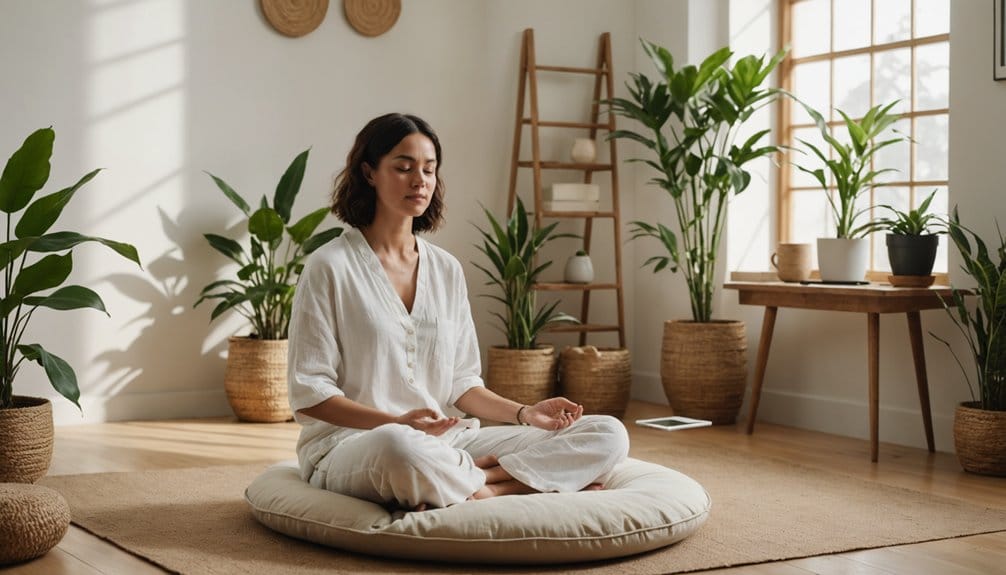
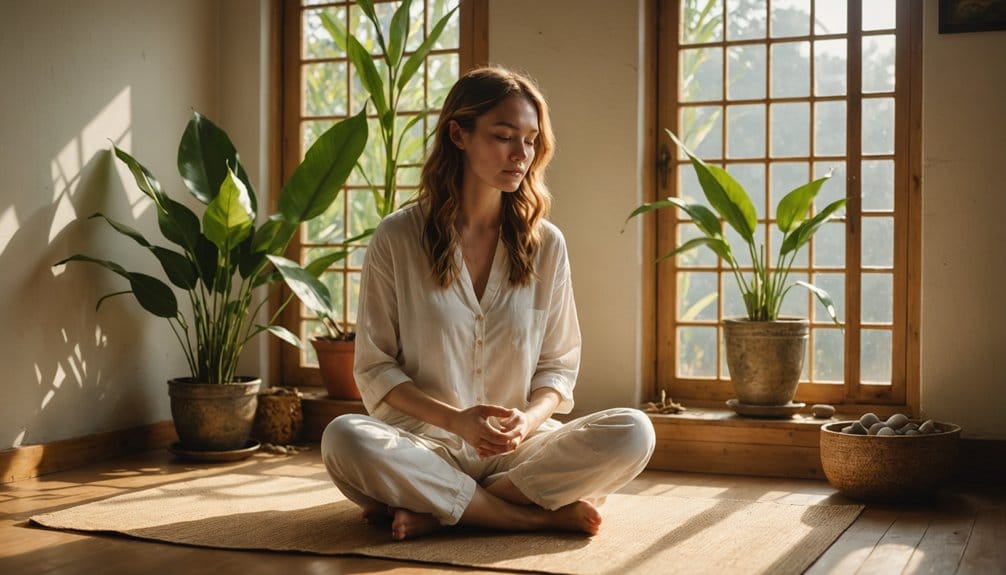
Setting up your meditation space doesn’t require a Pinterest-worthy zen garden or imported meditation cushions from Tibet. All you need is a quiet corner where you can breathe freely and feel at peace. Start by decluttering your chosen area – yes, that means finally dealing with that pile of magazines you’ve been avoiding.
Add calming elements that speak to you personally: maybe it’s a small plant, your favorite crystals, or that weird-but-soothing bobblehead your kid made in art class. Lighting ambiance matters too – natural light works wonders, but a soft lamp will do just fine. The key is creating organization that feels natural to you. Your meditation space should reflect your personality, not someone else’s idea of tranquility. Remember, if it makes you feel centered and calm, you’re doing it right.
Daily Meditation Practices for Lasting Results
Once you’ve created your perfect meditation nook, it’s time to actually use it – and not just as another place to stack your laundry. Let’s bust some meditation myths right now: you don’t need hours of free time or monk-like discipline to reap mindfulness benefits.
Start with just five minutes each morning. Seriously, that’s it. Set your alarm five minutes earlier (I know, I know – but your Instagram feed can wait). Sit comfortably, focus on your breath, and when your mind wanders off to your growing to-do list or what you’ll have for lunch, gently guide it back. No judgment, no pressure. Think of it like training a puppy – it takes patience and consistency, but the results are worth it. Your focus will sharpen, your stress will decrease, and you might even become that annoyingly zen person at the office.