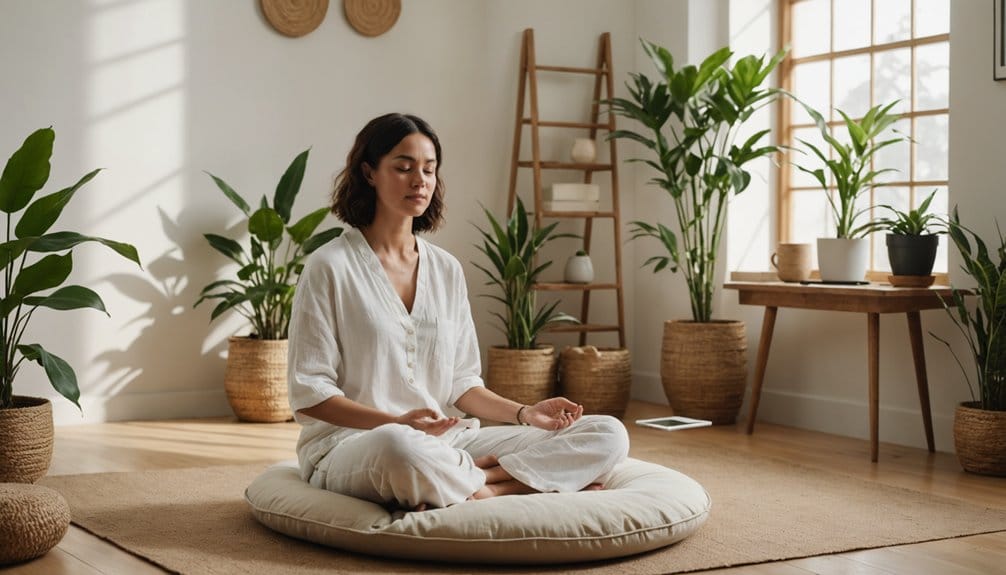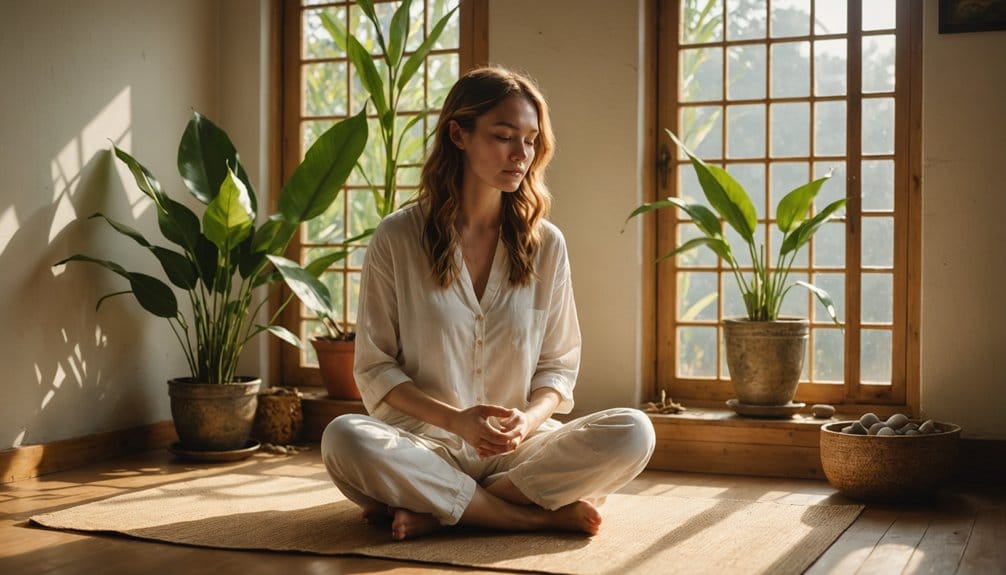
Looking to tame those stress monsters? Three proven mindfulness techniques can help you find your zen. Try a body scan meditation – it’s like defrosting tension from your toes to your head in just 10 minutes. Practice mindful breathing, which trains your wandering mind like a playful puppy learning to sit and stay. Or take your calm on the go with walking meditation in nature. There’s more to discover about each method’s transformative power.
Body Scan Meditation for Deep Relaxation
While you might think body scan meditation requires fancy equipment or years of training, it’s actually one of the simplest ways to hit your mental reset button. All you need is a quiet spot and about 10 minutes of uninterrupted time. Ever notice how your shoulders creep up toward your ears during a stressful day? That’s where body awareness comes in.
Start by lying down comfortably and close your eyes. Then, systematically focus your attention from your toes to your head, noticing any tension without trying to change it. You’ll be amazed how this triggers your body’s natural relaxation response. Think of it like defrosting a frozen windshield – the tension simply melts away on its own. Who knew that doing “nothing” could be so productive? Moreover, this practice of body scanning enhances meditation by promoting body awareness, enabling you to develop a personal pain-relief map through mental exploration.
Mindful Breathing Through Zen Practice
Although Zen masters make mindful breathing look effortless, you don’t need to sit cross-legged on a mountaintop to master this technique. In fact, you can practice mindful observation right where you are, whether that’s your office chair or your favorite spot on the couch.
Start by focusing on your natural breath awareness without trying to change anything. Notice how your chest rises and falls, how the air feels moving through your nostrils. Sound simple? Just wait until your mind starts wandering to that awkward thing you said three years ago! When that happens (and it will), gently guide your attention back to your breath. Think of it like training a playful puppy – every time it wanders off, you’ll need to guide it back with patience and a sense of humor. The practice of mindful breathing not only enhances your immediate awareness but also strengthens neural pathways that support emotional regulation over time.
Walking Meditation in Nature
As you step into the fresh air and feel the earth beneath your feet, you’re about to discover why walking meditation might become your new favorite stress-buster. Unlike your usual power walk to the coffee shop, this mindful movement practice invites you to slow down and actually notice what’s happening around you.
Ready to try it? Start by finding a quiet natural spot – maybe that tree-lined path you usually rush past. Focus on each step, feeling how your heel touches down first, then your toes. Let your arms swing naturally. Notice the nature connection happening with each breath – the rustling leaves, chirping birds, or even that squirrel giving you the side-eye. You’re not hiking here; you’re simply moving through space with purpose and awareness, which can help promote mental clarity and focus by aligning your thoughts with your steps.