Ever notice how laughter becomes more contagious when you’re with friends? The same principle applies to loving-kindness meditation in groups – your compassion actually multiplies when practiced together. You’ll find that sending positive wishes alongside others creates an energy that’s hard to achieve alone, like trying to start a Mexican wave by yourself. If you’ve been meditating solo and wondering why your practice feels a bit lonely, there’s a powerful alternative waiting in your local meditation community.
Understanding the Essence of Group Metta Practice
While meditation often brings to mind images of solitary practitioners sitting cross-legged in silence, group metta practice adds an entirely new dimension to loving-kindness meditation. You’ll find yourself tapping into a collective energy that amplifies personal growth in ways you never thought possible. Ever notice how laughter’s more contagious in a crowd? The same principle applies here.
In group metta practice, you’re not just working on your own mindfulness benefits – you’re part of something bigger. It’s like having a whole team of meditation buddies cheering you on. The shared intention creates a powerful field of compassion that’s almost tangible. You might start wondering why you ever thought sitting alone with your thoughts was the only way to go. Trust me, once you experience the synergy of group loving-kindness, you’ll be hooked. The practice traditionally recommends 10 to 20 minutes of daily meditation to achieve meaningful results.
Building Collective Compassion Through Shared Meditation
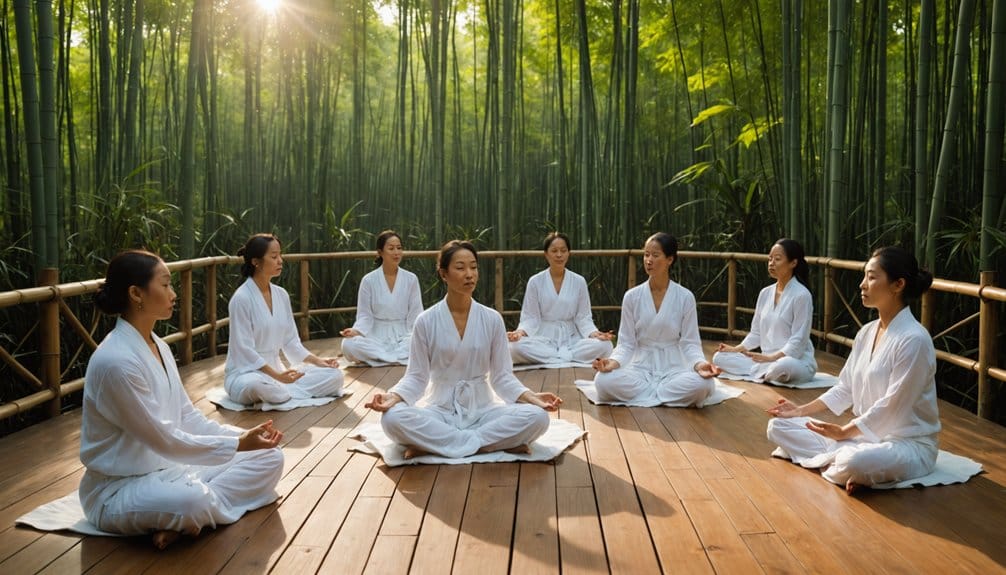
The power of collective compassion emerges naturally when meditators gather to practice loving-kindness together. When you join others in shared intentions, you’ll tap into an energy that’s bigger than yourself – like being part of a synchronized swimming team, but for the heart!
Through collective mindfulness, you’re not just growing your own compassion muscle; you’re helping others flex theirs too. Haven’t you noticed how much easier it is to stay focused when everyone around you is doing the same thing? That’s the beauty of group practice. You might start feeling stuck in your own meditation, but then you’ll catch a glimpse of someone else’s peaceful expression and think, “Hey, if they can do this, so can I!” It’s like having a whole cheering squad for your spiritual journey. Regular group sessions can help develop emotional resilience against life’s challenges while fostering deeper community bonds.
Scientific Research on Group Loving-Kindness Benefits
You’ll be intrigued to learn that scientific studies have shown group loving-kindness meditation greatly reduces stress levels – yes, even more than meditating solo (who knew having buddies around could make you so zen?). When researchers examined participants’ brain activity during group practice, they discovered synchronized patterns that suggest we’re literally getting on the same wavelength. The most fascinating finding is how practicing together strengthens empathy between group members, creating deeper connections that last well beyond the meditation cushion.
Stress Reduction Through Groups
Research consistently demonstrates that practicing loving-kindness meditation in groups can greatly reduce stress levels compared to solo practice. When you’re feeling overwhelmed, there’s something powerful about joining others who share your desire for peace. The group dynamics create a supportive atmosphere where stress relief happens naturally.
You’ll find that collective meditation amplifies the calming effects – it’s like having multiple stress-busting buddies in your corner! Ever notice how a yawn spreads through a room? Well, tranquility works the same way. As others around you settle into a peaceful state, you’ll naturally follow suit. Your nervous system actually syncs up with the group’s collective calm, making it easier to let go of tension. And let’s be honest – knowing you’re not the only one fighting stress can be incredibly reassuring.
Brain Activity During Practice
According to fascinating neuroscience studies, collective loving-kindness meditation creates unique patterns of synchronized brain activity among participants. When you meditate in a group, your brain waves naturally begin to synchronize with others around you – it’s like your neurons are doing a harmonious dance together!
Research shows enhanced neural connectivity in areas linked to empathy and emotional processing when you practice loving-kindness meditation with others. Ever notice how you feel more “in tune” with people after group meditation? That’s your brain literally getting on the same wavelength! Scientists have found that brainwave synchronization happens more powerfully in groups than when you’re practicing solo. It’s as if your brain picks up on the collective calm and compassion in the room, amplifying the benefits for everyone involved.
Enhanced Empathy Between Participants
That synchronized brain activity we just explored leads directly to something even more remarkable – the deepening of empathy between participants during group loving-kindness meditation. When you’re practicing with others, you’ll notice a natural emotional connection forming as you share the experience of extending compassion together.
Research shows that group meditation creates a unique space of shared vulnerability, where you’re more likely to understand and relate to others’ experiences. Ever notice how you can “catch” someone else’s yawn? Well, you can catch their compassion too! As you sit together, sending wishes of wellbeing to all beings, you’ll find yourself naturally tuning into others’ emotional states. It’s like having your empathy dial turned up – suddenly you’re picking up on subtle cues you might’ve missed before.
Strengthening Social Connections in Meditation Circles
While sitting alone in meditation certainly has its benefits, joining a group meditation circle creates an entirely different kind of magic. You’ll find yourself naturally drawn into deeper community engagement as you share the unique energy of collective practice. Ever notice how a yawn can spread through a room? The same goes for calm, peaceful vibes in group meditation. The shared experience helps create a stress response buffer that makes managing daily anxiety easier for everyone involved. Through shared experiences, you’re building connections that go beyond small talk. You might start as strangers awkwardly avoiding eye contact, but soon you’ll be exchanging knowing smiles about that one time someone’s stomach growled during silent meditation. These circles become your spiritual tribe – people who get why you’re excited about finding your “om” or why you can’t stop talking about your latest mindfulness breakthrough. They’re your meditation buddies, and they’re in it for the long haul.
Amplifying Emotional Resonance in Group Settings
The power of shared emotional experiences multiplies exponentially in group meditation settings. When you’re practicing loving-kindness with others, you’ll notice a natural emotional synchronization that’s almost magical – like everyone’s hearts beating to the same compassionate rhythm. Think about it: haven’t you felt more moved by watching a sunset with friends than alone? Group dynamics in meditation work similarly. Your capacity for kindness grows as you witness others radiating goodwill. It’s like having multiple mirrors reflecting warmth back and forth, creating an amplified field of positive energy. You might start with a tiny spark of compassion, but soon you’ll find yourself swept up in the group’s collective wave of goodwill. Don’t be surprised if you leave feeling like you’ve just had an emotional growth spurt! This practice of shared positive intentions has been proven to enhance feelings of connectedness and community among practitioners.
Creating Supportive Energy Through Unified Practice
As meditators join together in shared practice, a unique kind of supportive energy emerges that’s greater than the sum of its parts. You’ll feel it build as everyone’s shared intentions align – like invisible threads weaving together into something powerful and uplifting.
In this supportive atmosphere, you don’t have to worry about being “perfect” at meditation. When someone next to you shifts or coughs, you’ll find yourself less distracted than when practicing alone. There’s comfort in knowing everyone’s experiencing similar thoughts and sensations. Think of it like joining a potluck dinner – everyone brings their own energy, and together you create something nourishing and complete. You’re not just meditating alongside others; you’re participating in a collective field of kindness that lifts everyone higher. The practice incorporates mindfulness techniques and breath awareness to help participants reconnect with their authentic selves while building community bonds.
Transforming Communities With Collective Metta
Regular group metta practice radiates ripples of positive change far beyond the meditation hall. When you join others in extending loving-kindness, you’re helping create lasting community support networks that uplift everyone involved. Think about it – your collective goodwill doesn’t just stay in that room!
These transformative practices reshape neighborhoods in surprising ways. You’ll notice more smiles from strangers, kinder interactions at local shops, and an increasing sense of connection with folks you previously ignored. Who knew your meditation could make Karen from accounting actually pleasant to work with? As your group grows, so does its impact. You’re not just changing your own perspective – you’re part of a movement that’s making your whole community more compassionate, one meditation session at a time.
Practical Tips for Joining Group Meditation Sessions
Ready to join your first group meditation but feeling a bit nervous about the protocol? Don’t worry – we’ve all been there, wondering if we’ll accidentally Om at the wrong moment! Start by finding facilitators through local wellness centers or meditation apps. They’ll guide you through the basics.
When joining groups, arrive 10 minutes early to settle in and meet others. Wear comfy clothes that won’t distract you (or your neighbors) during practice. It’s perfectly fine to peek at what others are doing if you’re unsure – that’s how we all learned! Most groups welcome questions before and after sessions.