Starting your online Zen journey doesn’t have to be complicated. First, carve out a quiet corner with comfy cushions and good headphones. Choose a credentialed teacher whose style resonates with you through free sample sessions. Set up a distraction-free zone by keeping devices in airplane mode and at least six feet away. Focus on proper posture and gentle breathing while using mindfulness apps to track your progress. The path to inner peace begins with these simple steps, but there’s so much more to discover.
Creating Your Perfect Virtual Meditation Space
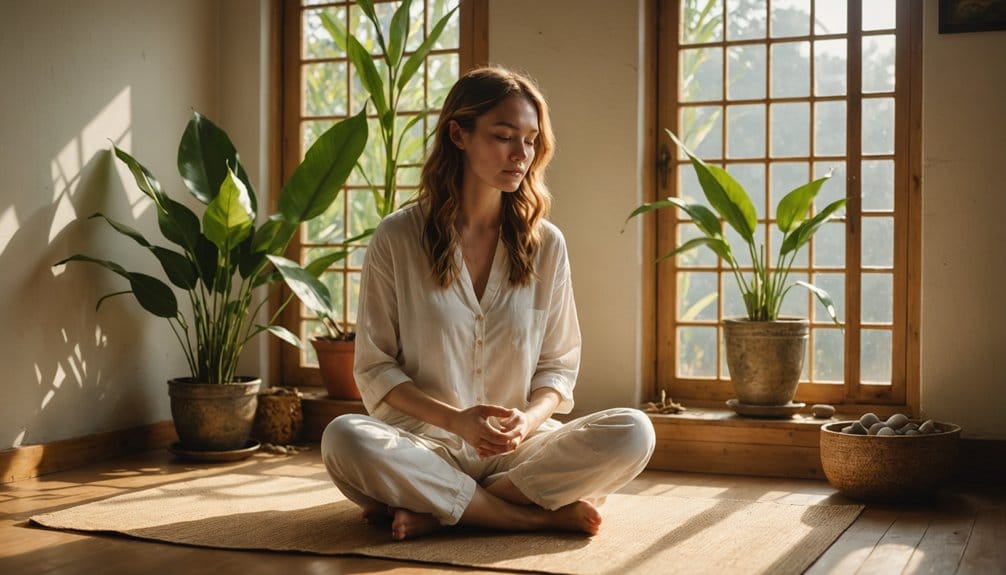
A peaceful virtual meditation space is like your own personal zen garden – minus the backbreaking work of raking actual sand! Your physical surroundings play a huge role in achieving that perfect meditative state, even when you’re practicing online.
Start by selecting a quiet corner where you won’t be disturbed. Consider your personal preferences for virtual ambiance – maybe you’d enjoy gentle nature sounds playing softly in the background, or perhaps total silence helps you focus better. Set up your screen at eye level and guarantee your seating arrangement supports good posture. Incorporating the full lotus position can provide a stable base for your meditation practice.
Want to enhance the mood? Try dimming the lights, lighting a calming scented candle, or surrounding yourself with houseplants. Remember, there’s no “right” way to create your meditation sanctuary – it’s all about what helps you feel centered and present.
Choosing the Right Online Zen Guide
When you’re starting your Zen journey online, picking the right teacher can feel like speed-dating for your soul – you want someone who really “gets” it. You’ll want to check their credentials and teaching background, but don’t get too hung up on fancy certificates – what matters most is their proven track record of helping beginners find their meditation groove. Before committing to a paid program, take advantage of their free sample sessions to see if their teaching style clicks with you (and whether their voice puts you in a peaceful state rather than making you want to throw your phone across the room). Remember, successful meditation hinges on mindful awareness, a core principle that can help deepen your practice.
Credentials and Teaching Experience
Finding the right Zen meditation guide online can feel like searching for a needle in a digital haystack – except the haystack is filled with self-proclaimed gurus selling enlightenment for $9.99.
When evaluating an instructor’s credentials, look for someone with formal training from established Zen centers or recognized Buddhist institutions. You’ll want to verify their teaching philosophy aligns with traditional Zen principles, not just trendy wellness buzzwords. Check how long they’ve been practicing (aim for at least 5+ years) and teaching (2+ years minimum).
Don’t just take their word for it – read student testimonials, watch their free content, and see if they’re affiliated with reputable Zen organizations. Remember, a genuine teacher won’t promise instant enlightenment or push expensive “spiritual packages.”
Track Record Matters Most
Beyond flashy websites and polished marketing, your potential Zen teacher’s track record tells the real story. Look for instructors who’ve maintained consistent student relationships over several years – not just collected likes on social media. You’ll want to see experience validation through student testimonials and peer recommendations within the meditation community.
When researching an instructor’s reputation, dig deeper than surface-level reviews. Have they published articles in respected mindfulness journals? Do they regularly lead retreats or workshops? What’s their own meditation lineage and training background? Just like you wouldn’t trust a skydiving instructor who’s only watched YouTube tutorials, your Zen guide should have verifiable expertise. The best teachers often maintain active blogs or podcasts where you can sample their teaching style before committing.
Watch Free Sample Sessions
Before investing time and money in formal Zen meditation training, you’ll want to preview potential teachers through their free content. Most reputable guides offer sample session benefits through short introductory videos or live group sessions that’ll give you a taste of their teaching style.
Take advantage of online guided meditation samples to assess if the instructor’s voice, pace, and approach resonate with you. Does their energy feel calming or distracting? Are their instructions clear enough for a beginner to follow? You wouldn’t buy a car without a test drive, right? The same goes for choosing your meditation guide. Watch at least three different sample sessions – you might find yourself connecting with someone unexpected. Remember, there’s no shame in “teacher shopping” until you find the right fit for your practice.
Essential Equipment for Digital Zen Practice
You’ll need surprisingly little tech gear to start your digital Zen practice – just your device, some basic headphones, and a reliable internet connection. Finding a quiet corner of your home is essential, though it doesn’t need to be fancy (that cluttered spare room will work just fine once you clear a small space). While it’s tempting to browse endless meditation cushions and fancy apps, remember that the ancient monks managed just fine with nothing more than a patch of floor and their determined spirit. Engaging in pranayama meditation can enhance your online practice by fostering deeper awareness and clarity.
Basic Tech Setup Needs
Your device’s built-in speakers might work, but investing in decent headphones will dramatically improve your audio quality and help block out distractions. Remember those neighbors who seem to mow their lawn exactly when you’re trying to find inner peace? A good pair of noise-canceling headphones can be your best friend. Set up in a spot with strong WiFi signal, test your audio before sessions, and you’re ready to begin your digital journey to tranquility.
Meditation Space Requirements
Creating a dedicated meditation space doesn’t require converting your entire home into a Zen temple – though wouldn’t that be nice? You’ll need a quiet corner where you can sit undisturbed for at least 15-20 minutes. Your meditation environment should align with your personal preferences while maintaining minimal distractions.
Pick a spot with good airflow and comfortable temperature – nobody achieves enlightenment while sweating or shivering. Set up a stable cushion or chair that supports good posture without making you feel like you’re attempting advanced yoga. Clear the area of attention-grabbing items (yes, that means your phone goes on silent and out of sight). Consider adding simple elements that help you focus: a small plant, a meaningful photo, or a battery-operated candle. Remember, this is your space – make it work for you.
Setting a Consistent Online Practice Schedule
While establishing new habits can feel challenging at first, setting up a consistent online meditation schedule doesn’t have to be complicated. You’ll find it easier to stick with your practice when you treat it like any other important appointment in your calendar. Pick a time that realistically works with your daily routine – maybe it’s 10 minutes before your morning coffee or right after the kids go to bed.
Smart time management means blocking out your meditation sessions in advance. Consider finding accountability partners in online meditation groups who practice at similar times. You can check in with each other virtually, share progress, and keep the momentum going. And hey, if you miss a day? Don’t beat yourself up. Tomorrow’s always a fresh start to reconnect with your practice. Remember, even experienced practitioners face wandering thoughts during sessions, so embrace the journey of mindfulness with patience and persistence.
Proper Posture and Breathing Techniques
Before diving into complex meditation techniques, mastering the fundamentals of posture and breathing will set you up for success. Think of posture alignment as building a stable tower – you’ll want your spine straight but not rigid, shoulders relaxed, and chin slightly tucked. Sitting cross-legged on a cushion works great, but a chair’s fine too if that’s more comfortable.
Now for the breathing part – and no, you haven’t been doing it wrong your whole life! Focus on breath awareness by noticing the natural rhythm of your inhales and exhales. Don’t try to control it; just observe. Feel the gentle rise and fall of your belly, like waves on a calm shore. When your mind wanders (and trust me, it will), simply guide your attention back to your breath without judgment. Integrating practices like Bhramari pranayama can further enhance your relaxation and focus during meditation.
Managing Digital Distractions During Sessions
Since your phone seems to buzz with notifications at the most inconvenient times, managing digital distractions is essential for a peaceful meditation practice. Think of it as a mini digital detox – your Instagram feed can wait for 15 minutes, right?
Start by putting your phone on “Do Not Disturb” mode and placing it face-down at least six feet away. You’d be amazed how that little distance can break the urge to check it. If you’re using meditation apps, enable airplane mode after starting your session. Set mindfulness reminders for specific meditation times, but disable all other notifications during practice.
Remember that ping you heard mid-session last time? Was it really an urgent message, or just another cat video from your cousin? Exactly – most notifications can wait until after your practice.
Tracking Your Mindfulness Progress Online
Once you’ve established a regular meditation routine, you’ll want to keep tabs on your progress – and thankfully, there’s an app for that! Modern mindfulness apps offer features like meditation timers, progress tracking, and even virtual achievement badges. Remember when keeping track meant scribbling notes on random pieces of paper? Those days are gone!
Digital progress journals let you record your meditation duration, mood changes, and breakthrough moments. You can spot patterns in your practice – like how you’re surprisingly zen during Monday mornings but struggle to focus on pizza night (we’ve all been there). Many apps also provide visual charts showing your consistency over time. Want to see how far you’ve come? Just check your meditation streak or total mindful minutes. It’s like having a meditation coach in your pocket!