You might think short breaths are just for panicky moments, but they’re actually a powerful gateway to deeper meditation. When you’re feeling scattered or stressed, quick, intentional breathing can flip your mental switch from chaos to calm faster than you can say “om.” It’s like having a reset button for your brain – one that ancient practitioners discovered long ago. Want to know how a few simple huffs and puffs could transform your meditation practice? Let’s explore this surprising technique.
The Science Behind Short Breath Meditation
While scientists once dismissed meditation as mystical nonsense, they’re now fascinated by what happens in your brain during short-breath practices. You know how you’ll sometimes hold your breath when you’re stressed? That’s your body’s natural response – but with proper breath regulation, you can flip the script and take control.
Through advanced meditation techniques, you’re actually training your nervous system to become your ally. When you take those quick, controlled breaths, you’re not just playing a game of respiratory ping-pong – you’re triggering specific neural pathways that help calm your mind. Ever wonder why even the simplest breathing exercises can make you feel like you’ve just had the world’s best power nap? It’s because you’re tapping into ancient wisdom that modern science is finally catching up to.
The square breathing method has proven especially effective at lowering blood pressure and reducing anxiety in high-pressure situations.
Historical Origins of Rapid Breathing Practices
Although modern wellness enthusiasts might think rapid breathing techniques are a new trend, these practices have been around since ancient civilizations first discovered their powerful effects. You’ll find historical practices of rapid breathing in traditions spanning from India’s pranayama to the Arctic’s shamanic rituals.
Ancient traditions reveal that your ancestors weren’t just breathing fast for fun – they’d discovered something profound. In India’s Vedic texts, dating back over 5,000 years, you’ll find detailed instructions for various breathing patterns. Even Native American ceremonies incorporated rhythmic breathing to induce altered states. Ever wonder why so many cultures independently developed similar techniques? It’s because they work! These time-tested methods have survived centuries because they’ve consistently helped people tap into deeper states of consciousness. The practice serves as a bridge between body and consciousness, connecting modern practitioners to ancient wisdom through controlled breathing techniques.
Step-by-Step Guide to Short Breath Technique
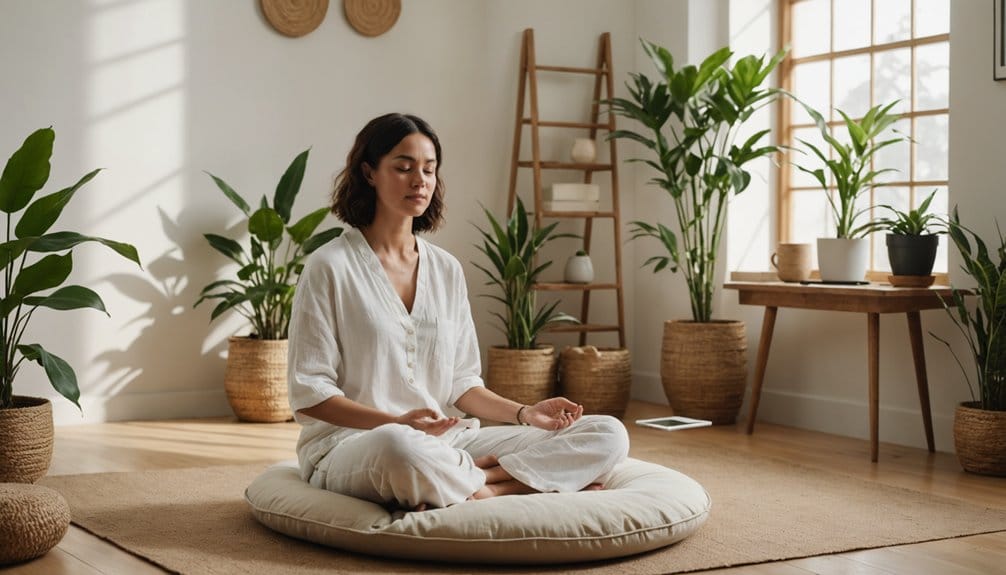
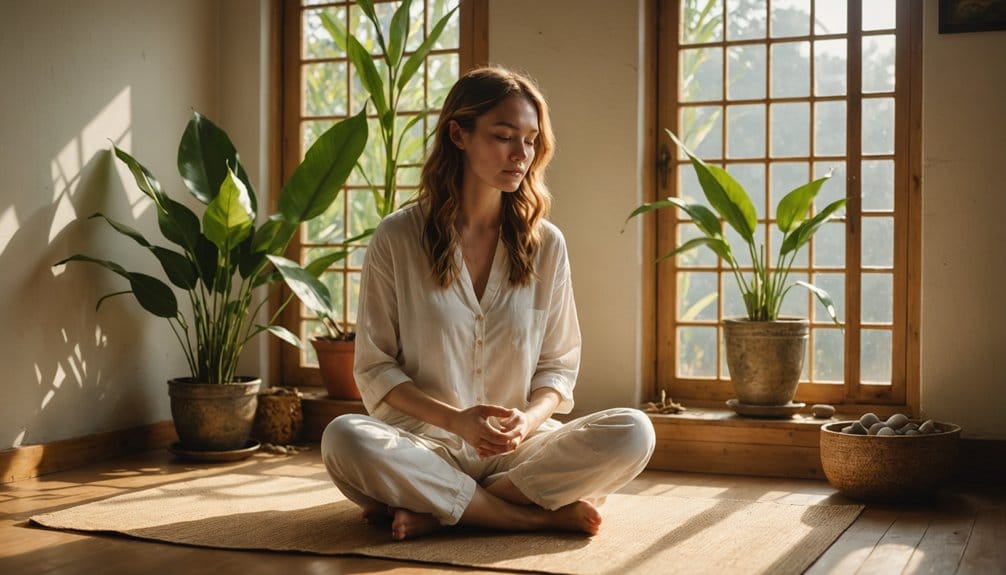
Let’s plunge into the nuts and bolts of short breath meditation – it’s simpler than you might think! Find a comfortable seat and set a timer for five minutes. You’ll want to start small before diving into longer sessions.
Begin by taking quick, shallow breaths through your nose, about one per second. Don’t worry if you feel a bit silly at first – we all do! One of the key short breath benefits is how quickly it can shift your mental state. After 30 seconds, you might notice a pleasant tingling or lightness.
Want to explore technique variations? Try alternating between mouth and nose breathing, or experiment with different rhythms – maybe two short inhales followed by one longer exhale. The beauty of this practice is that you can adapt it to what feels right for your body.
For deeper relaxation, incorporate the ocean wave visualization while maintaining your short breath rhythm.
Physical and Mental Benefits of Quick Breaths
You’ll be amazed at how those quick, energetic breaths can transform your meditation from sleepy to supercharged, boosting both your focus and energy like a shot of espresso without the jitters. When you practice short-breath techniques, you’re actually triggering your body to release stress hormones in a controlled way – think of it as giving your system a gentle reset button. Your respiratory system will thank you too, as regular practice helps strengthen your lungs and increases their efficiency, making everyday breathing feel as smooth as butter. This practice helps maintain a balanced autonomic nervous system, allowing you to shift easily between states of energy and relaxation.
Boosting Energy and Focus
When sluggishness hits during the afternoon slump, short energetic breaths can act like nature’s espresso shot. You’ll feel an immediate energy boost as fresh oxygen floods your system, awakening your mind and body without the jitters of caffeine. Ever wonder why athletes take quick breaths before a big play? It’s the same principle.
Through focused breath control, you’re tapping into your body’s natural focus improvement mechanism. Try this: Take 20 sharp, quick breaths through your nose while sitting upright. Feel that tingling sensation? That’s your brain getting a revitalizing oxygen bath. You can practice this technique anywhere – at your desk, in traffic, or before an important meeting. It’s like having a secret superpower that’s always available, no fancy equipment needed.
Release of Stress Hormones
The stress hormones coursing through your body don’t stand a chance against rapid breathing exercises. When you engage in short, rhythmic breaths, you’re actually triggering a powerful stress hormone release that works in your favor. Think of it as hitting your body’s reset button – but way easier than finding your computer’s tiny power switch.
Your quick breaths create a fascinating short breath impact: cortisol levels drop, while your body pumps out feel-good chemicals. Ever notice how you naturally take short, sharp breaths when you’re trying to pump yourself up? There’s science behind that instinct. You’re fundamentally telling your body, “Hey, it’s time to ditch that stress!” And your body listens – reducing tension, clearing your mind, and leaving you feeling lighter than a feather on a summer breeze.
Enhanced Respiratory Efficiency
Quick breathing exercises pack three major perks for your respiratory system’s performance. First, you’ll boost your diaphragmatic breathing capacity – imagine your lungs becoming Olympic athletes! Second, you’ll develop better oxygen efficiency, helping your body use every breath like a pro. Third, you’ll train your respiratory muscles to work smarter, not harder.
Ever notice how shallow breathing makes you feel sluggish? That’s about to change. By practicing controlled short breaths, you’re fundamentally giving your lungs a high-intensity interval workout. Your breathing muscles become stronger and more flexible, just like any other muscle group you train. You’ll find yourself handling stress better, thinking clearer, and maybe even conquering that dreaded flight of stairs without sounding like a steam locomotive.
Common Challenges and Solutions
Many practitioners face a common set of hurdles when first exploring short-breath meditation techniques. You might find yourself getting light-headed (don’t worry, we’ve all been there!), or your mind may wander faster than a squirrel chasing acorns. These mindfulness obstacles aren’t roadblocks – they’re just part of the journey.
Mastering breath control doesn’t happen overnight, and that’s perfectly okay. If you’re feeling dizzy, simply lengthen your breaths until you’re comfortable again. Can’t focus? Try counting each breath or using a gentle timer. The key is to approach these challenges with curiosity rather than frustration. Remember, even experienced meditators once struggled with the same issues you’re facing now. Start with shorter sessions and gradually build up your practice. Setting aside a consistent meditation time can help you overcome these initial challenges by making the practice a natural part of your daily routine.
Integrating Short Breaths Into Daily Practice
While mastering short-breath techniques on your meditation cushion is valuable, incorporating these practices into your everyday life can be transformative. Ever notice how you’re holding your breath during a stressful meeting? That’s your cue for mindful integration.
Set daily reminders on your phone – you’ll be amazed how these little prompts can snap you back to presence. Try taking three short breaths while waiting for your coffee to brew, sitting at red lights, or before checking your email. You’re already breathing anyway, so why not make it count?
The beauty of short-breath practice is its stealth mode – nobody needs to know you’re secretly finding your zen while standing in the grocery line. Think of it as your portable peace pocket, ready whenever life throws its inevitable curveballs.