Just when you think you’ve mastered sitting still for meditation, life throws you a curveball with movement meditation. You’re flowing through your practice when – squirrel! Your mind wanders faster than a caffeinated toddler at a toy store. Don’t worry, you’re not alone in this mental ping-pong match between focus and distraction. Let’s explore seven tried-and-true strategies that’ll help you stay present during your moving meditation practice – because sometimes the path to zen involves a few stumbles along the way.
Creating a Sacred Movement Space
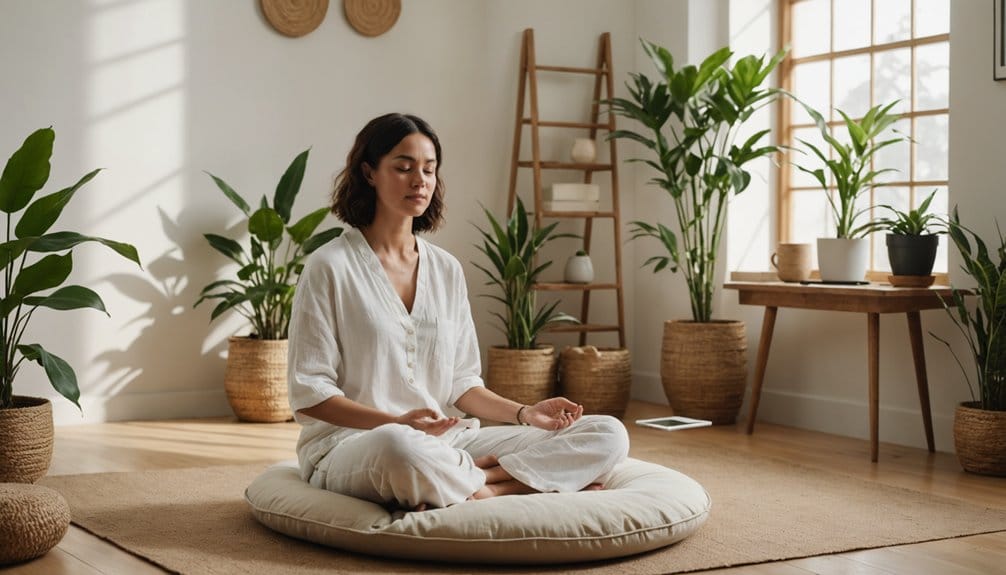
Although you might think meditation requires a fancy studio or Instagram-worthy zen garden, creating your sacred movement space is surprisingly simple. You’ll want to carve out a cozy corner that’s distinctly yours – even if it’s just a cleared spot between your bed and that pile of laundry you’ve been meaning to fold (we’ve all been there!).
The key is intentional design that speaks to your spirit. Maybe that’s a soft cushion, a few meaningful objects, or simply a clear view out your window. Your sacred space doesn’t need to look like anyone else’s – it just needs to feel right for you. Toss down a yoga mat, light a candle, or hang that tapestry you love. What matters is creating a spot where you can show up, breathe, and be completely yourself. Just as sacred geometry patterns guided ancient seekers through meditation spaces from Chartres Cathedral to Asian temples, your space should create a natural flow that supports your practice.
Establishing a Pre-Practice Ritual
With your meditation space ready to go, let’s get into the magic of a pre-practice ritual – yes, it’s basically your meditation warm-up routine! Think of it as your personal red carpet moment before the main event.
Start with some pre-meditation grounding – maybe it’s lighting your favorite candle, brewing a cup of calming tea, or simply taking three deep breaths. You’ll be amazed how these small acts can signal to your brain that it’s time to shift gears. Next comes intention setting, where you’ll decide what you want from your practice today. Are you seeking peace? Clarity? Or just a break from your chattering mind? Try incorporating a quick body scan technique while seated to release any hidden tension before beginning your practice.
Using Breath as an Anchor Point
Breathing serves as your trusty meditation sidekick, always there when your mind starts wandering off to tomorrow’s grocery list or that embarrassing thing you said five years ago. Through mindful breathing, you’ll discover a reliable way to gently guide your attention back to the present moment – no fancy equipment required!
Start with simple breath awareness by noticing the natural rhythm of your inhales and exhales. Feel the cool air entering your nostrils and the warm air flowing out. When your thoughts inevitably drift (and trust me, they will), don’t beat yourself up. Just think of your breath as a home base – somewhere you can always return to when your mind decides to go on an impromptu vacation. It’s like having a built-in GPS for your wandering attention. Try practicing diaphragmatic breathing technique while lying on your back with one hand on your belly and one on your chest to deepen your relaxation response.
Embracing Environmental Sounds
When a car honks or a dog barks during your meditation, don’t fight it – those environmental sounds can actually become part of your mindful awareness. You’ll find that simply letting sounds exist without getting caught up in mental chatter about them (like “why won’t that dog be quiet?!”) helps you stay present and focused. Those natural background noises, from chirping birds to distant traffic, can become like nature’s own meditation soundtrack if you learn to flow with them instead of resisting. This approach aligns with movement meditation benefits, helping transform potentially stressful experiences into opportunities for deeper mindful practice.
Listen Without Mental Commentary
One of meditation’s biggest hurdles is getting tangled up in mental chatter about every little sound around you. That car alarm? Your mind wants to craft an entire story about the inconsiderate neighbor who never fixes their vehicle. The chirping birds? Suddenly you’re wondering if they’re building a nest near your window.
Instead of narrating a mental podcast about every sound, practice active listening without commentary. Simply let sounds exist as pure sensory experiences. When you hear footsteps upstairs, don’t label them as “annoying roommates” – just experience them as rhythmic patterns. This approach builds mental clarity and deepens your meditation practice. Think of yourself as a microphone that picks up sounds without judgment or interpretation. You’ll be amazed at how much mental space opens up when you stop being the narrator of your environment.
Natural Sounds Aid Focus
Although many meditation guides suggest finding a perfectly quiet space, environmental sounds can actually enhance your practice rather than hinder it. Instead of fighting against the chirping birds or distant traffic, let these natural soundscapes become part of your meditation landscape.
You’ll find that incorporating ambient sounds into your practice leads to remarkable focus enhancement. That rustling leaf? It’s nature’s attention bell. The gentle patter of rain? Your personal concentration soundtrack. When you stop resisting these sounds, they become allies in your practice rather than enemies to shut out.
Think of it this way – if you can maintain focus while a dog barks three blocks away, imagine how centered you’ll be in other situations. It’s like training with weights to make the real game easier.
Accept Sounds as Flow
Instead of struggling to block out environmental sounds, you’ll find greater peace by letting them flow naturally through your meditation practice. Think of yourself as a peaceful mountain stream – the sounds simply pass through without disturbing your essence. That’s sound awareness at its finest.
When you hear a car honk or a dog bark, don’t get frustrated. Practice auditory acceptance by acknowledging each sound without judgment. Remember, you’re not trying to become deaf to the world – you’re learning to coexist with it! Even that neighbor who seems to mow their lawn during every meditation session can become part of your practice. Isn’t it amazing how those once-annoying sounds can transform into neutral background elements? Soon you’ll find yourself smiling at the symphony of life around you.
Managing Physical Discomfort
While sitting still during meditation might seem simple enough, your body often has other plans in mind. That twinge in your knee, the itch on your nose, or your suddenly screaming lower back – they’re all competing for your attention.
Rather than fighting these sensations, embrace them as opportunities for deeper body awareness. Notice where the discomfort originates and breathe into those areas. Is your back aching? Maybe you’re slouching. Pain management during meditation isn’t about gritting your teeth – it’s about finding a sustainable position. Adjust your posture, use cushions, or try a meditation bench. And hey, if you need to scratch that itch or stretch occasionally, that’s perfectly fine. You’re aiming for mindfulness, not martyrdom. Remember: comfort supports practice, and practice makes progress. Progressive relaxation techniques can help you identify and release habitual tension patterns that contribute to physical discomfort.
Incorporating Mindful Pauses
You’ll be amazed at how those little breaks throughout your day can transform into powerful meditation moments – even if you’re just waiting for your coffee to brew or standing in line at the grocery store. Adding intentional pauses between activities gives your mind a chance to reset, just like hitting the refresh button on your mental browser when it’s got too many tabs open. Whether you’re shifting from one task to another or taking a breather between yoga poses, these mindful micro-breaks help you stay centered without requiring you to sit cross-legged on a mountaintop.
Embrace Brief Rest Periods
Taking regular mindful pauses throughout your meditation practice isn’t admitting defeat – it’s actually a clever strategy for long-term success. Think of it as hitting your mental reset button whenever you need it. During these breaks, you can reconnect with interval breathing and check in with your physical awareness.
Let’s be honest – nobody wins medals for pushing through discomfort until they’re completely frazzled. When you feel your focus slipping, take a 30-second breather. Stretch those legs that are starting to tingle, or roll those shoulders that have somehow crept up to your ears (how do they always do that?). These mini-breaks help prevent the frustration that builds when you’re trying too hard to maintain perfect focus. Remember, meditation isn’t about being a zen superhero – it’s about building a sustainable practice that works for you.
Schedule Transition Moments
Just as those brief rest periods refresh your practice, strategic mindful pauses throughout your day can transform your meditation experience. Think about your typical day – it’s filled with natural shifts between activities. Why not use them?
Build schedule flexibility by identifying key moments: before starting your car, while waiting for coffee to brew, or those precious seconds before joining a Zoom call. These shift strategies aren’t just random breaks – they’re your mindfulness anchors.
You don’t need to meditate for hours in a mountain cave (though wouldn’t that be nice?). Instead, tag these mini-moments onto existing habits. When you’re waiting for your microwave to ding, take three conscious breaths. Standing in line at the grocery store? Perfect time for a quick body scan.
Reset Between Movement Flows
Three key movements define most meditation sessions: settling in, deepening focus, and gently returning to normal awareness. Between these flows, you’ll need effective reset strategies to maintain momentum without jarring shifts.
Think of it like changing gears in a car – you don’t slam from first to fifth! Instead, take micro-pauses between each movement flow. When you’re shifting from settling in to deeper focus, pause for three breaths. Feel stuck? Try this quick reset: wiggle your toes, roll your shoulders, and smile (yes, really!). These small breaks aren’t interruptions – they’re your meditation pit stops.
Your flow shifts don’t need to be perfect. Sometimes you’ll fumble, and that’s totally okay. The goal isn’t seamless switching but mindful movement between states of awareness.
Building Progressive Movement Patterns
A gradual approach to movement during meditation can make all the difference in finding your groove. Think of it like learning to dance – you don’t start with complex choreography! Begin with simple, repeatable motions that feel natural to you, then slowly build up to more dynamic flows.
Start by mastering basic progressive sequences: gentle arm raises, shoulder rolls, or hip circles. Once you’re comfortable, combine these movements into longer patterns. You’ll be amazed at how your body naturally wants to flow from one motion to the next. Remember, there’s no need to rush – it’s not a race to enlightenment! Keep experimenting until you discover combinations that feel right for your practice. When in doubt, return to those basic movements that first clicked with you.