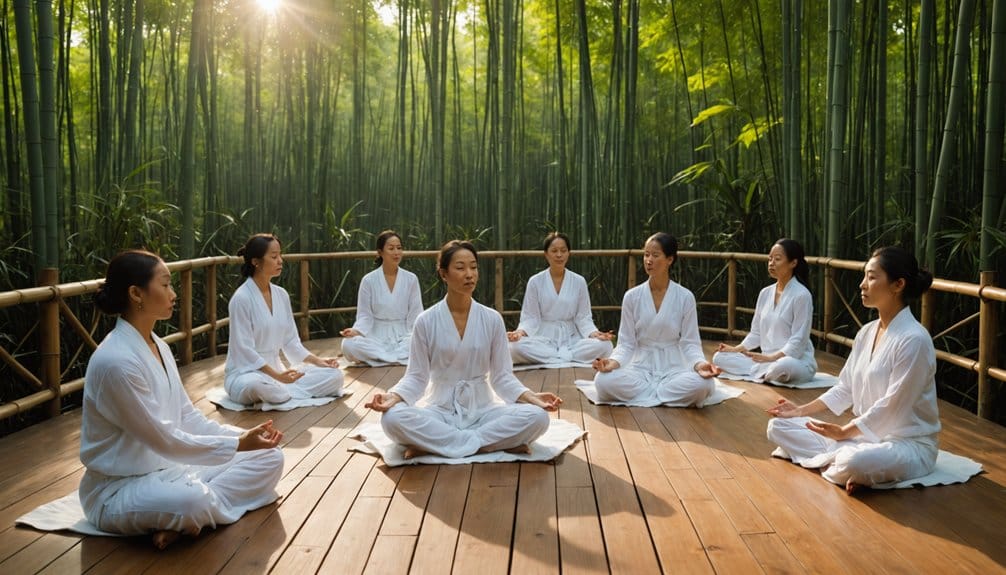
Picture yourself sitting cross-legged, trying to quiet your mind while simultaneously wondering if you’re “doing it right.” You’ve heard about both transcendental meditation and mindfulness but aren’t sure which path fits your spiritual GPS. Maybe you’re drawn to TM’s structured mantra approach, or perhaps mindfulness’s go-with-the-flow style speaks to your soul. Let’s unpack these two distinct practices – because choosing between them shouldn’t feel like solving a cosmic riddle.
Technique and Approach: The Core Practice Methods
Through their distinct approaches, Transcendental Meditation (TM) and mindfulness couldn’t be more different in their core techniques. While TM relies on silently repeating your personal mantra (think of it as your mind’s favorite song on repeat), mindfulness keeps you anchored in the present moment through focused breathing techniques and awareness.
You’ll find TM feels like floating downstream – you’re not trying to control thoughts, just letting that mantra do its thing. It’s kind of like having a mental hammock to rest in. Mindfulness, on the other hand, is more like being a friendly detective of your own experience. You’re actively noticing when your mind wanders off (and trust me, it will) and gently guiding it back to your breath or current sensations. Each approach offers its own flavor of inner calm.
Studies show that twenty minutes twice daily of TM practice can effectively rewire your brain for enhanced mental clarity and focus.
Mental Focus and Awareness States
Anyone who’s tried both practices can tell you that TM and mindfulness create distinctly different states of awareness. With mindfulness, you’re actively paying attention to thoughts, sensations, and surroundings – like a friendly observer watching life unfold. Think of it as having front-row seats to your own mind’s quirky show.
TM takes you in a different direction entirely. Instead of watching the mental traffic, you’re transcending it completely, plunging into deeper waters of pure consciousness. It’s like hitting your brain’s reset button for enhanced mental clarity. While mindfulness helps you become a better observer of your experience, TM guides you beneath the surface chatter to a profound state of restful awareness development. Ever notice how your mind feels after a plunge versus staying in the shallow end? That’s the key difference here. This profound state of rest requires just 20 minutes twice daily, making it a remarkably accessible path to inner peace.
Origins, Teachers and Training Requirements
While both practices have ancient roots, their modern teaching methods couldn’t be more different. Mindfulness traces its historical backgrounds to Buddhist meditation, and you can learn it from various teachers or even apps. It’s pretty flexible that way! Transcendental Meditation (TM), though rooted in ancient Vedic traditions, requires certified instructors who’ve completed extensive training under the organization founded by Maharishi Mahesh Yogi, one of the key figures in bringing meditation to the West.
Want to start mindfulness? You’ll find countless free resources online, local meditation centers, or Buddhist temples. But if you’re drawn to TM, you’ll need to commit to formal training with an authorized teacher – and yes, that comes with a price tag. Think of it like learning piano: you can teach yourself basics, but mastering classical pieces often requires a trained instructor.