Like a butterfly emerging from its chrysalis, your journey into Transcendental Meditation begins with small, transformative steps. You’ve probably heard about TM’s incredible benefits – from stress relief to enhanced creativity – but maybe you’re wondering if you’ll ever master this ancient practice. Don’t worry! Whether you’re a meditation newbie who can’t sit still for two minutes or a curious soul seeking inner peace, these seven essential tips will help you access your meditation potential.
Finding Your Personal Mantra
How do you find the perfect mantra when there seem to be countless options floating around? While some gurus might tell you there’s only one “right” way, your mantra selection should actually resonate with your personal journey. Think of it like choosing a favorite song – it’s got to speak to your soul.
Your perfect mantra doesn’t need to be an ancient Sanskrit word (though it certainly can be). What matters most is its personal significance to you. Maybe it’s a meaningful word from your native language, or even a sound that brings you peace. Here’s a pro tip: try different options during short meditation sessions. You’ll know you’ve found the right one when it feels as natural as breathing. Just don’t overthink it – sometimes the simplest mantras create the deepest connections.
Starting with a certified TM instructor can provide personalized guidance to help you discover the mantra that best suits your meditation practice.
Setting Up Your Sacred Space
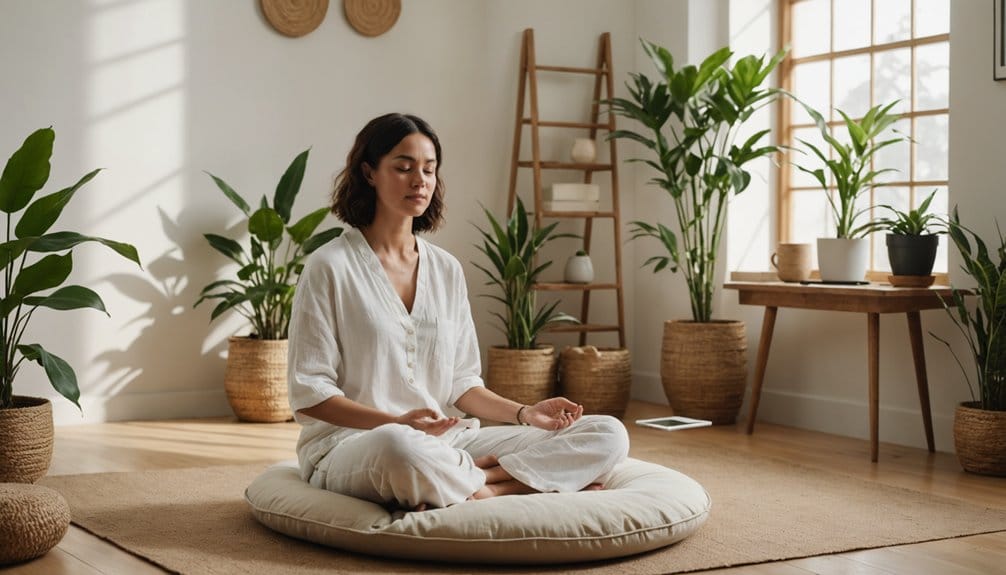
While you don’t need a meditation room worthy of a zen master’s Instagram feed, creating your own sacred space can transform an ordinary corner into a sanctuary of serenity. Pick a spot that’s relatively quiet – even if that means the bathroom’s your only option (hey, we’ve all been there). Remove distracting clutter and consider adding elements that create sacred ambiance: soft lighting, a comfy cushion, or perhaps a small plant.
Add personal items that spark joy and meaning for you – maybe it’s your grandmother’s scarf, a crystal you picked up on vacation, or that wonky ceramic bowl your kid made. Remember, this isn’t about impressing anyone else. The goal is creating a space where you’ll actually want to sit and meditate, even if it’s just a cozy nook between your bed and the wall. Similar to yogic sleep practice, you’ll want a space where you can lie comfortably still without physical strain or distraction.
Mastering the Proper Sitting Position
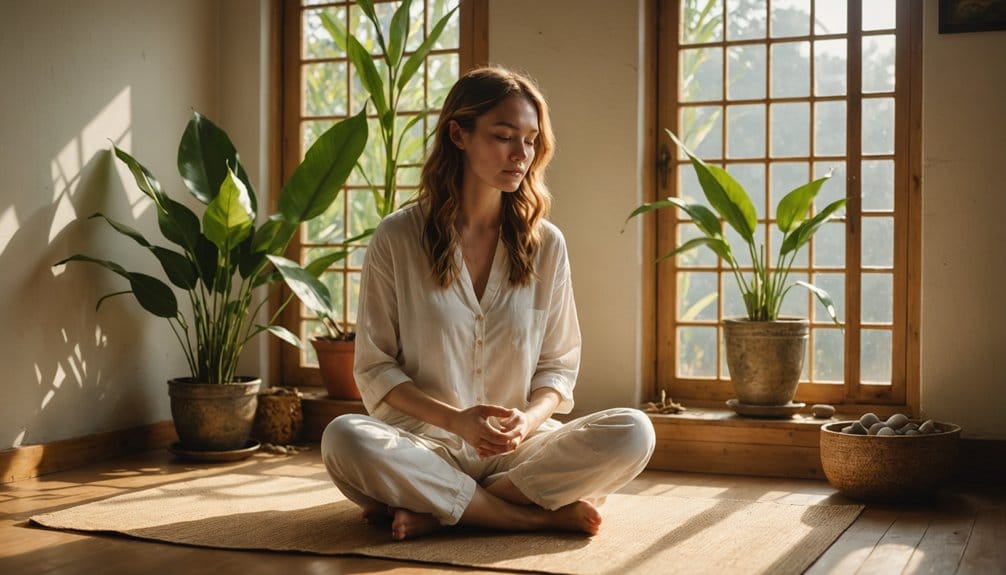
You’ll want to find a comfortable position that feels natural – after all, you’re going to be sitting here for a while without fidgeting like a kid waiting for recess. Your spine should be straight but not rigid, as if an invisible string is gently pulling upward from the crown of your head through your entire back. Keep your neck aligned with your spine while tucking your chin slightly inward, which helps prevent that awkward head-bobbing thing we’ve all done when starting to meditate.
Finding Your Ideal Posture
What good is meditation if you’re too distracted by an aching back or tingling legs? Finding your ideal meditation posture doesn’t mean torturing yourself into a pretzel-like position. You’ll want to explore different posture types until you discover what feels natural for your body.
Start by choosing ideal support – whether it’s a firm cushion, meditation bench, or even a straight-backed chair. Your spine should feel like a stack of coins, aligned but not rigid. Keep your shoulders relaxed and chin slightly tucked. Remember, you’re not auditioning for a yoga magazine cover!
The secret is finding a position you can maintain comfortably for 20 minutes without fidgeting. If your legs fall asleep faster than your mind, try adjusting your height or switching positions. Your body will thank you later.
Spine and Neck Alignment
Imagine your spine as nature’s perfect antenna, designed to channel peaceful energy through your entire body during meditation. You’ll want to find that sweet spot between ramrod straight and slouching – think dignified but relaxed, like a laid-back royal on their throne.
Start by checking your spine flexibility with a gentle roll of your shoulders. Let any neck tension melt away as you align your head naturally over your shoulders. You’re not trying to balance a book up there! Many beginners unknowingly crane their necks forward (hello, smartphone posture!), which only leads to discomfort. Instead, visualize a golden thread pulling gently from the crown of your head while keeping your chin slightly tucked. If you catch yourself slumping, no worries – just readjust without judgment.
Establishing a Consistent Practice Schedule
Creating a consistent meditation schedule is one of the most essential steps for beginners, yet it’s often where many of us stumble – like trying to catch a slippery fish with buttered hands.
You’ll want to embrace flexible scheduling while building your practice into your daily routine. Start with morning rituals when your mind is fresh and the world hasn’t yet crowded your thoughts with its demands. Can’t do mornings? That’s okay – the best time to meditate is whenever you’ll actually do it.
Pick a specific time and stick to it for 21 days. Maybe it’s right after your morning coffee, or perhaps it’s during your lunch break. The key isn’t perfection – it’s showing up. Your mind will eventually recognize these moments as your sacred “me time.”
Managing Common Mental Distractions
Random thoughts popping into your head during meditation are as normal as getting spam emails – they’ll show up whether you want them to or not. You’ll be amazed at how your chattering mind can generate an entire grocery list, replay yesterday’s awkward conversation, and plan next week’s schedule all within 30 seconds of starting to meditate. Rather than fighting these mental interruptions or background noises like your neighbor’s lawnmower, simply acknowledge them with a mental nod and gently return your focus to your mantra, just as you’d politely excuse yourself from an overeager conversation at a party.
Accepting Random Thoughts
The wandering mind during meditation is like a puppy exploring a new room – it’s going to get distracted by every shiny object, interesting smell, and sudden noise. Instead of getting frustrated when your grocery list or weekend plans pop into your head, practice thought acceptance. Let those random ideas float by like clouds in the sky.
Focus Through Background Noise
While meditation may seem impossible when your neighbor’s dog won’t stop barking or your roommate’s watching TV, learning to focus through background noise is an essential skill for any practitioner. Think of background noise as mental weightlifting – it’s actually helping you build stronger focus techniques.
Start by acknowledging the sounds without fighting them. That lawn mower next door? It’s just there, like clouds in the sky. You don’t need complete silence to meditate effectively. In fact, learning to maintain focus amid life’s soundtrack will make you more resilient in the long run.
Here’s a pro tip: practice with gradually increasing levels of noise. Begin in a quiet room, then slowly work your way up to meditating in bustling environments. Before you know it, you’ll be finding peace even during rush hour traffic!
Breathing Techniques for Deep Meditation
Because proper breathing forms the foundation of effective meditation, mastering a few key techniques can dramatically improve your practice. Start with basic breath awareness – simply notice the natural rhythm of your inhales and exhales without trying to change anything. It’s like watching waves roll in and out at the beach.
Ready to go deeper? Try this: Take a deep inhalation for four counts, hold briefly, then release for six counts. You’d be amazed how many thoughts can sneak in during those ten seconds! But don’t worry if your mind wanders – that’s totally normal. Just gently guide your attention back to your breath. Think of it like training a playful puppy – it’ll take some patient repetition, but eventually your mind will learn to stay.
Transitioning Back to Daily Activities
As your meditation session winds down, gradually returning to everyday life requires the same mindful attention you’ve been practicing. Think of it like waking up from a invigorating nap – you wouldn’t jump straight into running a marathon, would you?
Start with gentle mindful shifts: wiggle your toes, slowly open your eyes, and take a deep breath. Give yourself permission to take an extra minute or two. You’d be surprised how many people rush this part, only to crash into their day like a caffeinated squirrel.
Carry that peaceful energy into daily mindfulness as you tackle your to-do list. Maybe you’ll notice how the sun feels on your skin during your commute, or actually taste your lunch instead of inhaling it while checking emails. Small moments, big difference.