Life’s throwing curveballs, work’s piling up, and your stress levels are through the roof – sound familiar? You’re not alone in feeling overwhelmed by the daily grind. While you can’t eliminate stress entirely (wouldn’t that be nice?), you can learn to manage it better through mindfulness meditation. Before you roll your eyes thinking this is just another “breathe and count to ten” lecture, let’s explore some practical tips that’ll actually fit into your hectic schedule.
Find Your Perfect Meditation Space
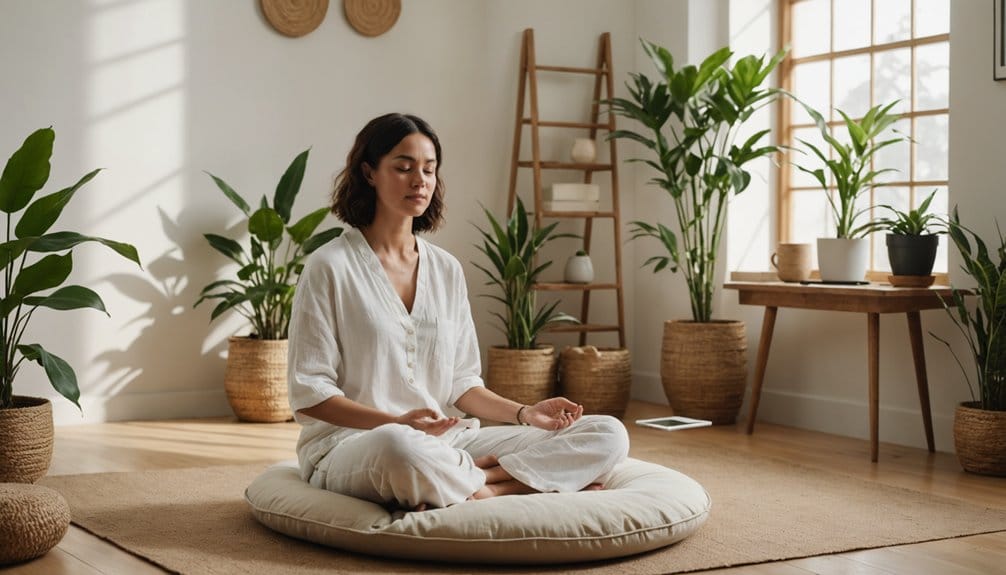
While finding the perfect meditation spot might seem like searching for a unicorn in your cluttered home, it’s actually much simpler than you’d think. All you need is a quiet corner where you won’t be interrupted by your cat knocking things over or your roommate’s impromptu karaoke sessions.
Consider outdoor settings if you’re craving fresh air – your backyard, a peaceful park bench, or even a sunny balcony can work wonders. Inside, transform any space into your zen zone with comfortable seating that supports good posture. That old beanbag chair? Probably not your best bet (unless you enjoy meditating with a curved spine).
Start With Proper Breathing Techniques
Before you plunge into complex meditation techniques, mastering proper breathing is like learning to walk before you run – except you’ve technically been breathing your whole life (just not necessarily doing it right).
Start with simple breathing exercises that focus on deep diaphragmatic breathing. Place one hand on your chest and another on your belly. When you inhale, your belly should expand like a balloon while your chest stays relatively still. Weird, right? Most people do the opposite. Take a slow breath in through your nose for 4 counts, hold for 2, then release through your mouth for 6. You’ll feel your shoulders drop as tension melts away. Don’t worry if your mind wanders – just gently guide your attention back to your breath. It’s like training a puppy – with patience and practice, it’ll get easier.
Schedule Regular Practice Sessions
Now that you’ve got those breathing basics down, it’s time to make mindfulness a regular part of your daily routine. Let’s be real – finding valuable time for meditation can feel like trying to fit an elephant into a Mini Cooper. But here’s the trick: start small and be consistent.
Pick a dedicated space that speaks to you – it doesn’t need to be fancy. That quiet corner by your window? Perfect. Your favorite armchair? Even better. The key is choosing a spot where you won’t be interrupted by your cat’s sudden urge to practice parkour or your roommate’s impromptu karaoke sessions.
Set a daily appointment with yourself, even if it’s just five minutes. Mornings work great, but hey – if you’re more of a night owl, that’s fine too. The important thing is showing up.
Focus on Body Awareness
Body awareness might sound fancy, but it’s really just getting to know your own body like you’re meeting an old friend for coffee. You’ll start with body scanning – a simple practice where you mentally check in with each part of your body from your toes to your head, noticing any tension or discomfort along the way. Progressive muscle relaxation takes this a step further, as you’ll intentionally tense and release different muscle groups, which feels a bit like giving yourself a mini massage without the awkward reaching around.
Body Scanning Basics
Learning to scan your body mindfully is like becoming your own internal detective – except instead of solving crimes, you’re discovering tension you never knew existed. You’ll be amazed at how much information you’ve been missing about your own physical state.
Start by lying down comfortably and bringing your mental focus to your toes. Really feel them – are they cold? Tingly? Tense? Work your way up slowly, as if you’re shining a flashlight of awareness through each body part. Don’t rush it – this isn’t a race to the finish line. When you notice tension, just observe it without trying to fix anything.
This practice develops your body awareness like a superpower. Soon you’ll catch stress building before it becomes a problem, giving you the freedom to release it early.
Progressive Muscle Relaxation
While body scanning helps you notice tension, progressive muscle relaxation teaches you how to actually release it. Think of it as giving your muscles a mini-workout in reverse – you’ll tense them up first, then let them melt into beautiful relaxation.
Start with your toes and work your way up. Squeeze each muscle group for 5-7 seconds (yes, even those muscles you forgot existed), then release completely. You’d be amazed how much tension you’re holding without realizing it! When you reach your face, scrunch it up like you’ve just tasted something super sour, then let it go. These relaxation techniques might feel a bit silly at first – you’ll probably look like you’re doing a very slow-motion dance – but they’re incredibly effective at breaking the cycle of muscle tension.
Let Go of Judgmental Thoughts
You’re probably familiar with that nagging inner voice that loves to judge every little thing you do during meditation – from fidgeting too much to having a wandering mind. Instead of fighting these critical thoughts or labeling them as “good” or “bad,” try acknowledging them with a gentle “hello there” and letting them float by like clouds in the sky. Remember, being judgmental about being judgmental is still being judgmental, so give yourself permission to be perfectly imperfect in your practice.
Release Inner Critic
Most of us have that nagging inner voice that loves to point out our every flaw and mistake during meditation. You know the one – it’s that persistent critic that whispers “you’re doing it wrong” or “you can’t focus for more than two seconds.” It’s time to transform that negative inner dialogue into something more constructive.
When you notice your critical mindset creeping in, try this: acknowledge the thought with a mental nod, then imagine it floating away like a leaf on a stream. You don’t need to fight it or fix it. Simply observe it passing by. The goal isn’t to silence your inner critic completely – that’s about as likely as teaching your cat to fetch. Instead, practice responding to it with gentle curiosity rather than frustration.
Accept Thoughts Without Labels
You’re not here to judge your thoughts – you’re here to observe them with mindfulness observations. Think of yourself as a curious scientist watching thoughts under a microscope, minus the lab coat and safety goggles. When you catch yourself thinking “I’m terrible at meditation” or “This isn’t working,” just smile and let those thoughts drift away. They’re neither good nor bad – they just are.
Practice Mindful Walking
While sitting meditation can feel challenging at first, mindful walking offers a perfect alternative for those who prefer to move their bodies while practicing awareness. You don’t need anything special – just your feet and a mindful environment where you can stroll without bumping into things (or people).
Start by choosing a short path, maybe in your garden or a quiet hallway. As you walk, focus on each purposeful movement: how your heel touches down, the way your weight shifts forward, the gentle lift of your toes. Ever notice how you’ve walked thousands of steps without really feeling them? Now’s your chance to experience each one. When your mind wanders (and it will), just bring your attention back to your feet – no judgment needed. Think of it as a moving meditation that gets both your body and mind in sync.
Incorporate Guided Visualization
For times when walking feels like too much movement but sitting still seems impossible, guided visualization offers a happy medium. You’ll love how guided imagery can transport you from your chaotic day to a peaceful mental sanctuary – no passport required! Whether you’re picturing a serene beach or a cozy mountain cabin, these mental journeys help quiet your racing thoughts.
Want to try it? Close your eyes and imagine yourself in your favorite calm place. Maybe it’s that coffee shop where you once spent a perfect rainy afternoon, or your grandmother’s garden where the butterflies always danced. Let your mind wander through the details – the sounds, smells, and textures. Even if you get distracted by wondering if you left the stove on (we’ve all been there), just gently guide yourself back to your peaceful scene.
Use Sound and Music Effectively
Have you ever noticed how the right background sounds can instantly shift your mood? It’s like having a remote control for your mind! When you’re meditating, your tonal variation and rhythm preference matter more than you might think.
Start by exploring nature sounds that speak to your soul – maybe it’s gentle rain or ocean waves. Then experiment with ambient textures that create emotional resonance without dominating your attention. You’ll know you’ve found the right mix when your breathing naturally falls into beat synchronization with the sounds.
Don’t forget about chime selection – a well-timed bell can guide your practice without jarring you out of your zone. And if you’re feeling adventurous, try some musical improvisation. Just remember: the goal isn’t to become a meditation DJ – it’s to find sounds that help you let go.
Develop a Compassionate Mindset
You can’t build a peaceful mind without first cultivating genuine compassion – starting with being kinder to yourself (yes, that includes forgiving yourself for binge-watching an entire season in one weekend). While your inner voice may sometimes sound like a grumpy cafeteria worker, learning to transform it into a supportive friend will help you extend that same gentleness to others. When you practice viewing yourself and others through a lens of understanding rather than judgment, you’ll create a foundation for more meaningful meditation and lasting stress relief.
Practice Self-Love Daily
Self-compassion often feels like an elusive concept – we’re quick to comfort friends but forget to extend that same kindness to ourselves. It’s time to flip that script and make self-love a daily priority. Start by creating simple self acceptance rituals that speak to your soul. Maybe it’s a morning mirror pep-talk (yes, even if you feel silly at first), or writing nurturing affirmations in your journal before bed.
Think about it – would you tell your best friend they’re not good enough? Of course not! So why do you say it to yourself? Each day, challenge that inner critic by treating yourself with the same warmth you’d offer a loved one. Remember, you’re not being selfish – you’re filling your own cup first so you can show up fully for others.
Embrace Your Inner Voice
Developing a compassionate inner voice starts with recognizing those running commentaries in your head. You know the ones – those pesky thoughts that can spiral from “I forgot to buy milk” to “I’m the most forgetful person alive” in record time. It’s time to flip the script on that inner dialogue.
Through mindful self reflection, you’ll learn to catch those harsh thoughts and transform them into kinder ones. Would you speak to a friend the way you sometimes talk to yourself? Probably not! Start by simply noticing your mental chatter without judgment. When you catch yourself being harsh, pause and rephrase with compassion. “I messed up” becomes “I’m learning and growing.” Remember, your inner voice is like a radio station – you’ve got the power to change the channel to something more uplifting.
Show Kindness to Others
Kindness has a funny way of making mindfulness easier – it’s like adding training wheels to your meditation practice. When you focus on acts of kindness and compassion exercises, your mind naturally shifts away from its own worries. Try incorporating simple kindness rituals into your daily routine, like sending positive affirmations to someone who’s struggling or embracing random generosity at your local coffee shop.
Ready to level up your empathy training? Challenge yourself with weekly kindness challenges. Maybe it’s helping a neighbor with groceries or exploring volunteer opportunities at your community center. You’ll be amazed at how these small gestures create ripples of positivity in your life. The best part? While you’re busy spreading joy to others, you’ll find your own stress melting away – funny how that works, isn’t it?
Track Your Progress and Growth
Keeping a meditation journal can transform your mindfulness journey from fuzzy memories into clear milestones of growth. Through regular journaling reflections, you’ll spot patterns in your practice and celebrate those “aha” moments when meditation finally clicks. Remember that time you actually stayed present for five whole minutes without thinking about your grocery list?
Track your progress like you’d track your steps – but instead of counting miles, you’re mapping inner peace. Set up weekly check-ins to review your experiences, noting both breakthroughs and challenges. Don’t forget to plan milestone celebrations when you hit your goals! Maybe you’ve gone from “monkey mind” to “zen master” in just a few months. Okay, perhaps not quite zen master – but hey, progress is progress, right?