You’ll find powerful stress relief through Vipassana meditation’s scientifically-backed techniques. Start with mindful breathing – count four in, hold two, exhale six (yes, you can count and relax at the same time!). Add daily body scanning to notice where you’re holding tension, and create a consistent practice schedule that works for you. Remember, even mini-meditation breaks count. The more you practice observing your mind-body connection, the better you’ll handle life’s curveballs.
Understanding the Mind-Body Connection in Vipassana
The mind and body are like an old married couple – they’re constantly influencing each other, whether they realize it or not. When you’re stressed, your shoulders tense up. When you’re anxious, your stomach churns. It’s a two-way street that Vipassana meditation helps you navigate.
Through Vipassana’s mindfulness benefits, you’ll learn to notice these subtle connections. Ever wondered why taking deep breaths calms your racing thoughts? That’s just the tip of the iceberg. As you practice, you’ll develop stronger emotional awareness, catching stress before it snowballs. You’ll notice that tight jaw before it becomes a headache, or that flutter of worry before it turns into full-blown anxiety. It’s like becoming a detective of your own experience – except this time, you’re not just solving mysteries, you’re preventing them. Furthermore, this practice acts as a protective shield against depression, enabling you to better manage difficult emotions as they arise.
Creating Your Daily Meditation Routine
Starting a daily meditation routine might feel as intimidating as trying to teach your cat to fetch – but it doesn’t have to be. You’ll find your groove by starting small and building gradually, just like any other habit.
Begin with morning rituals that fit naturally into your existing schedule. Maybe it’s those precious five minutes before your coffee kicks in, or right after brushing your teeth. Evening reflections work beautifully too – why not trade those last few minutes of scrolling social media for a peaceful meditation session? Remember to incorporate mini-meditation breaks throughout your day to reinforce your practice.
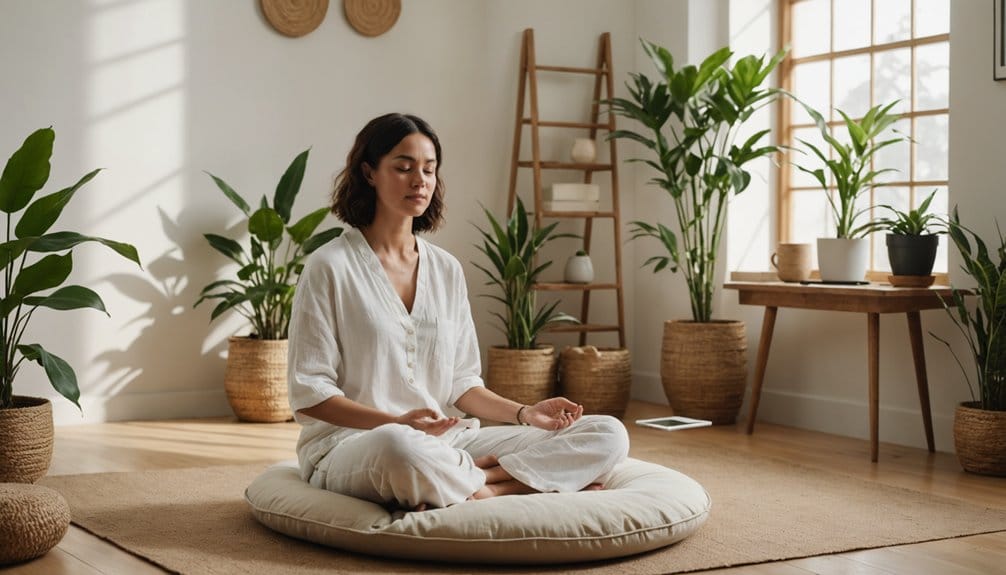
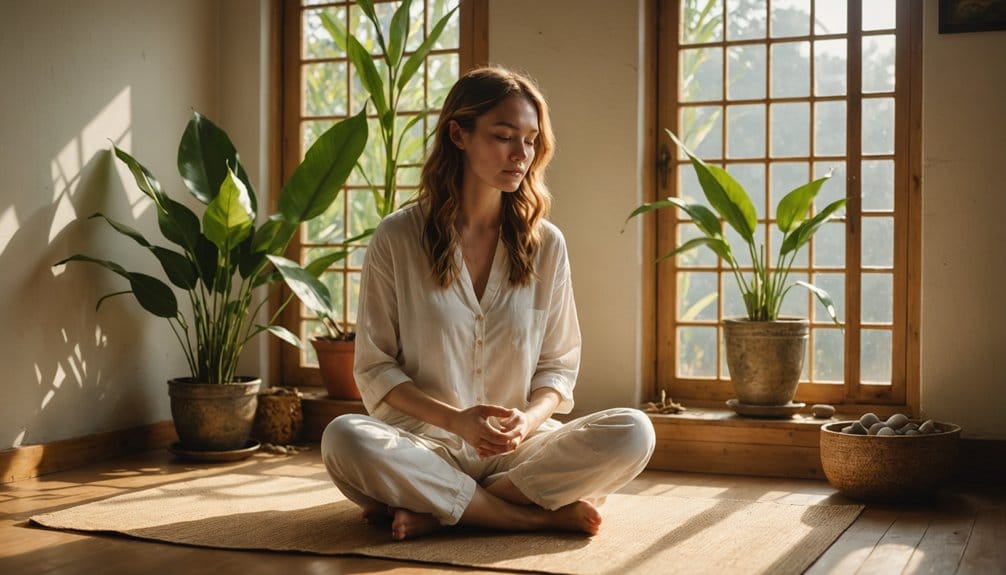
Pick a consistent time and comfortable spot where you won’t be disturbed. Remember, meditation isn’t about achieving perfect stillness (your mind will wander, and that’s okay!). It’s about showing up for yourself daily, even if some days feel more like a mental circus than zen mastery.
Mindful Breathing Techniques for Instant Calm
Now that you’ve carved out your meditation nook and time slot, let’s get you breathing like a pro – or at least better than a hyperventilating penguin. Start with breath counting – it’s simpler than filing your taxes and way more relaxing. Inhale for four counts, hold for two, then exhale for six. Easy, right?
Your body’s natural relaxation response kicks in when you breathe deeply and mindfully. Think of it as your internal “chill pill.” Focus on the sensation of air flowing through your nostrils – is it cool going in and warm coming out? That’s your built-in temperature gauge at work! When your mind wanders (and it will, because you’re human), gently guide it back to your breath. No judgment needed – even meditation masters chase random thoughts about what’s for dinner. Remember, employing techniques like deep diaphragmatic breathing can enhance your relaxation experience even further.
Incorporating Body Scanning in Daily Practice
When life feels scattered, body scanning helps you get back in touch with your physical self – kind of like running a personal systems diagnostic. You’ll be amazed at how much tension you’ve been carrying without even realizing it!
Start by finding a quiet spot where you won’t be interrupted (yes, that means putting your phone on silent). Lie down comfortably and begin focusing on different parts of your body, from your toes to your head. Notice any sensations – tingling, warmth, or even that annoying itch you’ve been trying to ignore. This practice builds body awareness while promoting mental relaxation, and can help activate the relaxation response to further alleviate stress.
Make it a daily ritual – maybe right before bed or during your lunch break. Think of it as giving yourself a mental massage, minus the awkward small talk with a massage therapist.
Applying Vipassana Wisdom to Stressful Situations
Although stressful moments can feel like emotional tsunamis, the wisdom of Vipassana offers a life raft of clarity in choppy waters. When you’re facing stressful triggers, from that frustrating traffic jam to your boss’s unrealistic deadlines, you can pause to observe your reactions just as you do in meditation. Notice how your shoulders tense up? That’s your cue to implement mindful responses.
Think of it as being your own emotional weather reporter – you’re not trying to change the storm, just observing its patterns. Instead of immediately reacting when your coworker sends that passive-aggressive email, take a breath and watch your thoughts float by like clouds. You’ll find that what once felt like a category-five hurricane might actually be just a passing shower. Incorporating mindfulness meditation into your daily routine can significantly reduce muscle tension and improve emotional regulation during these stressful moments.