You can cultivate deep compassion through mindful meditation by starting with self-kindness first. Begin with simple breathing exercises in a quiet space, then practice loving-kindness meditation to boost those feel-good brain chemicals. Regular practice rewires your neural pathways, making empathy flow more naturally. It’s like building a compassion muscle – the more you train it, the stronger it gets. There’s a whole world of inner peace waiting to unfold as your practice deepens.
Understanding the Core Principles of Mindful Compassion
While many people think mindful compassion is simply about being nice to others, it’s actually a powerful practice that starts with being kind to yourself. The compassion definition goes beyond basic kindness – it’s about truly understanding and responding to suffering, including your own. Ever noticed how you’ll comfort a friend but beat yourself up over the same situation?
The core mindful principles involve recognizing your shared humanity with others. You’re not perfect (newsflash: nobody is!), and that’s exactly what makes you perfectly human. When you practice self-compassion, you’ll naturally extend that understanding to others. Think of it like putting on your own oxygen mask first – you can’t pour from an empty cup, right? Start by treating yourself with the same gentleness you’d offer a dear friend. Additionally, cultivating loving-kindness meditation can enhance your compassion practice by fostering a deeper connection with yourself and others.
The Science Behind Meditation and Emotional Growth
When you’re sitting quietly in meditation, your brain’s doing an impressive juggling act – releasing feel-good chemicals while building new neural superhighways for emotional intelligence. You’ll find it fascinating how your brain literally reshapes itself during meditation, creating stronger connections in areas linked to empathy and self-awareness (and yes, that means you’re technically becoming a better person while sitting still). Research shows that regular meditators have thicker gray matter in regions responsible for emotional regulation, which explains why your friend who meditates always stays oddly calm during heated debates about pineapple on pizza. Furthermore, regular practice in mindfulness meditation can reduce emotional reactivity, helping you respond to stress with greater calmness.
Brain Chemistry During Meditation
Because your brain operates like a sophisticated chemical factory, meditation acts as the master controller – adjusting neurotransmitter levels with the precision of a well-trained orchestra conductor. When you meditate, your brain’s chemistry transforms in remarkable ways. You’ll experience increased neurotransmitter release of feel-good chemicals like serotonin and dopamine, while stress hormones like cortisol take a much-needed coffee break.
Ever notice how your mind feels clearer after meditation? That’s because your brainwave patterns shift from the frantic beta waves of daily life to calmer alpha and theta states. It’s like switching from rush hour traffic to a peaceful country road. The best part? You don’t need any fancy equipment or a PhD in neuroscience – just your breath and a quiet corner.
Neural Pathways and Empathy
As your mind settles into a meditation practice, it’s actively rewiring neural pathways that control emotional responses and social connections. You’re literally sculpting your brain to be more attuned to others’ feelings – pretty amazing, right?
Through consistent practice, you’ll notice enhanced neural connections forming that boost your empathy enhancement capabilities. It’s like upgrading your emotional intelligence software! When you meditate regularly, you’re training your brain to generate more compassionate responses to others’ struggles. Ever notice how veteran meditators seem to radiate understanding?
The best part? These changes aren’t just temporary. Your brain’s growing ability to recognize and respond to others’ emotions becomes more natural over time, like learning to ride a bike – except instead of skinned knees, you get better relationships.
Emotional Regulation Research
While scientists have long studied meditation’s effects on the brain, recent research reveals something fascinating about emotional regulation. You’re probably familiar with those moments when your emotions feel like a runaway train – we’ve all been there! But here’s the good news: studies show that consistent meditation practice can help you develop emotional resilience, much like building a mental muscle.
When you’re dealing with life’s daily challenges or even compassion fatigue from caring for others, your meditation practice acts as a natural buffer. Think of it as installing a pause button between trigger and reaction. Research indicates that regular meditators show increased activity in brain regions responsible for emotional control. You’ll find yourself responding rather than reacting, making clearer decisions even when things get heated.
Creating Your Sacred Meditation Space
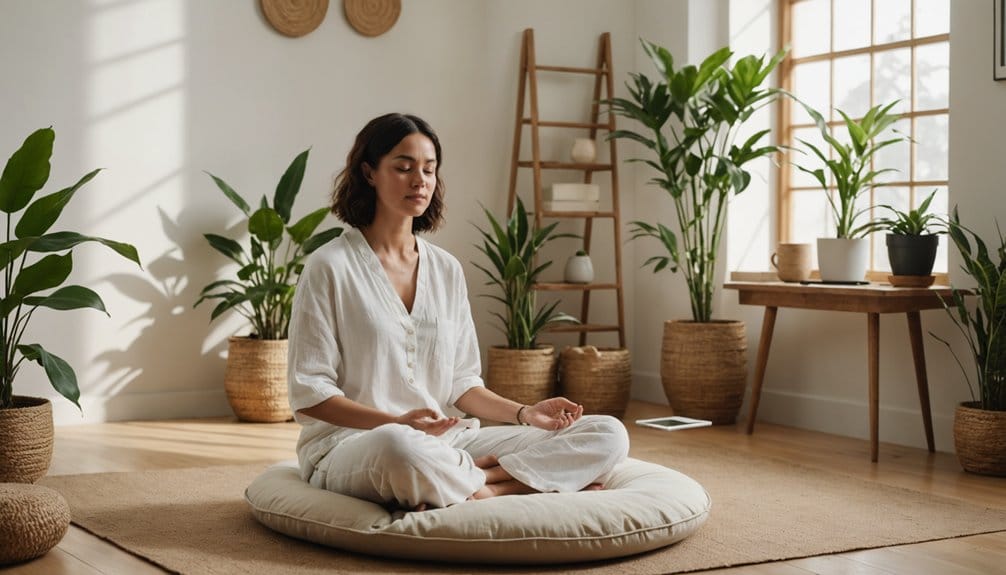
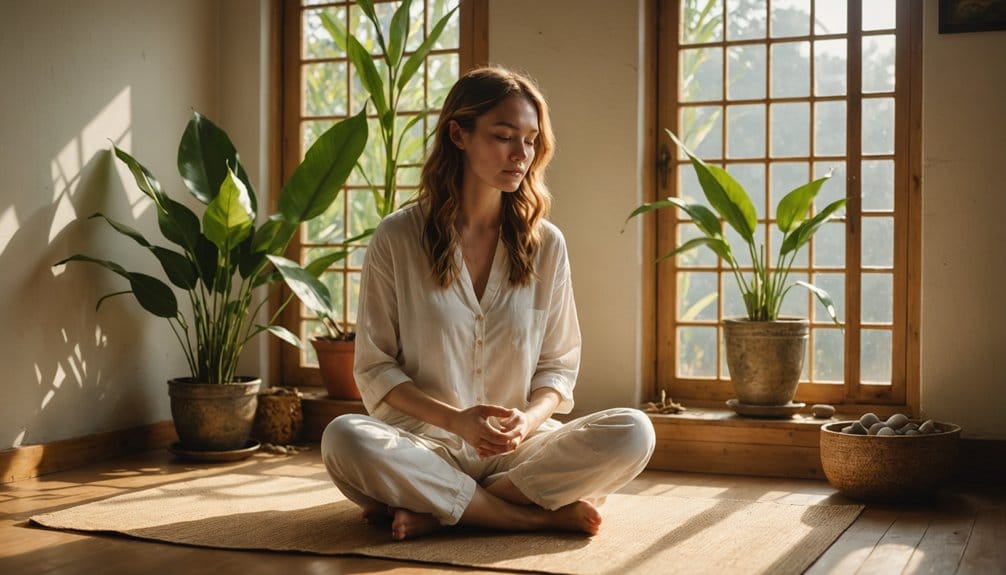
Choose materials that speak to your soul – maybe it’s a plush cushion that keeps your sits bones happy, or perhaps it’s incorporating nature with a few potted plants. Personalizing space means adding inspiration that resonates with you, whether it’s meaningful artwork or a cherished crystal.
Don’t forget lighting options (dimmers are your friend!) and sound considerations. You might want a white noise machine or simply embrace the natural acoustics. Remember, your sacred space doesn’t need to be Instagram-worthy – it just needs to feel like home to you. Incorporating meaningful sacred objects such as crystals and candles can further enhance the energy of your meditation space.
Essential Breathing Techniques for Inner Peace
You’re about to discover two powerful breathing techniques that’ll transform your meditation practice from “Is this even working?” to “Wow, I feel amazing!” While rhythmic deep breathing forms the foundation of any solid practice (think of it as Meditation 101), alternate nostril breathing takes things to the next level by balancing your energy and clearing mental fog. Incorporating techniques like deep diaphragmatic breathing can serve as a bridge between your physical body and consciousness. Whether you’re a meditation newbie or a seasoned practitioner who still sometimes falls asleep during sessions (we’ve all been there), these breathing methods will help anchor your wandering mind and guide you toward that sweet spot of inner calm.
Rhythmic Deep Breathing Basics
Three foundational breathing techniques form the cornerstone of mindful meditation, with rhythmic deep breathing being the most essential. You’ve probably noticed how your breathing rhythm changes when you’re stressed – it becomes shallow and rapid. Well, it’s time to take control of that pattern.
Start by finding a comfortable position and closing your eyes. Breathe in slowly through your nose for four counts, hold for two, then exhale through your mouth for six. Sound simple? It’s trickier than you’d think! But don’t worry if your mind wanders – that’s completely normal. The key to deep mindfulness lies in gently bringing your focus back to your breath. Think of it like training a playful puppy – it takes patience, but the results are worth it.
Alternate Nostril Breathing Method
Building on our foundation of rhythmic breathing, let’s explore the fascinating practice of alternate nostril breathing. This ancient meditation technique helps create energy balance while reducing stress – and yes, it’s exactly what it sounds like! You’ll use your thumb and ring finger to alternate breathing between nostrils.
Here’s how it works: Close your right nostril with your thumb and inhale through the left. Then, close the left nostril with your ring finger, release your thumb, and exhale through the right. Reverse the pattern and continue. Sound tricky? Don’t worry – you’ll get the hang of it! This powerful practice delivers amazing benefits, from improved focus to emotional clarity. As you develop your technique, you’ll notice enhanced mental harmony and a deeper sense of calm. Who knew breathing through one nostril at a time could be so transformative?
Building Self-Compassion Through Daily Practice
When it comes to nurturing self-compassion, most of us could use a gentle reminder to treat ourselves as kindly as we’d treat a dear friend. You wouldn’t berate your bestie for making a simple mistake, so why do it to yourself? Start with basic self-forgiveness exercises – take a deep breath and acknowledge that you’re beautifully human, perfectly imperfect. Incorporating loving-kindness meditation into your routine can further foster your ability to embrace self-compassion.
Gratitude journaling can be your daily anchor for self-kindness. Even on those days when you’ve eaten the entire cookie jar (we’ve all been there!), you can still write down three things you’re grateful for about yourself. Maybe it’s your determination to keep trying, your infectious laugh, or how you always remember your mom’s birthday. These small acts of self-appreciation add up to create lasting change.
Extending Loving-Kindness to Others
As you master self-compassion, it’s time to share that warmth with others through loving-kindness meditation. Think of it like expanding your circle of care – you’re not just sending good vibes to yourself anymore, but radiating them outward to friends, family, and even that neighbor who never returns your recycling bin.
Through empathy exercises, you’ll learn to genuinely wish well-being for others, even those who challenge you. Start with compassionate communication by silently offering phrases like “May you be happy” or “May you find peace.” Ever notice how your mood lifts when you’re kind to others? That’s the magic of loving-kindness – it’s a two-way street. The more you practice extending compassion outward, the more natural it becomes, until you’re practically a walking happiness dispenser.
Overcoming Barriers to Compassionate Awareness
Despite our best intentions to practice compassion, pesky mental blocks can make mindfulness feel about as achievable as teaching your cat to fetch. Through barrier identification and self reflection techniques, you’ll start to notice what’s really getting in your way – those sneaky emotional blockades we all face.
You might discover that prejudice awareness isn’t your strong suit, or that stress reduction takes a backseat when life gets chaotic. That’s perfectly normal! The key is practicing vulnerability acceptance while acknowledging those fears that make you want to run and hide. When you embrace acceptance practices, you’ll find it easier to navigate cultural sensitivities and recognize how societal influences shape your reactions. Remember, becoming more compassionate isn’t about being perfect – it’s about being perfectly human, awkward moments and all.
Integrating Mindfulness Into Daily Interactions
The simple practice of mindfulness needn’t be confined to your meditation cushion or yoga mat. You can weave it into every interaction throughout your day – yes, even that awkward elevator ride with your chatty coworker.
Start with mindful listening during conversations. Instead of planning your next witty response while someone’s talking (we’ve all done it!), truly focus on their words. You’ll be amazed at how much more you hear when you’re actually listening. Practice offering compassionate responses, even in challenging situations. When your neighbor complains about your wind chimes for the hundredth time, take a breath before responding.
Measuring Your Compassion Journey
Measuring compassion might seem about as easy as nailing jello to a wall, but there are concrete ways to track your progress on this mindful journey. Start by keeping reflection journals where you document daily acts of kindness – both given and received. You’ll be surprised how these small moments add up!
Consider tracking your compassion metrics through simple questions: How many times did you pause before reacting today? Did you offer support to someone in need? Were you gentle with yourself when things didn’t go as planned? These aren’t just feel-good exercises – they’re powerful tools for growth.
Sustaining Long-Term Meditation Practice
Now that you’ve learned to track your compassion journey, let’s focus on turning your meditation practice into a lasting lifestyle change – because we all know how quickly those “I’ll meditate every day!” promises can fizzle out like a forgotten New Year’s resolution.
Creating sustainable habits requires smart routine adjustments that align with your natural rhythms. Start by identifying your “golden hour” – that sweet spot when you’re most likely to stick with practice. Tackle consistency challenges by linking meditation to existing habits (morning coffee, anyone?) and setting up mindful reminders that actually work for you. Find accountability partners who’ll keep it real, and celebrate your meditation milestones together.