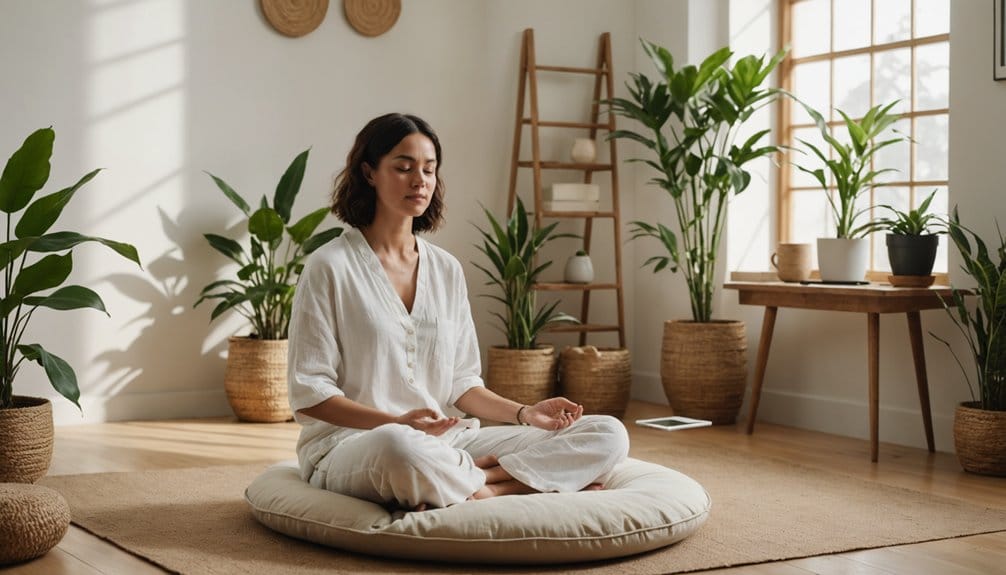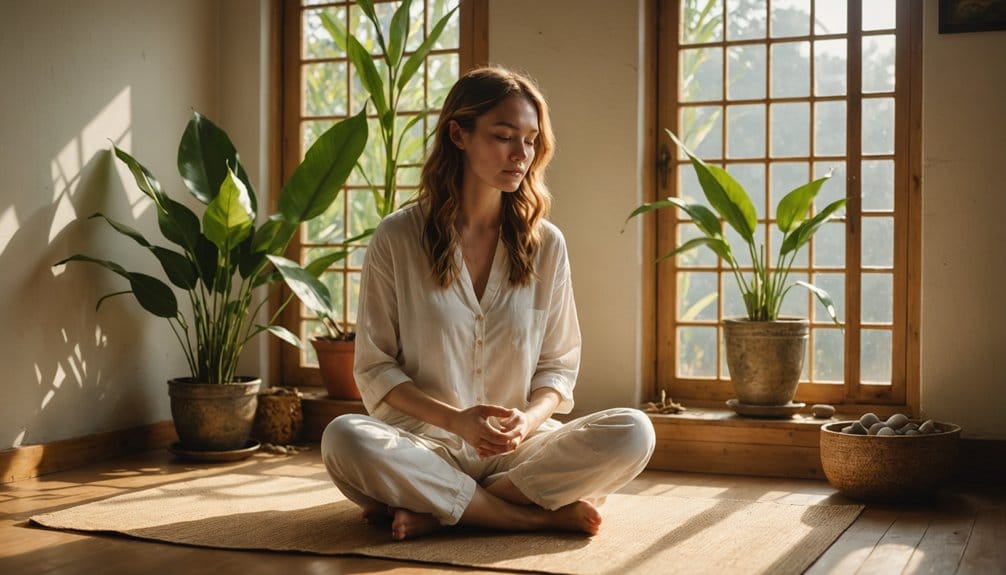
You can transform your health by making movement mindful – it’s not just about breaking a sweat! Start by syncing your breath with simple activities like walking or gentle stretching. Pay attention to how your body feels, release tension through focused movement, and let your breath guide you. Even five minutes of mindful motion can boost your physical and mental wellbeing. There’s a whole world of wisdom waiting in each conscious step you take.
Understanding the Mind-Body Connection Through Movement
While most of us spend our days lost in thought, our bodies are quietly trying to send us messages we rarely stop to hear. You know that knot in your stomach before a big presentation? That’s your body speaking its own language.
Developing somatic awareness isn’t just about noticing when your shoulders are tense – it’s about understanding why they’re tense in the first place. Through mindful movement, you’ll start recognizing how your physical sensations connect to your emotional state. Ever notice how a good stretch can trigger an unexpected emotional release? That’s your body finally getting a word in edgewise! Engaging in mindful movement practices not only helps release tension but also transforms stress into personal strength.
The Science Behind Mindful Movement Benefits
Research reveals what your body already knows – mindful movement isn’t just a feel-good practice, it’s a scientifically-backed way to rewire your brain. When you combine focused attention with physical activity, you’re tapping into powerful neuroscience principles that enhance both mental and physical well-being.
Studies show that movement therapies activate your brain’s neuroplasticity – its ability to form new connections and pathways. Ever notice how a walk helps you think more clearly? That’s your brain on mindful movement! You’re actually strengthening neural networks that support attention, emotional regulation, and body awareness. Incorporating breath awareness exercises into your routine can further enhance these benefits and calm your nervous system.
The best part? You don’t need fancy equipment or complicated routines. Whether you’re stretching, walking, or dancing, your brain’s getting a workout right alongside your body. Think of it as a two-for-one deal your nervous system can’t resist.
Essential Elements of Movement Meditation
You’ve probably noticed how your breath naturally shifts when you’re rushing versus when you’re relaxed – that’s your first clue into mindful movement. When you tune into your breathing while walking, you’ll start picking up on subtle shifts in your muscles and posture that you never knew existed. Whether you’re strolling through your neighborhood or pacing in your living room (we’ve all been there during those endless phone calls), mindful walking begins with syncing your breath to your steps, creating a natural rhythm that feels like your body is finally speaking your language. This practice not only enhances your awareness but also supports the mind-body connection, allowing for greater emotional release and healing.
Body Awareness Through Breathing
Breathing serves as the essential bridge between your mind and body during movement meditation. As you move, your breath control becomes the gentle conductor orchestrating each motion. Ever notice how you unconsciously hold your breath during tricky yoga poses? We’ve all been there!
Awareness techniques start with simply observing your natural breathing pattern. You’ll be amazed at how much tension you’re holding when you first pay attention. Try this: As you walk, sync your steps with your breath – inhale for two steps, exhale for two steps. It’s like having a built-in metronome! Let your breath flow naturally through your nose, filling your belly first, then your chest. When your mind wanders (and it will), gently guide your focus back to your breath.
Mindful Walking Fundamentals
Moving mindfully on two feet takes your breath awareness to the next level. As you walk, notice how each step connects with the ground beneath you. Feel the gentle roll from heel to toe, the subtle shift of weight between legs. Ever wonder why a simple stroll can feel so therapeutic?
Nature immersion amplifies these benefits – there’s something magical about crunching leaves or feeling soft grass under your feet. Start with basic pacing techniques: walk at half your normal speed, matching your breath to your steps. You’ll probably feel a bit silly at first (like a slow-motion movie star), but that’s perfectly fine! Try counting four steps for each inhale and exhale. You’re not racing anyone here, and that turtle-like neighbor who always waves from their garden? They’re probably onto something.
Incorporating Breath Work With Physical Activity
The seamless connection between breath and movement creates a powerful foundation for mindful exercise. As you coordinate your breath with each action, you’ll discover a natural rhythm that enhances your workout’s effectiveness. Think of it as dancing with your lungs – when you nail that breath synchronization, everything just flows better.
Start by matching your breath to basic movements. Inhale as you extend or lift, exhale as you contract or lower. You’ll find this movement flow comes naturally once you practice. Ever noticed how you automatically hold your breath during challenging moments? That’s exactly what we’re trying to avoid! Instead, maintain steady breathing through each exercise. It’s like being your own orchestra conductor, where your breath sets the tempo for your body’s symphony of motion. This combination of mindful movement and breath work can help shift the nervous system from stress to a state of relaxation.
Building Body Awareness Through Gentle Practices
While mastering breath work sets the stage, gentle movement practices help you become fluent in your body’s unique language. Through body mapping exercises, you’ll discover areas of tension you didn’t even know existed – like that stubborn shoulder knot that’s been your unwanted companion since 2019.
Start with simple sensory exploration: wiggle your toes, roll your shoulders, and notice how different movements feel. Ever wondered why your left side feels tighter than your right? These gentle practices help you solve such mysteries. Let your curiosity guide you as you scan from head to toe, paying attention to subtle sensations. You’re not just moving – you’re becoming a detective in your own body’s story, uncovering clues about how you hold yourself throughout the day. Engaging in mindful movement can lead to enhanced self-awareness and emotional regulation, amplifying the benefits of your exploration.
Reducing Stress and Tension With Mindful Motion
Because stress loves to lurk in our muscles like an unwanted houseguest, mindful motion offers a gentle eviction notice. You’ll find that slow, intentional movements can sweep tension right out of your body, leaving you feeling refreshed and renewed.
Start by focusing on areas where you typically hold stress – maybe it’s those shoulders that creep up toward your ears during tough meetings, or that lower back that tightens when deadlines loom. As you move, imagine stress relief flowing through each muscle group like a gentle stream. Roll your shoulders, twist your spine, or simply sway side to side.
For maximum tension release, try this simple practice: Stand tall, take a deep breath, and let your body respond naturally to the rhythm of your breathing. You’re not just moving – you’re mindfully unwinding.
Strengthening Your Core Through Conscious Movement
Strengthening your core doesn’t require hundreds of crunches or an expensive gym membership – it starts with simply tuning in to your center. Think of your core as your body’s power station, where intentional movement begins and flows outward to your limbs.
Start by standing tall and breathing deeply into your belly. Can you feel those deep abdominal muscles engaging? That’s your natural core stability at work! As you move through your day, practice drawing your navel toward your spine while performing everyday tasks like reaching for a coffee mug or picking up your kid’s toys. You’ll be amazed how these mindful micro-adjustments can transform ordinary movements into opportunities for strengthening. Remember, it’s not about perfection – it’s about paying attention to how your body naturally wants to move.
Creating a Sustainable Daily Movement Practice
Building on your core awareness, let’s look at how to make mindful movement a natural part of your daily rhythm. You don’t need fancy equipment or hours of free time – just a willingness to weave simple exercises into your existing routine. Ever brushed your teeth while doing calf raises? That’s the spirit!
Set daily reminders on your phone for movement breaks, but place them strategically. You’re more likely to follow through if they pop up when you’re not in the middle of something vital. Start with three five-minute sessions: morning stretches, lunch-hour walking, and evening unwinding. Can’t remember? Link these movements to things you already do automatically – like rolling your shoulders every time you check your email, or taking the stairs when you grab coffee. Before you know it, mindful movement will become as natural as reaching for your phone.