Kapalabhati, the “skull shining breath,” is your ticket to natural energy without that morning coffee addiction. This ancient yogic practice combines sharp exhales with gentle inhales while pulling your navel toward your spine. You’ll start with just 10 rounds in a comfortable seated position, focusing on quality over speed. While it’s not for everyone (skip it if you’re pregnant or have high blood pressure), this powerful technique can transform your daily wellness routine – and that’s just the beginning of what it can do.
What Is Kapalabhati and Its Origins
The ancient yogic practice of Kapalabhati breathing has been turning heads (literally!) for thousands of years. Known as “skull shining breath” in Sanskrit, it’s a powerful technique that’ll wake you up faster than your morning coffee. You’ll find its history significance deeply rooted in traditional Indian wellness practices, where it’s revered as both a cleansing and energizing exercise.
In various cultural contexts, from bustling ashrams to modern yoga studios, Kapalabhati has evolved while maintaining its core essence. Think of it as your body’s natural reset button – one that ancient yogis discovered long before we had smartphones that needed rebooting! This dynamic breathing practice involves forceful exhalations and passive inhalations, creating a rhythm that’s been helping people clear their minds and energize their bodies since well before wellness became trendy.
Benefits of Practicing Skull Shining Breath
While many breathing exercises can feel like gentle ripples in a pond, Kapalabhati hits you with the energy of an invigorating wave. You’ll notice an immediate energy boost that makes your morning coffee look lazy. Ever feel like your mind is a browser with too many tabs open? This powerful practice helps clear mental fog faster than hitting refresh.
Regular practice sharpens your mental clarity, helping you tackle complex tasks with newfound focus. Your metabolism gets a wake-up call too – imagine your body’s engine revving up to peak performance. You’ll feel lighter, both physically and mentally, as toxins take the express route out of your system. Best of all? You’re in control of this natural energy switch. No expensive supplements or fancy equipment needed – just you and your breath. Engaging with pranayama only requires curiosity and lung capacity, allowing anyone to experience its remarkable benefits.
Step-by-Step Guide to Proper Technique
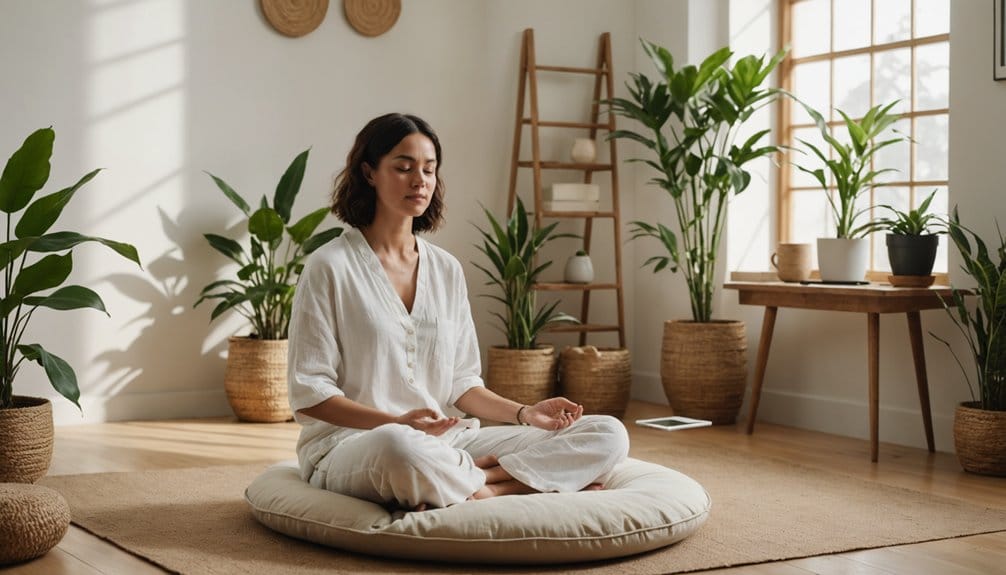
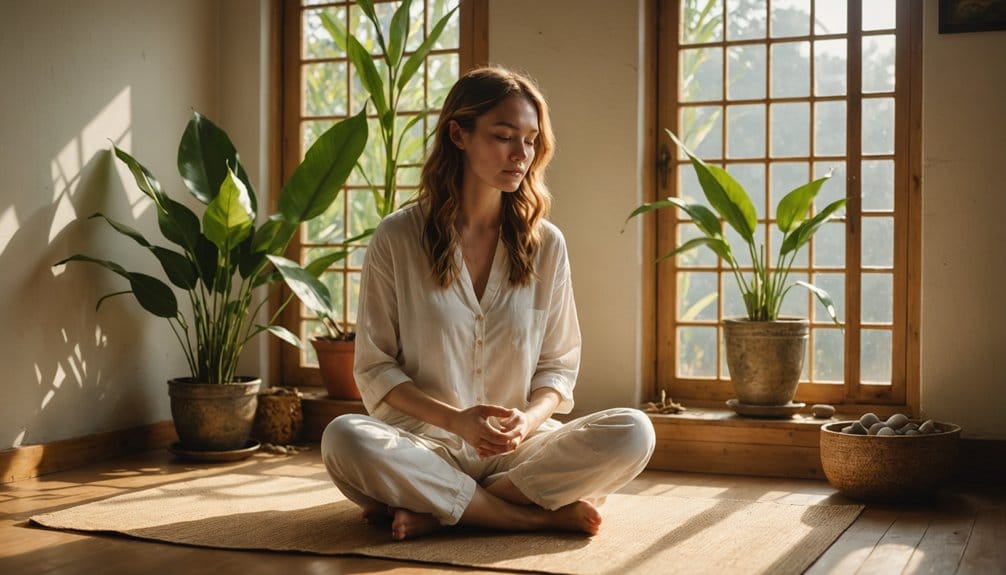
Learning proper Kapalabhati technique starts with finding your perfect meditation spot – think cozy corner, not rush-hour subway platform. Now, sit cross-legged with your spine straight (yes, like that teacher who always caught you slouching).
Begin with mindful breathing to center yourself. Take a deep inhale, then sharply exhale through your nose while pulling your navel toward your spine. Let your inhale happen naturally – it’s like your belly’s hitting the reset button. Start with 10 rounds and gradually build up.
Feel that energy flow increasing? That’s your body’s power plant revving up! Keep your shoulders relaxed and your mind focused on the breath. If you’re getting dizzy, slow down – this isn’t a race to enlightenment. Remember, smooth and controlled wins this zen game. Incorporating deep diaphragmatic breathing can enhance your Kapalabhati practice and overall relaxation experience.
Common Mistakes to Avoid
When it comes to Kapalabhati breathing, you’ll want to avoid the two most common pitfalls that can turn this energizing practice into a dizzy disaster. First, don’t treat it like you’re racing to catch the last bus – rushing through the breaths will only leave you light-headed and frustrated. Your breathing technique matters just as much as speed, so resist the urge to force the exhales like you’re trying to blow out a forest of birthday candles. Incorporating techniques like the 4-7-8 breathing method can help you reset your breathing patterns and reduce anxiety, making your practice more effective.
Rushing Through The Practice
The most common mistake with Kapalabhati breathing is treating it like you’re racing to finish a marathon. Ever notice how rushing through something usually means you’ll have to do it again? The same applies here.
When you speed through your mindful breathing, you’re missing the whole point of the practice. Think of it like savoring your favorite dessert – would you wolf it down without tasting it? Of course not! Practice patience with each exhale, and you’ll reap far greater benefits. Your breath isn’t going anywhere, so why hurry?
Take time to feel each contraction of your abdomen, each release of air. Remember, Kapalabhati isn’t about quantity – it’s about quality. One mindful round is worth more than ten rushed ones.
Poor Breathing Technique
Many of us plunge into Kapalabhati breathing with lots of enthusiasm but shaky technique. Ever notice how you’re gasping for air after just a few rounds? That’s probably because you’re not focusing on proper breath awareness during the practice.
The most common mistake is forcing the exhale too aggressively while neglecting the natural inhale. You’re not trying to win a breath-blowing competition here! Instead, think of it like gently bouncing a beach ball on water – there’s a natural rhythm to it. Through mindful breathing, you’ll discover that the passive inhale should feel effortless, while the active exhale comes from your lower belly, not your chest or throat. Remember, you’re aiming for controlled power, not hyperventilation. Your nose isn’t a trumpet, after all!
Safety Precautions and Contraindications
Before you get too excited about trying kapalabhati breathing, you’ll want to check if it’s safe for your specific situation. While this powerful practice can work wonders for many people, it’s not recommended if you’re pregnant, have high blood pressure, heart problems, or hernias – think of it like a roller coaster ride that’s awesome but not for everyone. You’ll also want to get cleared by your doctor first if you’ve had recent surgeries or suffer from vertigo, since this breathing technique can really get your internal energy moving (and we’re aiming for energized, not dizzy).
Key Medical Considerations
While Kapalabhati breath can energize your system like a morning espresso shot, practicing it safely requires careful attention to your body’s signals and medical history.
If you’re dealing with breathing disorders like asthma or cardiovascular issues, you’ll want to check with your doctor before giving this powerful technique a try. Think of your body like a finely-tuned sports car – you wouldn’t rev the engine without making sure everything’s running smoothly first, right?
Pay special attention if you’ve had recent surgeries, struggle with high blood pressure, or experience migraines. And here’s a pro tip: if you start feeling dizzy or your heart’s racing faster than a caffeinated squirrel, that’s your body’s way of saying “slow down, friend!”
Who Should Not Practice
Although Kapalabhati‘s energizing effects can be tempting, certain people shouldn’t attempt this breathing practice. If you’re pregnant, have high blood pressure, heart problems, or a recent surgery, it’s best to skip this one. The same goes for those with hernias, vertigo, or epilepsy – these advised conditions require extra caution.
You’ll want to check with your doctor about potential health risks if you’ve got migraines, glaucoma, or any recent abdominal surgeries. Think your morning coffee gives you the jitters? Then Kapalabhati might be a bit too stimulating for your system right now. And if you’re recovering from a fever or dealing with acute infections, give yourself time to heal before trying this energetic breath work. Safety first, tiger breath later!
Building Your Practice: From Beginner to Advanced
Since mastering Kapalabhati breath takes time and dedication, you’ll want to start with the basics and gradually build your practice. Begin with just 30 seconds of gentle breathing, focusing on breath awareness rather than speed or intensity. Ever tried patting your head while rubbing your belly? That’s how coordinating this breath might feel at first!
As your comfort grows, extend your sessions to 1-2 minutes. Practice consistency is key – aim for daily sessions at the same time, maybe right after your morning coffee. After a few weeks, you can increase to 3-5 minutes and pick up the pace. Remember, you’re not training for the breathing Olympics! Listen to your body and celebrate small wins. Before you know it, you’ll be sailing through 10-minute sessions like a pranayama pro.
Incorporating Kapalabhati Into Your Daily Routine
Many people think they need a dedicated yoga studio to practice Kapalabhati, but you can actually integrate this energizing breath into your existing daily activities. Set mindful reminders on your phone, or link the practice to regular habits – try a few rounds before your morning coffee or while waiting for your computer to boot up.
Start with just 30 seconds during your morning routine, then add another session before lunch. You’ll be amazed how natural daily integration becomes when you pair it with existing habits. Stuck in traffic? Perfect time for some skull shining breath (just don’t close your eyes!). Working from home? Use commercial breaks or email-loading time as your cue. Before you know it, you’ll be sneaking in Kapalabhati moments throughout your day without even thinking about it.