The 4-7-8 breathing technique is your ticket to instant calm – think of it as a natural chill pill for your nervous system. You’ll inhale through your nose for 4 counts, hold for 7, then exhale through your mouth for 8. It’s backed by science to lower blood pressure and anxiety in minutes. Find a quiet spot, sit up straight, and touch your tongue to the roof of your mouth to begin. There’s more to this ancient practice than meets the eye.
What Is the 4-7-8 Breathing Technique?
Known as “relaxing breath,” the 4-7-8 breathing technique is a powerful method that can help calm your racing mind and anxious body in just minutes. Unlike other breathing techniques that can feel complicated, this one’s as simple as counting. It’s based on ancient relaxation methods that have stood the test of time.
Think of 4-7-8 breathing as a natural tranquilizer for your nervous system. You’ll inhale quietly through your nose for 4 counts, hold that breath for 7 counts, then release it through your mouth for 8 counts. Ever noticed how a deep sigh makes you feel better? This technique works similarly, but with more structure. It’s like having a pause button for those moments when your thoughts are spinning faster than your friend’s excuses for being late to brunch.
The Science Behind 4-7-8 Breathing
While scientists once dismissed ancient breathing practices as mystical nonsense, research now confirms what practitioners have known for centuries – controlled breathing directly impacts your nervous system.
The neuroscience benefits of 4-7-8 breathing are pretty remarkable. When you extend your exhale longer than your inhale, you’re actually tapping into your parasympathetic nervous system – your body’s natural “chill out” mode. Think of it as hitting your internal pause button. Through conscious breath control, you’re telling your body “hey, everything’s cool here.”
Ever notice how you breathe when you’re stressed versus relaxed? That’s no coincidence. By practicing 4-7-8 breathing, you’re fundamentally rewiring your stress response. Your heart rate slows, blood pressure drops, and those racing thoughts? They finally take a backseat.
Step-by-Step Guide to Perform 4-7-8 Breathing
Now that you understand the science, let’s get down to the actual practice of 4-7-8 breathing. Like any new breathing techniques, you’ll want to find a quiet spot where you won’t be interrupted. Who needs another notification ding ruining their zen moment, right?
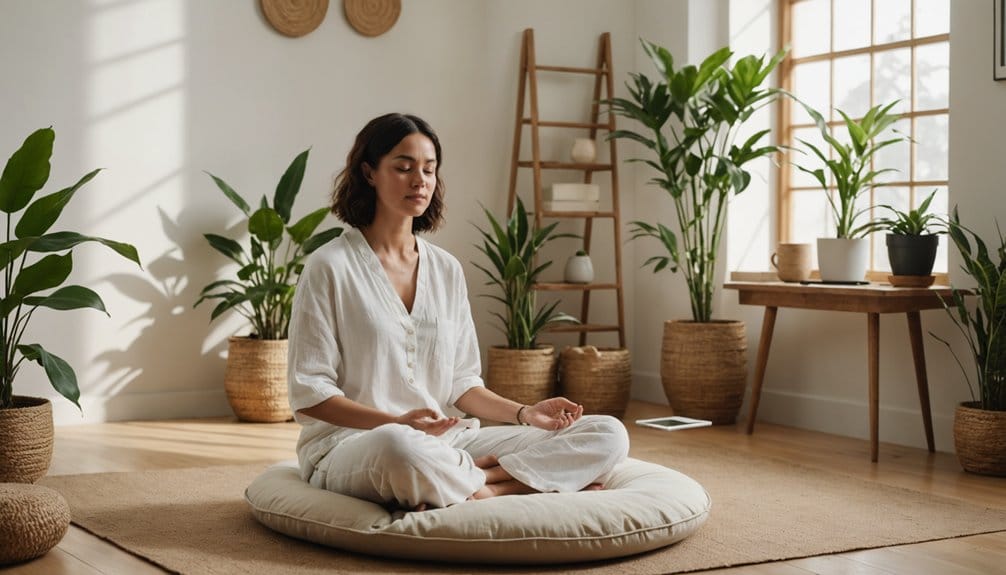
Start by sitting comfortably with your back straight. Touch the tip of your tongue to the roof of your mouth, just behind your front teeth. You’ll keep it there throughout the exercise – yes, even when you’re exhaling (through your mouth, around your tongue). Here’s your rhythm: Inhale through your nose for 4 counts, hold that breath for 7 counts, then make a whoosh sound as you exhale for 8 counts. That’s one cycle of these powerful relaxation strategies. Repeat three more times.
Health Benefits and Applications
When you’re feeling wound up tighter than last year’s holiday wrapping paper, 4-7-8 breathing can be your secret weapon for instant calm. You’ll find this technique particularly helpful for lowering blood pressure, reducing anxiety, and even managing those pesky stress headaches that love to show up during big presentations. Beyond the everyday stress-busting benefits, you’re also giving your body a natural boost by increasing oxygen flow, which helps everything from your immune system to your digestion work better.
Physical Health Advantages
The human body craves balance like a seesaw at recess – and deep 4-7-8 breathing delivers it in spades. When you incorporate this powerful relaxation technique into your daily routine, you’ll notice immediate physical benefits that go way beyond just feeling calm.
Your blood pressure naturally drops, your heart rate steadies, and oxygen floods your system like a rejuvenating wave. Ever notice how tense your shoulders get during a stressful day? This mindful meditation approach releases that built-up muscle tension faster than you can say “breathe in, hold, breathe out.” You’ll experience better digestion (goodbye stress eating!), improved immune function, and even a boost in energy that doesn’t require that third cup of coffee. Who knew something as simple as structured breathing could be your body’s best friend?
Stress Management Applications
By mastering 4-7-8 breathing, you’ll gain a powerful secret weapon against life’s daily stressors. Think of it as your personal “panic button reset” – except this one actually works!
You’ll find this technique particularly effective during high-pressure moments like job interviews, difficult conversations, or when your toddler’s having their third meltdown of the day. For maximum stress reduction, try practicing this method during your morning routine or right before challenging situations. It’s your on-demand anxiety relief tool that works anywhere, anytime.
Want the best results? Use 4-7-8 breathing when you’re stuck in traffic, dealing with deadline pressure, or lying awake at night. The beauty is that nobody even needs to know you’re doing it – you’re just sitting there, looking calm and collected while secretly hitting your internal reset button.
Common Mistakes to Avoid
When it comes to 4-7-8 breathing, you’re probably making a few common mistakes that can throw off your whole zen vibe. You might be racing through the steps like you’re in a breathing olympics (spoiler alert: that’s not a thing), or losing count somewhere between inhaling and exhaling because, let’s face it, counting while breathing isn’t exactly our natural superpower. Even worse, you could be turning purple trying to hold your breath for too long, which defeats the whole purpose of this relaxation technique – and nobody looks good in purple anyway.
Rushing Through Each Step
Many enthusiastic practitioners make the classic mistake of treating 4-7-8 breathing like they’re racing through a fast-food drive-thru. You’ve got places to be and people to see, right? But here’s the thing – this isn’t your morning coffee run.
Think of mindful pacing as your new best friend. When you rush through the counts, you’re missing out on the deep relaxation that makes this technique so powerful. Your breath awareness suffers, and you might as well be hyperventilating in traffic. Take your time with each number, letting the rhythm become natural and fluid.
Incorrect Breath Counting
The numbers in 4-7-8 breathing aren’t just random digits pulled from a lottery drawing. Each number represents a specific count that’s essential for the technique’s effectiveness. When you start rushing through breath counting or getting creative with your own numbers, you’re missing out on the method’s full benefits.
Common inhalation errors include cutting the four-count inhale short or extending it too long. You might think, “Hey, what’s the big deal if I breathe in for 3 or 5 counts instead?” Well, these precise numbers create an ideal ratio that helps activate your parasympathetic nervous system. Think of it like baking – you wouldn’t swap tablespoons for teaspoons and expect the same results. Stick to the exact counts: 4 for inhaling, 7 for holding, and 8 for exhaling.
Holding Too Long
Despite what your overachiever instincts might tell you, holding your breath longer than the prescribed 7-count won’t earn you extra meditation points. The 4-7-8 breathing technique‘s carefully calibrated holding techniques exist for good reason – they’re designed to create the perfect balance of oxygen and carbon dioxide in your system.
Think of it like baking a cake: You wouldn’t double the baking time hoping for a better result, would you? The same goes for breath duration. Extending your hold beyond 7 counts can trigger anxiety, light-headedness, or even hyperventilation. Plus, you’ll throw off the entire rhythm that makes this practice so effective. Remember, sometimes less really is more. If you’re tempted to overachieve, channel that energy into maintaining consistent, precise counts instead.
Tips for Making 4-7-8 Breathing a Daily Habit
Developing consistent habits can feel like herding cats, but making 4-7-8 breathing a daily practice doesn’t have to be complicated. Think about when you’re most likely to remember – maybe it’s right after brushing your teeth or during your morning coffee ritual. That’s your sweet spot for establishing routine.
Want to make it stick? Try setting reminders on your phone, but get creative with the labels. “Time to become a zen master!” beats a boring “breathe now” alert any day. Pop a sticky note on your bathroom mirror or computer screen – somewhere you’ll actually see it. And hey, why not pair it with something you already do religiously, like checking social media? Before you scroll through those cat videos, take 30 seconds for your breathing practice. Your stressed-out brain will thank you later.