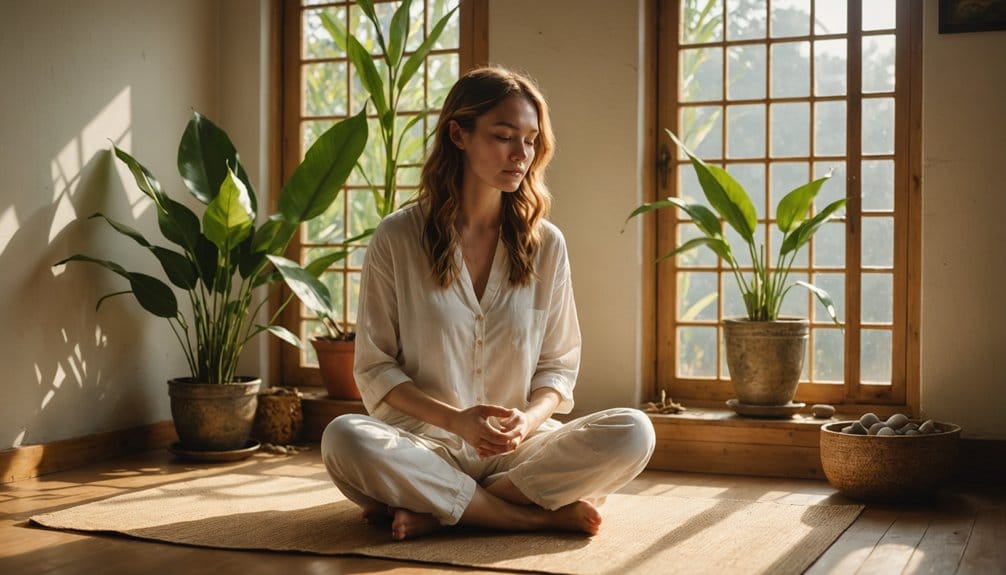
You’ll master dirga pranayama, or three-part breath, by following simple steps that engage your belly, ribcage, and upper chest. Start in a comfortable seated position with shoulders relaxed and spine tall. Breathe deeply into your belly like you’re inflating a balloon, then expand into your ribs, and finally fill your upper chest. Exhale in reverse order, emptying from top to bottom. Practice 5-10 rounds to discover how this ancient technique can transform your everyday breathing.
Understanding the Benefits of Three-Part Breath
While many people think of breathing as something that just happens automatically, Dirga Pranayama (three-part breath) transforms this unconscious process into a powerful tool for wellbeing.
You’ll discover remarkable beneficial effects as you engage your belly, ribcage, and upper chest in this mindful breathing practice. Ever notice how you can’t seem to focus when you’re stressed? That’s where three-part breath comes in. It’s like hitting the reset button on your mental clarity – minus the frantic search for the actual button! This technique calms your nervous system, reduces anxiety, and helps you take in more oxygen with each breath. You’re not just breathing – you’re actively creating space in your body and mind. Think of it as upgrading your basic breathing software to the premium version. Controlled breathing provides a natural coping mechanism for better emotional resilience and anxiety relief.
Proper Posture and Positioning for Dirga Pranayama
Before you start reaping those amazing benefits of three-part breath, let’s get you properly positioned – because trying to do pranayama while sprawled on the couch like a starfish probably isn’t your best bet!
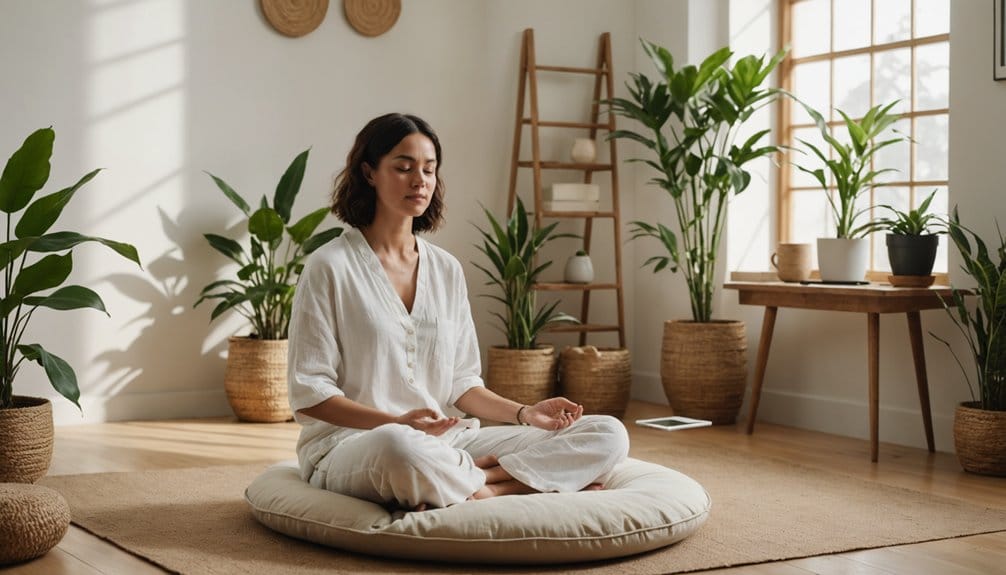
Find a comfortable seat on the floor or in a chair where you can maintain proper seated alignment. If you’re on the floor, cross your legs in a way that feels natural – no need to twist yourself into a pretzel! Pop a cushion under your sits bones to help with spinal lengthening. Now, imagine there’s a string gently pulling the crown of your head toward the ceiling while your shoulders melt away from your ears. Keep your chin slightly tucked to create that lovely long neck. Your hands? Just rest them on your knees or thighs – whatever feels most natural to you. Additionally, practicing breath techniques such as the 4-7-8 breathing method can enhance your overall experience during Dirga Pranayama.
Step-by-Step Guide to Three-Part Breathing
Now that you’re comfortably positioned, let’s plunge into the actual steps of three-part breathing – and don’t worry, you won’t need an instruction manual the size of War and Peace!
Start by taking a few natural breaths to center yourself. Then, with mindful awareness, begin filling your belly with air as if you’re inflating a balloon. Next, expand your breath into the ribcage, feeling it spread like wings. Finally, let the breath rise into your upper chest – you’ve just mastered the three parts! Ever notice how babies breathe this way naturally? Now exhale in reverse: chest, ribs, belly. Your breath control might feel a bit wonky at first (mine sure did!), but stick with it. Take 5-10 rounds at your own pace, and you’ll start feeling like a pranayama pro. Remember, this technique serves as a bridge between body and consciousness, enhancing your meditation experience.
Common Challenges and How to Overcome Them
Since mastering three-part breathing isn’t always smooth sailing, let’s tackle some common roadblocks you might encounter. Maybe you’re finding it tricky to maintain breath control when your mind wanders (and trust me, it will). Or perhaps you’re overthinking each breath until it feels forced and unnatural. Sound familiar?
Don’t worry – these challenges are totally normal. When your mind drifts, gently guide it back using simple mindfulness techniques like focusing on the sensation of air moving through your nostrils. If you’re getting frustrated with the rhythm, try counting slowly to four on each inhale and exhale. And remember that thing about forcing your breath? Just let it flow naturally. You’ll find your groove with practice, just like learning to ride a bike – wobbly at first, then suddenly it clicks. Additionally, incorporating techniques like deep diaphragmatic breathing can enhance your overall breath control and relaxation.
Incorporating Dirga Pranayama Into Daily Practice
Making Dirga Pranayama part of your daily routine doesn’t have to feel like adding another chore to your to-do list. You’re already breathing all day long – why not make those breaths count? Start by incorporating breath awareness into everyday moments, like waiting for your coffee to brew or sitting at a red light.
Try setting daily mindfulness reminders on your phone, or link your practice to existing habits. Maybe you’ll take three conscious breaths before checking your email (we all know you’re doing that enough times a day!). The beauty of Dirga Pranayama is its flexibility – you can practice it anywhere, anytime. Standing in line at the grocery store? Perfect time for some subtle belly breathing. Stressed about a deadline? Take a quick three-part breath break. Your lungs will thank you. Equal breathing is a great complement to Dirga Pranayama, enhancing your overall breath awareness and relaxation techniques.