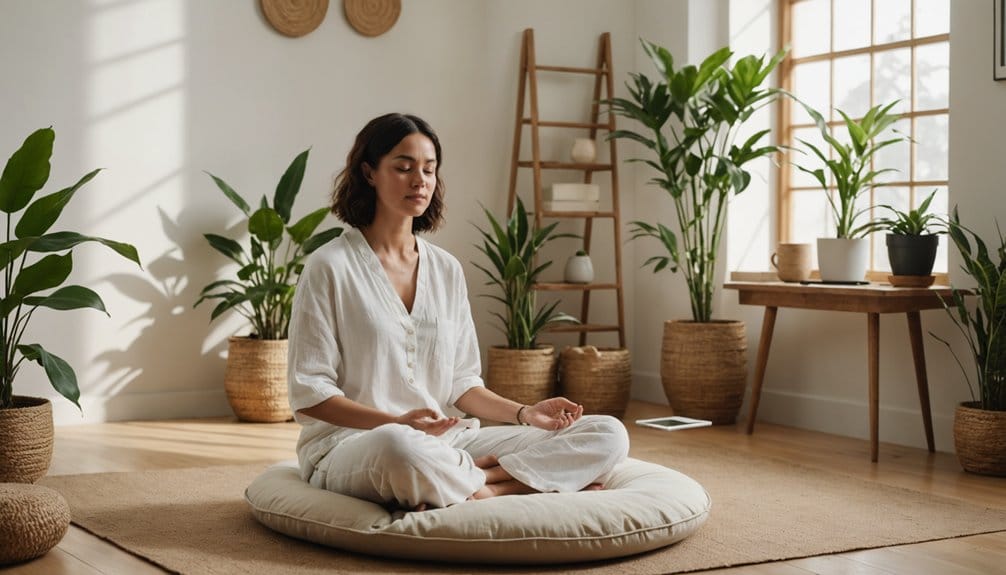
You can master extended exhalation breathing in just 10 minutes by focusing on your breath’s natural rhythm. Start by sitting comfortably and inhaling for 4 counts through your nose, then exhale for 6 counts. This simple technique triggers your body’s relaxation response, helping you find instant calm when stress hits. Think of it as tuning a radio – adjust your breath until you find that perfect frequency of peace. There’s a whole world of breathing variations waiting to transform your daily routine.
The Science Behind Extended Exhalation
Although breathing happens automatically, understanding the science of extended exhalation can transform this unconscious process into a powerful tool for relaxation and stress relief. When you exhale longer than you inhale, you’re triggering your body’s natural physiological response to calm down – pretty neat, right?
Think of your breath like a seesaw. Short inhales and long exhales create an intentional imbalance that actually boosts your respiratory efficiency. Your parasympathetic nervous system kicks in, slowing your heart rate and telling your body “Hey, everything’s cool here!” It’s like having a built-in chill pill.
Ever notice how you naturally sigh when you’re relieved? That’s your body instinctively using extended exhalation to restore balance. Nature’s already given you the blueprint – you’re just learning to use it consciously. Incorporating techniques like the 4-7-8 Relaxation Breathing Pattern can further enhance this practice, making it even more effective for stress relief.
Benefits for Body and Mind
Now that you understand the science, let’s look at what extended exhalation can actually do for you. You’ll notice an immediate boost in mental clarity – like clearing out those cobwebs that make your thoughts feel sluggish. Who doesn’t want that morning fog to lift without a triple espresso?
The physical relaxation you’ll experience is remarkable. Your shoulders drop, your jaw unclenches (yes, the one you didn’t realize was tight), and that knot in your stomach starts to unwind. It’s like hitting your body’s reset button. You’ll find yourself settling into a calmer state that carries you through life’s chaos – from deadline pressures to that awkward conversation with your boss. Think of it as your personal stress eraser that’s always available, completely free, and doesn’t require a subscription renewal. Additionally, incorporating deep breathing techniques like the 4-7-8 Breathing Method can enhance this calming effect and further reduce anxiety.
Understanding Your Breath Rate
Before you can master extended exhalation, you’ll need to get familiar with your natural breathing rhythm – kind of like getting to know your lungs’ default settings. Think of breath awareness as tuning into your body’s own radio frequency. Ever notice how your breathing changes when you’re stressed versus relaxed?
Take a moment right now to count your breathing frequency. How many breaths do you take in 60 seconds? The average adult takes 12-20 breaths per minute, but everyone’s different. Don’t judge your number – it’s just data! You might be surprised to find yourself breathing faster or slower than you thought. This self-check creates your baseline, letting you know where you’re starting from. It’s like checking your speedometer before deciding to slow down or speed up. Controlled breathing can serve as a natural coping mechanism to help you manage stress effectively.
Step-by-Step Breathing Guide
Getting your breathing numbers is great, but let’s put that knowledge into action with a clear roadmap for extended exhalation. First, sit comfortably – and no, your favorite slouching position won’t cut it this time! Keep your spine straight but relaxed, like you’re being gently pulled up by a string.
Start with breath regulation by inhaling for 4 counts through your nose. Hold briefly, then exhale slowly for 6 counts. You’ll feel like you’re deflating a balloon – that’s perfect! As you practice mindfulness integration, focus on the sensation of your breath moving through your body. Notice how your chest and belly expand and contract.
Want to level up? Gradually increase your exhale duration by one count each week. You’re training your breath like a marathon runner – slow and steady wins the race. Remember, this practice can help balance your autonomic nervous system, leading to improved relaxation and focus.
Common Mistakes to Avoid
Three major pitfalls can derail your extended exhalation practice, even when you’re trying your best to nail it. First, you might rush through the exhale, defeating the whole purpose – it’s like trying to savor chocolate by swallowing it whole! Second, many fall into the common misconception of forcing the breath out too hard, creating tension instead of release. Remember, you’re not trying to blow out birthday candles here.
The third breathing misconception? Focusing so much on the technique that you forget to relax. Your jaw’s clenched, shoulders hunched, wondering if you’re “doing it right.” Sound familiar? Let’s be honest – we’ve all been that overachiever. The key is finding the sweet spot between mindful attention and natural flow. Engaging in breath awareness allows you to tune into your body’s signals, creating a more harmonious breathing experience.
Ideal Practice Times and Duration
While many people assume extended exhalation requires marathon practice sessions, you’ll be relieved to know that quality trumps quantity here. The best times to practice are when you’re naturally more relaxed – early mornings before the chaos begins, or evenings as you wind down. Ever tried deep breathing during your morning coffee? It’s a game-changer.
For ideal duration, start with just 3-5 minutes twice daily. That’s right – no hour-long sessions needed! Think of it like training a puppy – short, consistent practice beats sporadic long sessions. As you build comfort, extend to 7-10 minutes per session. The sweet spot for most people is 10 minutes in the morning and 10 at night. Remember, you’re not training for the breathing Olympics – you’re building a sustainable daily practice.
Measuring Your Progress
Tracking progress with extended exhalation isn’t like counting reps at the gym – it’s more nuanced, but don’t let that scare you off. Think of progress tracking as your personal breathing diary, where small wins add up to big victories.
Start by setting goals that make sense for you. Can you extend your exhale by two seconds this week? Fantastic! Want to maintain a 1:2 inhale-to-exhale ratio for five minutes straight? Go for it! Keep a simple log of your practice sessions, noting how long you can maintain extended exhales and how you feel afterward.
Notice the subtle changes – maybe you’re sleeping better, feeling calmer during work calls, or not losing your cool when your cat knocks over your coffee (again). These real-life improvements are your true measures of success.
Combining With Other Relaxation Methods
Although extended exhalation is powerful on its own, it’s like a superhero that becomes even stronger with sidekicks. You’ll reveal even deeper levels of calm when you pair it with other relaxation techniques. Ever tried mindfulness integration while doing your extended breaths? It’s like adding chocolate sauce to ice cream – simply delicious for your soul.
Start by combining your breathing with progressive relaxation. As you exhale, imagine tension melting from your muscles one by one, from your toes up to your head. You can also sync your breath with gentle stretching or your favorite meditation app. The possibilities are endless! Think of it as creating your own relaxation recipe – mix and match until you find what works best for you. Who knew becoming zen could be this customizable?
Real-Life Success Stories
Since launching this breathing technique into the world, we’ve collected hundreds of inspiring success stories from real people just like you. Take Sarah, who conquered her pre-presentation jitters using extended exhalation before pitching to major clients. Or Mark, who finally got restful sleep after incorporating the technique into his bedtime routine.
You’ll love hearing about Jessica’s personal experience – she went from panic attacks in crowded spaces to confidently traversing subway stations during rush hour. And who could forget Tom, the skeptical accountant who now swears by the 4-7-8 pattern during tax season? These aren’t just success stories; they’re proof that you’ve got the power to transform your daily life. Want to join their ranks? Your breakthrough moment is just a few breaths away.
Advanced Techniques and Variations
Ready to take your breathing practice to the next level? Box breathing variations let you play with different count patterns – like 4-6-8-4 instead of equal counts – while alternate nostril extension adds a whole new dimension to your exhale game. You’ll feel like a breathing ninja as you mix and match these advanced techniques, creating your own signature style that works best for your needs and goals.
Box Breathing Pattern Variations
Traditional box breathing follows a fixed 4-4-4-4 pattern, but you’ll find three exciting variations that can take your practice to new heights. First, try the 4-6-4-6 pattern, where you’ll extend both the exhale and hold to six counts – perfect for deeper relaxation. Ready for a challenge? The 6-4-6-4 pattern emphasizes longer inhalations and retentions, building remarkable breath control.
For those days when you’re feeling adventurous, there’s the pyramid pattern. Start with 4-4-4-4, then increase each count by one until you reach 7-7-7-7, before working your way back down. It’s like interval training for your breath! Don’t worry if you can’t master these variations right away – your lungs might wonder what you’re up to, but they’ll thank you later.
Alternate Nostril Extension Methods
Advanced practitioners can discover three powerful variations on alternate nostril breathing that extend the exhale phase. First, try the “wave” – exhale for twice as long through one nostril, then switch sides mid-breath. Next, there’s the “mountain peak” where you’ll gradually increase your exhale duration with each cycle until you hit your personal best. Finally, master the “infinity loop” by connecting your alternate nostril technique with circular breathing patterns.
Ever wonder why these methods feel so different from basic breath control? It’s because they challenge your respiratory system in unique ways. You’ll notice enhanced focus and deeper relaxation – though you might feel a bit dizzy at first (don’t worry, that’s totally normal). Just remember to start slowly and listen to your body’s signals.